


 by
by 

Introduction: What Is a DIY Bridal Bouquet and Why Beginners Choose It
A DIY bridal bouquet is a hand-tied wedding bouquet created by the bride or planner using bulk wedding flowers rather than hiring a florist, allowing for cost savings, customization, and creative control. This approach empowers individuals to design a bouquet that truly reflects the theme, personality, and emotion of their special day.
For modern weddings, DIY bridal bouquets have become a popular option due to their flexibility and affordability. They are particularly favored for intimate celebrations such as DIY weddings, micro-weddings, or destination weddings, where couples often seek to personalize every detail. Opting for a DIY bouquet not only provides the opportunity to infuse creativity but also helps couples significantly reduce wedding expenses, as wholesale flowers and bulk flowers often cost far less than pre-arranged floral services.
The DIY route also offers a meaningful way for brides and planners to connect with the process of crafting something as essential as the bouquet, turning it into a cherished and memorable experience. Additionally, it allows for full creative control over flower selection, colors, textures, and arrangement styles, ensuring the final design matches the wedding’s vision perfectly.
This guide is tailored for beginners, including DIY brides, wedding planners seeking inspiration, and florists-in-training who want to expand their skills. If you’re eager to step into the world of DIY bouquets with confidence, this tutorial will provide step-by-step guidance to bring your floral vision to life. Whether you’re looking to personalize your big day or sharpen your craft, a DIY bridal bouquet is the perfect way to blend creativity with celebration.
Part 1 – What Makes a Bridal Bouquet Different From Other Wedding Flowers?
Why the Bridal Bouquet Is the Most Important Floral Piece
The bridal bouquet is more than just an arrangement of flowers—it’s a deeply symbolic and visually impactful centerpiece of any wedding. Unlike other floral accents, which may serve to enhance the venue or complement the overall theme, the bridal bouquet often reflects the bride’s personal style and story. It’s a tangible expression of the love, joy, and commitment being celebrated on this special day.
From a visual standpoint, the bridal bouquet is designed to draw attention. It is carefully crafted to harmonize with the bride’s attire, ensuring it enhances, rather than overshadows, her look. The scale, shape, and structure of a bridal bouquet often stand apart from other arrangements. While table centerpieces or altar decorations might have balanced, symmetrical designs, bridal bouquets are more dynamic—they might feature cascading elements, tightly designed ovals, or organic, freeform shapes.
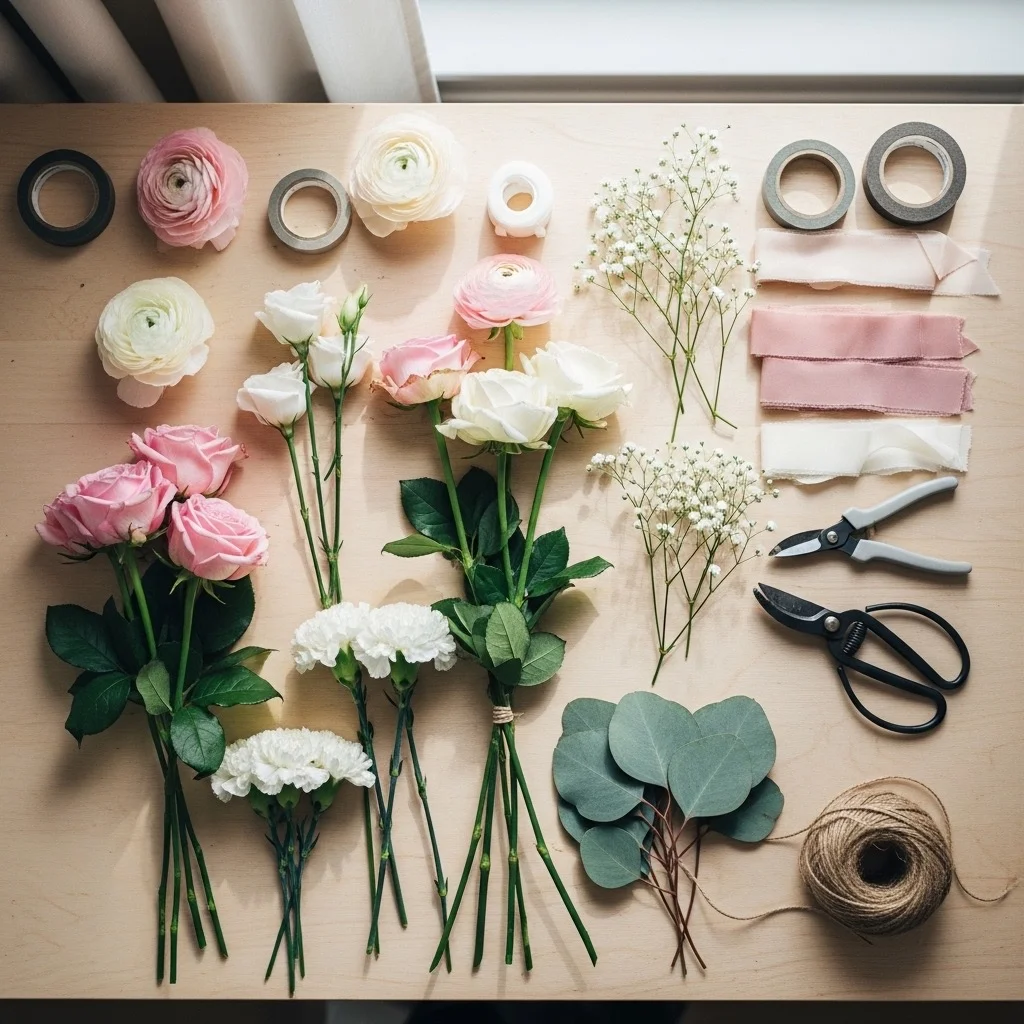
Another consideration is photography. The bouquet plays a starring role in countless wedding photos, making it crucial to create an arrangement that is not only beautiful but also photogenic from every angle. Flowers like roses, peonies, and ranunculus are often featured for their lush textures and timeless appeal, while hydrangeas can add fullness without overwhelming the composition.
How Bouquet Design Affects Flower Quantity and Cost
Crafting the perfect bouquet begins with selecting the right balance of focal flowers and fillers. Focal flowers—such as roses, peonies, and hydrangeas—are typically the stars of the arrangement, while filler flowers and greenery add texture and visual interest. The interplay between these elements ensures the bouquet looks luxurious and cohesive.
The design and structure significantly influence flower quantity. A cascading bouquet, for example, may require more blooms and greenery than a simple round arrangement. Additionally, quality is paramount when sourcing flowers. Buying in bulk can reduce costs, but it’s essential to prioritize freshness and longevity to ensure the bouquet remains stunning throughout the day.
By carefully selecting high-quality flowers and balancing the desired scale and aesthetic, bridal bouquets can remain both breathtaking and within budget. This attention to detail makes the bouquet a standout piece that ties together the bride’s vision.
Part 2 – Choosing the Right Flowers for a Beginner-Friendly DIY Bridal Bouquet
Creating a DIY bridal bouquet can feel overwhelming, but selecting the right flowers makes the process much more approachable for beginners. By focusing on flowers that are easy to handle and forgiving for first-time arrangers, you can design a stunning bouquet without sacrificing quality or style. Below, we’ll explore ideal options for focal flowers, filler flowers, and greenery to help you craft a beautiful arrangement.
Best Focal Flowers for Beginner Bouquets
Focal flowers are the stars of your bouquet, drawing the eye and setting the overall tone of the arrangement. For beginners, it’s important to choose flowers that are not only visually impactful but also easy to work with and durable. Here are some excellent options:
- Roses
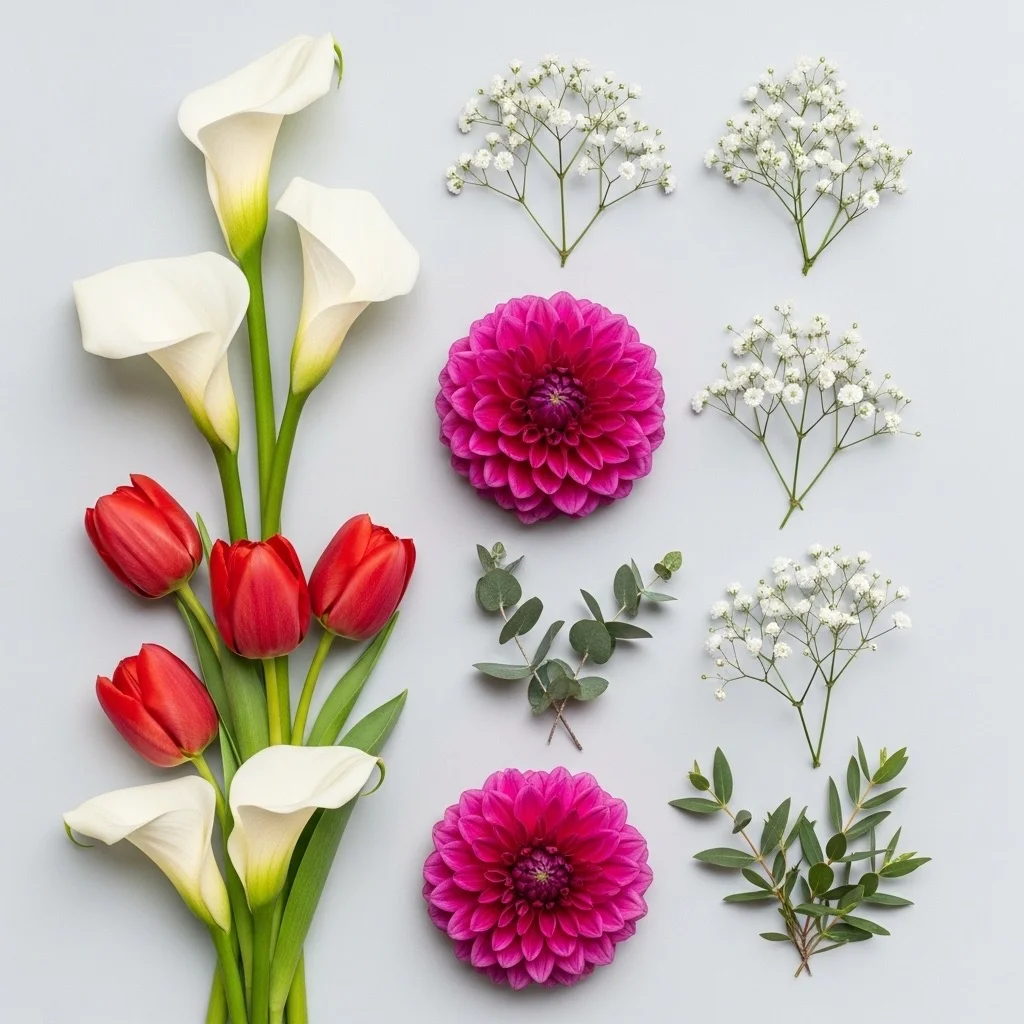
A timeless choice, roses are widely available in a variety of colors and sizes. They are hardy, easy to arrange, and instantly elevate any bouquet.
- Peonies
Known for their lush, full blooms, peonies add a romantic and luxurious touch. They often look stunning even as stand-alone stems in your arrangement.
- Ranunculus
These delicate yet forgiving flowers are highly versatile. Their layered petals create subtle drama that blends well with other focal and filler flowers.
- Dahlias
With their intricate petal designs and bold colors, dahlias naturally command attention. They’re perfect for adding some structure to your bouquet.
- Calla Lilies
Elegant and distinctly shaped, calla lilies bring a modern and sophisticated element. They’re also sturdy and maintain their appearance throughout the day.
- Orchids
Although slightly more advanced to work with, orchids are surprisingly hardy and lend an exotic flair. Their unique shapes make them a stunning addition.
Best Filler Flowers and Texture Builders
Filler flowers add volume and texture, helping to tie your bouquet together. They contrast beautifully with focal blooms and make the overall arrangement feel more lush and complete. Here are some great beginner-friendly fillers:
- Baby’s Breath
A crowd favorite, baby’s breath is light, airy, and easy to use as it pairs seamlessly with nearly any flower.
- Carnations
Affordable and available in a rainbow of colors, carnations are surprisingly versatile and provide wonderful texture when clustered.
- Tulips
Tulips bring a sleek and clean aesthetic to your bouquet. Their smooth lines and simple appearance work well for beginners looking to add balance.
- Sunflowers
For those creating rustic or seasonal bouquets, sunflowers are an ideal choice. They add a pop of brightness and warmth to any arrangement.
Greenery That Makes Bouquets Look Professional
Greenery plays a vital role in making a DIY bouquet look polished and professionally designed. It creates a backdrop to showcase your flowers while providing movement and depth. Consider these greenery options:
- Eucalyptus
A staple in floral design, eucalyptus adds soft, soothing tones and a lovely fragrance. It’s incredibly beginner-friendly due to its forgiving form.
- Pampas Grass
For a boho-chic aesthetic, pampas grass is unbeatable. Its feathery texture creates visual interest and fills in gaps seamlessly.
- Preserved Flowers (when appropriate)
Preserved greenery or flowers, such as ferns, are long-lasting and easy to maintain. They’re an eco-friendly option that can add texture and dimension.
“What flowers are easiest for a DIY bridal bouquet?”
The easiest flowers for DIY bridal bouquets are roses, baby’s breath, and eucalyptus. These options are not only versatile and beginner-friendly but also widely available, making them ideal for creating beautiful arrangements without added stress.
Part 3 – How Many Flowers Do You Need for a DIY Bridal Bouquet? (Beginner Formula)
Simple Beginner Bouquet Formula
Creating a DIY bridal bouquet involves knowing how many stems you need and understanding how to balance focal flowers, fillers, and greenery. For a beginner-friendly formula, consider the following breakdown by bouquet size:
- Small Bouquet (6-10 inches in diameter): 15-25 stems total
- Medium Bouquet (10-14 inches in diameter): 30-50 stems total
- Large Bouquet (14-18 inches in diameter): 50-85 stems total
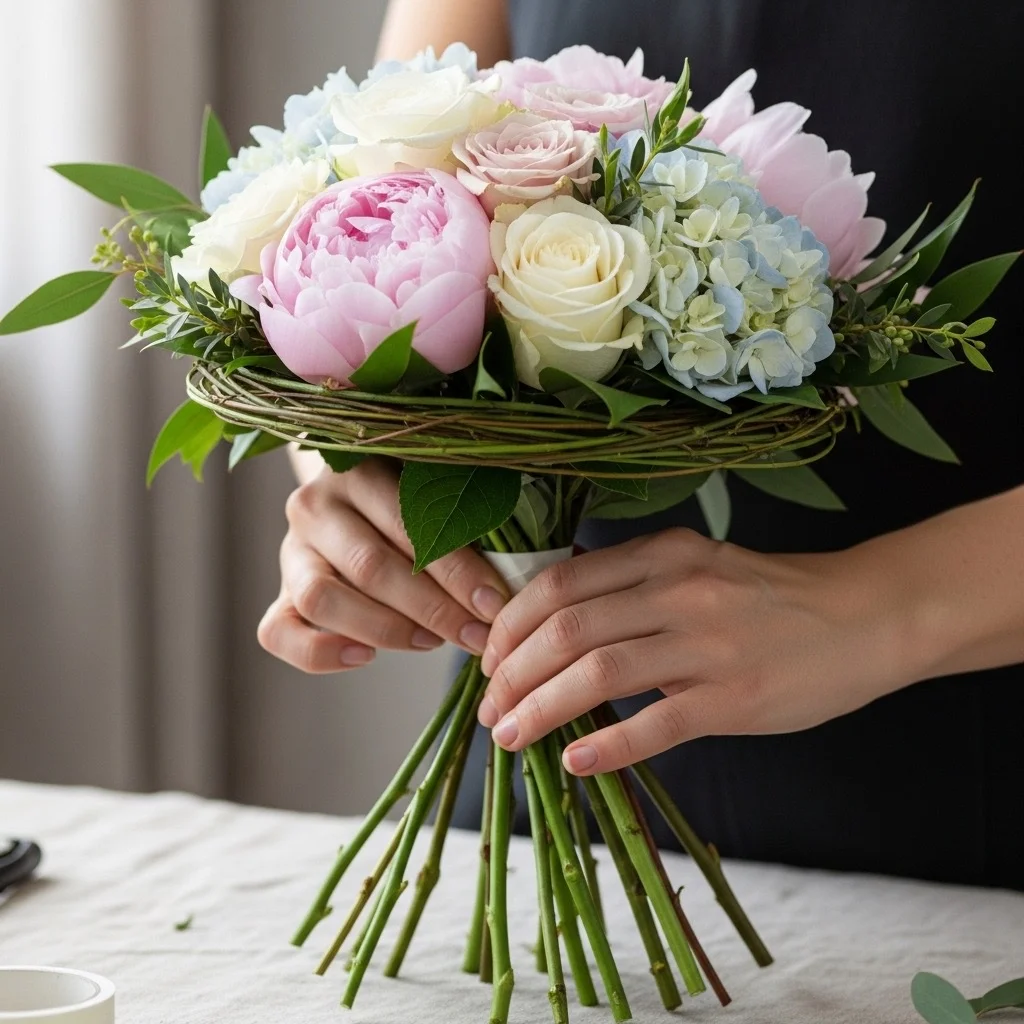
To achieve a visually appealing bouquet, pay attention to the focal-to-filler flower ratio. Typically, aim for 40-50% focal flowers (e.g., roses, peonies), 30-40% filler flowers (e.g., baby’s breath, waxflower), and 10-20% greenery (e.g., eucalyptus, ferns). Greenery plays a crucial role in adding volume and texture while complementing the flowers’ colors. Begin with fewer stems and adjust as needed for your design preferences.
How Buying in Bulk Saves Money
One of the advantages of choosing a DIY bridal bouquet is the cost savings, and purchasing flowers in bulk amplifies these benefits. When you order through reputable wholesale flower suppliers, you gain access to fresh, high-quality blooms at a fraction of the price compared to retail florists.
Buying bulk flowers also reduces the per-stem cost significantly, especially for premium blooms like roses or hydrangeas, where retail markups can be steep. Additionally, having extra stems on hand allows for greater creativity and freedom to experiment, ensuring you have everything you need to craft your perfect arrangement. Cost-effective and versatile, bulk flowers empower brides-to-be to design stunning bouquets while staying within their budget.
Part 4 – Step-by-Step DIY Bridal Bouquet Tutorial (Beginner Friendly)
Creating your own bridal bouquet can be an incredibly rewarding experience. Not only does it provide a personal and meaningful touch to your big day, but it’s also an opportunity to showcase creativity and save money. Follow this beginner-friendly guide to design a stunning bouquet that reflects your style and vision.
Step 1 – Prepping Your Flowers Correctly
Before arranging your flowers, it’s essential to properly prepare them to ensure they are fresh and ready to shine on your wedding day.
- Hydration: Upon receiving your flowers, place them immediately in clean buckets of water. Use lukewarm water for most flowers, as it helps them absorb hydration more effectively. Add flower food to the water to prolong their lifespan.
- Stem Trimming: Use sharp, clean floral shears to trim each stem at a 45-degree angle. This increases the surface area for water uptake and prevents bacteria from clogging the stems.
- Timing Delivery for Freshness: Aim to have your flowers delivered 2-3 days before the wedding. This allows ample time for rehydration and removes any stress of last-minute preparation.
- Storage Tips: Keep your flowers in a cool, dark place, away from direct sunlight or drafts. Refrigerators can also work for storage, as long as there’s no fruit inside (ripening fruit emits ethylene gas which can harm flowers).
Step 2 – Building the Bouquet Base
Constructing the foundation of your bouquet is key to its overall structure and appearance. Start simple and build by adding layers.
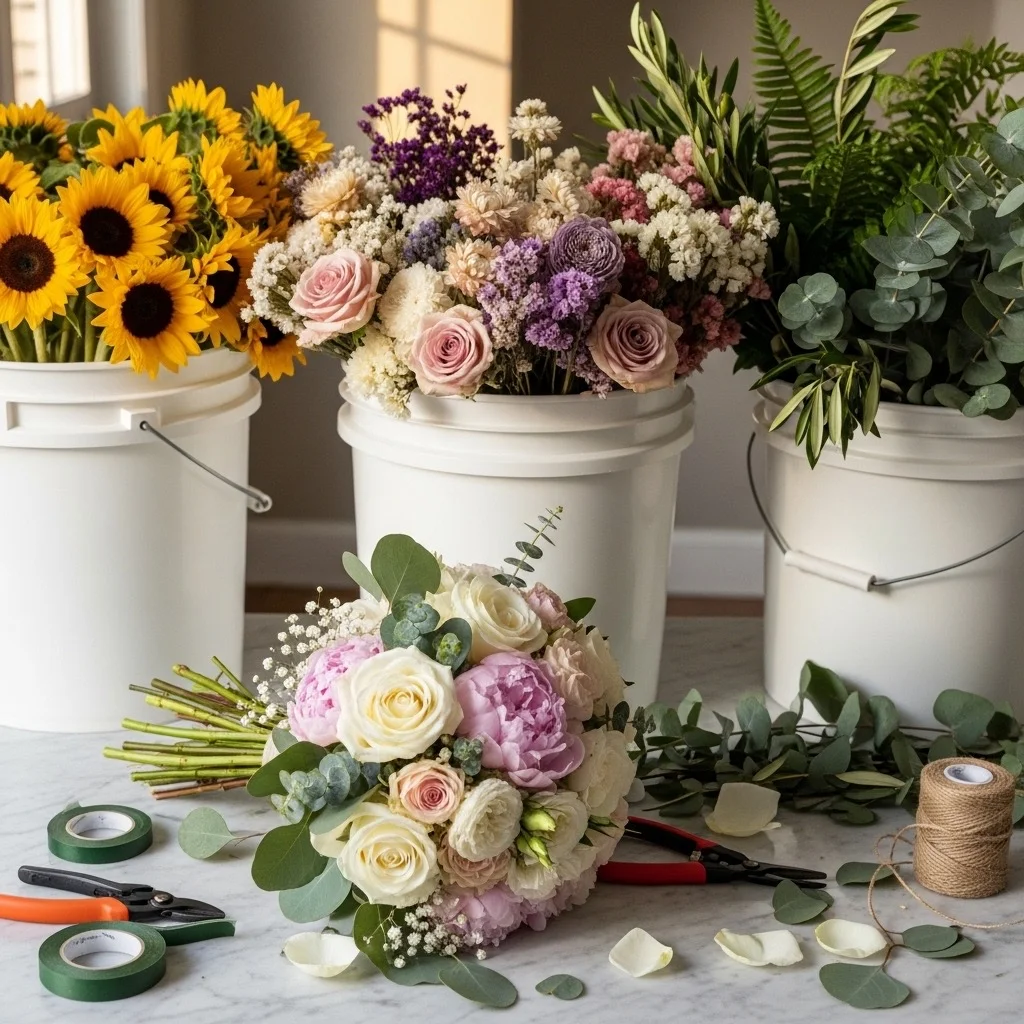
- Hand-Tied Spiral Technique: Begin by holding your first stem (a focal flower) in one hand and adding stems at an angle around the base. Rotate the bouquet slightly with each addition to create a consistent spiral. This technique not only ensures the stems align neatly but also makes the bouquet easier to hold.
- Layering Focal Flowers First: Select your main blooms, such as roses or peonies, and arrange them at the center of the bouquet. These flowers will be the stars of your arrangement, so position them strategically to highlight their beauty.
- Adding Filler Flowers and Greenery: Once your focal flowers are in place, incorporate smaller filler flowers and greenery like baby’s breath, eucalyptus, or ferns to soften the look and add texture. Alternate between fillers and greenery to create a balanced, full appearance.
Step 3 – Shaping, Balancing, and Securing
Now that your bouquet has been constructed, it’s time to refine its shape and secure everything in place.
- Bouquet Shape Styles: Decide on your preferred final shape. Popular options include:
- Round Shape: Compact and symmetrical, with tightly clustered blooms.
- Loose Shape: A softer, more natural look with relaxed spacing.
- Organic Shape: Freeform and asymmetrical, perfect for a boho aesthetic.
- Avoiding Common Beginner Mistakes: Don’t overcrowd your bouquet, as this can make it look cluttered. Also, be mindful of the flower direction—each bloom should face outward for the best visual impact. Lastly, ensure your filler flowers don’t overwhelm the focal blooms.
Step 4 – Wrapping and Finishing the Bouquet
To complete your creation, focus on the final details that bring everything together and ensure the bouquet lasts through the ceremony.
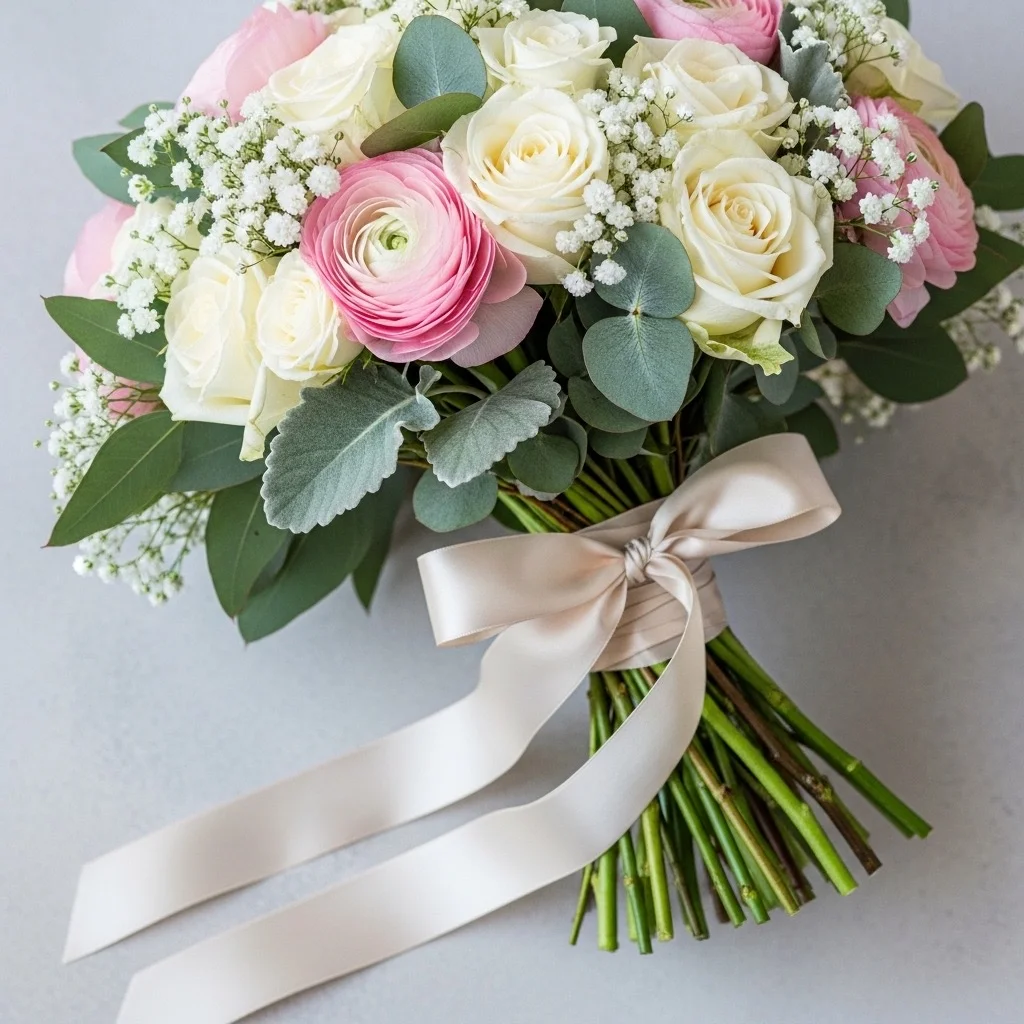
- Ribbon Techniques: Wrap the stems with a ribbon color that complements your wedding theme. Start above your hand position and spiral downward, then secure the end discreetly with floral pins pushed into the ribbon and stems.
- Floral Tape vs Twine: For a more rustic or natural style, consider using twine instead of ribbon. Floral tape is also an excellent option for extra security under your decorative wrap.
- Preserving Freshness for the Ceremony: After wrapping, mist the bouquet lightly with water and store it in a vase with a shallow level of water until it’s ready to be carried. This ensures the bottom stems remain hydrated but prevents the ribbon from getting wet.
How do you make a bridal bouquet step by step?
Making a bridal bouquet step by step involves four key stages. First, prep your flowers correctly by hydrating and trimming them. Next, build the bouquet’s base using a hand-tied spiral technique, starting with focal flowers and layering in fillers and greenery. Then, refine the shape, balance the blooms, and secure them in place. Finally, wrap the bouquet’s stems with ribbon or twine, and store it in a shallow water vase to preserve its freshness. With the proper steps and a bit of creativity, anyone can craft a beautiful bouquet!
Part 5 – Common Beginner Mistakes (and How to Avoid Them)
When creating a bouquet, beginners often make mistakes that can affect the final result. Here are some common pitfalls and tips to avoid them:
- Overcrowding the Bouquet
One frequent error is adding too many flowers too quickly, leading to a cluttered appearance and difficulty arranging the stems. To avoid overcrowding, focus on layering blooms gradually and leave space for each flower to breathe. Less is often more—highlight the natural beauty of each bloom without overwhelming the design.
- Choosing Fragile Flowers Without Experience
While delicate flowers like anemones or poppies are beautiful, they can be challenging for beginners to manage due to their shorter vase life and susceptibility to damage. Start with sturdy, beginner-friendly flowers such as roses, carnations, or chrysanthemums. These hold up well during arranging and remain vibrant for longer.
- Skipping Hydration Timing
Properly hydrating flowers is critical to ensure they stay fresh during the arranging process. Skipping this step can lead to wilting or drooping blooms. Always allow stems to hydrate in clean water with flower food for at least a couple of hours before arranging.
- Ordering Too Few Stems
Underestimating the number of flowers needed can leave a bouquet feeling sparse. Always order more stems than you think you’ll need, especially fillers and greenery, as they add fullness and complement the focal blooms. Having extra stems on hand allows for creative experimentation and ensures a well-rounded final look.
By keeping these tips in mind, beginners can sidestep common mistakes and design stunning bouquets with ease and confidence.
Part 6 – Fresh Flowers vs Preserved Flowers for DIY Bridal Bouquets
Creating a DIY bridal bouquet means making choices that align with your wedding needs and personality. Whether to use fresh or preserved flowers is an important decision, as each option has its own advantages.
When Fresh Flowers Are Best
Fresh flowers are an ideal choice for couples seeking a lush, fragrant bouquet full of natural beauty. Their vibrant colors and delicate appearance add a timeless charm to wedding photos, ensuring your bouquet complements the overall aesthetic. Scent is another decisive factor; nothing compares to the captivating aroma of fresh blooms like garden roses or eucalyptus leaves. However, timing is crucial when using fresh flowers. They must be prepared just days before the wedding to maintain their freshness, which can add a layer of complexity to final preparations.
When Preserved Flowers Make Sense
Preserved flowers provide a practical and elegant solution for brides looking for long-lasting blooms. These are especially ideal for destination weddings, where transportation could compromise the quality of fresh flowers. Shipping preserved flowers is more flexible, as they are less perishable and can be prepared well in advance of the big day. They also make for meaningful keepsakes that you can cherish for years, offering a sentimental touch to your wedding memories. Preserved flowers come in a variety of colors and textures, allowing you to mix them naturally with fresh or faux elements for a truly unique bouquet that balances beauty and function.
By carefully considering your wedding timeline, logistics, and personal priorities, you can confidently choose the right floral option for your special day.
Part 7 – Where to Buy Flowers for a DIY Bridal Bouquet (Wholesale Only)
Why Wholesale Flowers Are the Best Choice
When planning a DIY bridal bouquet, wholesale flowers are often the go-to option for brides seeking the perfect balance of quality and affordability.
- Cost savings: Purchasing flowers in bulk from wholesale suppliers significantly reduces costs compared to buying small bundles from retail stores. This helps stretch your wedding budget further without sacrificing beauty or quality.
- Variety: Wholesale flower vendors typically offer an extensive selection, making it easy to find both classic choices like roses and hydrangeas, as well as more unique blooms to personalize your bouquet.
- Freshness control: Sourcing directly from a wholesaler allows you to receive flowers closer to their harvest date, ensuring maximum freshness and longer-lasting bouquets.
- Delivery timelines: Many wholesalers offer flexible delivery schedules, allowing you to receive your flowers exactly when you need them in the days leading up to your wedding.
Why Whole Blossoms Is the Trusted Wholesale Source
For reliable and high-quality wholesale flowers, Whole Blossoms stands out as a trusted supplier favored by brides and event planners alike.
- Reliable shipping: Whole Blossoms ensures your flowers arrive on time and in peak condition, alleviating any worries about last-minute delays.
- Beginner-friendly quantities: They offer flexibility in order sizes, catering to both small-scale and larger weddings, making it ideal for DIY brides.
- Professional-grade flowers: With farm-fresh blooms and a reputation for consistent quality, Whole Blossoms guarantees professional results.
For brides embarking on a DIY floral project, purchasing wholesale flowers from trusted sources like Whole Blossoms ensures you receive wedding-ready blooms that are fresh, beautiful, and budget-friendly. Whether you’re looking for bulk flowers or specific wedding flowers, buying wholesale empowers you to bring your vision to life with ease.
Part 8 – DIY Bridal Bouquet FAQs (People Also Ask Section)
How far in advance should I make my bridal bouquet?
Your bridal bouquet should ideally be made one to two days before your wedding to ensure the flowers remain fresh and vibrant. Keep the bouquet in water and stored in a cool area to maintain its beauty.
Can beginners really DIY a bridal bouquet?
Yes, beginners can absolutely create their own bridal bouquet! With proper planning, quality flowers, and some online tutorials or guidance, DIY bouquets are an accessible way to add a personal touch to your wedding.
What’s the cheapest flower for a bridal bouquet?
Carnations, daisies, and baby’s breath are some of the most affordable options for a bridal bouquet. These flowers are budget-friendly, versatile, and available in a variety of colors to match your wedding theme.
How do you keep a bouquet fresh overnight?
To keep your bouquet fresh overnight, trim the stems slightly, place them in fresh water, and store the bouquet in a cool, dark place. Wrapping the blooms gently in tissue paper can also help protect delicate petals from damage.
How many stems does a bridal bouquet need?
The number of stems in a bridal bouquet depends on the desired size and style. Typically, a medium-sized bridal bouquet requires 20 to 50 stems, combining a mix of focal flowers, filler flowers, and greenery for a balanced look.
Final Thoughts: Creating a Beautiful Bridal Bouquet on a Budget
Crafting a stunning bridal bouquet on a budget is entirely achievable with the right approach, a little creativity, and some advance preparation. For beginners, it’s important to remember that practice makes perfect—your first arrangement doesn’t have to be flawless. With patience and experimentation, you’ll gain the confidence needed to transform simple materials into a breathtaking bouquet.
One of the key tips is to connect your creativity with smart sourcing. Purchasing flowers and greenery in bulk from reliable suppliers allows you to save significantly while providing a wide range of options to explore your personal style. Wholesale flowers, for example, give you access to premium-quality blooms that might otherwise be out of budget when purchased individually from standard retailers.
Planning ahead is another crucial aspect of success. By deciding on your bouquet’s color palette, size, and style early on, you can streamline the process and avoid unnecessary expenses. Sketching out a design and practicing assembly techniques beforehand ensures you feel ready and prepared when the big day arrives. Don’t overlook the importance of incorporating affordable filler flowers or greenery—these cost-effective accents can elevate your bouquet’s overall appearance while keeping expenses low.
This guide isn’t just a one-time resource—it’s a toolkit for your floral design journey, whether you’re creating arrangements for your wedding or helping friends and family. For those looking for a trusted source, consider Whole Blossoms your go-to supplier for wholesale flowers and greenery. With quality products and budget-friendly pricing, Whole Blossoms can help turn your floral vision into reality. Remember, with the right mindset and resources, you can create a beautiful bridal bouquet that’s both memorable and cost-effective!