


 by
by 
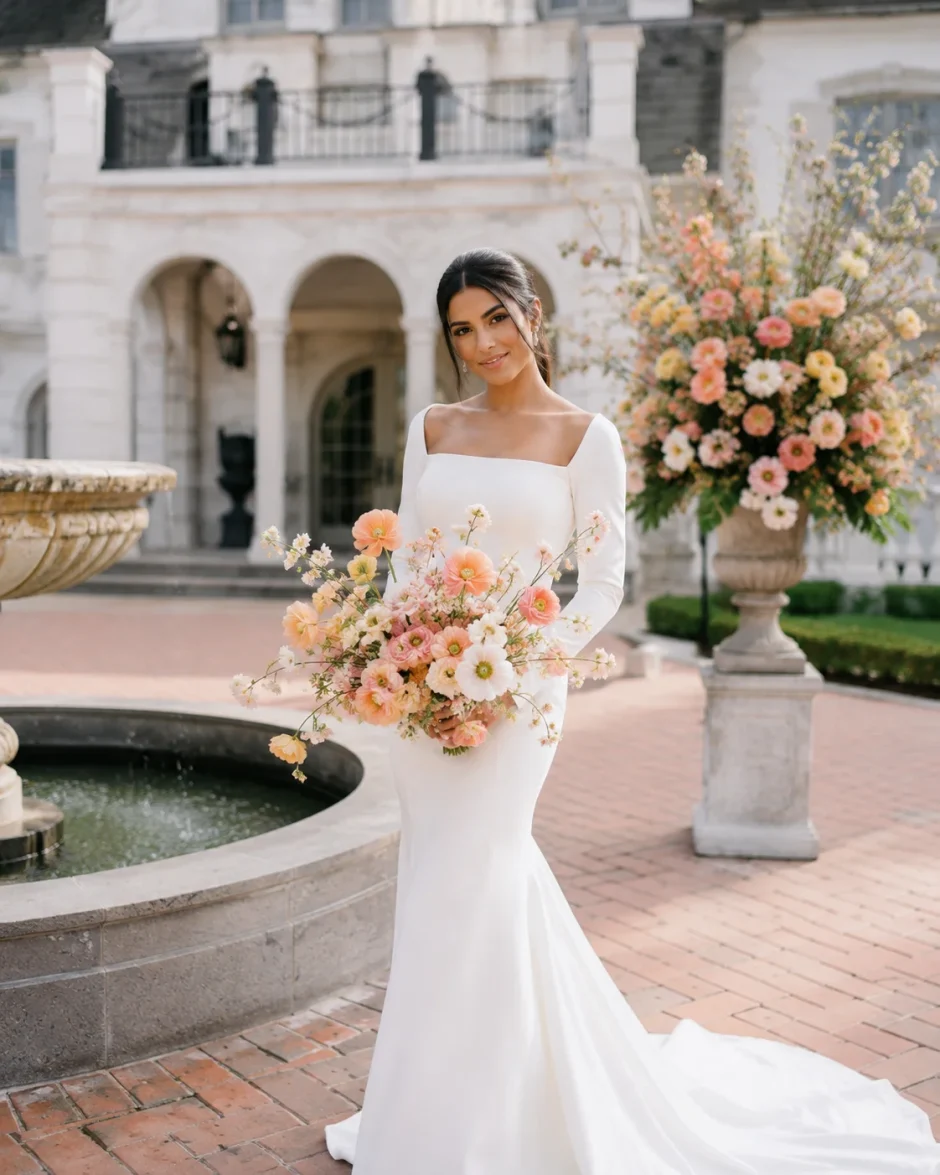
You may recognize traditional ranunculus by its tight, layered, rose-like bloom. Butterfly Ranunculus looks entirely different. Its flowers are more open, its stems branch naturally, and one stem may carry several blooms and buds. Those qualities make it beautiful, but they also leave buyers wondering how to use it, how much to order, and whether it should be treated as a focal flower or supporting texture.
To address these questions and to celebrate the versatility of this stunning flower, Whole Blossoms is introducing new Butterfly Ranunculus varieties through an exclusive relationship with a trusted farm. This guide will provide you with everything you need to know about Butterfly Ranunculus, including tips for identification, comparison with traditional ranunculus, available colors, care instructions, vase life, recommended quantities to order, and how to incorporate it into wedding arrangements.
While nature ensures that no two blooms are exactly the same, adding to their charm, you can expect some natural variation in bloom count, stem form, maturity, and color. This guide is here to help you make the most of this unique collection, whether you’re creating lush bouquets or adding delicate touches to larger floral arrangements.
In this guide, you’ll learn:
- What Butterfly Ranunculus is
- Butterfly Ranunculus vs. traditional ranunculus
- Colors and new varieties
- How to use it in wedding flowers
- What flowers pair well with it
- How to care for cut stems
- Expected vase life
- How many stems you may need
- How to order Butterfly Ranunculus in bulk
- Frequently asked questions
Part 1 – What Is Butterfly Ranunculus?
Butterfly Ranunculus is a captivating variety of ranunculus known for its open, airy flowers and unique charm. Unlike the tightly layered, round blooms traditionally associated with ranunculus, Butterfly Ranunculus presents an entirely different aesthetic, making it a favorite among floral designers and event planners seeking a natural, garden-inspired look.
Why Is It Called Butterfly Ranunculus?
The name “Butterfly Ranunculus” perfectly reflects the flower’s visual character. Its delicate, open petals seem to flutter like butterfly wings, creating an impression of lightness and movement. Each stem branches naturally, holding its flowers and buds at varying levels, further enhancing this airy, graceful appearance. The effect is almost as though the flowers are lightly dancing in the breeze, a feature that makes them stand out in arrangements.
What Does Butterfly Ranunculus Look Like?
Butterfly Ranunculus often features single or semi-double blooms with soft, delicate petals. The flowers appear open and airy, exuding a more organic, effortless beauty than the structured forms of traditional ranunculus. Tonal and color variation is a hallmark of this variety, each bloom may carry slight differences in hue, adding depth and dimension to bouquets and displays. Colors range from soft pastels to vibrant shades, offering endless possibilities for creative combinations.
How Many Blooms Grow on One Stem?
Another unique aspect of Butterfly Ranunculus is its branching stems, each adorned with multiple blooms and buds. While the exact number of flowers per stem varies, it often features several, amplifying its value and versatility for floral designs. This branching characteristic lends a full, abundant look while maintaining a light, whimsical feel.
Is Butterfly Ranunculus Delicate?
While Butterfly Ranunculus is undoubtedly delicate in appearance, it is robust enough to hold its own in a variety of arrangements, including wedding bouquets and large installations. Its natural movement and informal charm make it an excellent choice for those seeking a loosely styled or garden-inspired aesthetic.
With its distinctive characteristics, Butterfly Ranunculus remains unmistakably ranunculus while offering a completely fresh and unique take. Its fluttering petals, airy nature, and branching stems provide depth, texture, and elegance to floral designs, making it an ideal option for weddings and special events.
Part 2 – Butterfly Ranunculus vs. Traditional Ranunculus
When it comes to choosing between Butterfly Ranunculus and traditional ranunculus, understanding the differences is essential. While these flowers may share a name, they offer distinct characteristics in terms of appearance, structure, and design applications. Here’s a closer look at how these two varieties compare:
Open Blooms vs. Densely Layered Blooms
One of the most striking differences lies in the bloom form. Butterfly Ranunculus features open, airy blooms that can be single or semi-double, creating a delicate, whimsical look. Conversely, traditional ranunculus blooms are tightly clustered, densely layered, and compact, providing a rich, opulent visual. This difference directly influences how each flower is perceived in arrangements—Butterfly Ranunculus exudes a light and natural style, while traditional ranunculus projects a polished and classic aesthetic.
Branching Stems vs. One Dominant Flower
The stem structure sets these two types apart significantly. Butterfly Ranunculus produces branching stems with multiple blooms or buds, allowing for dynamic designs with natural movement and texture. On the other hand, traditional ranunculus typically features a single dominant bloom per stem, offering a more defined and concentrated focal point. This makes Butterfly Ranunculus an excellent choice for airy, editorial-style arrangements, while traditional ranunculus excels in compact, formal designs.
Which Ranunculus Adds More Movement?
If visual movement and garden-inspired texture are your goals, Butterfly Ranunculus is the ideal option. The branching stems and open bloom structure of Butterfly Ranunculus create a flowing, dynamic effect, making arrangements feel light and ethereal. Traditional ranunculus, while strikingly beautiful, offers a more static appeal, serving as a bold focal point in designs.
Which Type Works Best for DIY Flowers?
Both flower types have their merits for DIY floral projects, depending on the desired style. Butterfly Ranunculus, with its versatile branching stems, is a forgiving choice that works well in loose bouquets, bud vases, and organic centerpieces. Traditional ranunculus, meanwhile, shines in structured arrangements like bridal bouquets and boutonnieres, where distinct focal blooms are key.
Can You Use Both Types Together?
Yes, Butterfly Ranunculus and traditional ranunculus can absolutely be used together in arrangements. Pairing these two varieties allows for the best of both worlds—Butterfly Ranunculus provides texture and movement, while traditional ranunculus delivers bold, compact focal blooms. This combination can result in visually stunning and well-balanced floral designs.
| Feature | Butterfly Ranunculus | Traditional Ranunculus |
| Bloom form | Open, airy, single or semi-double | Tight, rounded, densely layered |
| Stem structure | Branching with multiple blooms or buds | Usually one dominant bloom |
| Visual effect | Movement and garden texture | Defined, compact focal bloom |
| Design role | Soft focal, bridge flower, texture | Strong focal flower |
| Best uses | Airy bouquets, loose centerpieces, bud vases | Bouquets, boutonnieres, compact arrangements |
| Overall style | Whimsical, editorial, natural | Classic, romantic, polished |
Buyer Questions Answered
- What is the difference between ranunculus and Butterfly Ranunculus? Butterfly Ranunculus has open, airy blooms and branching stems, while traditional ranunculus has tight, layered blooms on single stems.
- Which one is larger? The individual blooms of traditional ranunculus are often larger, but Butterfly Ranunculus stems feature multiple blooms.
- Which one is better for bridal bouquets? Traditional ranunculus is excellent for defining focal points in bridal bouquets, while Butterfly Ranunculus adds texture and movement.
- Which one provides more coverage? Butterfly Ranunculus provides broader visual coverage with its branching stems.
- Can I mix both in one arrangement? Yes, mixing both types creates balanced, dynamic arrangements.
Part 3 – Explore Butterfly Ranunculus Colors and New Varieties
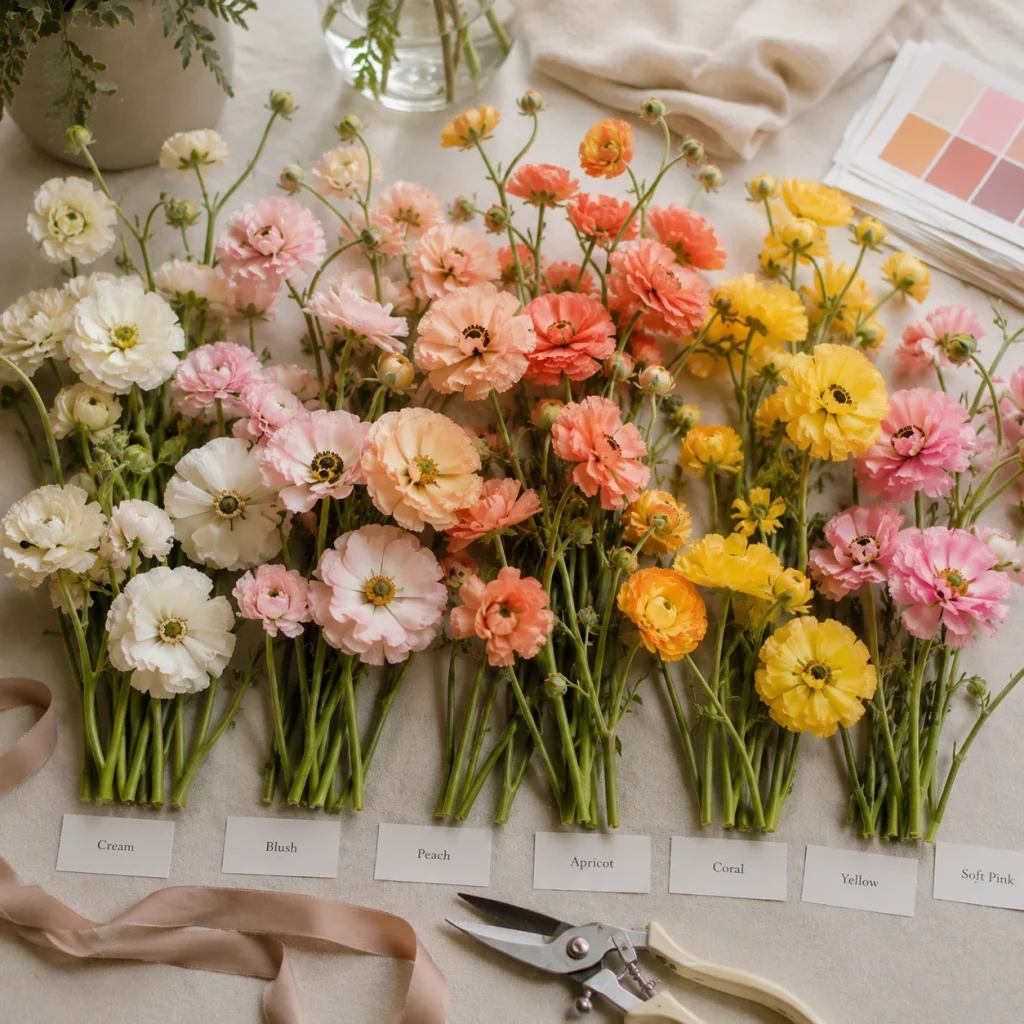
Butterfly Ranunculus offers a stunning array of colors and natural tonal variations, making it an excellent choice for creating depth and texture in garden-style floral designs. With delicate blooms that often feature unique hues within a single bunch, these flowers are versatile and captivating for any event or arrangement. Below, we break down the new collection by color range and introduce some standout varieties to help you find the perfect match for your needs.
White and Cream Butterfly Ranunculus
Butterfly Ranunculus Selene
- Main Color: Creamy white with soft ivory undertones.
- Undertones: Light touches of soft green or pale yellow in the center.
- Best Wedding Palettes: Neutral, elegant, or classic palettes.
- Best Uses: Bouquets, centerpieces, bud vases, ceremony flowers.
- Pairs Well With: White peonies, eucalyptus, and dusty miller.
Blush and Pink Butterfly Ranunculus
Butterfly Ranunculus Ariadne
- Main Color: Soft blush or pale pink tones with delicate tonal variation.
- Undertones: Hints of cream or pale peach for added warmth.
- Best Wedding Palettes: Romantic spring weddings, pastel palettes, garden celebrations.
- Best Uses: Bouquets, centerpieces, bud vases, or installations.
- Pairs Well With: Pink garden roses, astilbe, and silver dollar eucalyptus.
Butterfly Ranunculus Aphrodite
- Main Color: Vibrant rose pink.
- Undertones: Subtle coral or pale lavender accents.
- Best Wedding Palettes: Bold spring or summer weddings, jewel tones, and editorial styles.
- Best Uses: Centerpieces, statement arrangements, or aisle décor.
- Pairs Well With: Burgundy dahlias, ombre roses, and waxflower.
Peach, Coral, and Apricot Varieties
Butterfly Ranunculus Hestia
- Main Color: Warm peach with apricot and coral movement.
- Undertones: Golden yellow or soft orange resembling sunset hues.
- Best Wedding Palettes: Late-summer palettes, colorful celebrations, and relaxed outdoor weddings.
- Best Uses: Centerpieces, floral arches, and installations.
- Pairs Well With: Creamy ranunculus, peach roses, and seeded eucalyptus.
Yellow and Warm-Toned Varieties
Butterfly Ranunculus Helios
- Main Color: Soft golden yellow.
- Undertones: Delicate shades of warm buttercream or light orange.
- Best Wedding Palettes: Cheerful spring celebrations, rustic garden parties, or vibrant designs.
- Best Uses: Bouquets, tablescapes, or bud vases.
- Pairs Well With: Chamomile flowers, white lisianthus, and soft greenery.
Burgundy, Wine, and Bicolor Varieties
Butterfly Ranunculus Dionysus
- Main Color: Deep burgundy or wine tones.
- Undertones: Subtle highlights of dark green or soft gold in the centers.
- Best Wedding Palettes: Moody fall weddings, jewel tones, or vintage-inspired designs.
- Best Uses: Dramatic arrangements, statement bouquets, or grand installations.
- Pairs Well With: Deep red roses, plum-colored scabiosa, and greenery accents.
Butterfly Ranunculus Iris
- Main Color: Bicolor petals with blush or pale yellow edges and coral centers.
- Undertones: Soft, natural gradient for perfect tonal variation.
- Best Wedding Palettes: Eclectic spring weddings or garden-inspired designs.
- Best Uses: Bouquets, bud vases, or floral sculptures.
- Pairs Well With: Cream-colored sprays, pink stock, and ivy foliage.
Natural Variation in Butterfly Ranunculus
One of the unique traits of Butterfly Ranunculus is their natural tonal variation, which creates a dynamic and textured appearance. Each bloom can showcase subtle gradient shifts, making every stem feel one-of-a-kind. This variation is especially valuable for designers aiming to craft lush, layered arrangements that feel organic and full of life. Whether you’re planning a soft, romantic palette or a bold, vibrant wedding design, Butterfly Ranunculus can elevate the look with its natural beauty.
Looking to mix several colors? Combining different shades of Butterfly Ranunculus creates breathtaking, harmonious designs that balance color and texture effortlessly. Explore our full collection today and find the perfect colors for your next event or project!
Part 4 – How to Use Butterfly Ranunculus in Wedding Flowers
Butterfly Ranunculus is a versatile flower that can serve various roles in wedding floral design. From adding a whimsical touch to bouquets to creating dynamic movement in large installations, this bloom is a favorite among designers for its ability to adapt to different styles and applications. Whether you’re envisioning lush, romantic arrangements or soft, garden-inspired designs, Butterfly Ranunculus offers endless possibilities.
Butterfly Ranunculus Bridal Bouquets
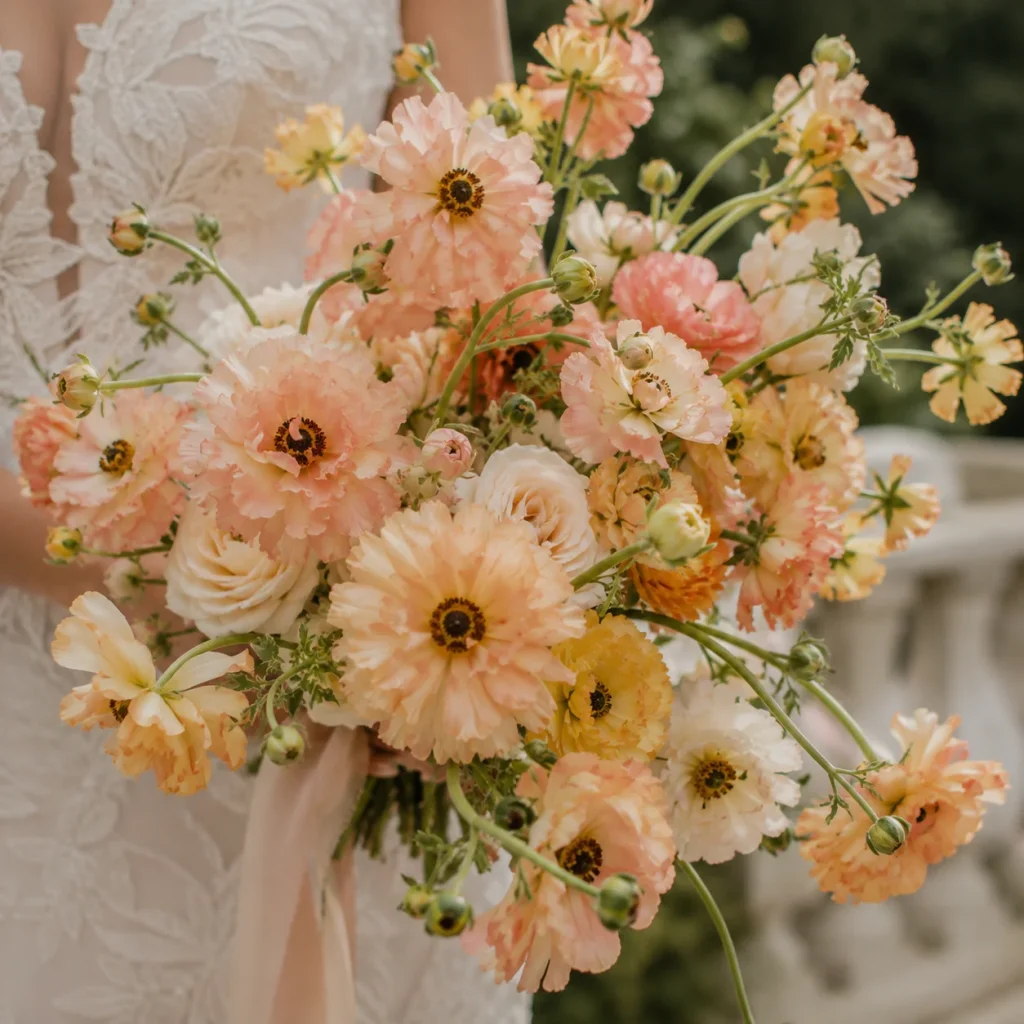
When used in bridal bouquets, Butterfly Ranunculus can act as a soft focal flower or as a textural accent that ties the arrangement together. For instance, mixing five or six stems of Butterfly Ranunculus with larger blooms like roses or peonies creates a layered, airy look that feels both polished and natural. Their delicate, branching stems add movement, bringing lightness and visual interest to the bouquet. Choose colors to complement your theme—it could be soft pastel shades for a romantic palette or boldly saturated hues for a striking, modern style.
Garden-Style Wedding Centerpieces
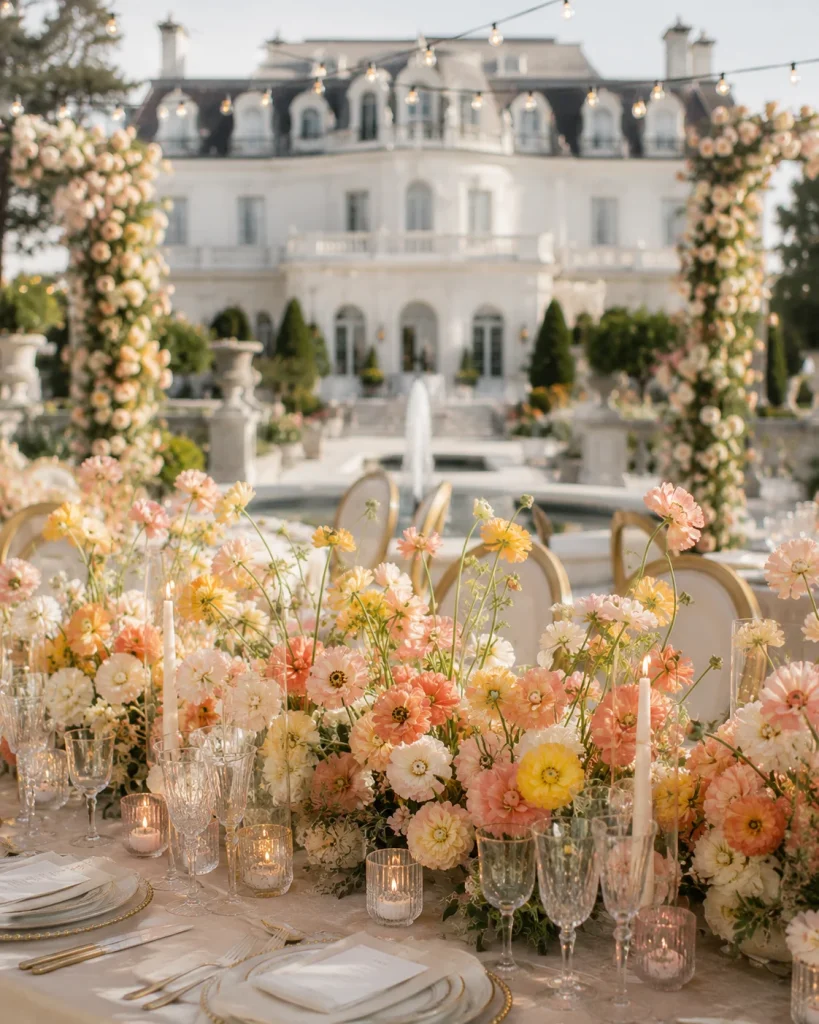
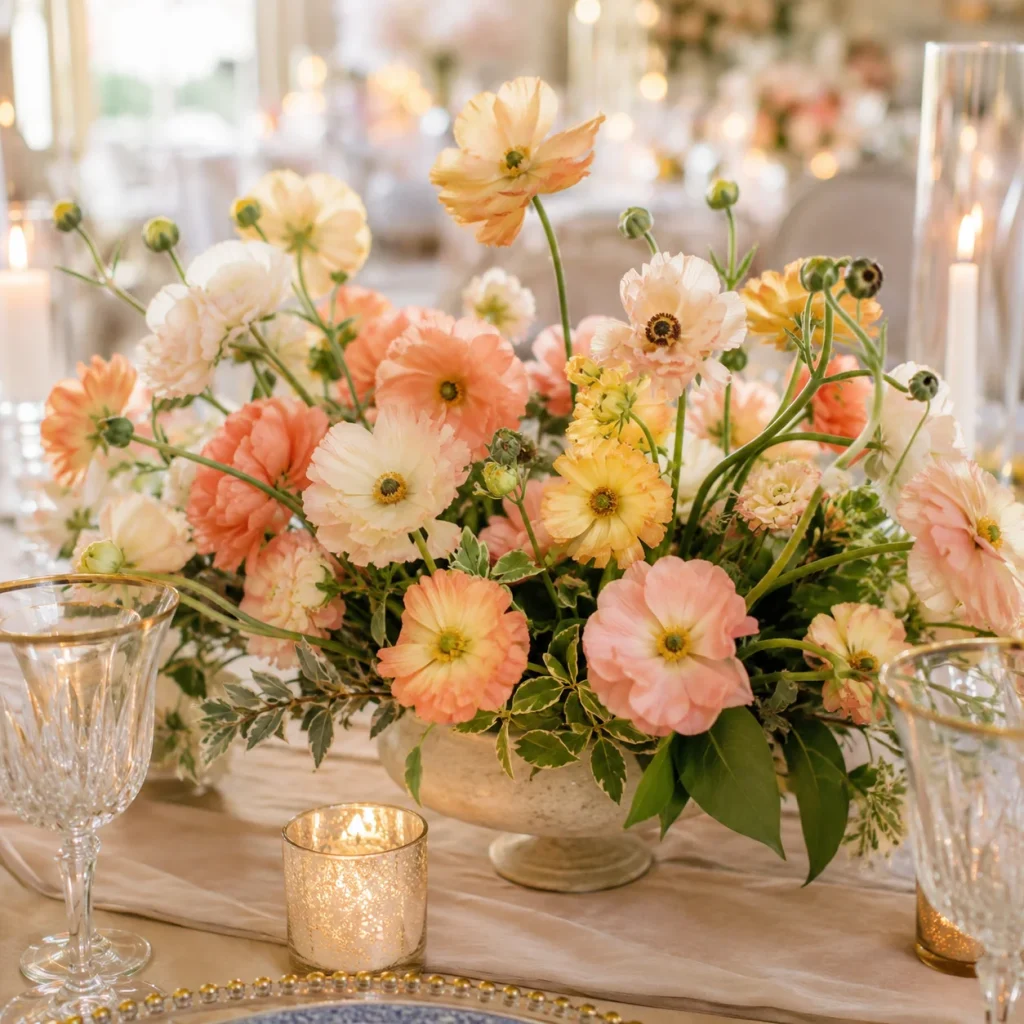
Butterfly Ranunculus shines in loose, garden-style centerpieces, where its light, dynamic stems can create depth and fluidity. A grouping of 10-12 stems works beautifully in a low vase centerpiece, especially when paired with larger focal blooms such as dahlias or garden roses. With their distinctive open blooms, Butterfly Ranunculus bridges the gap between focal flowers and smaller filler blossoms, providing a harmonious transition that feels effortless. Their natural elegance adds dimension to table arrangements, making these flowers an excellent choice for welcome tables, sweetheart tables, or reception dining setups.
Bud Vases and Small Arrangements
For minimalist or intimate settings, a single stem of Butterfly Ranunculus in a bud vase can make an understated yet impactful statement. Their branching nature means one stem can provide multiple blooms, creating visual interest without needing additional flowers. This simplicity lends itself well to styling casual florals for cocktail tables, guest seating areas, or decorative accents throughout the venue. Choose delicate colors to keep the design subtle, or go bold with bright shades for a playful pop.
Ceremony Flowers and Installations
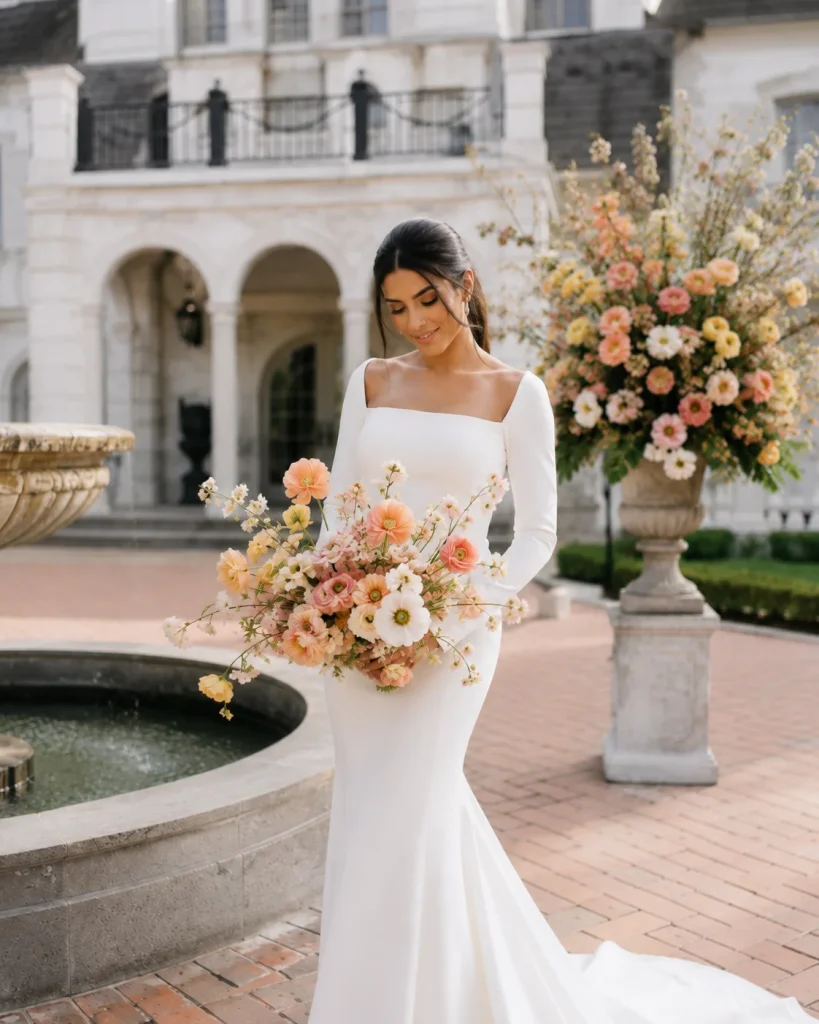
Butterfly Ranunculus is ideal for adding movement and texture to ceremony meadows, floral arches, or large-scale installations. Their light blooms effortlessly enhance loose, natural arrangements, while their thin stems are easy to weave into floral foam or chicken wire frameworks. Use them sparingly for a delicate touch or group several stems as a soft focal point within an installation. Pair them with complementary greenery and focal flowers to create a balanced yet organic design for altar backdrops or entryway florals.
Is Butterfly Ranunculus a Focal or Filler Flower?
One of the standout features of Butterfly Ranunculus is its adaptability. It can function as a soft focal flower, a bridge between larger focal blooms, or even a textural element depending on the design. A few stems added to a bouquet or installation bring subtle movement, while a larger grouping can take center stage in an airy, garden-style arrangement. The role of Butterfly Ranunculus ultimately depends on quantity, placement, and the surrounding flowers, making it a must-have for versatile wedding design.
Suggested Uses and Applications
- Bridal bouquets: Combine with roses, peonies, or lisianthus for a romantic, layered look.
- Bridesmaid bouquets: Use two or three stems with greenery for light, airy arrangements.
- Centerpieces: Add depth and texture to loose, garden-style designs for reception tables.
- Bud vases: Showcase one elegant stem for minimalist decor on cocktail or side tables.
- Ceremony installations: Line aisles or fill floral arches with their whimsical, open blooms.
- Editorial photography: Incorporate into flat lays or styled shoots for a soft, organic aesthetic.
Butterfly Ranunculus can be used as a soft focal, supporting flower, or textural bridge. A few branching stems add movement between larger focal blooms, while a fuller grouping can become the main feature in an airy bouquet or garden-style centerpiece.
With its versatility and unmistakable charm, Butterfly Ranunculus is an essential addition to any wedding-flower repertoire. Explore our collection today to find the perfect varieties for your next event design.
Part 5 – What Flowers Pair Well With Butterfly Ranunculus?
Butterfly Ranunculus is an exquisite flower that shines in countless floral designs, but its true charm emerges when paired with complementary blooms and greenery. Whether you’re curating an elegant wedding arrangement or a bold editorial masterpiece, adding supporting flowers and textures will enhance Butterfly Ranunculus’ natural beauty. Below, explore pairing suggestions by design style to help you build a complete and breathtaking order.
Pair Butterfly Ranunculus With Garden Roses
For romantic and timeless arrangements, garden roses are the ideal complement to Butterfly Ranunculus. Their abundant petals and lush form provide a striking contrast to the delicate, fluttering nature of Butterfly Ranunculus petals. Together, they create a dreamy, soft aesthetic perfect for wedding bouquets or table centerpieces. Shop Garden Roses to add a luxurious foundation to your design.
Add Spray Roses for Small-Bloom Texture
Spray roses, with their miniature clusters, bring texture and depth to floral arrangements. Pairing them with Butterfly Ranunculus enhances movement in your designs while maintaining a cohesive look. Spray roses are particularly well-suited for romantic or soft garden palettes, making them both practical and beautiful additions. Browse Spray Roses to find ideal hues for your palette.
Use Greenery to Support Its Branching Shape
The versatile, branching stems of Butterfly Ranunculus are perfectly complemented by soft, airy greenery. Consider using eucalyptus for a flowing, organic feel or Italian ruscus for a more structured, elegant design. Greenery not only frames the delicate blooms but also adds volume and texture, keeping your arrangements balanced. Shop Eucalyptus, Italian Ruscus, and more Bulk Greenery options to complete your designs.
Build a Light and Airy Wedding Palette
For an effortlessly romantic style, combine Butterfly Ranunculus with baby’s breath, white roses, cream spray roses, and pale eucalyptus. These elements create an ethereal, light-filled arrangement that’s perfect for weddings. The interplay of soft whites and cream tones emphasizes the delicate charm of Butterfly Ranunculus and brings a graceful touch to any event. Explore Baby’s Breath and White Roses to complement this look.
Combine Several Butterfly Ranunculus Colors
For colorful editorial designs, mix multiple Butterfly Ranunculus varieties with bold blooms like dahlias, anemones, or coral roses. Snapdragons and contrasting greenery can add structure and excitement to these vibrant arrangements. This dynamic pairing highlights the versatility of Butterfly Ranunculus and creates a show-stopping visual experience. Shop Wholesale Roses and explore Anemones for vivid options.
Butterfly Ranunculus truly excels as the hero flower while harmonizing beautifully with roses, greenery, and complementary blooms. No matter the design style, these thoughtful pairings ensure your creations wow every client. Explore our Wedding Flowers collection for all your event design needs!
Part 6 – How to Care for Cut Butterfly Ranunculus
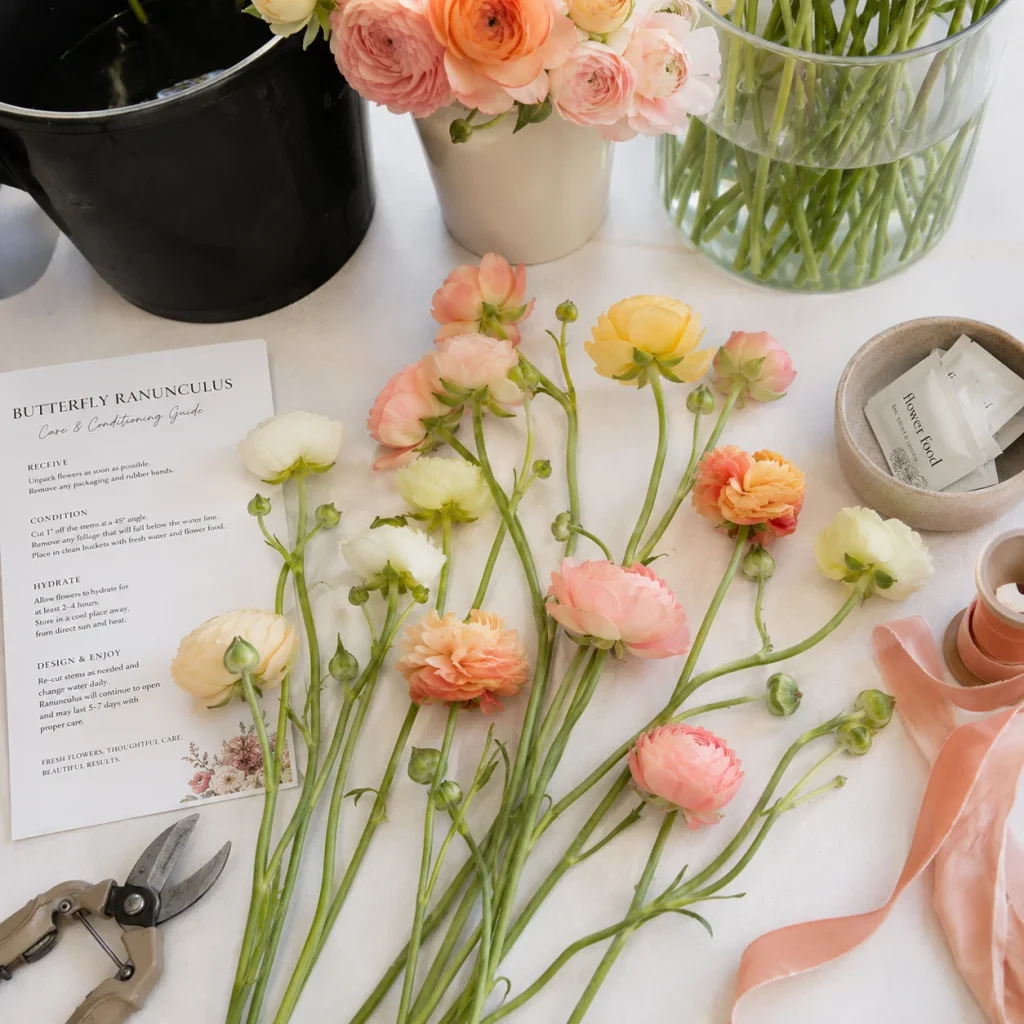
Ensuring your Butterfly Ranunculus stays fresh and beautiful begins with proper care. These delicate, branching stems require mindful handling and proper preparation. Follow these step-by-step instructions to reduce anxiety about caring for these exquisite blooms and keep them at their best.
- Open the shipping box carefully. Avoid using sharp objects that might damage the flowers or stems inside.
- Remove protective packaging gently. Take care not to pull on the delicate branching stems to prevent breakage.
- Prepare clean buckets or vessels. Fill them with fresh, cool water and add flower food according to the package instructions.
- Remove excess foliage. Strip away any leaves that would sit below the waterline to prevent bacterial growth.
- Trim the stems. Using clean, sharp clippers, trim approximately ½ inch from the bottom of each stem at a diagonal angle.
- Place the stems in water promptly. Hydration is key—do not leave the stems dry for extended periods.
- Keep flowers in a cool room. Avoid exposing them to direct sunlight, heaters, or drafts, as these can accelerate wilting.
- Refresh water and clean vessels regularly. Changing the water every couple of days ensures the blooms remain hydrated and healthy.
- Remove aging blooms. Trim off any aging or wilted flowers to allow healthy buds to take center stage.
- Be mindful of stem curves. Butterfly Ranunculus often features natural, graceful curves that are part of its charm. Do not force the stems to straighten, as this can cause damage.
Important Warning
Handle the Branching Stems Gently
Butterfly Ranunculus thrives on its delicate beauty, with fine branching stems and blooms at varying heights. Be cautious not to crush the bunch, force it into a tight vessel, or pull the stems apart too quickly. Using a sufficiently large vessel and allowing ample space for each bloom will help maintain the flowers’ unique garden-like character.
Additional Care Tips
- Use a vase or bucket that accommodates naturally curved stems.
- Do not overcrowd the flowers in one container.
- Allow the blooms to hydrate for several hours—or ideally overnight—before beginning your arrangements.
- Refer to any variety-specific instructions included with your order for optimal results.
By following these care guidelines, you can ensure the Butterfly Ranunculus remains stunning and vibrant, creating a lasting impression in any design.
Part 7 – How Long Does Butterfly Ranunculus Last?
Butterfly Ranunculus is a popular choice for floral designs due to its delicate beauty and intricate blooms. When it arrives fresh and receives proper care, this flower may last approximately one week or longer. However, the actual vase life can vary, as it depends on several factors, including variety, harvest stage, transportation time, room temperature, hydration, and stem handling.
To ensure the best results, it is essential to follow the care instructions provided with your Whole Blossoms order. Proper care can significantly impact the longevity and appearance of Butterfly Ranunculus. Start by sanitizing your vase or bucket to create a clean and bacteria-free environment. Always use fresh water and change it regularly. Trim the stems at an angle with clean, sharp tools, and hydrate the flowers in a cool, shaded area.
Other tips to extend vase life include keeping the arrangements away from direct sunlight and ripening fruit, as ethylene gas from fruit can hasten floral decline. Avoid excessively handling the open petals to preserve their delicate texture. Additionally, remove individual blooms that appear to be declining to maintain the overall freshness of your arrangement. For closed buds, give them time to develop in proper conditions; some may open and add further beauty to your display.
For buyers wondering when to arrange Butterfly Ranunculus before an event, it is recommended to do so within a day or two after proper hydration, following the initial care guidelines. While Butterfly Ranunculus may not have the same vase life as regular ranunculus, its unique charm and versatility make it a standout choice for any occasion.
Part 8 – How Much Butterfly Ranunculus Do You Need?
Determining the right number of Butterfly Ranunculus stems for your arrangements is an essential step in planning your floral designs. The quantity you need depends on several factors, including the number of arrangements, vessel size, bouquet size, your preference for fullness, and whether Butterfly Ranunculus will serve as the main flower or a supporting accent. Additionally, the variety’s branching habit and the average number of blooms per stem contribute to how much you’ll need, as each stem may vary slightly in its coverage.
Start With an Arrangement List
To ensure you’re ordering the correct amount, begin by creating a list of every arrangement you plan to make. From centerpieces to bridal bouquets to bud vases, having a clear vision of the arrangements you want will enable better calculations. Once you have this list, you can estimate the number of stems required for each arrangement, and then add an allowance for variations or unexpected needs.
Stem Counts for Bridal Bouquets
For a bridesmaid bouquet, plan for 3–6 stems of Butterfly Ranunculus if you’re using them as accents alongside other flowers. A bridal bouquet, which is typically larger, may require 5–10 stems depending on the size of the bouquet and the flower recipe you choose. Keep in mind that a lush, fuller look will call for a greater number of stems.
Stem Counts for Centerpieces and Bud Vases
Centerpieces vary greatly depending on their size and design goals. A medium centerpiece often incorporates 5–10 stems of Butterfly Ranunculus, complemented by other flowers like roses or greenery. For bud vases, the design is much simpler; 1–2 stems per vase usually suffice for a delicate, minimalist look. If you want the arrangements to highlight Butterfly Ranunculus as the focal flower, you may need to increase your stem count according to the vessel’s width and the desired fullness.
Planning for Natural Variation
When planning your order, always account for natural variation in stems. Butterfly Ranunculus often has branching stems, which can vary in the number and size of blooms. Additionally, unexpected design changes or a preference for lusher arrangements might increase your needs. For ten tables, for example, a medium centerpiece with 5–10 stems would suggest a base quantity of 50–100 stems. Adding 10–15% as a buffer ensures you’ll have enough to accommodate any changes or adjustments.
When to Order Extra Stems
If Butterfly Ranunculus is the primary flower in your arrangements, ordering extra stems is highly recommended. The uniqueness of each stem—along with potential variations in bloom size or branching—makes it helpful to have additional flowers on hand to achieve the desired look. Furthermore, having extras ensures you’re prepared for any last-minute expansions or replacements.
Suggested Starting Ranges
Here are some planning estimates to guide your quantity decisions:
- Bud vase: 1–2 stems
- Small arrangement: 3–5 stems with supporting flowers
- Bridesmaid bouquet: 3–6 stems as accents
- Bridal bouquet: 5–10 stems, depending on size and flower recipe
- Medium centerpiece: 5–10 stems with roses, greenery, or other flowers
- Butterfly-Ranunculus-forward arrangement: Increase quantity based on vessel width and desired fullness
- Large ceremony design: Calculate stems needed by section rather than relying on a single estimate
Suggested Formula
To simplify your calculations, use this formula:
Number of arrangements × estimated stems per arrangement = base quantity
Once you’ve arrived at a base quantity, add a reasonable allowance for natural variation, design changes, or unexpected adjustments. Careful planning helps ensure your arrangements will have the beauty and charm you’re aiming for, and a small buffer of extra stems allows for flexibility. With Butterfly Ranunculus, you’ll be prepared to create unforgettable designs with confidence.
Part 9 – How to Order Butterfly Ranunculus in Bulk
Ordering Butterfly Ranunculus in bulk requires careful planning to ensure your floral designs exude elegance and charm. Below are essential steps to guide your preparation and purchasing process.
Choose Varieties by Color and Event Style
Start by selecting a color palette that complements your event’s theme and style. Butterfly Ranunculus comes in a variety of stunning shades—soft pastels, vibrant pinks, creamy whites, or golden yellows—allowing you to create cohesive designs for weddings, events, and arrangements. Reviewing the available varieties early ensures you can match your selection to your desired aesthetic.
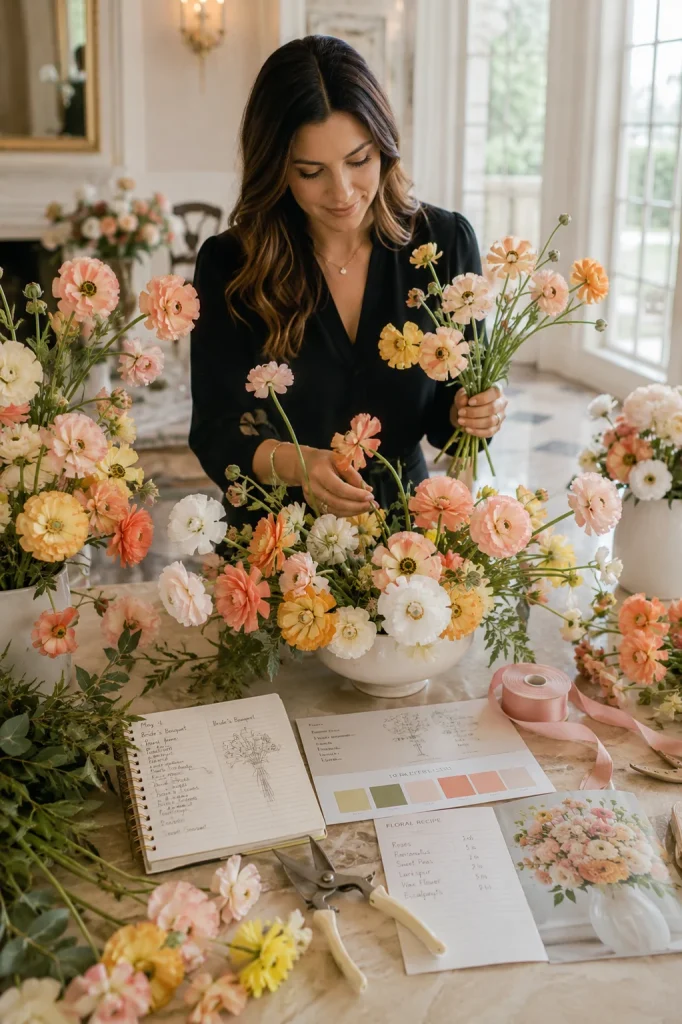
Calculate Your Flower Recipe Before Ordering
List the number of bouquets, centerpieces, and décor arrangements you plan to create. For each design, note how many stems of Butterfly Ranunculus you’ll need. Use standard formulas, like the one in this guide, to calculate a base quantity. Be sure to add a buffer for any natural bloom or size variations. This method guarantees you’ll have just enough stems without over-ordering.
Order Supporting Flowers at the Same Time
Butterfly Ranunculus pairs beautifully with complementary flowers and greenery such as roses, stock, eucalyptus, or hydrangea. Ordering all your flowers together saves time and ensures a harmonious selection that works well in your designs.
Prepare for Delivery and Hydration
Plan for your flowers’ arrival by gathering the necessary supplies. Buckets, sharp clippers, room-temperature water, and quality flower food are essential for proper hydration. When your Butterfly Ranunculus arrives, cut stems at an angle, place them in fresh water, and allow them to rehydrate for at least six hours before designing.
Shop the New Butterfly Ranunculus Collection
Whole Blossoms is expanding its Butterfly Ranunculus selection through a new farm partner, giving customers access to more colors and distinctive varieties for weddings, events, and professional floral designs. Explore these unique options to elevate your creations with refined beauty and unmatched variety.
Whether you’re a floral professional or a DIY bride, proper preparation ensures the success of your designs. Visit Whole Blossoms to shop our Butterfly Ranunculus collection. Plan your order today to secure the season’s most exquisite blooms for your unforgettable arrangements!
FAQ Section
What is Butterfly Ranunculus?
Butterfly Ranunculus is an elegant and airy variety of ranunculus, distinguished by its open single or semi-double flowers and branching stems adorned with multiple blooms or buds. Its structure creates a flowing, natural garden-style look, in contrast to the densely layered, compact appearance of traditional ranunculus. The light, delicate blooms add movement and ethereal charm to any arrangement.
What is the difference between Butterfly Ranunculus and regular ranunculus?
The key differences lie in their structure and design versatility. Butterfly Ranunculus features open petals and branching stems with several flowers or buds, making it perfect for adding movement and texture. Regular ranunculus, on the other hand, showcases tightly layered, rounded blooms on single stems, ideal for creating strong and defined focal points in arrangements.
Is Butterfly Ranunculus a focal or filler flower?
Butterfly Ranunculus is multifaceted—it can play multiple roles in floral design. When used sparingly, it bridges larger focal flowers and contributes graceful movement to arrangements. Alternatively, when grouped together, it can act as the centerpiece of a bridal bouquet, bud-vase cluster, or garden-inspired centerpiece, offering both style and softness.
How long does Butterfly Ranunculus last?
With proper care, Butterfly Ranunculus typically lasts about one week or longer. Its vase life can vary based on factors such as specific variety, harvest stage, shipping conditions, temperature, hydration, and handling. To maximize its lifespan, keep the flowers in clean water, use sanitized vessels, maintain a cool environment, and trim stems regularly.
How do you care for Butterfly Ranunculus?
Upon receiving Butterfly Ranunculus, handle the flowers gently to avoid damaging their delicate stems. Remove any foliage below the waterline, trim the stems with clean, sharp clippers, and immerse them in fresh water mixed with flower food. Maintain cool conditions, regularly change the water, and avoid overpacking stems to allow their natural shapes and curves to shine.
Can DIY brides use Butterfly Ranunculus?
Absolutely! Butterfly Ranunculus is a wonderful choice for DIY brides seeking to create stunning, garden-style bouquets or centerpieces. To ensure success, prepare clean buckets and tools before the flowers arrive. Allow the stems to hydrate properly before arranging, and work with their natural curves to design arrangements that feel organic and effortless. With a bit of care, Butterfly Ranunculus can elevate any DIY floral project.
Conclusion
Butterfly Ranunculus is a truly versatile flower, offering airy, delicate blooms, naturally branching stems, and multiple buds that bring movement and texture to any floral arrangement. With its wide range of colors and adaptability in design, this flower can seamlessly transition between serving as a focal point or as a filler, depending on how it’s styled and the materials it’s paired with. Whether you’re creating a lush bouquet or a minimalist bud vase, Butterfly Ranunculus shines in countless roles, making it an invaluable addition to any floral project.
Explore the expanded collection of Butterfly Ranunculus at Whole Blossoms, where you’ll find even more vibrant colors and design possibilities. Perfect for brides, florists, and event designers, these stunning flowers are ideal for crafting custom bouquets, centerpieces, and estate-style decorations. Visit Whole Blossoms today and bring your vision to life with this exceptional bloom!