

 by
by 
How Many Flowers Do I Need for My Wedding? (Calculator Breakdown)
Planning the perfect wedding involves countless details, and deciding how many flowers you need is one of the most important. The quantity of flowers required depends on factors like the number of guests, the types of arrangements you envision, the size of the blooms, and your overall design style. From large, cascading bouquets to simple centerpieces, these elements will define the floral needs for your big day. Most weddings typically require anywhere from 800 to 2,500 stems, depending on the scale and style.
By determining your floral quantities early, you can gain clarity, stick to your budget, and take advantage of potential savings through bulk buying. Whether you’re going the DIY route with friends and family, working with an event planner, or ordering wholesale, timing is key to ensure your flowers are at their freshest on your wedding day. Proper planning simplifies the process and helps create breathtaking floral designs that match your vision and budget.
The number of flowers you need for your wedding depends on guest count, arrangement types, bloom size, and design style. Most weddings require between 800–2,500 stems.
Part 1 – Why Knowing Your Stem Count Matters for Budget & Logistics
Understanding your stem count is essential for managing both your wedding budget and logistics. Flowers are a significant part of most ceremonies and receptions, contributing to the overall atmosphere, aesthetic, and theme. Carefully planning your flower needs ensures you achieve your desired designs without overspending or over-ordering.
Why do weddings need so many flowers?
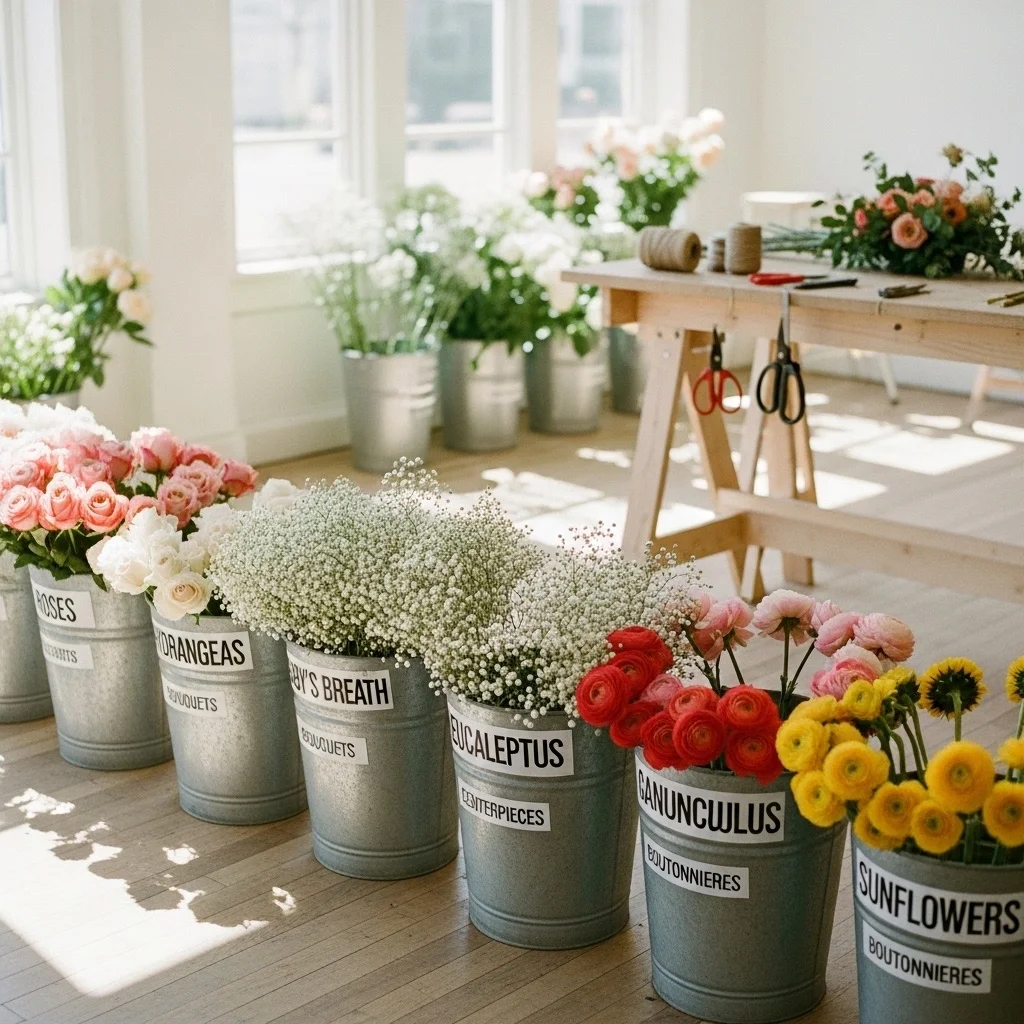
Weddings require a large quantity of flowers due to the numerous arrangements used throughout the event. Centerpieces, which adorn reception tables, often require multiple stems per arrangement to create the desired fullness and impact. Bouquets for the bride and bridesmaids typically feature a mix of focal flowers, fillers, and greenery to achieve a balanced look. Boutonnières for the groom and groomsmen, while smaller in size, add elegance and require precise attention to detail. Additionally, floral backdrops or arches used at the ceremony and reception often involve hundreds of stems to create a lush, cohesive design. These elements come together to enhance the ambiance and make the day unforgettable.
How does flower quantity affect cost?
The number of flowers you need directly impacts your wedding budget. Higher quantities lead to increased costs, especially if you’re working with labor-intensive designs that require professional florists to arrange. Labor costs rise with intricate arrangements, as florists must carefully prepare, condition, and assemble each piece. On the other hand, purchasing flowers in bulk from wholesale suppliers can help reduce overall expenses. Wholesale flowers are particularly budget-friendly and offer flexibility, especially when matching specific colors or ensuring freshness for your big day. However, it’s crucial to coordinate the timing of bulk purchases to guarantee the flowers remain vibrant.
What types of flowers impact quantities?
Different flower types play unique roles in arrangements, influencing the overall stem count. Focal flowers, such as Roses, Peonies, Calla Lilies, Orchids, and Dahlias, are typically the centerpiece of designs and require fewer stems due to their larger size and visual prominence. Fillers, such as Hydrangeas, Ranunculus, and Carnations, help add volume and texture, often allowing fewer focal flowers to be used. Greenery varieties, like Eucalyptus, Ruscus, and preserved foliage, provide dimension and balance to arrangements, stretching your floral budget while creating lush, full designs. Knowing the purpose of each type of flower helps you plan quantities effectively and maintain consistency across all arrangements.

Part 2 – The Complete Wedding Flower Calculator (Stems Per Arrangement)
Planning your wedding flowers can feel overwhelming, but breaking it down by arrangement type helps you estimate quantities effectively. Use this guide to calculate how many stems you need per arrangement for stunning, balanced designs.
Bridal Bouquet — How Many Flowers Do You Need?
- Standard: 24–36 stems
- Garden style: 36–50 stems
Keep in mind that bloom size impacts the count—for instance, large blooms like Hydrangeas can count as 3–4 stems due to their volume.
Bridesmaid Bouquets — How Many Stems Per Bouquet?
- Standard: 12–24 stems
Popular combinations include:
- Roses + Baby’s Breath + Eucalyptus
- Ranunculus + Carnations + Greenery
Boutonnières & Corsages — How Many Stems Each?
- Boutonnière: 1–2 blooms + greenery
- Corsage: 3–5 mini blooms (e.g., Spray Roses, Ranunculus)
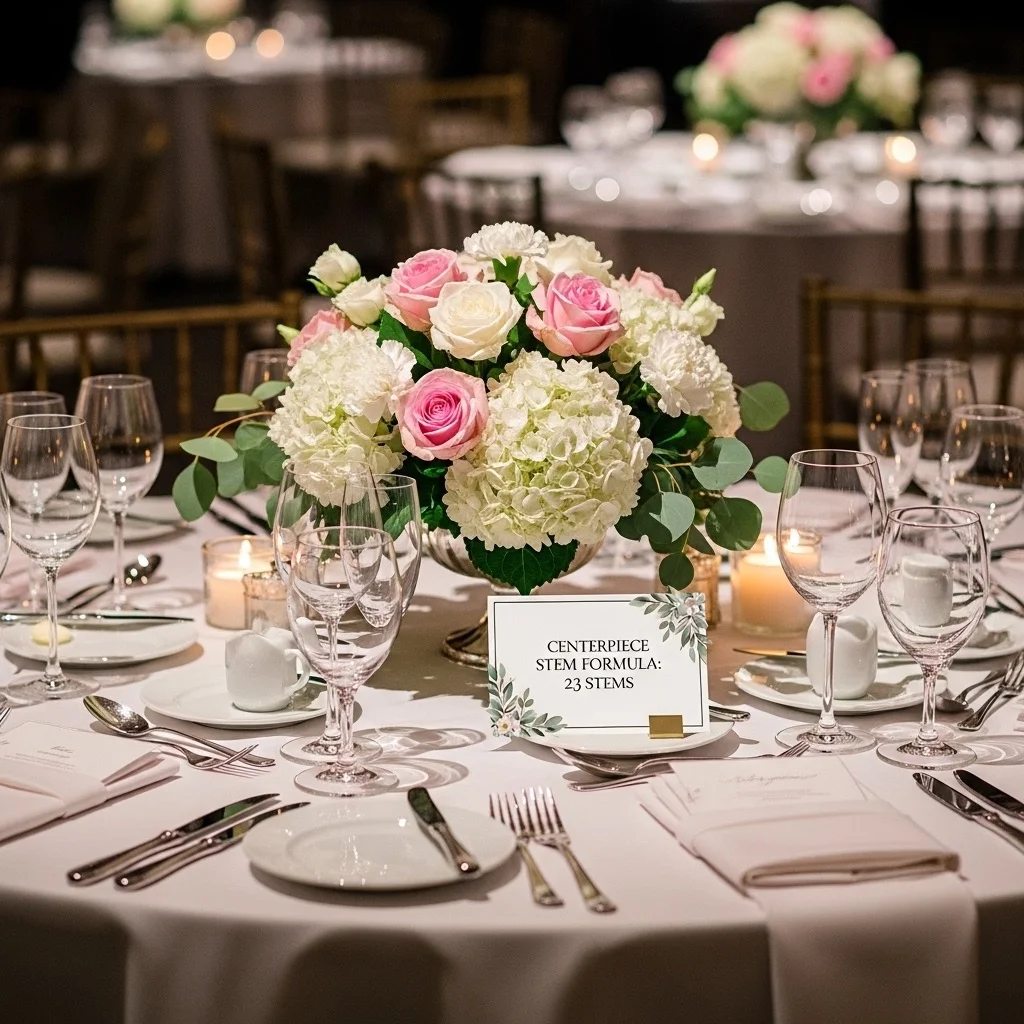
Centerpieces — How Many Stems Per Table?
The number of stems depends on your desired design level:
- Minimalist: 12–18 stems
- Full: 24–36 stems
- Lush: 36–50 stems
Ceremony Aisle Flowers — Stems Per Marker or Arrangement
- Ground markers: 15–25 stems each
- Pew/aisle ties: 6–8 stems each
Arbor/Arch Flowers — How Many Stems for Backdrops?
For creating a stunning floral backdrop:
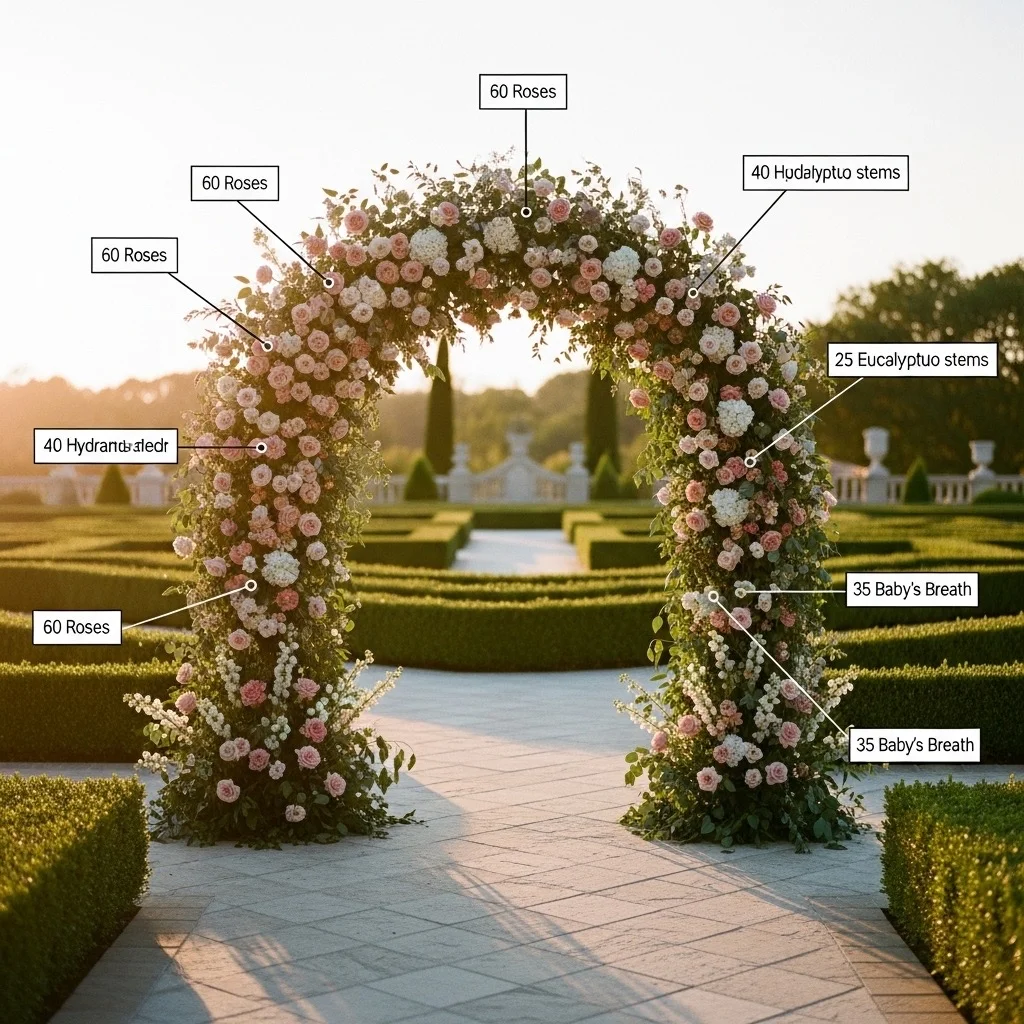
- Half-arch: 150–300 stems
- Full arch: 300–500 stems
Include approximately 30–50% greenery in these arrangements to add depth and texture.
Snippet Opportunity
| Arrangement Type | Stems Needed |
| Bridal Bouquet | 24–36 (Standard), 36–50 (Garden Style) |
| Bridesmaid Bouquet | 12–24 |
| Boutonnière | 1–2 blooms + greenery |
| Corsage | 3–5 mini blooms |
| Minimalist Centerpiece | 12–18 |
| Full Centerpiece | 24–36 |
| Lush Centerpiece | 36–50 |
| Ground Markers | 15–25 |
| Pew/Aisle Ties | 6–8 |
| Half-arch | 150–300 |
| Full Arch | 300–500 |
This calculator ensures your floral arrangements are both visually pleasing and well-organized for your big day!
Part 3 – Guest Count Calculator — How Flower Quantities Scale
When planning floral arrangements for a wedding, the number of expected guests plays a significant role in determining how many stems and centerpieces you’ll need. Below, we’ve broken down recommendations for small, medium, and large weddings based on guest count, including insights into centerpiece quantities, total stem estimates, and flower arrangement ratios to ensure a stunning and cohesive display.
Small Wedding (≤50 guests)
If you’re hosting an intimate celebration, plan on using 6–8 centerpieces to complement the setting. For this scale, expect to use an estimated total of 600–900 stems. The arrangements should follow a focal-to-filler-to-greenery ratio of 35% focal flowers, 40% filler flowers, and 25% greenery to create a balanced yet elegant appearance. Blooms such as hydrangeas (known for their large size) can help achieve a fuller look with fewer flowers, while smaller flowers like spray roses or mini daisies may require more stems to achieve the same visual impact.
Medium Wedding (50–150 guests)
For mid-sized weddings, 10–18 centerpieces are generally recommended to accommodate the additional tables and space. This would translate to a total of 1,200–2,000 stems. To maintain visual harmony, the same 35:40:25 ratio for focal flowers, filler flowers, and greenery can be applied. With medium-sized blooms like dahlias or sunflowers, you may opt for fewer filler flowers thanks to their ability to command attention, while smaller blooms can add texture and depth. Adjusting based on bloom size ensures that each arrangement is lush without excess waste.
Large Wedding (150–300+ guests)
For grand celebrations with 18–30+ tables, your floral arrangements should match the scale and grandeur of the event. Plan for a total of 2,000–3,500+ stems, with 18–30+ centerpieces, depending on the layout. Utilize the standard focal-to-filler-to-greenery ratio (35:40:25) while considering the venue size and style. Larger blooms like hydrangeas and sunflowers can reduce overall stem requirements, as they take up more space in arrangements. Alternatively, for a more intricate look, increase the quantity of smaller filler flowers. Personalizing the bloom selection based on size and structure will ensure your arrangements are bold and beautiful for such a monumental occasion.
By scaling flower quantities to the size of your wedding, you can create cohesive visuals that enhance the atmosphere and elevate the celebration without over- or under-utilizing resources.
Part 4 – Best Flowers to Buy for Bulk Efficiency (By Category)
When planning a wedding, sourcing flowers in bulk is a cost-effective solution for creating stunning arrangements without stretching your budget. By focusing on categories such as focal flowers, filler flowers, and greenery, you can achieve the perfect balance of impact, volume, and structure.
Focal Flowers (Biggest Impact Per Stem)
Focal flowers are the stars of any arrangement, offering bold, eye-catching beauty that anchors the overall design. Among the best options are:
- Roses: Available year-round in a vast array of colors, roses work beautifully across wedding styles, from classic to rustic.
- Peonies: Perfect for romantic and garden-inspired weddings, peonies add lush, delicate layers with their full blooms.
- Calla Lilies: Sleek and contemporary, they’re ideal for minimalist or modern wedding themes.
- Orchids: Known for their exotic elegance, orchids bring a luxurious feel to arrangements, complementing tropical or formal styles.
- Dahlias: These large, intricate flowers are excellent for fall weddings, where bold, warm palettes shine.
Filler Flowers (Volume + Texture)
Filler flowers lend volume and texture to arrangements, creating a cohesive look without overwhelming the focal blooms. Here’s what to consider:
- Hydrangeas: These are bulk-friendly and count as multi-stemmed fillers, providing abundant coverage with minimal stems.
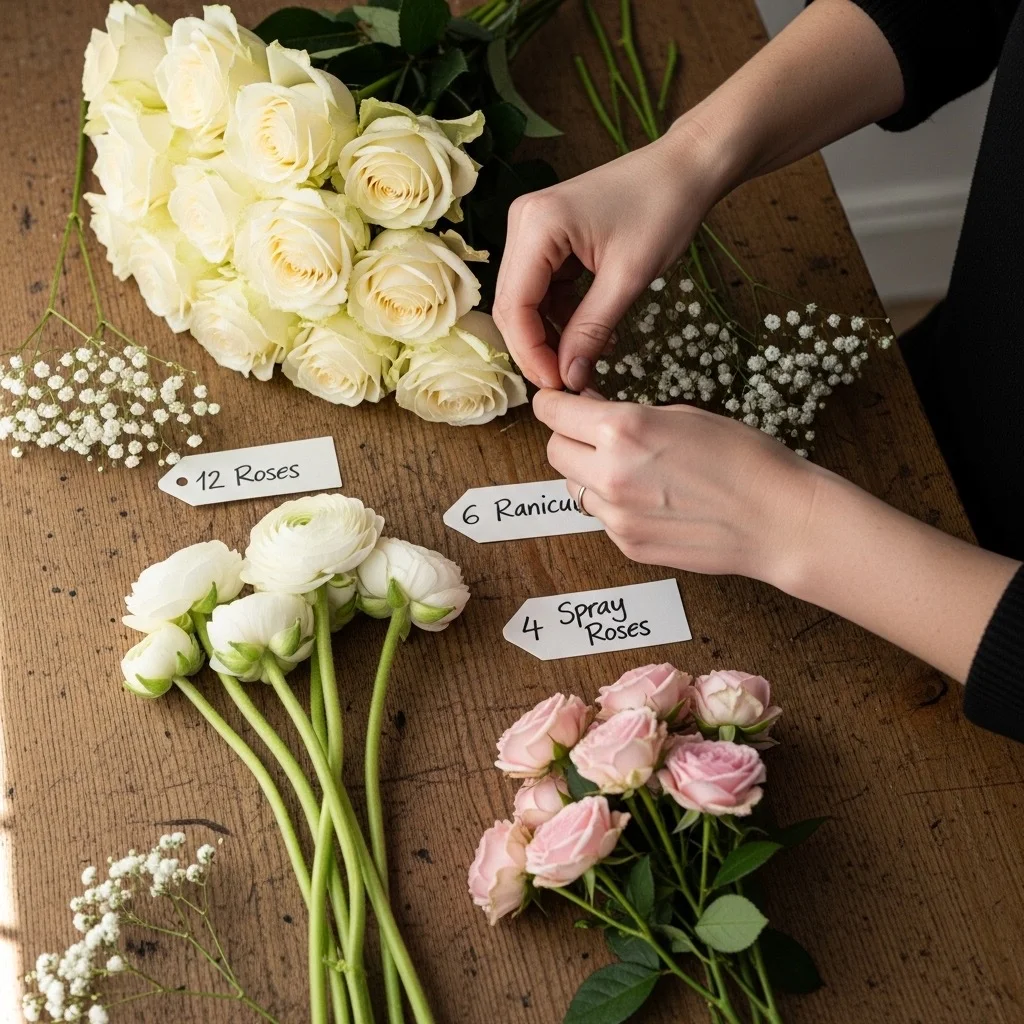
- Ranunculus: Offering layers of delicate petals, they’re versatile and pair well in both whimsical and romantic styles.
- Carnations: A budget-friendly option with a variety of colors, carnations work for almost any season or theme.
- Baby’s Breath: Classic and airy, baby’s breath is perfect for both modern and vintage-inspired weddings.
- Tulips: Simple yet elegant, tulips are especially appealing for spring nuptials in pastel or muted palettes.
Greenery (Coverage + Structure)
Greenery is essential for creating depth and structure in arrangements, adding a fresh, natural touch to the design. Key greenery options include:
- Eucalyptus: Popular for its soft, silvery-green hue, eucalyptus complements nearly any style or color palette.
- Ruscus: Known for its hardy nature, ruscus adds graceful lines and works wonderfully in cascading bouquets.
- Lemon Leaf: Provides rich green tones that are perfect for lush, garden-inspired looks.
- Preserved Flowers: Ideal for modern or boho-chic styles, preserved greenery combines durability with aesthetic appeal.
Adapting to Wedding Styles, Seasons, and Color Palettes
Tailor your floral selection to align with the style, season, and desired color palette of your wedding. For modern and minimalist weddings, focus on sleek blooms like calla lilies paired with eucalyptus. Garden-style celebrations will shine with peonies, dahlias, and hydrangeas, complemented by vibrant green foliage. To suit a specific season, opt for flowers and greenery that thrive during that time of year, ensuring freshness and cost efficiency.
Navigating Bulk Flower Options
When purchasing wedding flowers, sourcing bulk flowers or wholesale flowers can dramatically reduce costs while maintaining high quality. Explore categories like Wedding Flowers for specialized options that fit your color scheme and overall vision. By carefully balancing focal flowers, fillers, and greenery, you’ll craft breathtaking arrangements tailored to your big day.
Part 5 – How to Buy the Right Quantity of Flowers in Bulk (Without Overbuying)
Planning the right number of flowers for your wedding is a delicate balancing act. While purchasing in bulk can significantly reduce costs, overbuying can lead to waste and unnecessary expenses. Following a structured approach based on seasonality, bloom size, and ordering strategies will help you make informed decisions without stress.
Seasonality Affecting Stem Availability
Understanding seasonality is key to ensuring you get fresh, high-quality flowers. During peak seasons, flowers like peonies and dahlias are abundant, making them more affordable and readily available.
- Peony Season: Peonies are typically in bloom from late spring to early summer. They make excellent focal flowers with full, luxurious petals but may be pricier during off-peak months.
- Dahlia Season: Dahlias shine in late summer through early fall, offering vibrant, unique shapes that are perfect for both centerpieces and bouquets.
- Alternatives for Off-Season: When these flowers aren’t in season, consider substitutes like garden roses for peonies or chrysanthemums for dahlias. Both provide similar volume and beauty while being more cost-efficient.
Choosing Stems by Bloom Size & Coverage
Selecting flowers based on bloom size and coverage can optimize your floral budget and reduce the total number of stems required.
- Hydrangeas as Coverage Stems: With their large, lush heads, hydrangeas are an ideal choice for creating the illusion of fullness in arrangements and require fewer stems overall.
- Sunflowers for Focal Volume: If you’re aiming for a statement piece, sunflowers provide great visual impact and pair well with rustic or outdoor themes.
- Baby’s Breath for Aisles and Tables: Affordable and versatile, Baby’s Breath works beautifully as a filler for aisle markers, table accents, and other decorative details without overwhelming the design.
Bulk Ordering Tips for DIY Brides & Planners
To ensure your bulk flower purchase goes smoothly, it’s essential to follow best practices for delivery, preparation, and arrangement.
- Delivery 2–3 Days Before Wedding: Schedule delivery 2–3 days prior to your wedding day to allow time for inspection, conditioning, and arranging. This ensures the flowers are in peak condition when your big day arrives.
- Conditioning Time: Upon arrival, flowers need hydration and time to open up. Trim the stems at an angle, remove excess leaves, and place them in clean, fresh water to extend their lifespan.
- Test Vase Sizing: Before making bulk purchases, test your vase sizes with a few sample stems to gauge how many flowers you’ll need per arrangement. This prevents overbuying and ensures a polished final look.
By carefully planning around these considerations, you can confidently buy the right quantity of flowers in bulk without compromising on beauty or elegance.
Part 6 – Real Wedding Scenarios (Example Stem Count Formulas)
When planning floral arrangements for weddings, having clear stem count formulas tailored to various styles and guest counts is invaluable. Below, we outline three distinct wedding scenarios with detailed examples of how to calculate floral needs. These examples provide practical insights into achieving a seamless and cost-efficient flower plan.
Scenario A: Minimalist Modern Wedding
Flowers: White Calla Lilies, Orchids, Eucalyptus
Guest Count: 50 guests
Tables: 6 tables
For a chic and minimalist aesthetic, this arrangement emphasizes simplicity and elegance. Each table could feature a compact vase with 20–30 stems of mixed florals and greenery. For accent pieces such as the wedding arch or aisle arrangements, allocate approximately 400 additional stems.
- Per Table: 20–30 stems × 6 tables = ~120–180 stems
- Extras (arch, aisle, bouquets, etc.): ~400 stems
Total Stems Needed: ~650–850 stems
Scenario B: Garden Romantic Wedding
Flowers: Roses, Peonies, Ranunculus, Baby’s Breath
Guest Count: 120 guests
Tables: 12 tables
For a dreamy garden-themed wedding, opt for lush and fuller arrangements. Each table can display arrangements of approximately 80–100 stems, combining a mix of primary flowers and filler accents. Bouquets, centerpieces, and ceremony décor contribute significantly to the floral count.
- Per Table: 80–100 stems × 12 tables = ~960–1,200 stems
- Extras (ceremony décor, large installations, etc.): ~500–700 stems
Total Stems Needed: ~1,400–1,900 stems
Scenario C: Rustic Outdoor Wedding
Flowers: Sunflowers, Dahlias, Carnations, Preserved Flowers
Guest Count: 150 guests
Tables: 15 tables
Rustic outdoor weddings often incorporate bold, vibrant blooms mixed with dried or preserved accents for texture. Utilize 80–120 stems per table to achieve this full, layered style. For larger installations such as arches or hanging garlands, plan for an additional 700–1,000 stems.
- Per Table: 80–120 stems × 15 tables = ~1,200–1,800 stems
- Extras (large displays, bouquets, hanging garlands, etc.): ~700–1,000 stems
Total Stems Needed: ~1,800–2,200 stems
Why These Formulas Work
These examples go beyond abstract recommendations by providing specific calculations that simplify planning. With clear estimates based on real wedding scenarios, you can confidently align your floral needs with your design vision and budget. From minimalist to lush, these formulas help ensure every stem is strategically sourced and beautifully utilized.
Part 7 – Bulk Ordering from Whole Blossoms (Best Practice Guide)
When it comes to planning your wedding or event, bulk ordering flowers from Whole Blossoms helps simplify logistics while ensuring the highest quality blooms. Because Whole Blossoms operates farm-direct, your flowers arrive fresher than traditional supply chains, having been cut to order and shipped directly to your doorstep. This approach eliminates unnecessary middlemen, giving you access to fresher flowers at significant cost savings, perfect for DIY weddings or event planners with tight budgets.
For the best results, we recommend scheduling your flower delivery 2–3 days before your event. This timeline allows ample room for the flowers to be hydrated and refreshed after transport while resting at the ideal temperature. Proper hydration and temperature control can fully revive blooms, ensuring they look their best on the big day. Additionally, ordering early provides flexibility, particularly when preparing intricate displays that require hands-on time.
Whole Blossoms also offers the unique advantage of color-matching. Since flowers are sent directly from the farm, you’ll have access to consistent bloom colors, ideal for creating a cohesive design across bouquets, centerpieces, and larger installations. This precision makes it easier to bring your vision to life.
Lastly, don’t forget to explore our collections of Wholesale Flowers, Bulk Flowers, and Wedding Flowers to get inspired and plan your order. With Whole Blossoms, you can confidently balance quality, convenience, and affordability, ensuring a stunning result for your special event.
Part 8 – Final Calculator Summary: Total Stem Count Quick Reference Chart
Below is a quick reference chart to help you plan your floral arrangements efficiently. Use this guide to estimate the total number of stems needed for your event, ensuring you have the perfect combination of flowers for every arrangement.
| Arrangement | Stems | Flower Types | Notes |
| Bridal Bouquet | 30-50 | Roses, Peonies, Eucalyptus | Choose a mix of focal flowers and greenery for a balanced, lush appearance. |
| Bridesmaid Bouquet | 20-30 | Roses, Carnations, Baby’s Breath | Smaller versions of the bridal bouquet for cohesion. |
| Table Centerpieces | 12-20 | Hydrangeas, Snapdragons, Greenery | Compact arrangements that complement the overall theme. |
| Floral Arch | 100-150 | Roses, Spray Roses, Ivy | Use a mix of cascading and filler flowers for dramatic impact. |
| Boutonnieres | 3-5 | Rose, Spray Rose, Greenery | Minimalist yet elegant, use blooms to match the bouquet styles. |
| Corsages | 5-7 | Spray Roses, Baby’s Breath | Lightweight and comfortable with delicate flowers and accents. |
| Large Installations | 150+ | Mixed Seasonal Flowers | Bulk flowers ensure coverage, volume, and dynamic textures. |
This chart provides a versatile foundation for planning and can be customized to fit your specific event style and floral preferences.
Conclusion
Effective event planning requires careful consideration of floral stem counts, budgeting, and the advantages of purchasing in bulk. Understanding approximate stem needs for bouquets, boutonnieres, and large installations helps streamline the planning process and manage costs without sacrificing beauty. Bulk flowers offer not only significant savings but also unparalleled flexibility for creating stunning designs with ample volume and texture. By working closely with planners and adhering to a well-defined timeline, you can ensure your vision is flawlessly executed. Explore the wide selection of bulk flower options available at Whole Blossoms today and bring your event to life with vibrant, fresh blooms tailored to your specific needs.