


 by
by 
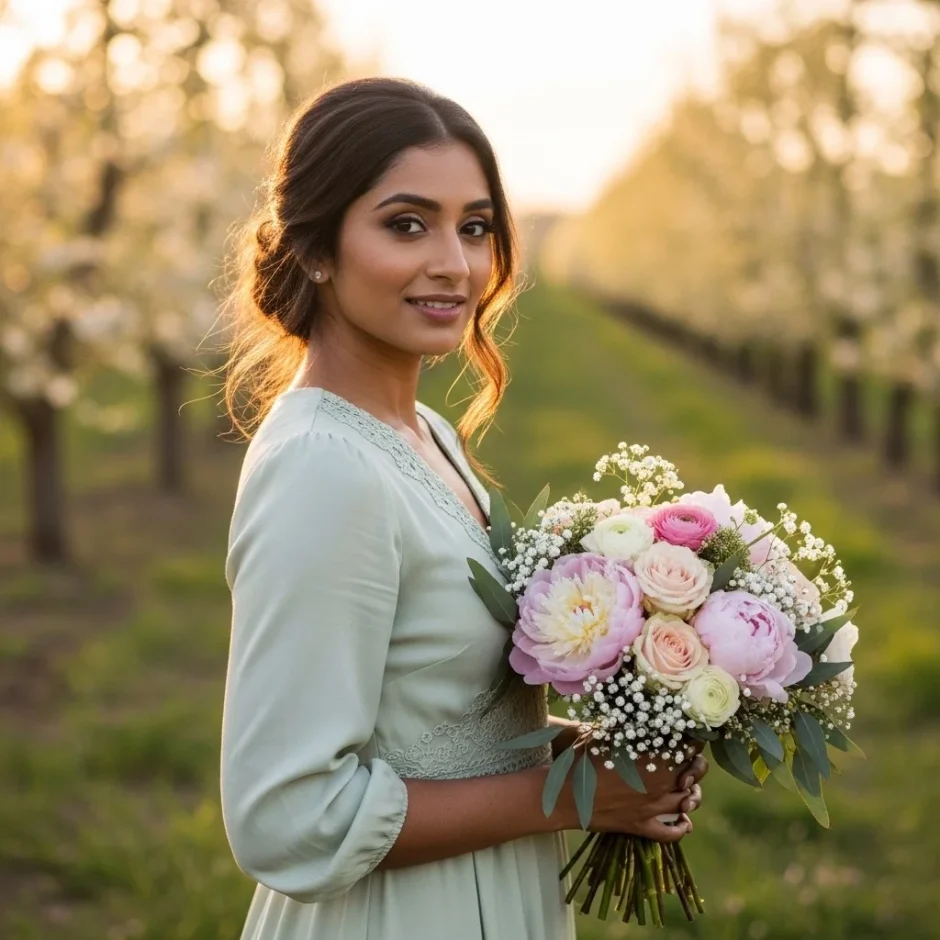
What Are Focal Flowers and Filler Flowers in Wedding Design?
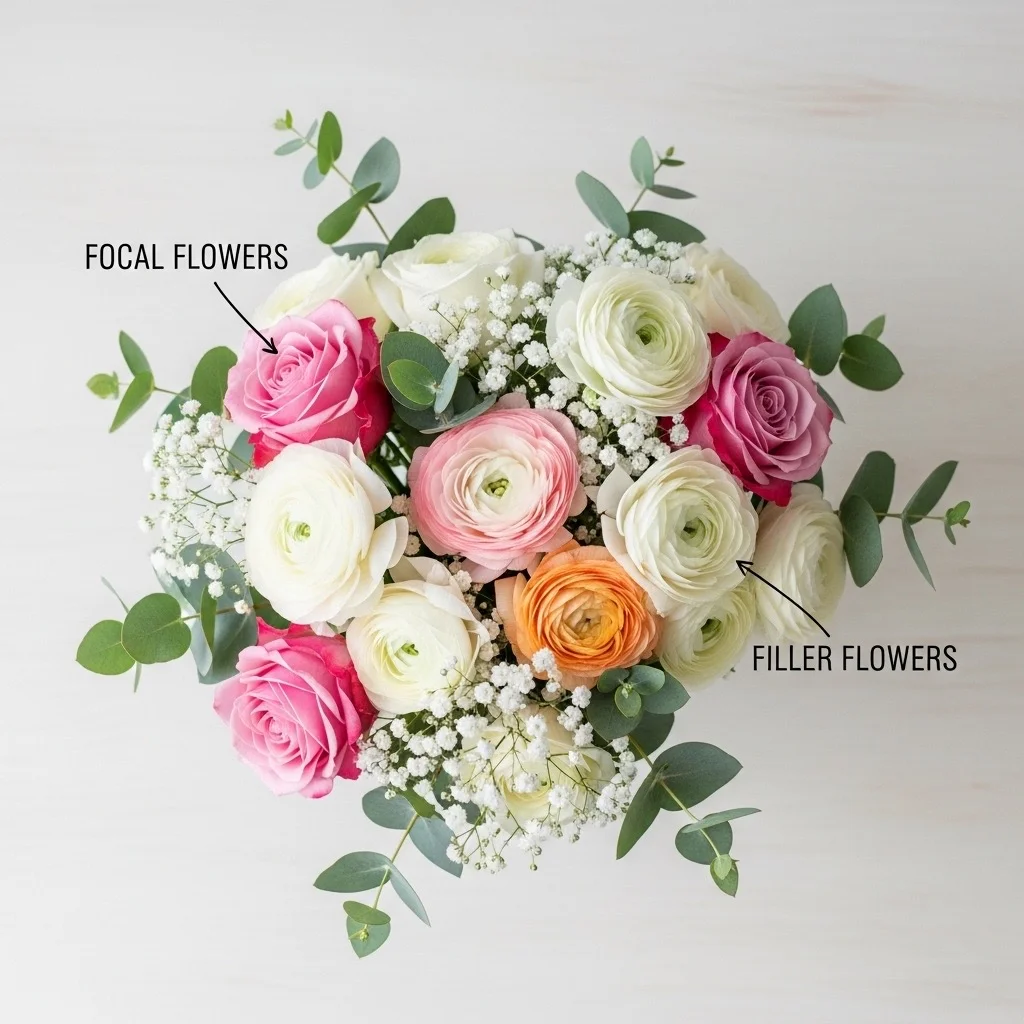
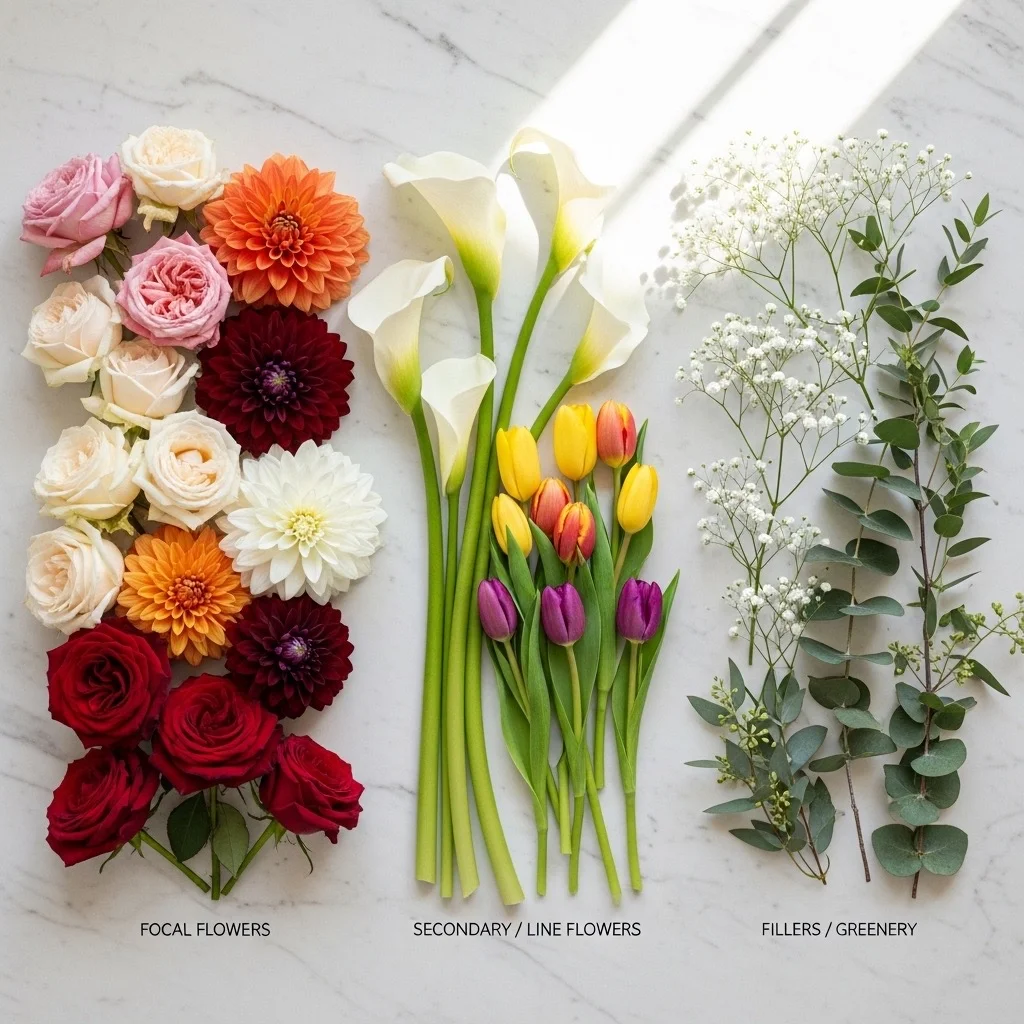
Focal flowers are the standout blooms in a wedding arrangement, often larger and more vibrant, designed to draw attention and create a central point of focus. Filler flowers, on the other hand, are smaller, subtler blooms or greenery used to complement focal flowers, fill in spaces, and add texture and depth to the arrangement.
Florists use these classifications to achieve balance and harmony in floral arrangements. Focal flowers, like roses, peonies, or sunflowers, establish the structure and visual hierarchy of a bouquet. They are strategically placed to command attention and define the arrangement’s overall aesthetic. Filler flowers, such as baby’s breath, wax flowers, or small ferns, play a supporting role by filling gaps, enhancing texture, and distributing color in a way that accentuates the focal blooms.
The interplay between focal and filler flowers is essential for creating dynamic and visually exciting designs. Focal flowers provide the dramatic centerpiece, while filler flowers shape the arrangement’s dimensions, soften transitions, and maintain a cohesive flow. This harmony ensures that the bouquet or centerpiece feels balanced and visually appealing from every angle, meeting both aesthetic preferences and practical needs for wedding design.
Part 1 – Why Focal and Filler Flowers Matter in Wedding Design
When designing florals for weddings, achieving the perfect balance between focal and filler flowers is crucial. This pairing not only creates visually stunning arrangements but also helps to manage costs, streamline bulk ordering, and maximize the overall aesthetic impact. Thoughtful use of these flowers can elevate any wedding design, regardless of style or budget.
Visual Balance & Composition
At the heart of any captivating floral arrangement is the principle of visual balance and composition. Florists meticulously combine contrast, shape, and cluster balance to ensure that every bouquet and centerpiece feels cohesive. For example, large focal blooms like roses, peonies, or ranunculus offer dramatic shapes and vibrant colors that command attention. Meanwhile, filler flowers such as baby’s breath and carnations complement these focal blooms, softening the transitions and creating harmony within the design. By thoughtfully clustering focal flowers and pairing them with delicate fillers, florists can craft arrangements that feel intentional, polished, and visually dynamic.
Budget and Stem Count Control
Filler flowers play a pivotal role in keeping wedding floral designs cost-effective. Luxurious focal blooms often come with a higher price tag, but adding fillers allows florists to fill spaces in arrangements while reducing the total number of expensive focal stems required. For instance, blending eucalyptus or baby’s breath with premium flowers delivers a lush, full look without inflating the budget. This cost-balanced approach ensures couples can enjoy stunning designs without overspending on florals.
Bulk Ordering Efficiency
Selecting focal and filler flowers for bulk ordering provides both color uniformity and predictable quantities, which are essential for streamlined wedding design. Consistent hues from flowers like carnations, roses, or ranunculus ensure a cohesive palette, while hardy filler greens like eucalyptus offer texture and versatility. Bulk ordering also supports floral rotations, ensuring freshness and availability for popular blooms like peonies during their peak seasons.
Smart floral designs combine cost control with aesthetic appeal—focal flowers create drama, while filler flowers add volume and cohesion. This balance allows couples to achieve luxurious wedding florals without exceeding their budget.
Part 2 – Focal Flowers for Weddings (Best Varieties & Design Roles)
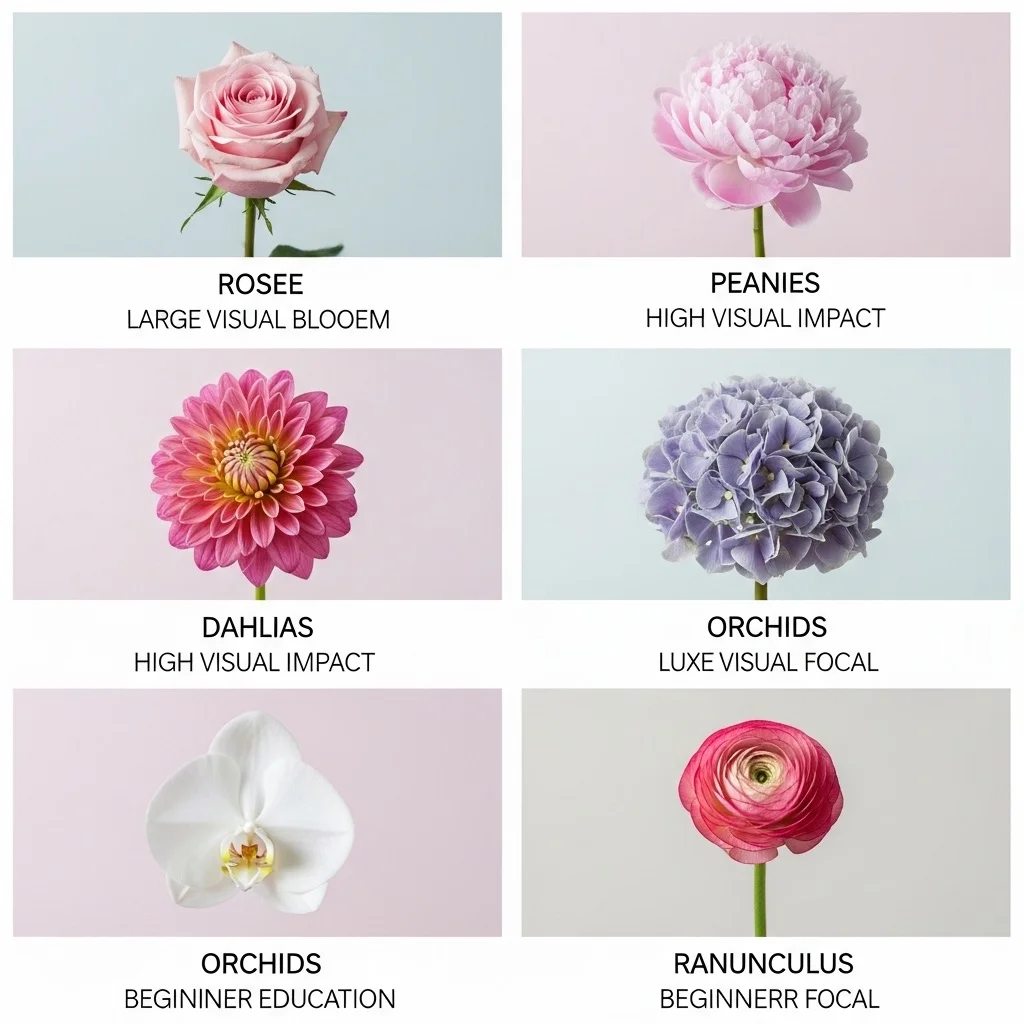
Focal flowers are the centerpiece of any floral arrangement, distinguished by their large, eye-catching blooms that draw attention and anchor the overall design. These flowers serve both an aesthetic and functional role, creating drama and depth while complementing supporting blooms and greenery.
Popular Focal Flowers Used in Wedding Bouquets
When it comes to wedding bouquets, certain flowers have remained timeless favorites due to their distinctive beauty and versatility. Here are some of the most popular focal flowers, along with their defining characteristics:
- Roses
Roses are a classic choice for weddings, celebrated for their structured shape and unparalleled color variety. From traditional reds and whites to unique shades like dusty blue or mustard yellow, roses fit nearly every theme or palette. Their symbolic association with love and passion makes them a meaningful addition to any bouquet.
- Peonies
Known for their soft, romantic texture and full, lush blooms, peonies are a top choice for brides seeking elegance. These seasonal flowers are highly coveted for their natural charm and ability to add substantial volume to arrangements. Their often-pastel shades make them particularly suited to spring and early summer weddings.
- Ranunculus
Ranunculus flowers are beloved for their delicate, layered petals that exude softness and sophistication. They are ideal for creating a luxurious yet understated look, complementing both minimalist and extravagant bouquets. Their light stems also make them versatile for cascading or hand-tied designs.
- Dahlias
Dahlias offer bold, seasonal beauty with their intricate petals and availability in vibrant colors like burgundy, orange, and pink. These blooms work exceptionally well for late summer or fall weddings, infusing arrangements with warmth and drama.
- Hydrangeas
With their dense clusters of small flowers, hydrangeas provide instant volume and fast coverage, making them perfect for fuller arrangements. Available in shades like white, blue, and blush, they contribute a whimsical and romantic feel while balancing the structure of other focal flowers.
- Orchids
Orchids are the epitome of luxury and elegance, their sculptural blooms lending an exotic and modern touch to wedding arrangements. Available in diverse hues, orchids are particularly popular for upscale or tropical-themed weddings.
- Sunflowers
Sunflowers bring cheer and brightness to rustic or boho-themed weddings. Their striking yellow petals and large centers make them an ideal choice for outdoor celebrations, pairing beautifully with natural elements like burlap or wood accents.
When to Choose Each Focal Flower Type
Selecting the perfect focal flowers often depends on several factors, including seasonality, climate, theme, and desired color palette:
- Seasonality
Focal flowers such as peonies and dahlias are highly seasonal, which can limit their availability or increase costs outside of their peak growing periods. Brides planning spring weddings may gravitate toward peonies, while late-summer brides might opt for dahlias.
- Climate
Local climate conditions can also influence flower choices. Orchids and roses, for example, thrive in warmer, controlled environments, making them suitable for couples marrying in tropical regions or during warmer seasons.
- Theme
The overall wedding theme plays a critical role in flower selection. Sunflowers complement rustic or boho weddings, while orchids work best in modern or tropical settings. Roses and ranunculus are versatile enough to fit into most themes, offering timeless elegance.
- Color Palette
The chosen color palette will further guide focal flower decisions. Hydrangeas come in soft, romantic hues, while dahlias and sunflowers bring bolder tones. Roses remain the most adaptable focal flower for diverse palettes due to their extensive color range.
Focal Flowers and Stem Length
When sourcing bulk wedding flowers, brides should pay close attention to stem length, especially for focal blooms. Long-stem flowers like roses, hydrangeas, and orchids are ideal for creating bold, structured arrangements, ensuring the bouquets maintain their shape and visual balance. Longer stems also provide the flexibility to craft taller centerpieces or cascading bouquets, elevating the overall design.
Investing in long-stem focal flowers ensures that arrangements appear both polished and luxurious, offering added versatility in presentation. This is particularly crucial for brides aiming to achieve an upscale look while working with bulk materials.
Filler flowers play an integral role in wedding bouquets, serving as smaller blooms or foliage that add volume, texture, seamless color transitions, and balance the overall cost of floral arrangements. While focal flowers catch the eye, filler flowers ensure every bouquet feels full, cohesive, and designed with precision. They act as the connecting elements in floral design, harmonizing bold statement blooms with supporting details. Additionally, they allow florists to stretch their budget while achieving a visually stunning result.
Part 3 – Popular Filler Flowers Used in Wedding Bouquets
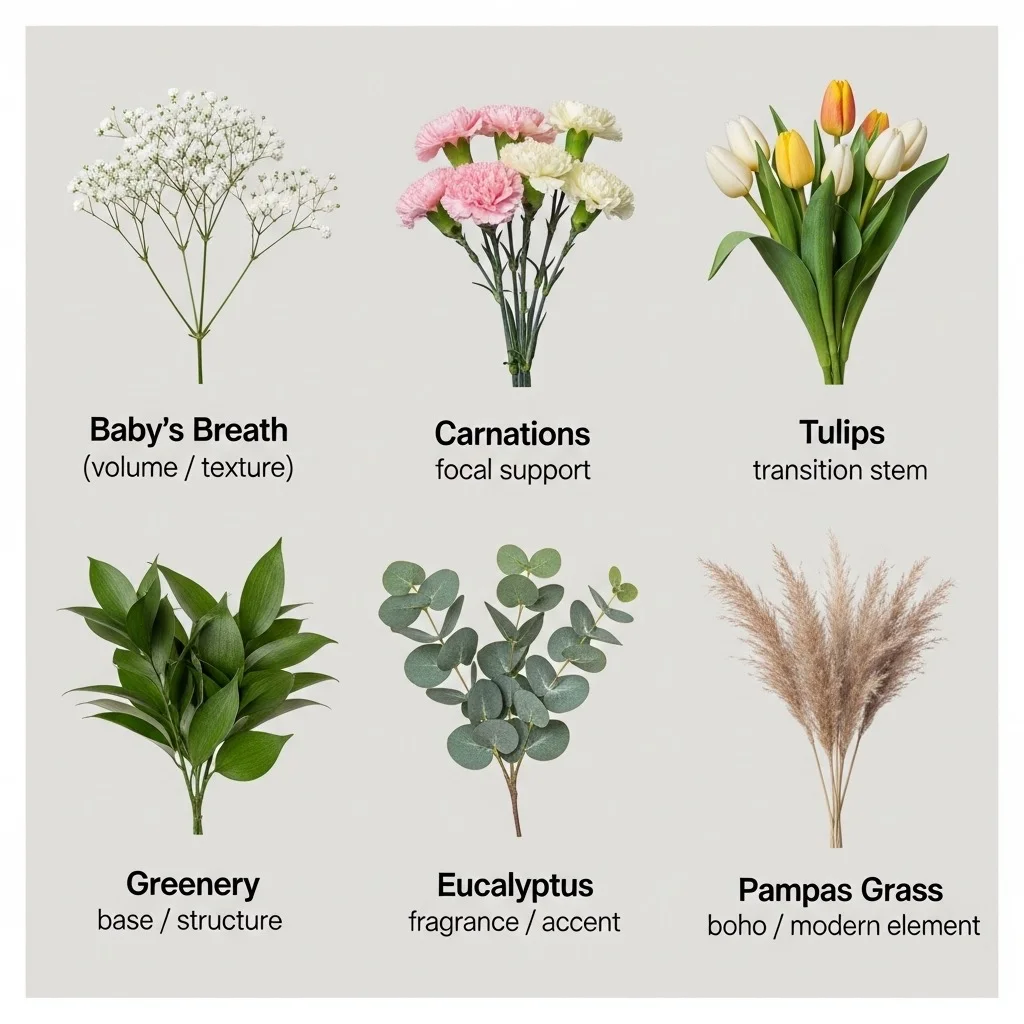
Each filler flower variety contributes something unique to a bouquet, whether through aesthetic value, structural support, or economical benefits. Below are some of the most popular options, along with their design roles:
Baby’s Breath
Known for its dreamy, delicate appearance, baby’s breath is a quintessential filler flower that provides airy volume and softens any arrangement. Its light, cloud-like qualities pair beautifully with classic, romantic themes, making it a staple in many wedding designs.
Carnations
Often underappreciated, carnations are an affordable option that adds texture and a pop of color to floral arrangements. Available in a wide spectrum of hues, they blend effortlessly with both focal and filler flowers and have the durability to withstand long event hours.
Tulips
Tulips act as perfect spring filler flowers, offering additional structure and depth to bouquets. Typically considered secondary flowers, their smooth, curvy petals lend movement to arrangements, and their wide range of colors makes them versatile for any palette.
Calla Lilies
While calla lilies can be considered focal flowers, their smaller blooms are often used for line accents or to add sculptural elegance to cascading arrangements. Their sleek and sophisticated appearance makes them particularly popular in contemporary wedding designs.
Greenery
Foliage such as leatherleaf fern, ruscus, or eucalyptus often takes on the role of a cost-efficient filler that provides coverage and grounds the arrangement with hints of green. It creates a natural framework, allowing blooms to shine while balancing the overall texture and color.
Preserved Flowers
If longevity is a concern, preserved filler flowers offer a durable solution for events that require the bouquets to travel or be displayed over several days. Dried lavender, baby’s breath, and strawflowers are common choices that provide a timeless charm.
Eucalyptus
One of the most sought-after filler greenery options, eucalyptus comes in various shapes and scents. Its muted blue-green tones add sophistication, while its long stems and pliable nature suit everything from cascading bouquets to minimalist arrangements.
Pampas Grass
For couples seeking a bohemian or rustic vibe, pampas grass provides soft, feathery movement that introduces texture and warmth. Its neutral tan and blush tones make it a seamless addition to earth-toned or whimsical wedding themes.
Secondary vs. True Filler vs. Greenery
Differentiating between secondary flowers, true fillers, and greenery is crucial in wedding bouquet design, as each plays a distinct role.
Secondary Flowers
Secondary flowers, such as ranunculus or tulips, act as supportive players to focal flowers. Larger and showier than true fillers, they bridge the gap between the dominating blooms and the intricate elements of the arrangement.
True Filler Flowers
True fillers, like baby’s breath or carnations, are smaller in scale and used for volume, texture, and filling gaps between larger flowers. They subtly complement the overall design without overpowering it.
Greenery
Greenery, such as eucalyptus, leatherleaf, and ruscus, provides the base structure and color balance for floral arrangements. It covers stems and gaps efficiently while introducing a natural, organic look.
Color, Texture, and Stem Count Strategy
Strategizing the use of filler flowers can significantly reduce the overall cost of a bouquet while maximizing its aesthetic appeal. Filler flowers bring cohesion to an arrangement’s color scheme, blending bold hues with softer transitions. Textural fillers like pampas grass or greenery draw attention to the bouquet’s distinct style—be it boho, rustic, or modern.
Managing stem count wisely is another way filler flowers optimize a budget. By incorporating fewer focal and secondary flowers, filler blooms can make up the bulk of the bouquet, reducing overall expenses without compromising on volume. For example, a centerpiece anchored by greenery and baby’s breath can achieve an elegant yet budget-friendly design. By balancing color, texture, and stem count, filler flowers can enhance the luxury and beauty of a wedding bouquet while keeping costs in check.
Part 4 – How Focal and Filler Flowers Work Together in Wedding Bouquets
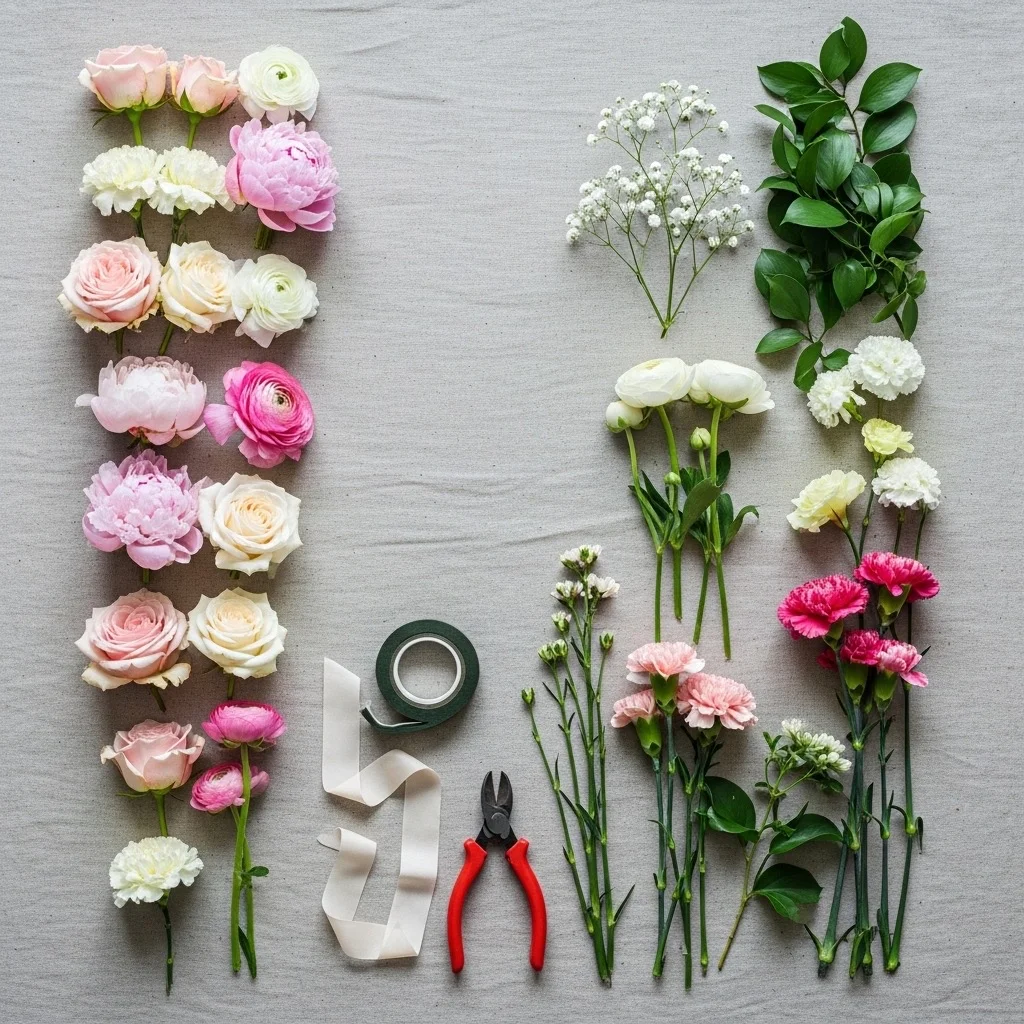
When designing an exceptional wedding bouquet, the synergy between focal and filler flowers is essential. Focal flowers, such as roses, peonies, or dahlias, act as the main features, drawing attention with their prominent size and striking beauty. On the other hand, filler flowers and greenery like baby’s breath, eucalyptus, or wax flowers provide the structure, color balance, and visual softness necessary to tie the bouquet together. By combining these elements thoughtfully, florists create arrangements that are cohesive, dynamic, and visually stunning.
Layering & Clustering Techniques
Florists utilize layering and clustering techniques to integrate focal and filler flowers seamlessly. A balanced bouquet often follows a methodical approach, beginning with focal flower clusters. These typically consist of 1–3 tightly grouped blooms placed strategically to establish the bouquet’s primary focal points. Secondary flowers, forming 2–4 smaller clusters, bridge the design by complementing the focal clusters without overshadowing them. Filler elements, with 3–6 variations, are then interwoven throughout the design to provide texture and volume, filling any gaps and softening transitions. This layered approach ensures that each element has its place, creating a bouquet with depth, dimension, and harmony.
Color Harmony & Palette Control
The right balance of focal and filler flowers also relies upon a well-curated color palette. To achieve this, florists tie in cohesive palette types that suit the wedding’s overall theme. For instance, blush and ivory create a timeless, romantic aesthetic, while mocha neutrals evoke warmth and understated elegance. Bright garden palettes, bursting with vibrant hues, are perfect for evoking a cheerful, whimsical atmosphere. Seasonal themes also play a role—autumn weddings might incorporate rust, orange, and burgundy accents, while spring moments often feature pastel blends. Filler flowers, in particular, help extend the chosen palette by reinforcing subtle transitions or adding softer tones, ensuring a unified and polished final look.
Texture & Movement
Texture and movement bring floral arrangements to life by combining contrasting shapes and forms. Round, lush blooms like roses or ranunculus provide a steady, grounding presence as focal points. These are offset by the airy textures of accents like eucalyptus sprigs, astilbe, or pampas grass, which introduce visual interest and a sense of flow. Incorporating fillers with varying textures creates a tactile richness, drawing the eye across the bouquet and preventing a static appearance. By pairing sturdy, symmetrical flowers with delicate, feathery elements, florists craft designs that feel both balanced and dynamic.
How do you mix focal and filler flowers? The answer lies in a deliberate orchestration of layering, color harmony, texture, and movement. Focal blooms anchor the design, while filler flowers infuse it with volume, rhythm, and personality, culminating in a bouquet that tells a story of beauty and connection.
Part 5 – Buying Focal and Filler Flowers in Bulk for Weddings
Creating breathtaking floral designs for weddings begins with a thoughtful balance of design planning and strategic purchasing. The path from design to purchasing involves aligning a vision with the practicalities of bulk ordering, ensuring that every arrangement, from bouquets to installations, conveys beauty and harmony. Planning ahead makes the entire process seamless, especially when using focal and filler flowers creatively to bring wedding floral concepts to life.
Why Bulk Ordering Works for Weddings
Bulk ordering flowers is undoubtedly one of the most efficient approaches for weddings. Here’s why it works so well:
- Uniform Batches: Bulk ordering ensures that all flowers come from the same crop, providing a consistent color tone and quality, which is essential for a cohesive aesthetic.
- Color Matching: When creating large-scale floral arrangements, exact color matches are critical. Bulk ordering enables precise color selection without discrepancies, ensuring designs look polished.
- Predictable Budgeting: With bulk ordering, pricing is often lower than retail, and packages are pre-defined, making budgeting for wedding flowers straightforward and reliable.
Bulk Ordering by Flower Type
When ordering flowers in bulk, it’s important to consider the characteristics of each flower type and their specific handling needs.
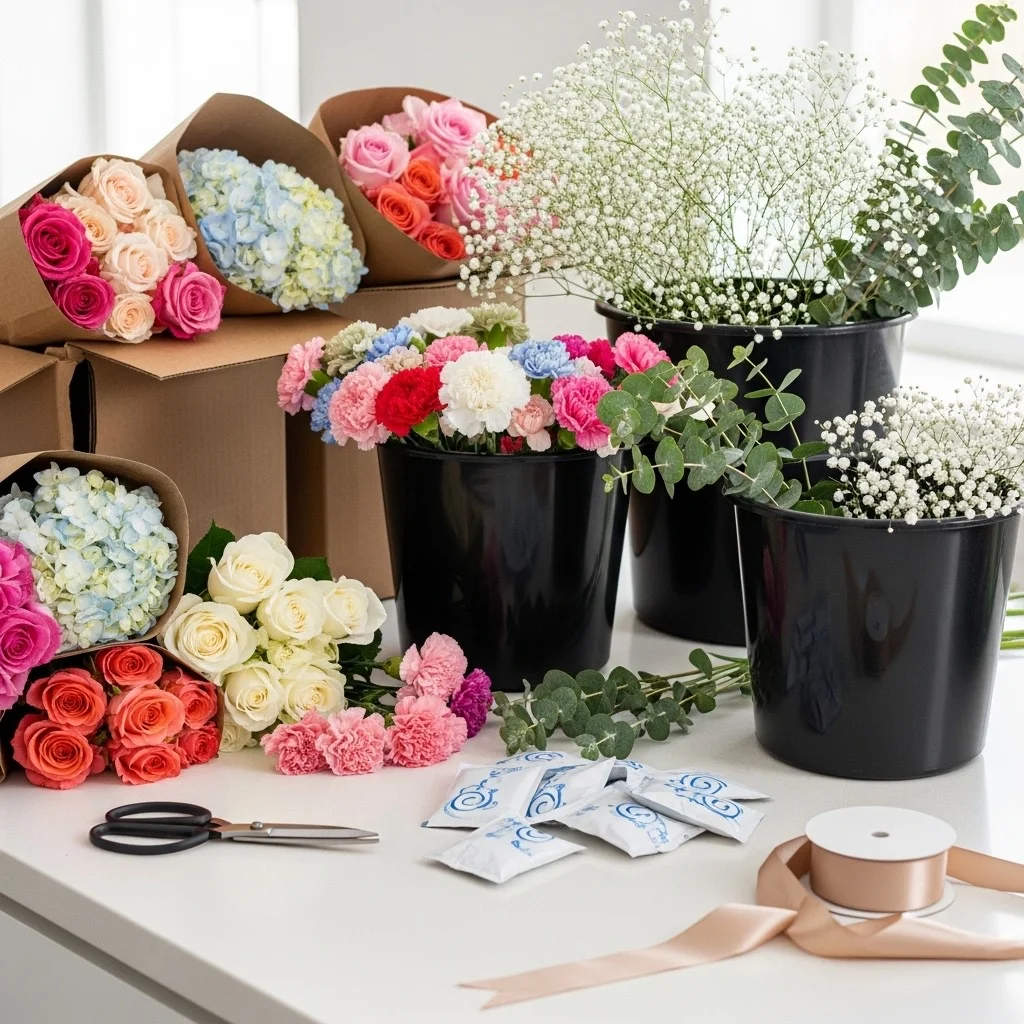
- Roses: Available in full boxes, roses are a classic choice for focal blooms, offering elegance and structure.
- Hydrangeas: These flowers require careful hydration and handling to maintain their lush, full appearance, making them ideal for large, voluminous arrangements.
- Baby’s Breath: Known as a popular filler flower, Baby’s Breath is perfect for adding soft, airy textures while contributing significant volume to designs.
- Greenery: High-coverage greenery is vital for creating a natural base in arrangements and installations. Eucalyptus, ruscus, or fern varieties work beautifully as lush fillers.
Understanding Stem Counts
Knowing how many flowers you’ll need for specific arrangements is crucial to avoid over-purchasing or running out closer to your event date. Here are rough guidelines for stem counts based on typical wedding arrangements:
- Bouquets & Arrangements:
- Bridal bouquets generally require 18–36 stems, depending on the size and complexity.
- Bridesmaid bouquets are smaller, usually requiring 10–18 stems.
- Centerpieces:
- For standard-sized centerpieces, plan for 15–25 stems per arrangement.
- Installations:
- Large floral installations, such as arches or hanging displays, require more variation and depend on the cubic footage of the space being decorated.
Freshness & Delivery Timelines
Timely delivery and proper preparation are key to ensuring flowers look fresh and vibrant on the wedding day. Here are general guidelines for freshness timelines:
- Hydration Windows:
- Hydrangeas and Roses typically need 24–48 hours of hydration time to reach their optimal condition.
- Preserved Flowers:
- These ship ready-to-use and are a great option for longer-lasting displays or pre-arranged setups.
Proper coordination with your supplier is critical. Arranging for deliveries within the right timeframe ensures every stem is wedding-ready when it’s time to design.
This is why DIY weddings and florists compare bulk flower and wholesale flower suppliers well before the event day. Knowing what to expect and who to trust sets the stage for a stress-free wedding floral experience.
One such trusted supplier is Whole Blossoms, a national provider of bulk wedding flowers and wholesale fresh flowers. Supporting florists, DIY brides, and wedding planners, Whole Blossoms ensures quality blooms and reliable delivery, bringing wedding floral dreams to life.
Part 6 – Frequently Asked Questions (People Also Ask Alignment)
What is the difference between focal flowers and filler flowers?
Focal flowers are the main, eye-catching blooms in a floral arrangement, often larger and more vibrant to draw attention. Examples include roses, peonies, and lilies. Filler flowers, on the other hand, are smaller accents used to complement the focal flowers, add texture, and fill gaps. Common filler flowers include baby’s breath, wax flowers, and ferns.
What are the best focal flowers for weddings?
Some of the best focal flowers for weddings include roses, peonies, hydrangeas, and dahlias. These flowers are popular for their showy blooms, wide range of available colors, and versatility in different wedding styles. Focal flowers are usually chosen based on the season, wedding theme, and personal preferences.
What are common filler flowers for bouquets?
Common filler flowers for bouquets include baby’s breath, stock, wax flowers, and astilbe. These flowers help create a fuller look and provide a soft, complementary backdrop for the focal blooms. Greenery like eucalyptus or ruscus is also widely used to add texture and color balance to bouquets.
Can you buy bulk wedding flowers online?
Yes, bulk wedding flowers can be purchased online from reputable wholesale suppliers. Companies like Whole Blossoms specialize in delivering fresh flowers directly to customers. Ordering online offers access to a wide selection of blooms in various colors and varieties, often at more affordable prices compared to traditional florists.
How far in advance should I order wedding flowers?
It is recommended to order wedding flowers at least 4 to 6 weeks in advance of the event date. This allows time to secure your desired blooms, particularly if they are seasonal or rare. For DIY weddings, receiving the flowers 2 to 3 days before the wedding ensures they arrive fresh and ready for preparation.
Conclusion
Planning your wedding flowers is an exciting and essential part of creating the perfect atmosphere for your special day. By understanding the importance of design roles, you can effectively bring your floral vision to life, whether you choose professional help or a DIY approach. Bulk sourcing provides excellent value, giving you access to a variety of blooms at wholesale prices, ideal for managing your budget without compromising quality. Proper logistics, including ordering flowers well in advance and ensuring their freshness upon arrival, are key to a smooth preparation process. Remember, attention to timelines makes all the difference in achieving stunning floral arrangements. For more tips and resources, explore our guides on Wedding Flowers, Bulk Flowers, and Wholesale Flowers to make your planning effortless and enjoyable.