


 by
by 

How to Store Flowers Before a Wedding: The Complete Freshness Plan
Keep your DIY wedding flowers looking stunning with a simple and effective storage plan. From hydration techniques to ideal temperature settings, preserving your blooms is all about timing and proper care. Learn how to safely store your flowers, prevent wilting, and ensure they radiate beauty on your big day. Follow this complete freshness guide to manage your floral arrangements with confidence, ensuring they remain vibrant and wedding-ready.
Part 1 – What Does “Storing Wedding Flowers” Mean, and Why Does It Matter?
Storing wedding flowers refers to the careful process of maintaining blooms in optimal conditions to preserve their freshness until the wedding day. Unlike arranging, which focuses on design and placement, storage prioritizes hydration, temperature stability, airflow, and protection from damage to ensure flowers look vibrant and flawless.
Proper flower storage is essential to shield delicate petals and stems from premature wilting, bruising, or discoloration. This process begins with hydration—ensuring flowers are adequately nourished by keeping their stems submerged in clean, cool water. Consistent temperature maintenance is also critical; flowers must avoid extreme heat or cold that can shorten their lifespan. Controlled airflow prevents excess moisture buildup and fungal growth, both of which can damage arrangements.
Another critical factor is managing exposure to ethylene gas, often released by ripening fruits or decaying plant material. This unseen threat can cause flowers to deteriorate quickly, making it crucial to store blooms away from potential sources. Timing and handling also play a significant role in storage. Flowers must be kept secure with minimal handling to avoid bruising or breaking, which can compromise their aesthetic appeal.
By understanding and implementing these techniques, soon-to-be-wed couples and florists can ensure their blooms remain fresh and vibrant, creating breathtaking floral arrangements that endure throughout the celebration. Proper storage is the unsung hero of stunning wedding flowers, bridging the gap between preparation and perfection on the big day.
Part 2 – The #1 Rule: Temperature and Hydration Decide Everything
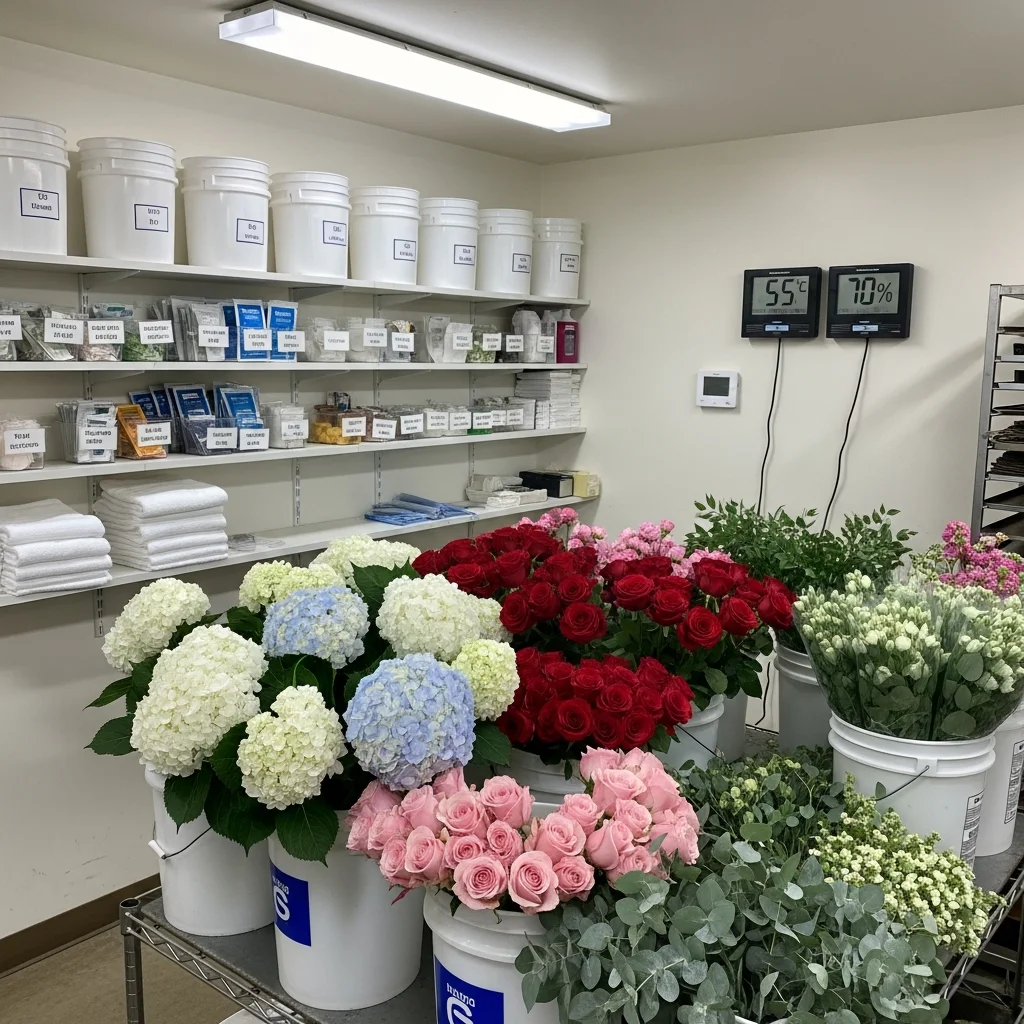
What temperature should wedding flowers be stored at?
Temperature is a critical factor in preserving the beauty and longevity of wedding flowers. Most flowers should be stored in a cool environment, ideally around 36°F to 46°F (2°C to 8°C). This range slows biological processes that cause wilting and decay, allowing flowers to stay fresh longer. However, it’s important to consider the specific needs of different flowers. Tropical blooms like orchids and anthuriums are particularly sensitive to cold and should be kept at slightly warmer temperatures, typically between 55°F and 65°F (13°C to 18°C). Storing these delicate flowers in an overly cold environment can cause damage or discoloration, as they are not adapted to such conditions. Understanding the right temperature for each flower variety ensures they remain vibrant and flawless for the big day.
Hydration basics: buckets, waterline, and re-cuts
Proper hydration is equally essential for wedding flowers to thrive. Start by using clean buckets to prevent bacteria from contaminating the water and affecting the flowers. Fill the buckets with fresh, lukewarm water up to a level that adequately covers the lower stems without submerging any leaves. For hydration to be effective, always re-cut the stems at a sharp angle (about 45 degrees) before placing them in water. This increases the surface area for water uptake while preventing the stems from sitting flush against the bottom of the bucket, which can block absorption.
Additionally, strip any leaves below the waterline to minimize bacterial growth, ensuring the flowers remain healthy. Roses, for instance, benefit greatly from these practices to prevent drooping heads, while hydrangeas require extra care to maintain their water-heavy blooms. Sunflowers, known for their sturdy stems, also need regular hydration to avoid wilting. Even greenery, used to complement arrangements, thrives with proper care. Paying attention to these hydration basics ensures all components of your floral arrangements look stunning and fresh throughout the celebration.
Part 3 – Where should you store flowers before a wedding? (Best-to-worst options)
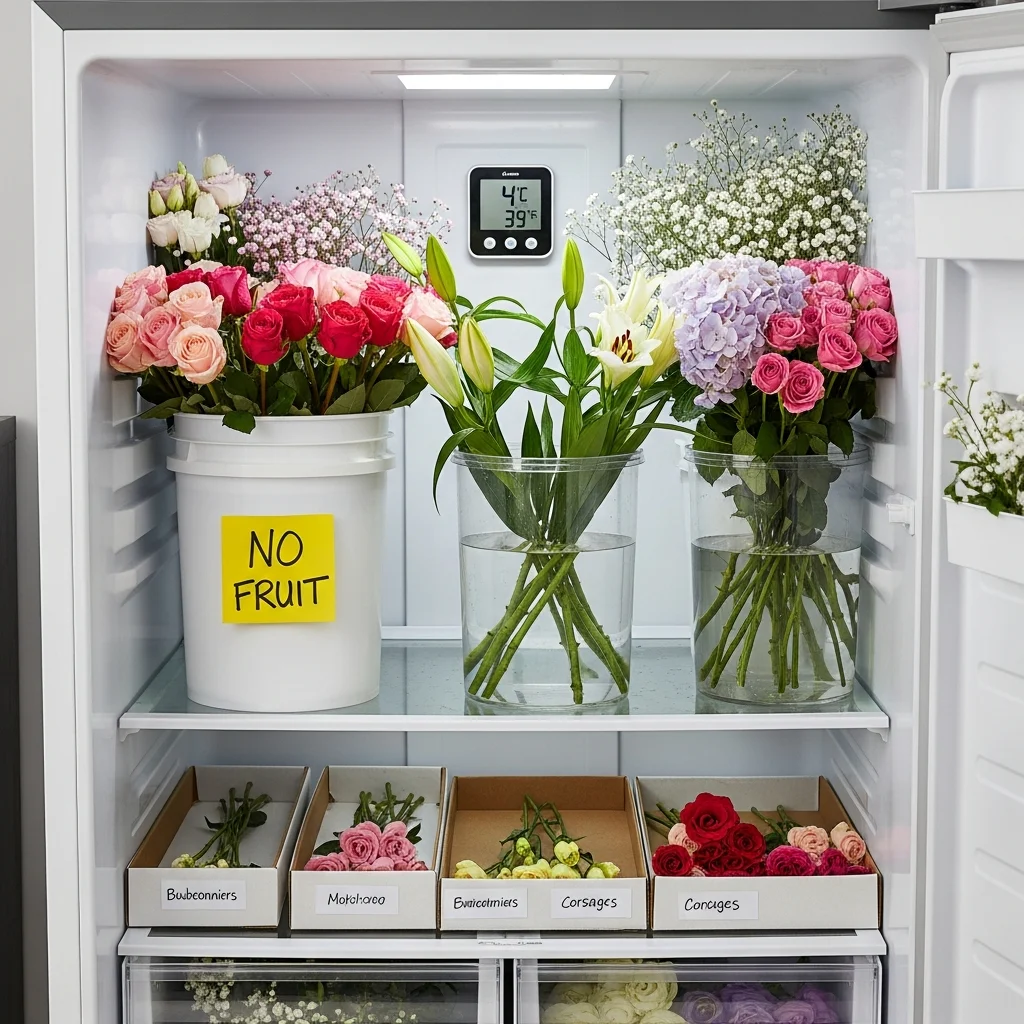
Floral cooler or spare refrigerator: the ideal setup
The best option for storing flowers before a wedding is a floral cooler or a spare refrigerator dedicated solely to this purpose. These environments are specially designed to maintain the optimal temperature and humidity levels for flowers, usually between 34°F and 38°F, without freezing them. It is essential to dedicate this space to flowers only, as storing produce like fruits and vegetables can emit ethylene gas, which speeds up flower aging and spoilage. Proper airflow is also critical; make sure the flowers are not overcrowded and that air moves freely around them. Minimize the frequency of door openings, as fluctuations in temperature and humidity can stress the blooms. When set up and managed correctly, a floral cooler or spare fridge ensures your flowers remain fresh, hydrated, and vibrant for the big day.
Air-conditioned room (no fridge): how to do it safely
If a floral cooler or refrigerator is unavailable, an air-conditioned room provides the next best solution, provided it is done carefully. Choose a cool, dark room where the temperature remains stable, ideally around 60°F or lower. Ensure the space is away from heating vents, fans, or drafty windows, as sudden air movements or temperature variations can dehydrate or damage the flowers. Keep the arrangements out of direct sunlight, as even indirect light can cause excessive heat or accelerated wilting. Use blackout curtains or blinds, if necessary, to maintain a darker environment. Check the temperature and humidity consistency periodically, and avoid moving the flowers unnecessarily, which can disturb their delicate structure. With thoughtful precautions, this option can keep your flowers looking fresh when refrigeration is not an option.
Garage, basement, or outdoors: when it works and when it fails
Storing flowers in a garage, basement, or outdoor area may only work under certain conditions, making this the least desirable option. If you choose this route, ensure the area is cool, dry, and shaded, with no exposure to direct sunlight or extreme weather fluctuations. An unheated garage or basement can suffice if the outside temperature is cool but not freezing, maintaining a steady range between 50°F and 65°F. Outdoors can be suitable in mild, shaded climates but is a risky choice due to the possibility of pests, unpredictable weather, or exposure to excessive wind. Warning signs that this option isn’t working include wilting, discoloration, or flower heads drooping prematurely. Use this storage solution only as a last resort and monitor your flowers closely to ensure they remain in acceptable condition.
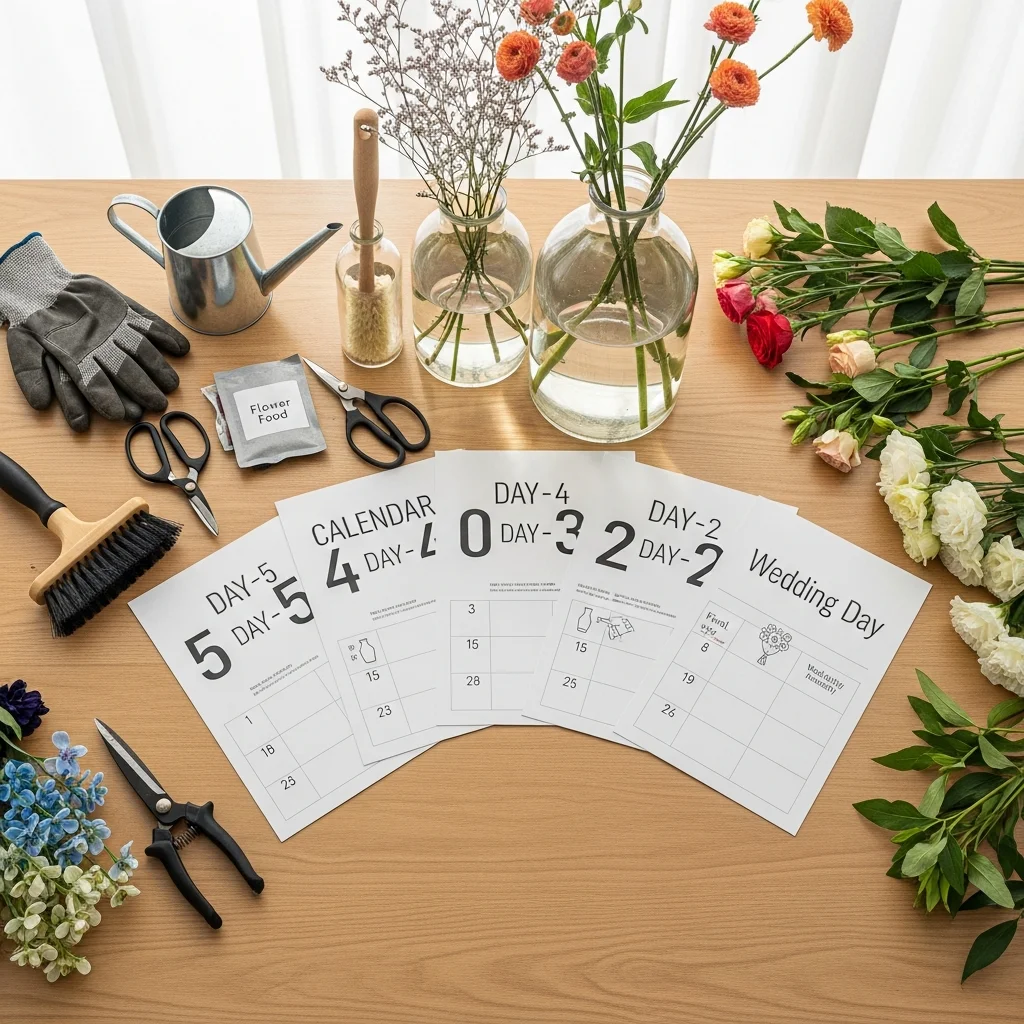
Part 4 – A Realistic 5-Day Wedding Flower Storage Timeline (Arrival to Ceremony)
Properly planning and storing your wedding flowers is essential to ensure they look their absolute best for your ceremony and reception. Here’s a step-by-step timeline to help you manage the logistics efficiently while using wholesale flower providers like Whole Blossoms to simplify bulk ordering and delivery.
Day -5 to -4: Receive, Inspect, Re-cut, Hydrate
When your bulk flower order arrives—ideally five to four days before the wedding—inspect every box carefully upon delivery. Wholesale flowers from trusted suppliers like Whole Blossoms will arrive fresh but still need preparation to shine on your big day. Start by unpacking the flowers and removing any damaged petals or leaves. Re-cut each stem at a diagonal under running water to encourage hydration, and place them immediately in clean containers filled with fresh water and flower preservative. Keep temperature control in mind; storing the flowers in a cool, shaded environment between 36°F and 50°F is crucial for their longevity. This initial step lays the foundation for vibrant blooms on your wedding day.
Day -3: Conditioning and Early Prep (Greens, Hardier Stems)
Three days before the wedding is the perfect time to condition hardier flowers and prepare greenery. Use this day to focus on blooms like roses, carnations, or chrysanthemums, which hold up well under pre-assembly. If you ordered greenery in bulk as part of your flower packages, take time to hydrate foliage and prep it for arrangements. Condition these stems by trimming ends and ensuring they have adequate water to absorb in clean storage buckets. Begin organizing florals by type, color, or arrangement category to simplify the assembly process in the coming days.
Day -2: Build Pieces That Store Well (Some Centerpieces, Garlands)
Two days prior, focus your efforts on assembling floral designs that can hold up well in storage conditions. Garlands, centerpieces without delicate flowers, or sturdy aisle markers are excellent candidates. This day is all about efficiency—working with blooms that will store well frees up time nearer to the wedding to focus on more fragile floral arrangements. Store these completed pieces in a cold room or floral fridge, keeping adequate misting in mind to maintain freshness. Wholesale flowers like those from Whole Blossoms are ideal for this task, as their high-quality stems are cultivated to remain fresh under proper conditions.
Day -1: Final Builds and Transport Staging
The day before the wedding is dedicated to assembling your most intricate creations, like bouquets, floral arches, or centerpieces with delicate flowers such as hydrangeas. Once completed, store these in water-filled containers or keep stems wrapped in damp paper towels to prevent dehydration. Use this day to finalize details and ensure all arrangements are organized by their specific destination—whether that’s the ceremony aisle, reception tables, or personal bridal party bouquets. Stage the flowers for efficient and safe transportation to the venue.
Wedding Day: Refresh, Mist, and Final Placements
On the wedding day, give all arrangements a quick refresh by trimming stems if needed, replacing water, and ensuring flowers are adequately misted for a fresh look. Assign someone to oversee the careful placement of each arrangement at the ceremony and reception. Wholesale floral providers like Whole Blossoms simplify this process by guaranteeing fresh, high-quality flowers arrive ready to bloom beautifully on your big day.
Part 5 – How to Store Different Wedding Flowers (Quick-Reference by Variety)
How to Store Roses Before a Wedding
Roses are among the most popular wedding flowers due to their elegance and versatility. To keep roses fresh, remove any leaves that would sit below the waterline of the vase. Store them in a clean container with fresh, room-temperature water, and add floral preservative if available. Place the roses in a cool area away from direct sunlight, drafts, or sudden temperature changes. Mist the petals lightly to maintain their vibrancy, but avoid oversaturating them. For best results, perform these tasks as close as possible to the wedding day.
How to Store Hydrangeas Before a Wedding
Hydrangeas are stunning blooms that demand significant hydration to stay fresh. Start by trimming the stems at an angle and double-splitting the ends to maximize water absorption. Immediately submerge the stems in a bucket of room-temperature water. To help the flowers remain hydrated, gently mist the petals with water periodically. Keep hydrangeas in a cool, shaded area away from heat sources or direct sunlight. Be mindful to check water levels regularly, as these flowers tend to absorb large amounts.
How to Store Sunflowers Before a Wedding
Sunflowers make a bold yet cheerful statement. To prepare them for storage, trim the stems at an angle and remove any excess leaves near the base. Submerge the stems in fresh, room-temperature water with a touch of flower food. Keep them in a cool area that is shielded from direct sunlight or extreme temperatures. Avoid overcrowding in vases to allow proper airflow, which keeps the blooms healthy and prevents wilting.
How to Store Peonies and Ranunculus Before a Wedding
Peonies and ranunculus are delicate blooms that require careful handling. Trim the stems at an angle and remove any unnecessary foliage. Store them in cool, fresh water to maintain their beauty. For peonies, if they arrive tightly closed, allow them to open up naturally by placing them in slightly warmer water. Both flowers thrive in a cool, shaded area, away from direct sunlight or strong drafts. Regular misting can help keep the petals hydrated and looking their best.
How to Store Carnations and Tulips Before a Wedding
Carnations and tulips are hardy but still benefit from proper care. For carnations, trim the stems at an angle and store them in fresh, room-temperature water with flower food. Tulips, on the other hand, prefer cooler water and should be allowed to stand upright to prevent their stems from bending. Both varieties should be kept in a cool environment, away from direct sunlight or heat sources, ensuring they remain fresh and vibrant.
How to Store Calla Lilies and Orchids Before a Wedding
Calla lilies and orchids are exotic blooms that thrive in more controlled environments. Trim their stems at an angle, and for orchids, submerge only the stems in water while keeping the blooms dry. Calla lilies can be placed in clean water at room temperature. Store both types in a cool, humid space, avoiding exposure to extreme temperatures or dry air. Add a damp paper towel around orchid blooms if necessary to maintain moisture, but avoid water pooling on the petals.
How to Store Baby’s Breath and Eucalyptus
Baby’s breath and eucalyptus are lightweight and versatile accents in wedding arrangements. Trim their stems and place them in a shallow vase with room-temperature water. These greens thrive in cool, shaded areas and do not require excessive humidity. Mist them lightly if needed to maintain freshness but avoid overwatering. Both varieties can last for several days with minimal effort.
How to Store Pampas Grass and Preserved Flowers
Pampas grass and preserved flowers require no water, as they are already dried or treated to maintain their appearance. Gently shake or brush pampas grass to remove any excess shedding before use. Store both in a dry, airy environment away from direct sunlight to prevent fading or discoloration. Ensure they are not exposed to high humidity or moisture, which could damage their preserved state. Regularly dust these items to keep them looking pristine.
Part 6 – Common storage mistakes that ruin wedding flowers (and how to prevent them)
Properly storing wedding flowers is essential to keeping them fresh and beautiful for the big day. Mistakes in handling and storage can lead to early wilting, discoloration, or damage, but being aware of common issues can help you prevent them. Here are some of the most frequent storage errors and tips to avoid them:
The produce problem: ethylene gas and premature aging
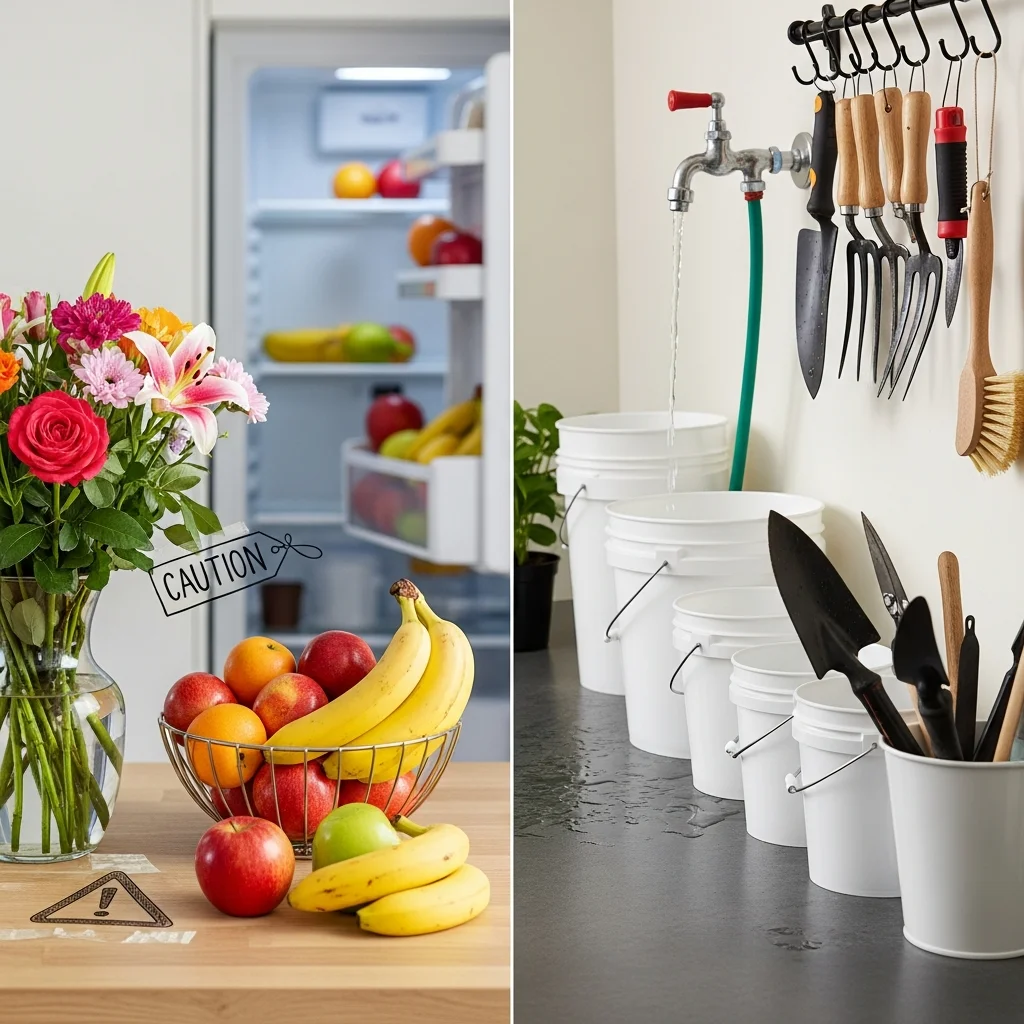
One of the most overlooked issues when storing wedding flowers is exposure to ethylene gas. This naturally occurring gas is released by ripening fruits and vegetables and can accelerate flower aging, causing petals to wilt or blossoms to drop prematurely. To prevent this, flowers should always be stored away from produce. Keep floral arrangements in a separate fridge specifically intended for flowers, as it is essential to ensure a low ethylene environment and maintain the ideal temperature range of 34–38°F.
Dirty buckets, bacteria, and cloudy water
Dirty containers and unclean water are common culprits behind bacteria buildup, which leads to cloudy water and impacts the lifespan of wedding flowers. Bacteria block the flower’s stems, preventing them from absorbing water effectively, causing early wilting. To address this, always clean buckets, vases, and tools thoroughly with soap and bleach before use. Replace water regularly and include floral preservatives to combat bacteria and keep the water clean and fresh for longer periods of time.
Crushing and bruising: stacking, tight rooms, and box pressure
Improper handling can easily damage wedding flowers, leaving petals crushed or stems bent. Tight spaces, overstacked arrangements, or excessive box pressure can bruise delicate blooms. To avoid these issues, ensure flowers are stored in spacious, organized areas where they are not overcrowded. Arrange boxes properly, and use padding or separators inside containers to cushion blooms during transportation and storage, maintaining their pristine look.
Part 7 – How to Store Finished Wedding Flowers (Bouquets, Centerpieces, Garlands)
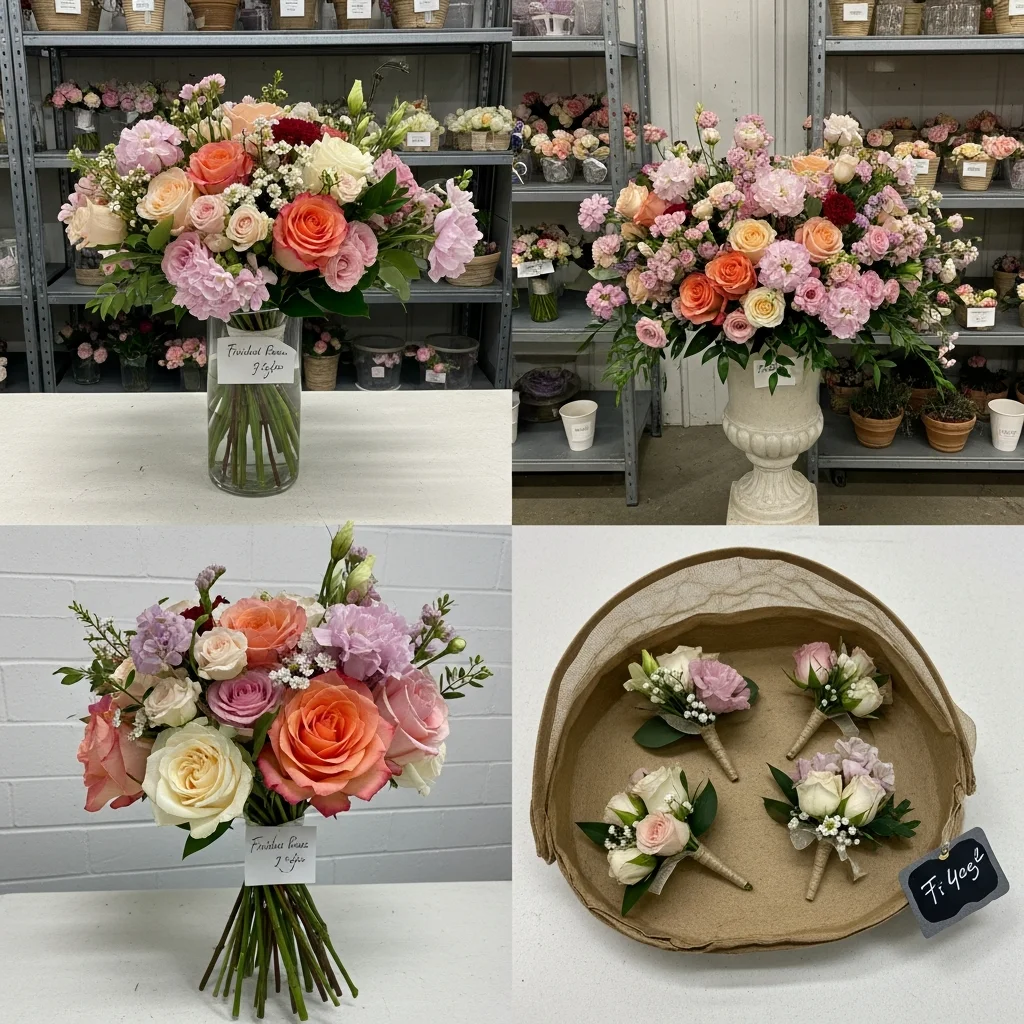
Proper storage of finished wedding flowers is essential to keep them fresh, vibrant, and structured for the big day. Each type of arrangement—bridal bouquets, bridesmaid bouquets, boutonnieres, centerpieces, and garlands—requires specific handling to ensure longevity and preserve their design integrity. By following a practical “build order” and strategizing storage, you can also streamline your workflow while maintaining the desired aesthetic.
How to Store a Bridal Bouquet Overnight
Storing a bridal bouquet overnight requires careful attention to moisture and temperature. After the bouquet is finalized, lightly spritz the blooms with water to maintain hydration, avoiding oversaturation, which can cause damage. Place the bouquet in a clean, sturdy vase with about two inches of fresh water to keep stems nourished without submerging delicate wrapping or ribbon details. Store it in a cool, dark area like a refrigerator, with the temperature set between 34°F and 38°F, ensuring there’s no ripening produce nearby that may release damaging ethylene gas. Proper storage not only prolongs the bouquet’s life but also ensures it remains photo-ready.
How to Store Bridesmaid Bouquets and Boutonnieres Safely
For bridesmaid bouquets and boutonnieres, organization is key to prevent misplacements or last-minute scrambling. After arranging the flowers, mist them gently with water to maintain hydration. Store the bouquets in individual vases with shallow water or provide hydration wraps around each stem to retain moisture without risking design disruption. Boutonnieres should be placed in sealed storage containers lined with slightly damp paper towels or cloth to prevent drying out. To avoid squishing or bruising, ensure enough space between items within the container. Storing these accessories in a cool space keeps the colors fresh and prevents wilting, ready for smooth distribution on the wedding day.
How to Store DIY Centerpieces and Table Designs
DIY centerpieces and table designs demand careful handling to maintain their aesthetic appeal. After assembly, mist the arrangements lightly and ensure the vases or foam bases are adequately hydrated. Group centerpieces by size and store them on stable surfaces, with padding around each piece to prevent tipping or jostling during transport. For table designs with exposed flowers, store them in a temperature-controlled space to avoid wilting while keeping humidity moderate to protect delicate details like dried elements or greenery. Planning storage with placement in mind allows you to minimize handling on-site, ensuring that each table design seamlessly fits its intended location.
Using a thoughtful build order—starting with hydrating base elements, followed by structural design, and finishing with final embellishments—can align storage needs with your creative process. Proper storage ensures both practicality and the preservation of each arrangement’s stylistic elegance.
Part 8 – How Many Flowers to Order When You’re Storing Ahead (Bulk Planning Math)
When planning how many flowers to order for your event, especially when storing ahead, it’s essential to factor in a few key considerations that include storage-related loss, hydration needs, and safety stems. These aspects ensure you account for variables that can affect the final appearance of your arrangements, particularly for projects like bulk wedding flowers, DIY wedding flowers, or large-scale events.
First, consider a storage-related loss buffer. Even with proper storage techniques, some flowers may wilt, bruise, or fail to hydrate fully during the storage period, especially for delicate blooms. Adding a loss buffer of 5-15% to your flower order accounts for these unavoidable losses while keeping the final result pristine and abundant. For example, if a design requires 100 roses, you should plan to order 110-115 stems to cover unexpected losses.
Next, hydration time is crucial after sourcing your blooms. Flowers bought in bulk often arrive in a dormant or semi-dry state, particularly when you buy wholesale flowers. Allowing at least 24-48 hours in clean water with flower food ensures each stem reaches its peak condition before designing. Proper hydration safeguards the vibrancy and longevity of your arrangements—especially for DIY wedding flowers where each stem must look fresh and vibrant on the day of the event.
Lastly, wholesale buyers often include “safety stems” in their calculations. These extra flowers serve as a precaution for design adjustments, imperfections, or last-minute replacements. Whether you’re working with bulk flowers for a wedding or experimenting with various styles, it’s better to have a few extras than to fall short.
By accounting for losses, hydration needs, and safety stems, you can confidently plan your flower order while maximizing storage efficiency and design flexibility. This thoughtful approach ensures your arrangements look stunning, even when using bulk wedding flowers or buying wholesale flowers.
Part 9 – Quick Checklist: The Night-Before Wedding Flower Storage Setup
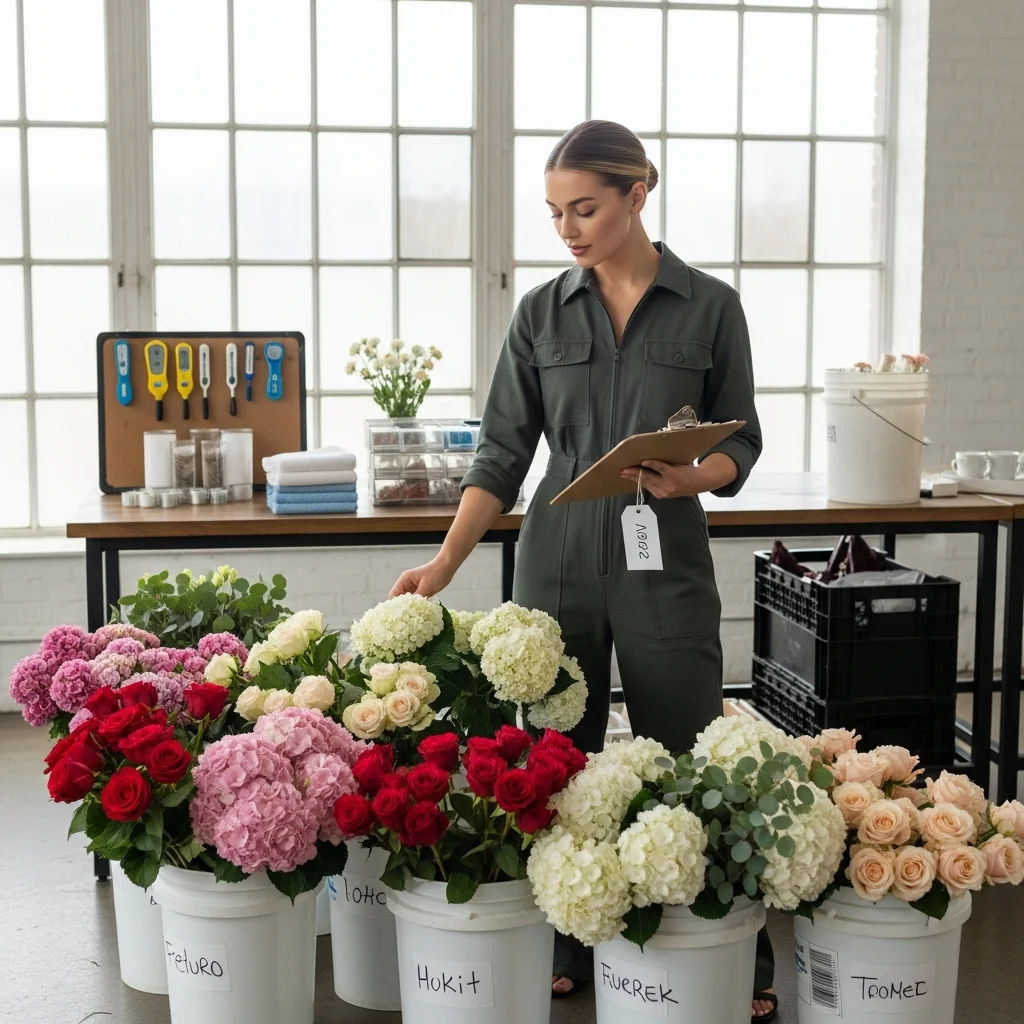
Clean your buckets ahead of time. Use soap and water to remove any residue, ensuring a sterile base for your flowers to stay fresh overnight.
Label everything clearly. Mark buckets with variety names or assigned arrangements so there’s no guesswork in the morning.
Refresh the water. Replace any stale water in buckets and add flower food to extend hydration and brilliance.
Keep towels nearby. Damp towels are useful for wiping surfaces or quickly cleaning up spills during last-minute adjustments.
Set up transport bins. Arrange sturdy bins or containers to safely secure arrangements for easy transport.
Plan for a cool room. Choose a space with stable, cool temperatures—away from direct sunlight and heat—to prevent flowers from wilting.
By following this checklist step by step, you’ll wake up to well-prepped, crisp flowers that are ready to shine.
FAQ: People Also Ask About Storing Flowers Before a Wedding
How do you keep wedding flowers fresh overnight?
To keep wedding flowers fresh overnight, trim the stems at an angle and place them in clean water. Use a cool, dark room to store the flowers and avoid direct sunlight or strong drafts. Mist them lightly with water to maintain their freshness and cover them loosely with plastic to retain moisture.
Should wedding flowers be refrigerated?
Yes, you can refrigerate wedding flowers under certain conditions. Make sure the fridge is clean and free from fruits, especially apples, as they release ethylene gas, which can accelerate wilting. Store flowers at around 34-36°F, and avoid stacking or overcrowding to prevent damage to petals and stems.
How long can flowers stay in the box before a wedding?
Flowers can typically stay in their box for up to 24 hours after delivery, provided the box is kept in a cool, ventilated space. To prevent dehydration, ensure the stems are wrapped in damp paper towels or foam and mist the flowers regularly until they are ready to be arranged.
Can I store flowers in a garage before a wedding?
Storing flowers in a garage is only advisable if the temperature is cool and stable, ideally around 40-50°F. Avoid garages that are exposed to heat, cold drafts, or vehicle fumes, which can harm the flowers. Ensure the space is clean and dry to preserve their quality.
How do I store Hydrangeas overnight?
To store Hydrangeas overnight, immerse their stems fully in cool water for a few hours to rehydrate them. Trim the stems diagonally before placing them in a vase with fresh, lukewarm water. Store the arrangement in a cool, dim area, and mist the petals lightly to keep them from drying out.
What flowers should not go in the fridge (like Orchids and Calla Lilies)?
Orchids, Calla Lilies, and tropical flowers should not be stored in the fridge, as they are sensitive to cold temperatures. These flowers thrive in warmer environments and can suffer shock or discoloration when exposed to refrigeration. Instead, store them in a cool, shaded room with good ventilation.
How early should I buy wholesale wedding flowers?
Wholesale wedding flowers are best purchased 2-3 days before the event to ensure they remain fresh and vibrant. This allows time for conditioning, such as trimming stems and rehydration, while ensuring the flowers reach peak bloom just in time for the wedding.
Conclusion: The Storage Plan That Protects Your Budget and Your Look
When it comes to preserving the beauty of your wholesale wedding flowers, proper timing, environment, and variety-specific care are essential. Purchasing your flowers 2-3 days before the wedding ensures they are fresh and ready to bloom at just the right moment. It’s also crucial to handle them carefully, keeping them away from extreme cold like refrigeration, which can damage more delicate varieties. Instead, store your flowers in a cool, shaded room with excellent air circulation to ensure they remain vibrant and healthy.
Each flower variety has unique needs, so understanding their requirements—such as ideal water temperature and stem trimming techniques—can make all the difference in their longevity and appearance. Proper storage and conditioning not only maintain your floral budget by reducing waste but also ensure your flowers look stunning on your special day.
With these guidelines in place, you can confidently manage your floral arrangements without stress. Whole Blossoms is here to help by offering a wide selection of wholesale flowers, along with expert advice to ensure your blooms arrive fresh and on schedule. By planning bulk purchases with Whole Blossoms, you’ll enjoy a seamless experience that supports your vision while protecting your budget.