


 by
by 
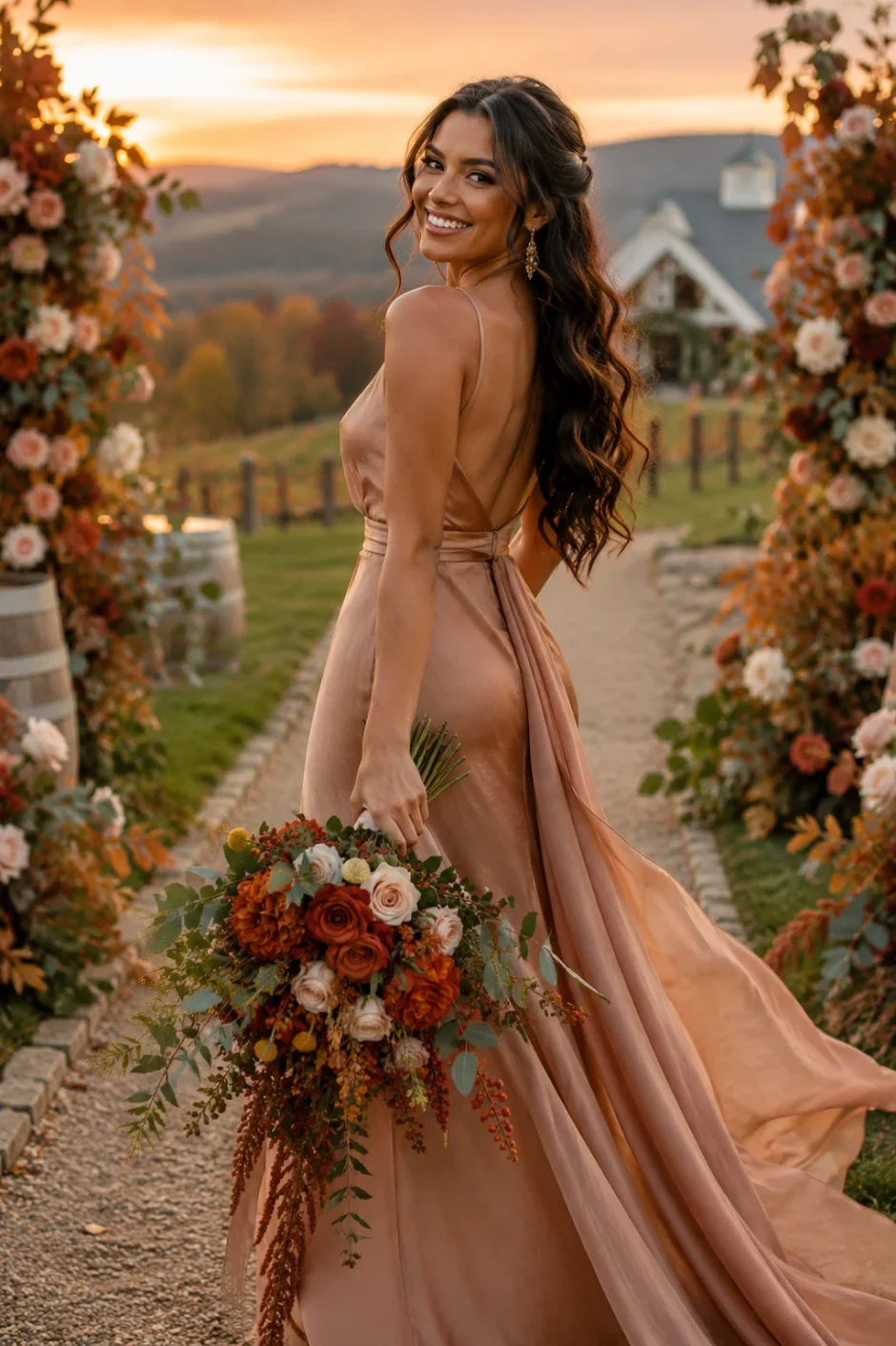
A fall wedding does not have to choose between soft neutrals and bold autumn colors. Terracotta roses and dark orange hydrangeas create a bridge between the two—earthy enough to feel sophisticated and colorful enough to make an unmistakable seasonal statement. Warm autumn tones such as terracotta, rust, cinnamon, burnt orange, and earthy neutrals provide a rich seasonal palette that feels fresh and refined, particularly when balanced with softer accents. Instead of overwhelming an arrangement with orange hues, the key to polished wedding florals is strategic contrast.
Terracotta roses serve as the refined, muted anchor of these arrangements, offering a timeless foundation with their subtle warmth. Meanwhile, airbrushed dark orange hydrangeas steal the show as the high-volume statement flower, adding dimension and vibrancy without overpowering. To create a truly elevated composition, balance these standout blooms with accents like cream, champagne, beige, muted blush, bronze berries, and textured greenery. The result is an elegant harmony of color, texture, and shape that exudes seasonal charm while maintaining sophistication.
In this guide, you’ll learn:
- Why terracotta and orange work together
- Which flowers complete the palette
- How to build a fall bridal bouquet
- How to design centerpieces and ceremony flowers
- How to order the look in bulk
- FAQs
Part 1 – Why Terracotta Roses and Orange Hydrangeas Work So Well Together
The pairing of terracotta roses and orange hydrangeas combines earthy warmth with bold autumn richness, creating a stunning visual balance perfect for fall arrangements. This duo works exceptionally well because of the complementary qualities each flower brings to a design, along with their ability to transition seamlessly between neutral and vibrant tones.
Terracotta Roses Create the Earthy Foundation
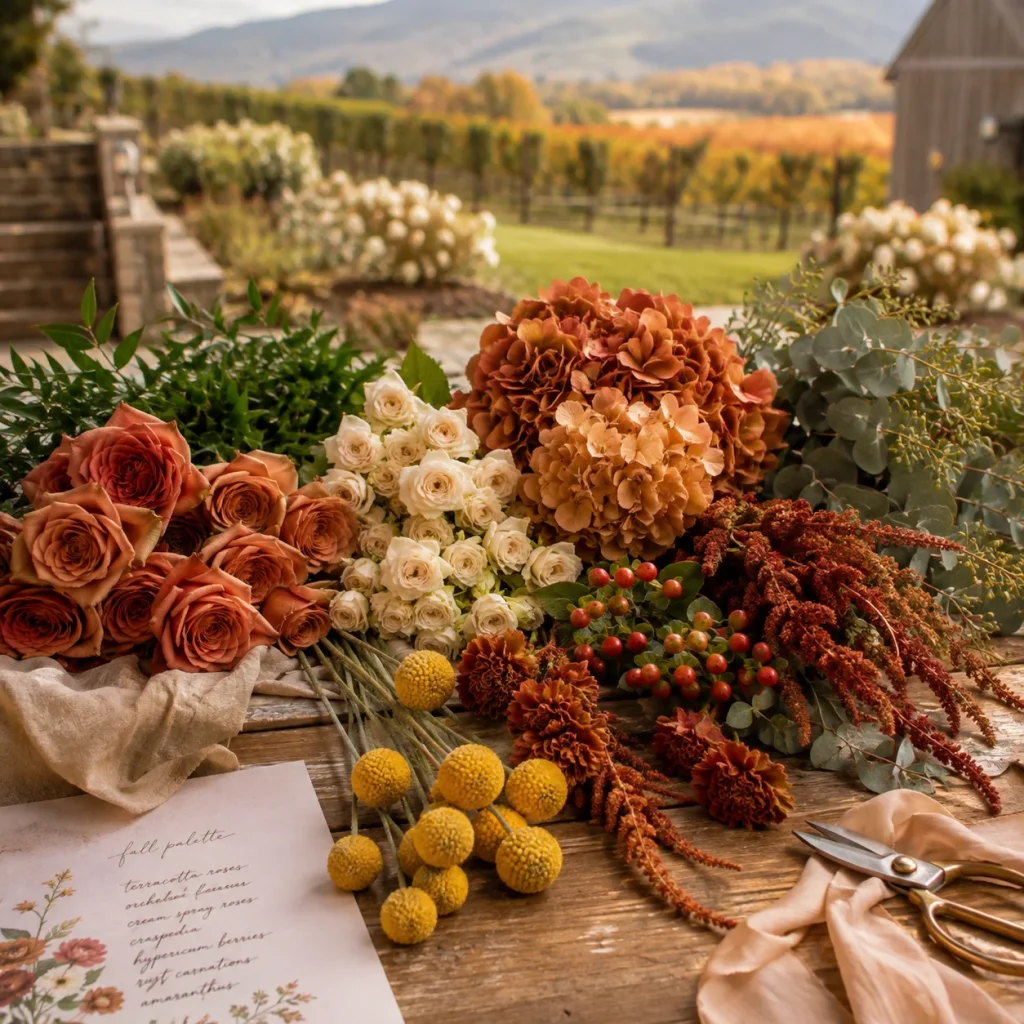
Terracotta roses stand out for their muted orange-brown undertones, making them an ideal base for fall-inspired floral designs. Their warm earthiness accommodates a wide range of palettes, from neutral creams to deeper saturated oranges. Unlike bright pumpkin orange, terracotta offers a softer, more natural hue that blends effortlessly with beige, champagne, or muted blush accents. Their romantic rose shape adds a sense of structured elegance, making them perfect for forming the foundation of bouquets or centerpieces. Additionally, terracotta roses act as a transition between neutral and bold colors, tying design elements together harmoniously.
Orange Hydrangeas Add Immediate Volume
Dark orange hydrangeas bring a powerful visual impact to fall arrangements, thanks to their strong autumnal color and large, clustered blooms. The voluminous nature of hydrangeas creates an immediate sense of fullness, making them a focal point in any composition. They soften the overall look by providing a cloud-like texture that contrasts beautifully with the more structured petals of the terracotta roses. This balance between the architectural precision of roses and the softer, clustered appearance of hydrangeas ensures the arrangement feels both romantic and dynamic.
Keep the Palette Dimensional With More Than One Orange
To elevate the design, incorporating a variety of orange tones enhances depth and visual interest. Shades like rust, burnt orange, peach-orange, bronze, cinnamon, and even jasper add dimension and keep the arrangement from feeling flat. This use of varied hues creates layers of color that draw the eye and evoke the rich, complex tones of the autumn season.
By understanding the unique roles terracotta roses and orange hydrangeas play, designers can craft floral compositions that feel balanced, sophisticated, and quintessentially fall. Their combination offers a marriage of earthy foundation and bold focal volume, ensuring arrangements are both visually striking and intrinsically harmonious.
Part 2 – The Best Flowers and Greenery to Pair With Terracotta and Orange
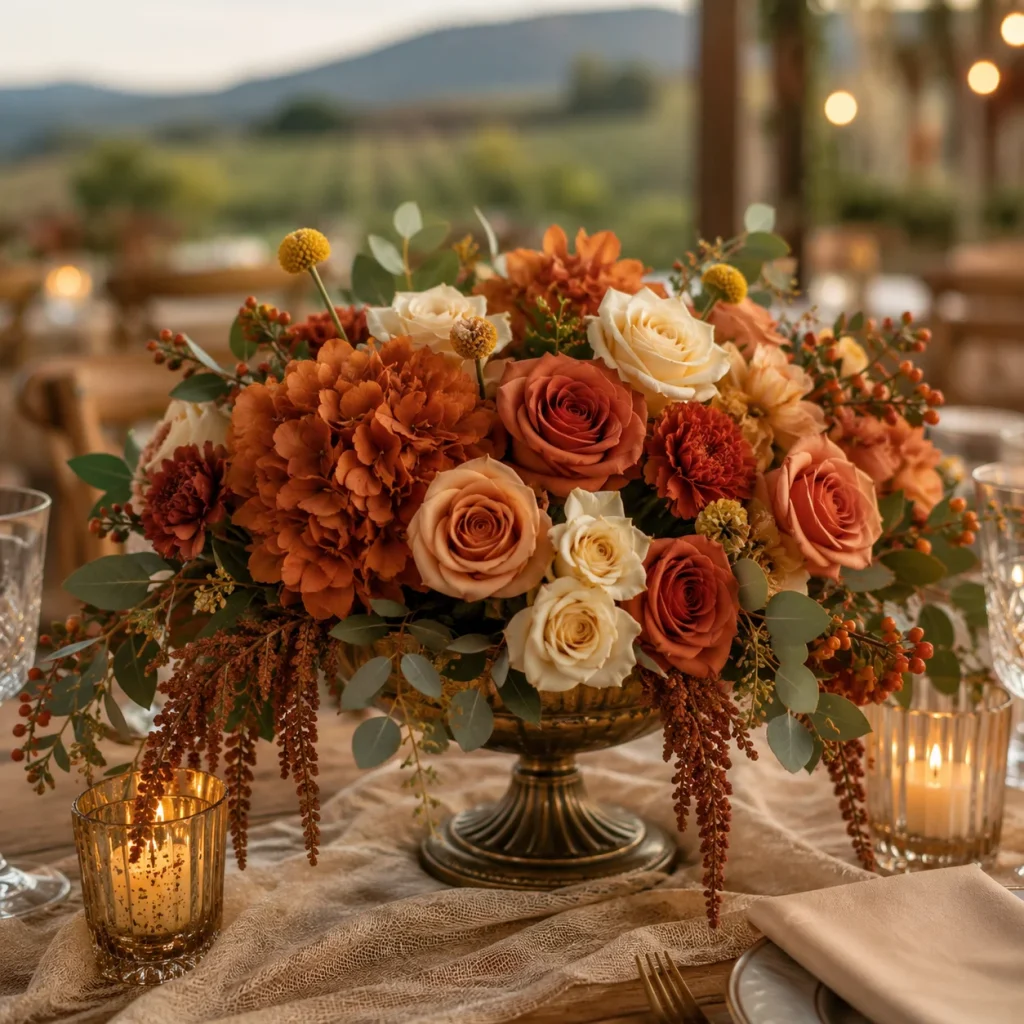
Creating a cohesive and complete floral arrangement using a terracotta and orange palette requires a thoughtful selection of complementary blooms and greenery. By incorporating a range of textures, tones, and shapes, designers can enhance the vibrancy of these core flowers while maintaining balance and elegance. Below are some of the best options for expanding this palette into a full shopping list.
Cream and Sahara-Toned Spray Roses Soften the Palette
To reduce the visual intensity of deeply saturated orange flowers, cream and Sahara-toned spray roses make an excellent addition. Their neutral, understated hues—ranging from beige and champagne to nude and other soft tones—create a sense of lightness, breaking up the boldness of terracotta and orange blooms. These delicate spray roses enhance the arrangement’s depth while offering a subtle elegance that draws the eye. Consider varieties that lean towards Sahara-style neutrals for an ethereal and modern touch.
Craspedia Adds Small Golden Accents
Craspedia, also known as Billy Balls, introduces compact pops of yellow-gold to arrangements. Their graphic texture and playful character add contrast without overpowering the design. They are perfect for accenting bouquets and boutonnieres, giving a modern and whimsical spin to floral designs. Craspedia’s round shape and unique texture also help to break up the softer silhouettes of roses and hydrangeas, making them a useful accessory element in any seasonal arrangement.
Hypericum Berries Bring Seasonal Texture
Hypericum berries are an excellent way to introduce seasonal texture into a floral composition. Available in shades of rust orange, bronze, and red-brown, their small, clustered berries visually tie larger flowers to the selected greenery. Additionally, their natural sheen and round shape contribute both depth and a sense of cohesion to the overall arrangement. These berries work especially well for fall-inspired designs, adding a nod to the changing foliage of the season.
Amaranthus Adds Cascading Movement
For arrangements that need dynamic flow and drama, amaranthus is a valuable choice. Available in warm hues like bronze, brown, rust, and burgundy, trailing amaranthus adds a cascading effect that enhances movement and creates a luxurious feel. This flower is particularly striking in bridal bouquets, large table centerpieces, arches, and sweetheart-table designs. Amaranthus softens the boundaries of static floral arrangements while reinforcing the earthy, bold tone of the terracotta and orange palette.
Carnations Can Add Budget-Friendly Depth
Carnations are one of the most versatile and cost-effective flowers for adding volume to any arrangement. They’re available in a range of colors that suit this palette, including deep rust, terra-cotta-adjacent peach, and cream. By clustering carnations together or using techniques like reflexing, designers can achieve a contemporary, textured look that complements higher-end blooms in the composition. This approach ensures that large-scale events are both high-impact and budget-friendly, without sacrificing quality or style.
Muted Greenery Grounds the Warm Colors
To ground the arrangement’s warm hues, incorporate muted greenery. Options like seeded eucalyptus, Italian ruscus, olive-style foliage, salal, and trailing eucalyptus varieties provide a cool, subtle backdrop that enhances the flowers without overwhelming them. These greens introduce a natural, organic structure to the design, anchoring terracotta and orange tones while allowing the vibrant blooms to shine. Trailing greenery adds softness and flow, making it an ideal complement to cascading elements like amaranthus.
The key to transforming the terracotta and orange palette into a polished, full floral arrangement lies in balancing bold colors with soft neutrals, playful accents, and grounding greenery. By carefully selecting and combining these elements, designers can create striking compositions that evoke the beauty and warmth of the autumn season.
Part 3 – How to Build a Terracotta and Orange Bridal Bouquet
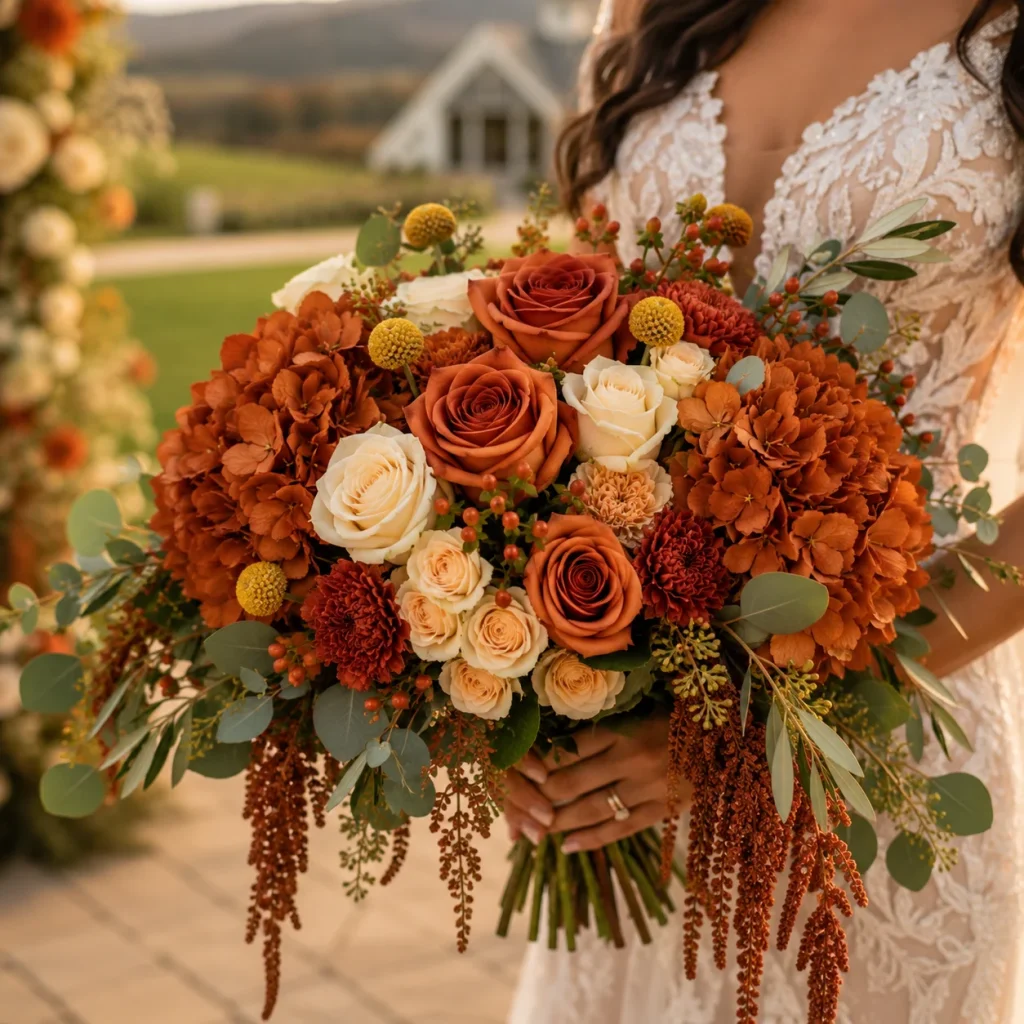
Creating a terracotta and orange bridal bouquet is a beautiful way to evoke the warmth and richness of autumn. The following is a starting recipe designed to help you craft a balanced and visually striking arrangement. Keep in mind that bloom sizes and bouquet density can vary, so use these guidelines as a flexible foundation.
Bridal Bouquet Starting Recipe
- 1–3 large dark orange hydrangea stems
- 8–12 terracotta roses
- 4–6 cream or Sahara spray rose stems
- 3–5 supporting rust or cream flowers
- 2–4 textural berry or craspedia stems
- Amaranthus (as desired)
- Seeded eucalyptus or Italian ruscus
- Velvet or satin ribbon in rust, taupe, copper, champagne, or dark brown
Let the Hydrangea Create the Foundation
Begin by placing the dark orange hydrangea slightly lower or toward the center of the bouquet. Hydrangeas are naturally voluminous, so positioning them in this way creates a strong, supportive base without overshadowing other elements. Their broad blooms also provide visual depth, framing the focal terracotta roses beautifully.
Cluster Terracotta Roses for Stronger Color Impact
Group the terracotta roses together in small clusters throughout the bouquet. This technique creates concentrated pockets of color, ensuring their warm, earthy tones make a deliberate impact. Scattering single roses randomly can dilute their presence, whereas grouping them injects a dynamic and sophisticated energy into the design.
Add Cream Flowers as Visual Breathing Room
To balance the intensity of the orange tones, incorporate cream flowers like spray roses or supporting blooms. These lighter elements act as “breathing space,” softening the overall palette and preventing the bouquet from becoming overly saturated. They ensure the final arrangement feels harmonious and inviting, rather than overwhelming.
Finish With Texture and Cascading Movement
To elevate the bouquet’s design, add textured elements such as craspedia or berries for visual interest. Introduce cascading greenery like amaranthus or seeded eucalyptus to give the bouquet a sense of motion and flow. Italian ruscus can also soften edges while drawing the eye inward. These details add dimension and movement, making the bouquet feel alive and enchanting.
By following this guide, you’ll come away with a beautifully balanced terracotta and orange bridal bouquet. Experiment with stem counts and bloom placements to create a unique arrangement that resonates with your personal style and vision.
Part 4 – How to Use the Palette in Centerpieces and Ceremony Flowers
When planning wedding flowers, versatility is a key component in creating a cohesive design across the entire event. The terracotta and orange palette is dynamic and can be scaled beautifully—from low centerpieces to impactful ceremony installations. Here’s how to use these blooms effectively for different arrangements.
Low Autumn Centerpieces
For low centerpieces that feel abundant yet maintain a table-friendly height, use the following ingredients:
- Terracotta roses
- Cream spray roses
- Carnations
- Berries
- Eucalyptus
- Optional craspedia
Design these arrangements in a compote or low bowl to keep the focus on the blooms while allowing guests to see across their tables. Layer greenery at the base, then build up using hydrangeas as a voluminous foundation. Disperse terracotta roses and spray roses for focal points, and add accents like berries and craspedia to provide texture and seasonal charm.
Bud Vases Stretch the Palette Across More Tables
To bring the palette to more areas of your venue while maintaining a budget-conscious approach, incorporate bud vases. Fill these with a mix of:
- Single terracotta roses
- Small clusters of spray roses
- Craspedia
- Berries
- Small pieces of greenery
Bud vases are perfect for cocktail tables, bars, and other secondary surfaces. This method ensures that the color palette appears throughout the venue without the need for full-sized centerpieces at every table.
Ceremony Installations Need More Greenery and Movement
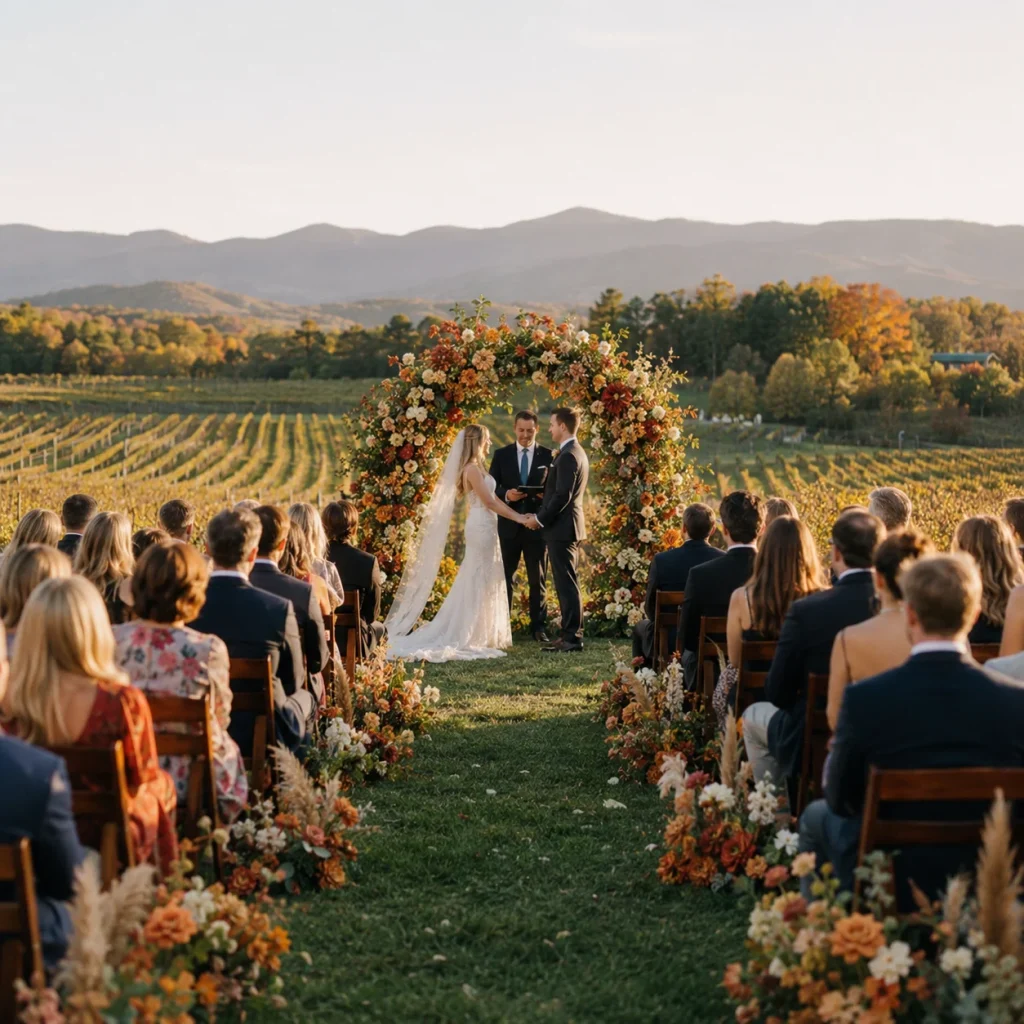
For larger-scale arrangements like ceremony arches or grounded installations, prioritize greenery to create a sense of fullness and dimension. Italian ruscus, seeded eucalyptus, and other cascading greens are excellent for providing a natural, flowing structure. Use hydrangeas strategically where large flower mass is needed, and cluster terracotta roses in focal areas to draw the eye. Incorporating these design principles will result in installations that feel lush yet cohesive with the overall palette.
Vineyard Weddings Naturally Support This Palette
The warm terracotta and orange tones are particularly well-suited for vineyard weddings. Take inspiration from venues like Pippin Hill Farm & Vineyards, known for their rolling Virginia hills, vineyard rows, and rustic-luxury details. These settings often feature natural stone, muted greens, and mountain views, which pair beautifully with the warm floral tones. Use hydrangeas and roses to complement the environment without overpowering it, ensuring that the flowers enhance the venue’s beauty rather than compete with it.
FAQ Section
Do terracotta roses go with orange hydrangeas?
Yes. Terracotta roses provide a muted earthy orange while darker orange hydrangeas create stronger saturation and volume. Adding cream flowers and muted greenery between the two colors keeps the arrangement dimensional rather than turning into one solid block of orange.
What flowers look best with terracotta roses?
Cream spray roses, neutral roses, carnations, craspedia, hypericum berries, amaranthus, and other rust or champagne-toned flowers can work beautifully. Choose supporting flowers according to whether you want to soften, deepen, or add texture to the palette.
Are orange hydrangeas good for wedding centerpieces?
Orange hydrangeas can provide substantial visual volume because of their large clustered flower heads. They can serve as a foundation around which roses, smaller flowers, berries, and greenery are arranged. The exact number needed depends on centerpiece size and density.
What greenery goes with terracotta wedding flowers?
Seeded eucalyptus, Italian ruscus, olive-style greenery, salal, and other muted green foliage can complement terracotta and burnt orange. Softer gray-green foliage creates an especially attractive contrast with warm rust and orange shades.
How do I keep an orange wedding bouquet from looking too bright?
Introduce cream, champagne, beige, muted blush, or Sahara-toned flowers between the stronger orange blooms. Greenery also provides visual separation. Using several related warm shades—terracotta, rust, burnt orange, and bronze—creates depth instead of one flat orange color.
Are terracotta wedding flowers good for a vineyard wedding?
Yes. Terracotta, rust, orange, cream, and muted greenery naturally complement vineyard landscapes, wood, stone, and rolling green hills. The palette provides enough warmth to stand out in outdoor photographs without fighting the natural scenery.
Color Palette Ideas for Vineyard Weddings
| Color | Flower | Design Role | Best Pairings | Suggested Use |
| Terracotta | Roses | Primary focal | Cream, rust, eucalyptus | Bouquets |
| Dark Orange | Hydrangea | Volume | Terracotta, cream | Centerpieces |
| Cream | Spray Roses | Softener | Orange, bronze | All designs |
| Gold | Craspedia | Accent | Terracotta, green | Bud vases |
| Rust | Hypericum | Texture | Cream, orange | Bouquets |
| Bronze | Amaranthus | Movement | Terracotta, dark green | Large designs |
Conclusion
Crafting the perfect autumn floral design is all about balance and harmony. Terracotta roses provide refined focal details, offering elegance and sophistication. Orange hydrangeas add volume and vibrant color, creating a striking and bold foundation. Cream-colored flowers act as the perfect contrast, softening arrangements and allowing other tones to shine. Texture flowers like hypericum berries and craspedia bring dimension, while greenery grounds the design with a natural finish. Together, these elements create stunning bouquets, centerpieces, and décor for any fall occasion.
Bring your autumn wedding palette to life with farm-direct flowers from Whole Blossoms. Explore our collection of terracotta roses, orange hydrangeas, spray roses, craspedia, berries, greenery, and floral supplies to design unforgettable bridal bouquets, ceremony installations, and reception décor. Visit Whole Blossoms today to start planning your dream floral arrangements!