


 by
by 

Introduction — Why Wedding Flower Delivery Timing Matters
Planning the perfect wedding requires careful attention to every detail, and the flowers are no exception. Wedding flower delivery refers to the process of sourcing fresh flowers, often ordered in bulk, to be shipped directly to your doorstep or preparation site in time for your event. This service is vital for DIY couples, florists, and event planners, offering access to fresh, stunning blooms for weddings and other occasions. But with fresh flowers being highly perishable and delicate, timing their delivery is critical for ensuring their beauty on the big day.
The timing of your flower delivery matters for several reasons. First, flowers need to arrive at their optimal bloom stage, ensuring they appear fresh and vibrant during the event. Ordering too early could result in over-bloomed or wilted flowers, while a late delivery might not leave enough time for proper preparation. Additionally, properly hydrating and storing your flowers upon arrival is important to maintain their health and appearance. Understanding these basic concepts—like hydration and bloom stages—can help alleviate anxiety about receiving shipped event flowers.
Bulk flower delivery offers numerous advantages, especially for those coordinating DIY weddings or larger events. For DIY couples, it provides a cost-effective way to create personalized floral arrangements without relying on traditional florists. Event planners and florists also benefit from the ability to source premium-quality flowers in large quantities, giving them the materials needed to craft breathtaking designs. By understanding the timeline and handling process, you can ensure beautifully arranged blooms, regardless of your level of experience.
With the right preparation and delivery strategy, wedding flower delivery can transform your event into a memorable experience, full of fresh and gorgeous floral decor. Let’s explore the ideal timeline for ordering, receiving, and storing your wedding flowers.
Part 1 – What Does “Wedding Flower Delivery” Mean?
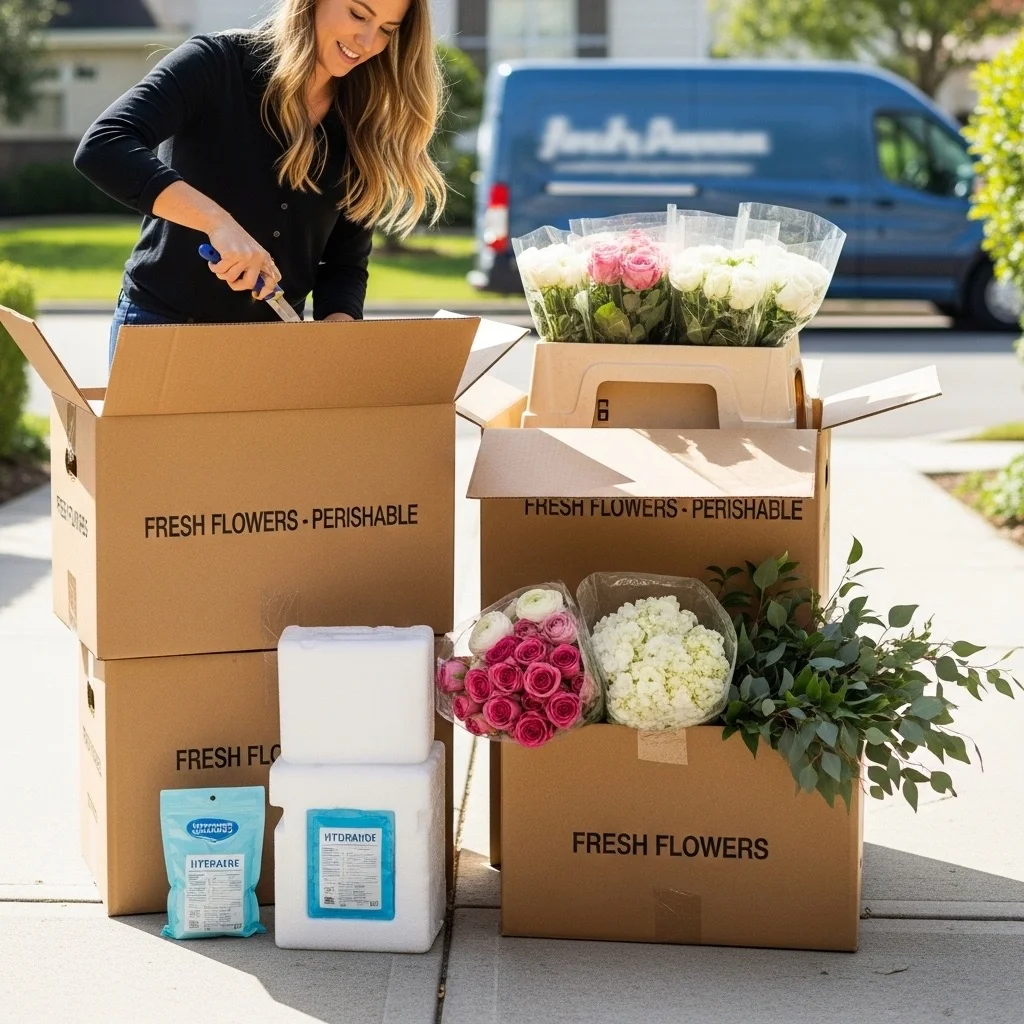
Wedding flower delivery refers to the process where bulk flowers are harvested, cooled, boxed, and shipped to event locations so they arrive fresh enough for hydration, designing, and installation. This essential service ensures that flowers maintain their beauty and vibrancy, making them ready for use in bouquets, centerpieces, arches, and other decorative arrangements.
Why It Matters
The process of wedding flower delivery is designed to prioritize the longevity and freshness of blooms, enabling an event’s floral décor to truly shine. Flowers like roses, peonies, ranunculus, and hydrangeas are harvested at their optimal bloom stage, ensuring that they arrive in perfect condition. After harvesting, flowers are carefully cooled and packed to preserve their quality during transportation.
For professional florists, wedding flower delivery offers access to high-quality materials required to craft awe-inspiring designs. DIY couples also benefit, as they can order wholesale flowers to create personalized arrangements. Whether you’re an expert florist or an amateur designer, having freshly delivered flowers supports your unique workflow.
Additionally, flower delivery plays a crucial role in reducing stress on the big day by ensuring blooms arrive timely and are wedding-ready. Whether you’re planning an extravagant event or an intimate gathering, this service guarantees that flower preparation happens efficiently, transforming your vision into reality.
Part 2 – When to Order Wedding Flowers (Ideal Ordering Window)
How Far in Advance Should You Order Bulk Wedding Flowers?
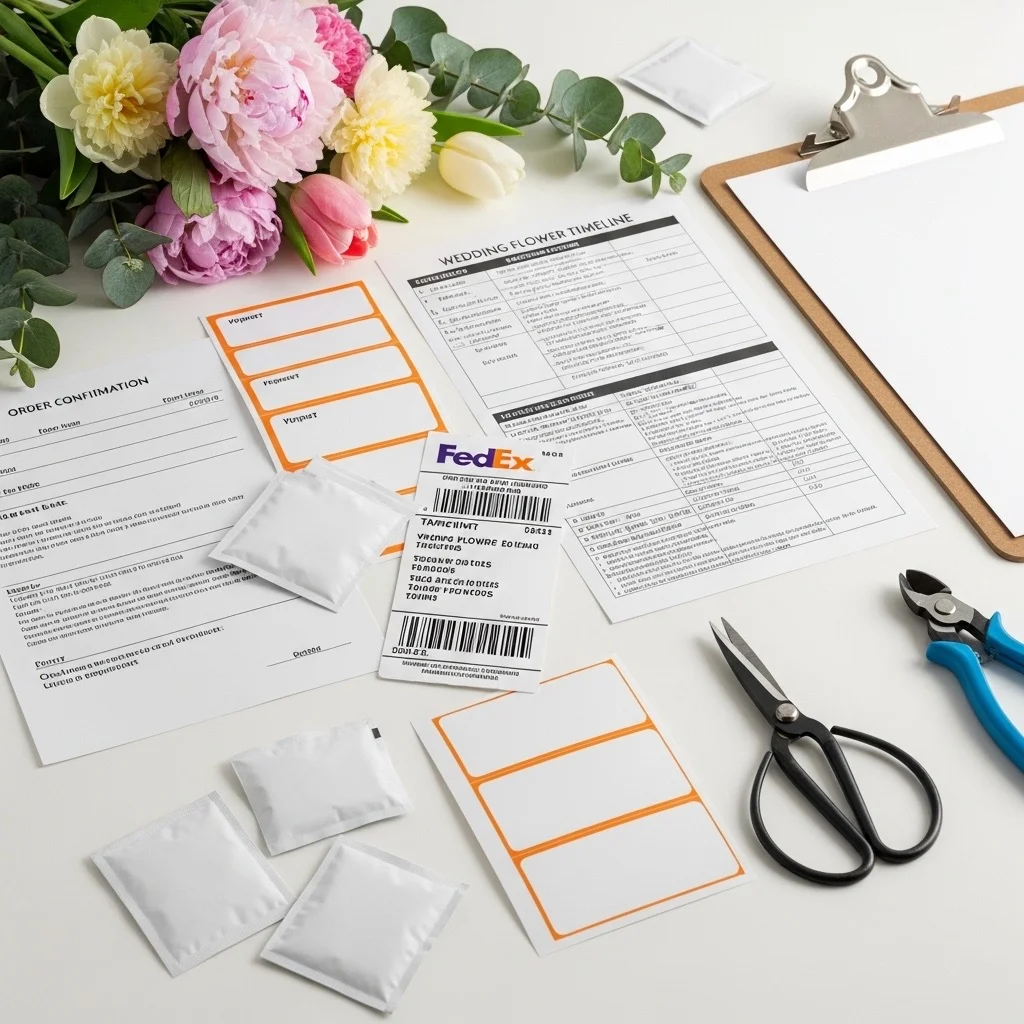
When planning a wedding, timing is everything, and this includes ordering your bulk flowers. Generally, the ideal ordering window for most bulk wedding flowers is 2–6 weeks before the event. This timeline ensures the flowers arrive fresh and in peak condition, allowing you or your florist enough time to process, arrange, and store them appropriately.
For weddings taking place during high-demand seasons, including May, September, and December, it is crucial to plan well in advance as popular flower varieties may sell out quickly. Similarly, specific blooms like Peonies and Ranunculus, which are seasonal favorites, have limited availability windows and often require advance reservations or pre-orders months before the event.
Seasonal Ordering Tips
Your wedding’s season plays a major role in determining flower availability and ordering timelines. Incorporating seasonal flowers into your arrangements not only ensures freshness but can also reduce costs. Below are some examples of flowers and greenery ideal for each season:
Spring
Spring weddings are synonymous with romantic and fresh blooms like Tulips, Daffodils, Ranunculus, and Peonies. These flowers thrive in the cooler months, but availability can be limited during early spring, so ordering 8–12 weeks in advance is advised.
Summer
For summer weddings, vibrant and bold flowers such as Sunflowers, Dahlias, Zinnias, and Roses are perfect choices. Since these blooms are in peak season, ordering 4–6 weeks before the event typically suffices while ensuring the best options.
Fall
Autumn weddings are enhanced by earthy and warm-toned flowers like Pampas Grass, Eucalyptus, Orchids, and Carnations. For these seasonal favorites, aim to place your bulk flower order 6–8 weeks ahead of time to ensure their timely arrival.
Winter
Winter weddings shine with classic blooms such as Amaryllis, Roses, and Calla Lilies, which exude elegance and warmth despite the colder settings. Placing your order around 8 weeks in advance is recommended during this slower floral season.
When to Order Preserved & Dried Flowers
For preserved and dried flowers, the timeline is a bit more flexible as these blooms do not require special care upon arrival. Preserved Eucalyptus, Pampas Grass, and other dried arrangements can be ordered months in advance since they maintain their texture and aesthetics over time. A good rule of thumb is to order preserved flowers about 1–3 months before the wedding, giving you ample time to design or refine your arrangements.
“How far in advance should you order wedding flowers?”
For fresh bulk wedding flowers, it’s best to place your order 2–6 weeks before the event, though high-demand seasons and specific blooms may require earlier planning. Preserved or dried flowers can be ordered 1–3 months in advance due to their long-lasting nature.
Part 3 – Understanding Flower Arrival Timing (3–10 Days Before Event)
When Do Bulk Flowers Arrive Before a Wedding?
It’s essential to plan flower arrivals carefully, as different types of blooms have unique needs to ensure they look their best on your special day. For optimal freshness, bulk flowers are typically shipped close to the wedding date. Below is a breakdown of arrival targets by category:
- Roses, Carnations, Baby’s Breath
Arrive 3–4 days before the event. These durable flowers benefit from additional time for hydration and arranging but don’t need a long bloom cycle.
- Peonies, Ranunculus, Dahlias
Arrive 4–6 days before the event. These delicate blooms need more time to open fully and showcase their intricate beauty.
- Hydrangeas, Garden Roses, Tulips
Arrive 2–3 days before the event. These flowers are highly sensitive to handling and environmental conditions, so they should be prepared as close to the wedding as possible.
- Preserved Flowers, Greenery
Arrive 7–14 days before the event. Since these are long-lasting materials that don’t wilt, you can receive them earlier to start creating arrangements at your own pace.
Cold Chain Logistics
To ensure bulk flowers arrive fresh and undamaged, they’re carefully monitored throughout their shipping process using cold chain logistics. This meticulous handling system controls temperature and conditions from the moment flowers are harvested until they reach your door. Here’s how the process works:
- Harvest
Flowers are cut at their prime stage of development, ensuring maximum longevity and quality.
- Hydration at the Farm
Immediately after being cut, stems are placed in water or hydrated using specialized solutions to preserve their freshness.
- Cooling
Flowers are quickly cooled to halt premature blooming or aging. Cooling stabilizes the blooms and retains their vibrant colors.
- Boxing
Once hydrated and cooled, flowers are securely boxed with insulation and waterproof liners to maintain their condition during transit.
- FedEx Priority Overnight / Cargo Shipping
Flowers are typically shipped using expedited services to minimize their time in transit. Many suppliers rely on FedEx Priority Overnight or specialized cargo options to deliver flowers quickly and in pristine condition.
Why Flowers Arrive Closed
One of the unique aspects of bulk wedding flowers is that they often arrive closed or in a semi-blooming state. This is done intentionally for several reasons:
- Roses
Roses are shipped closed to protect their delicate petal edges. Once rehydrated, they gradually open to their full, lush form over 1–2 days.
- Ranunculus
These flowers arrive in tight buds and slowly unfurl over 3–4 days, showcasing their layered, paper-like petals.
- Peonies
Shipped in a ball-like stage, peonies need about 3–5 days to bloom into their stunning, wide blossoms.
Popular Questions:
- Do wedding flowers arrive open or closed? Wedding flowers typically arrive closed or semi-closed to ensure they last longer and bloom at the desired time.
- How long do bulk flowers take to open? Most flowers take 2–5 days to fully open after arrival, so plan accordingly when scheduling flower delivery.
| Category | Arrival Target |
| Roses, Carnations, Baby’s Breath | 3–4 days before |
| Peonies, Ranunculus, Dahlias | 4–6 days before |
| Hydrangeas, Garden Roses, Tulips | 2–3 days before |
| Preserved Flowers, Greenery | 7–14 days before |
Part 4 – Delivery Day Checklist for Event Flowers Shipped
Unboxing your event flowers on delivery day is an important process to ensure they stay fresh and beautiful for your event. Below is a step-by-step guide to follow when your flowers arrive:
- Inspect boxes for damage
Carefully examine the packaging for any signs of shipping damage. Notify your supplier immediately if there are any issues with the shipment.
- Identify flower varieties
Cross-check all the delivered varieties with your order to ensure everything has arrived as expected.
- Check flower and water temperatures
Ensure that the flowers arrived cool and comfortable. If there is water or ice included in the packaging, make sure it is at the proper temperature to support freshness.
- Remove sleeves for air circulation
Gently remove any plastic sleeves or wrappings from the flowers to allow them to breathe, being careful not to damage delicate petals or leaves.
- Trim stems at an angle
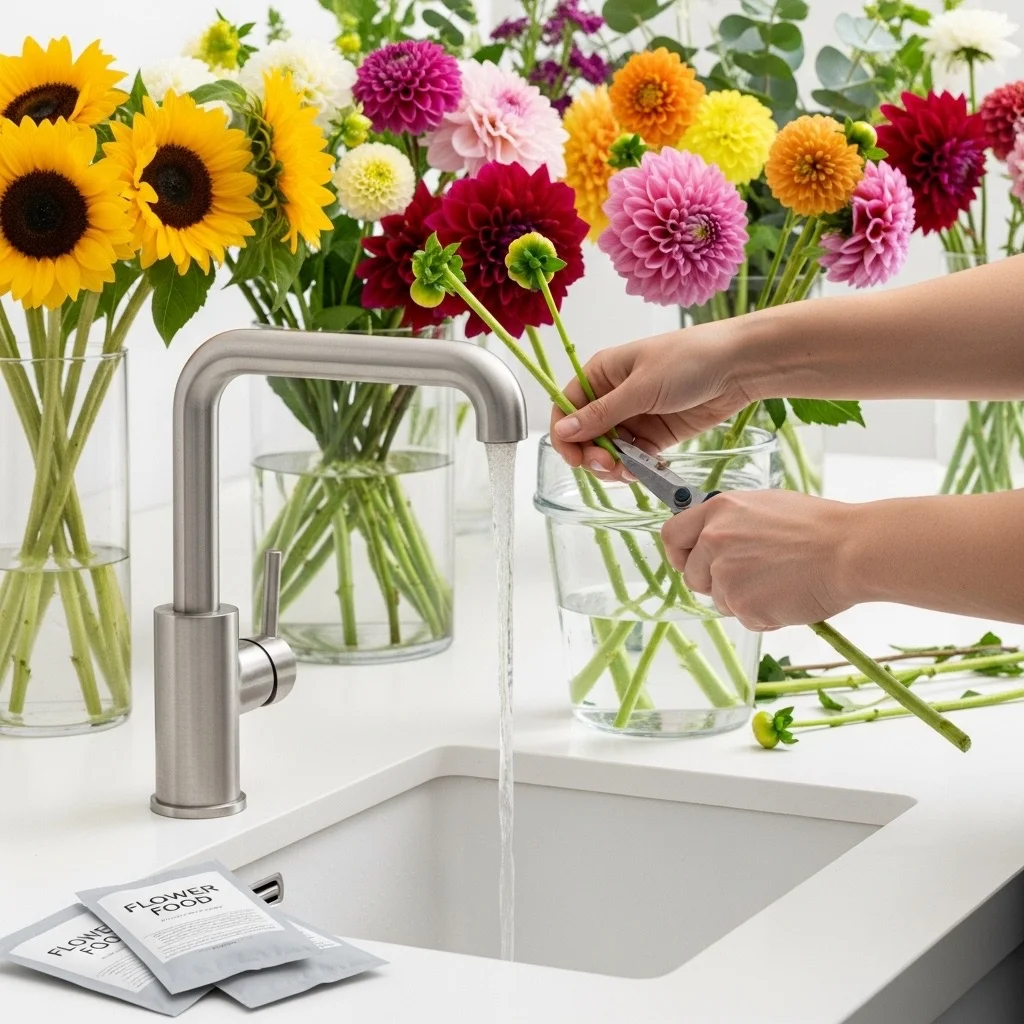
Using clean, sharp scissors or a floral knife, trim each stem at an angle. This allows flowers to efficiently absorb water for hydration. Avoid trimming too short to maintain your desired arrangement length.
- Place flowers in clean buckets of water
Fill sanitized buckets with room temperature water and place the flowers inside immediately after trimming the stems.
- Add flower food to the water
Dissolve the provided flower food into the water to nourish your blooms while they rehydrate. This step is vital for extending the freshness of your flowers.
- Refrigerate if required
Some flowers, depending on their type, may need to be stored in refrigeration to preserve their condition until the event. Be sure to check the recommended temperature ranges for each variety.
Special Handling Notes
Certain flower varieties have unique care needs to ensure their longevity and vibrance. Keep these important notes in mind for optimal results:
- Hydrangeas
Hydrangeas require extra hydration. Along with placing their stems in water, gently soak their flower heads in clean water to keep them looking full and fresh.
- Ranunculus
Ranunculus thrives in cooler temperatures. Store these flowers in a cool, shaded area to prevent wilting and maintain their intricate beauty.
- Sunflowers
Sunflowers are heavy drinkers and will quickly absorb water. Be sure to monitor their buckets regularly and replenish water as needed.
- Orchids
Orchids are extremely sensitive to cold temperatures. Avoid exposing them to drafts or refrigeration, and keep them in a stable, warm environment.
- Eucalyptus
Eucalyptus can be dry stored and does not require water immediately upon arrival. However, ensure it remains in a cool setting with low humidity to prevent any deterioration.
By following this delivery day checklist and customizing your care approach for each type of flower, you can guarantee that your event blooms make a stunning impression on the big day!
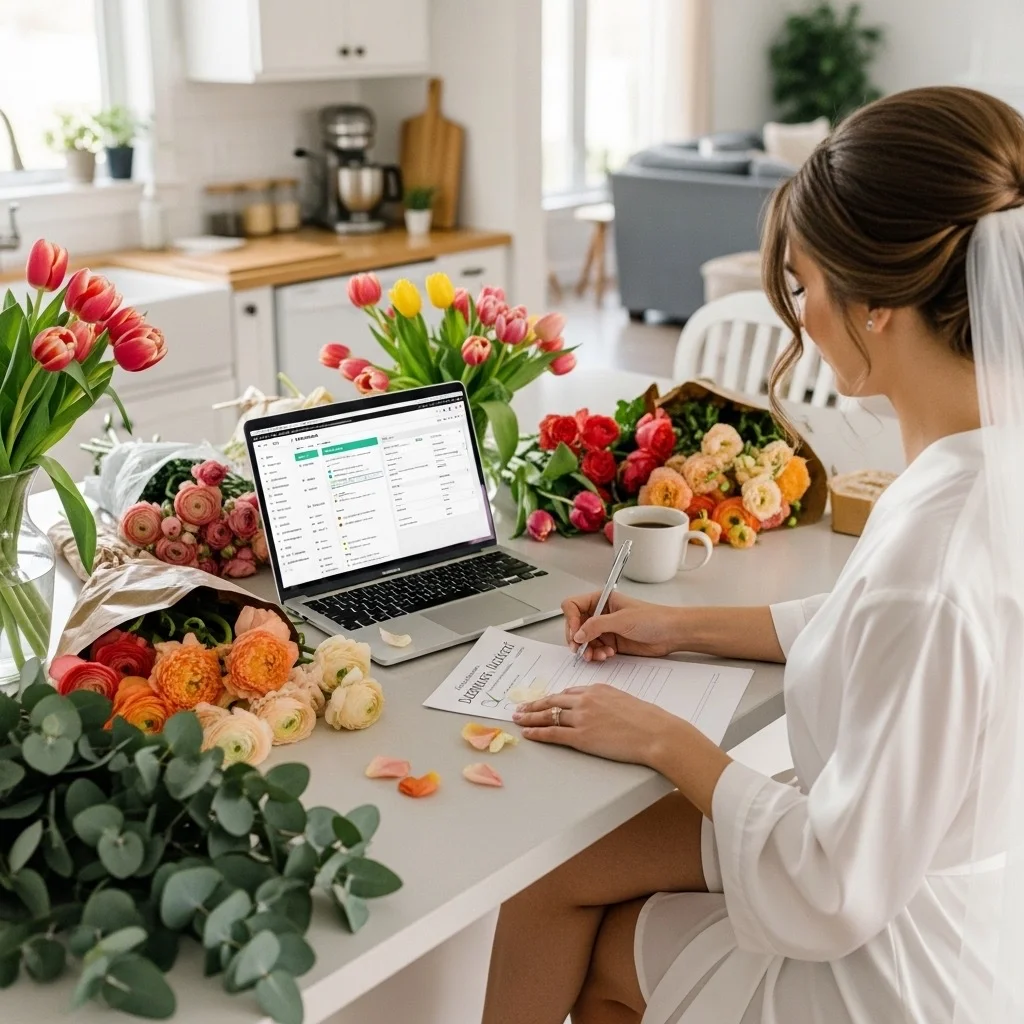
Part 5 – How to Store Bulk Wedding Flowers Until the Event
Proper storage of bulk wedding flowers is essential to keep them fresh, vibrant, and event-ready. Each flower type has unique storage needs, so following specific guidelines is necessary. Below is an outline of recommended storage practices by type, along with additional technical tips for hydration and conditioning.
Flower Storage Guidelines by Type
Hydrangeas
- Storage Notes: Hydrangeas are highly sensitive to dehydration and should be refrigerated until the event.
- Care Tips: Mist the flower heads lightly with clean water to maintain moisture levels and prevent wilting.
Roses
- Storage Notes: Roses thrive in a refrigerated environment to retain their freshness.
- Care Tips: Strip lower leaves from stems to prevent bacteria from forming in the water and change their water daily.
Peonies
- Storage Notes: Peonies require refrigeration and additional time to open fully, making them a unique case.
- Care Tips: Store in a cool space and plan for a 2–3 day “blooming” window before they are needed.
Tulips
- Storage Notes: Tulips store best in refrigeration and should be kept upright to avoid bending stems.
- Care Tips: Use a tall vase or plastic sleeve to support their natural posture during storage.
Orchids
- Storage Notes: Store orchids in a cool room, but never in a refrigerator.
- Care Tips: Keep away from direct sunlight and drafts to prevent unnecessary stress to the blooms.
Sunflowers
- Storage Notes: Sunflowers should be stored at room temperature and provided with heavy hydration.
- Care Tips: Prioritize a clean container with ample water and re-cut stems to ensure efficient water intake.
Greenery
- Storage Notes: Refrigerating greenery significantly extends its freshness.
- Care Tips: Keep stems fully submerged in water to enhance their longevity and vibrancy.
Preserved Flowers
- Storage Notes: Preserved flowers must be stored at room temperature and require no water.
- Care Tips: Handle these delicate pieces with care to avoid breakage or damage.
Ideal Cooler Temperature
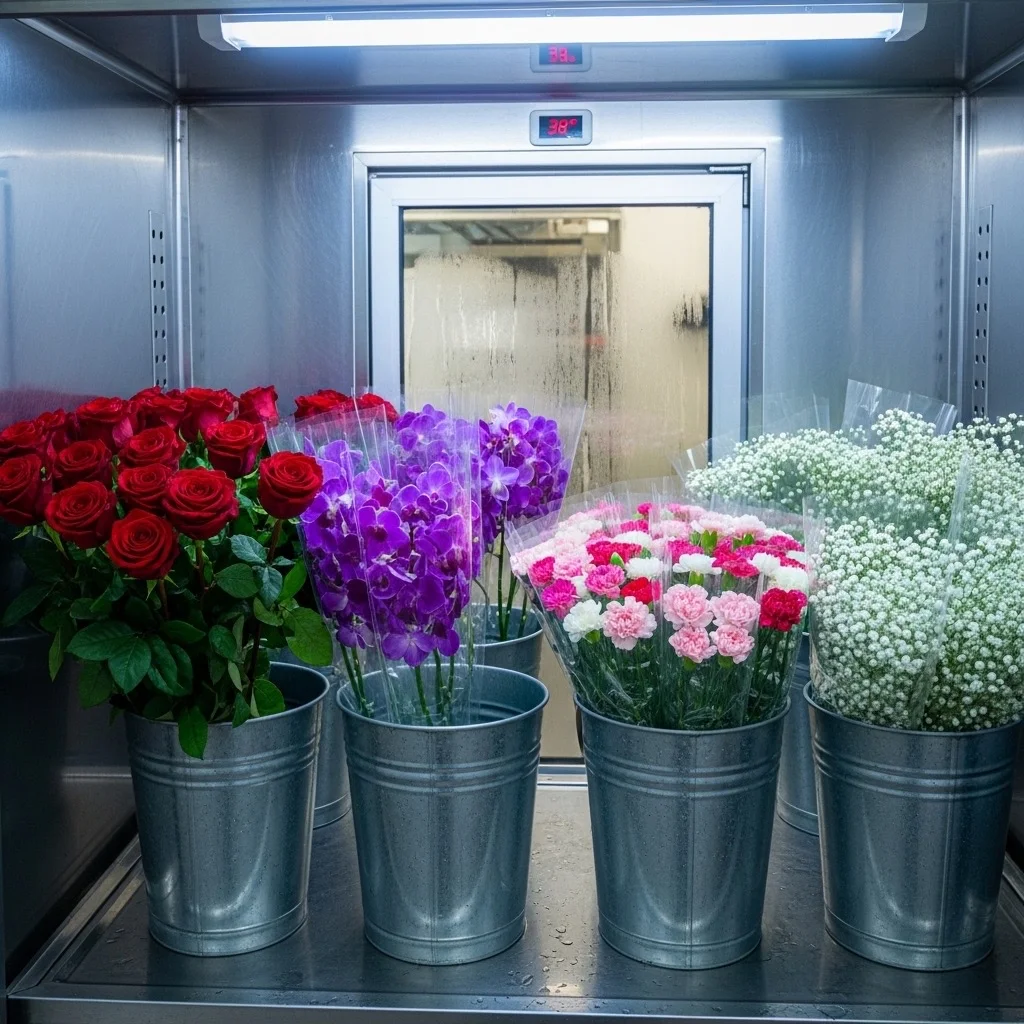
Most fresh-cut flowers do best when stored at a cooler temperature between 34°F–38°F. Use dedicated flower coolers to avoid exposure to ethylene gas, which is emitted by some fruits and vegetables and can cause premature aging in flowers. Avoid overcrowding flowers in the cooler to ensure even airflow and temperature control.
Hydration & Conditioning Tips
Preparing flowers for storage involves key conditioning techniques to maximize their longevity and appearance on the big day:
- Submerged Cut: When trimming stems, do so underwater to prevent air bubbles from forming inside, which could block hydration channels.
- Hydration Time: Allow flowers to hydrate in clean, room-temperature water for 4–12 hours before refrigeration.
- Rehydration Windows: Flowers stored for long periods should be rehydrated every 24–48 hours by trimming stems and placing them in fresh water.
| Flower Type | Temperature | Special Notes |
| Hydrangeas | 34–38°F | Mist heads to maintain moisture |
| Roses | 34–38°F | Strip lower leaves to avoid bacteria |
| Peonies | 34–38°F | Allow 2–3 days to open before the event |
| Tulips | 34–38°F | Keep upright in a tall vase or sleeve |
| Orchids | Cool Room | Avoid refrigeration |
| Sunflowers | Room Temp | Ensure heavy hydration |
| Greenery | 34–38°F | Fully submerge stems in water |
| Preserved Flowers | Room Temp | Do not use water |
By following these storage guidelines and conditioning techniques, you can ensure your bulk wedding flowers remain in peak condition, creating a stunning display for the event.
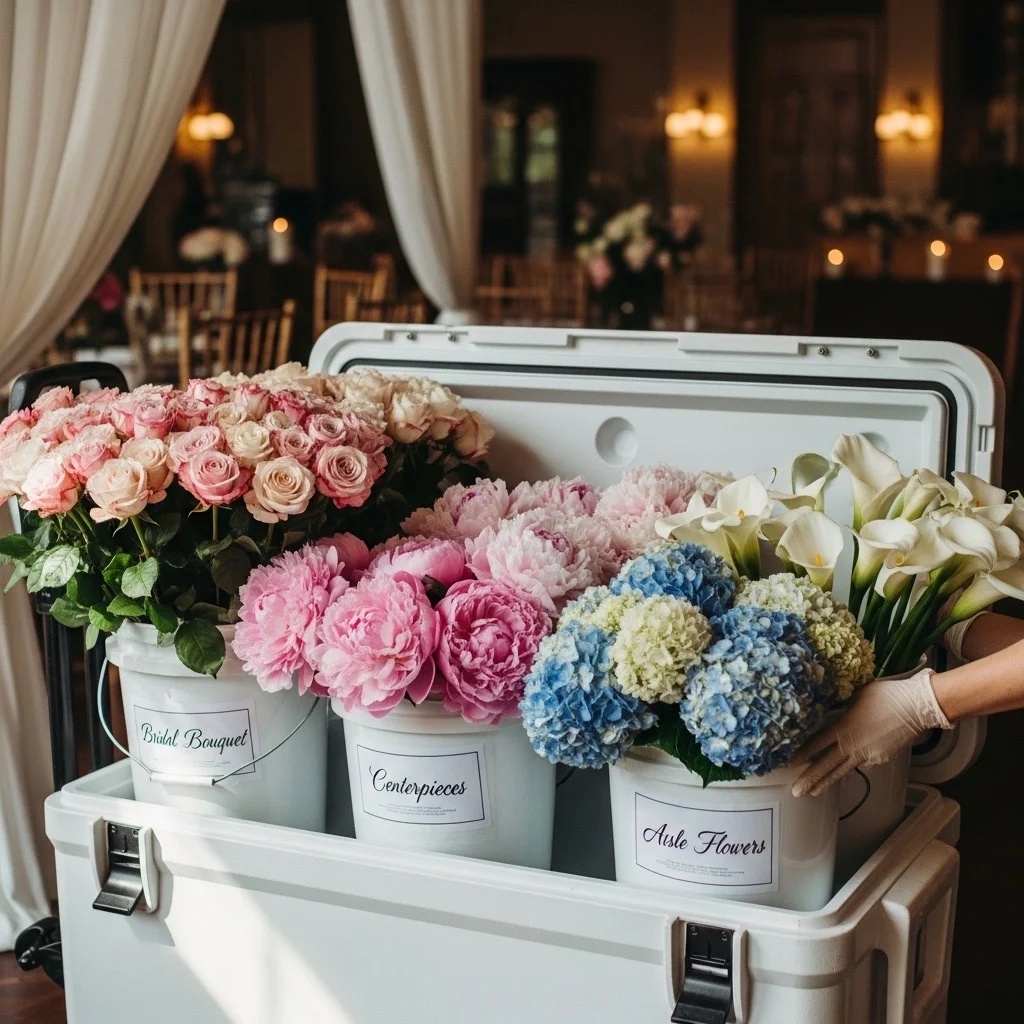
Part 6 – Wedding Week Timeline (Step-by-Step by Day)
The Ideal Week-Of Timeline for Wedding Flower Delivery
Proper planning and execution in the week leading up to a wedding are essential for ensuring your floral arrangements are fresh, vibrant, and ready for the event. Here is a breakdown of the ideal timeline for managing wedding flower deliveries and tasks:
Monday-Tuesday
- Arrival of bulk flowers: Most wedding flowers are shipped early in the week and should arrive either Monday or Tuesday. Upon arrival, inspect all blooms carefully to ensure quality and identify any damaged or unusable pieces. Check stems for freshness, and report any issues immediately to your supplier.
Tuesday-Wednesday
- Hydration and opening: Begin the conditioning process for your flowers. Trim stems at an angle and place them in buckets of clean, cool water with flower food. Make sure the storage conditions follow the guidelines specific to each flower type. Some varieties, like roses, may need more time to open, so start this step early to ensure they bloom fully by the weekend.
Thursday-Friday
- Bouquet and centerpiece design: Use these days to assemble the bridal and bridesmaid bouquets, boutonnieres, floral centerpieces, and any other arrangements. Be sure to store completed designs in a cool and controlled environment to maintain their freshness until the big day. Conduct a final quality check to ensure all the pieces meet your vision.
Saturday
- Install and last-minute corrections: On the wedding day, transport the floral arrangements to the venue carefully and allow time for set-up. Install larger, more elaborate designs, such as archways, flower walls, or hanging installations, first. Perform any corrections or touch-ups, such as refreshing the hydration of arrangements or trimming any wilted petals, to ensure every detail is perfect.
Real-World Example Timelines
The approach to floral preparation can vary depending on the type of wedding setup. Here are three real-world timelines to illustrate how different roles (DIY couples, event planners, and professional florists) might manage their wedding week:
Example 1: DIY Weddings
For couples handling their own flowers, preparation often begins with the delivery of bulk blooms on Monday or Tuesday. They should focus on hydration and proper storage through midweek. By Thursday, they can begin making simple arrangements such as mason jar centerpieces or bouquets, leaving Friday for venue decoration prep and Saturday for final setup. Time management is crucial in DIY scenarios.
Example 2: Event Planners
Event planners work closely with vendors to ensure a seamless transition from delivery to display. They usually arrange for flowers to arrive early in the week and coordinate with their teams to condition and design the floral elements starting Tuesday. On Thursday and Friday, planners oversee assembly tasks and prepare logistical details for transporting the flowers to the venue. On the wedding day, they handle onsite installation and troubleshooting.
Example 3: Florists
Professional florists follow a methodical and efficient timeline, leveraging experience and tools to execute floral designs at scale. Florists often receive flowers early in the week, allocating enough time for hydration, conditioning, and bloom monitoring. From Thursday to Friday, florists prepare intricate arrangements with a keen eye on quality and detail, saving the wedding day for setup and adjustments. They are well-equipped to adapt to unexpected challenges, such as temperature shifts or last-minute requests.
By adhering to these detailed timelines and examples, anyone involved in crafting or managing wedding florals can create a stunning, stress-free presentation for the big day.
| Day | Task |
| Monday-Tuesday | Arrival of bulk flowers shipped |
| Tuesday-Wednesday | Hydration + opening |
| Thursday-Friday | Bouquet & centerpiece design |
| Saturday | Install + corrections |
FAQ for Planning & Risk Reduction
Do bulk wedding flowers arrive cold?
Yes, most bulk wedding flowers arrive cold to ensure their freshness during transit. They are typically shipped in refrigerated or temperature-controlled conditions to prevent early wilting and to maintain their vibrant appearance.
How long do wedding flowers last?
Wedding flowers can last anywhere from 5 to 14 days, depending on the type of flower and how well they are cared for. Proper hydration, trimming stems, and keeping them at an ideal temperature can extend their lifespan significantly.
Can I store flowers in a regular fridge?
While it is possible to store flowers in a regular fridge, it’s essential to keep them away from fruits like apples and bananas. These release ethylene gas, which can cause flowers to wilt faster, so dedicate a separate area or remove any ethylene-producing items if storing flowers this way.
What flowers are best for beginners?
Beginners often find roses, carnations, and chrysanthemums to be great choices. These flowers are hardy, widely available, and forgiving if handled incorrectly, making them ideal for novice floral designers.
What time of year are shipping delays common?
Shipping delays are most common during the winter months due to harsher weather conditions and during peak holiday seasons like Christmas and Valentine’s Day. Planning far in advance and staying informed about shipping schedules can help mitigate these risks.

CONCLUSION — Final Ordering Guidance
When placing floral orders, thoughtful planning and attention to key details are essential to ensuring success. Begin by identifying your specific requirements well in advance, especially when preparing for seasonal peaks like Valentine’s Day or Christmas. Early ordering not only helps secure the best selection but also avoids the common pitfalls of shipping delays during high-demand periods or adverse weather conditions.
Shipping reliability is another critical aspect to consider. Partnering with trusted suppliers who prioritize timely delivery can make a significant difference, particularly for events that demand precision. Be proactive in tracking shipments and maintaining clear communication with your supplier to stay ahead of potential disruptions.
Equally important is proper storage accuracy. Flowers are delicate and require optimal conditions to maintain freshness. Have a plan in place for temperature-controlled storage, considering the specific needs of each variety. This step will extend the vase life of the flowers and contribute to a polished final presentation.
Finally, cultivate awareness of how different seasons impact availability and choices. While seasonal blooms bring unique charm, leaning on hardy and versatile options like roses and carnations ensures consistency even during challenging times.
By prioritizing careful planning, reliable logistics, and diligent storage practices, you’ll confidently elevate your floral arrangements. Your authority in the field grows with each successful execution, solidifying your reputation as a go-to professional in floral design and event preparation.
Whole Blossoms is your trusted partner for premium, farm-fresh flowers that elevate every event or floral arrangement. With a commitment to quality and accessibility, Whole Blossoms sources blooms directly from top growers worldwide, ensuring freshness and superior product standards. Their extensive selection includes everything from classic roses to exotic tropical flowers, meeting the needs of both traditional and creative designs.
What sets Whole Blossoms apart is their dedication to customer satisfaction. They offer expert support to help you select the perfect blooms and provide reliable on-time delivery, ensuring that your flowers arrive in pristine condition for your important occasions. Their competitive pricing and bulk ordering options cater to florists, event planners, and DIY enthusiasts alike.
With Whole Blossoms, you’re not just purchasing flowers—you’re investing in a seamless experience that prioritizes quality, dependability, and beauty, solidifying your trust in the premier flower supplier for all your needs.