


 by
by 
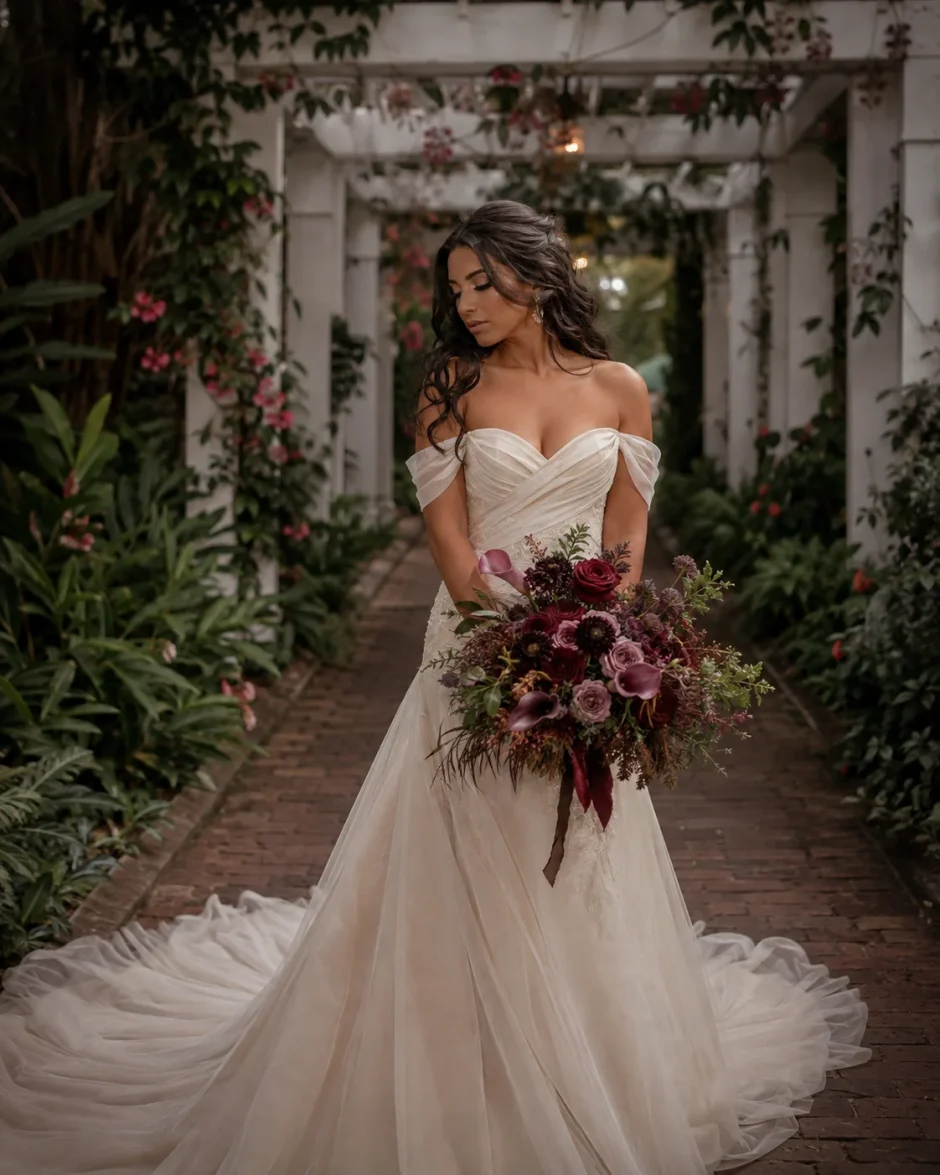
Moody wedding flowers are not simply dark flowers gathered together. The most beautiful designs use shadow deliberately, balancing wine, burgundy, plum, and nearly black tones with texture, greenery, and just enough softness to keep the arrangement romantic. Dark wedding flowers can look breathtaking in inspiration photos, but without careful planning, arrangements that rely entirely on burgundy, plum, or black can lose their definition. For brides dreaming of moody fall wedding flowers, it’s all about creating contrast and incorporating different textures and flower shapes to achieve a look that is both bold and romantic.
A successful moody design isn’t just about selecting the darkest blooms; it’s about blending deep shades with complementary elements such as soft greenery, lighter neutrals, or striking accent flowers to add depth and dimension. At Whole Blossoms, we make it easy to build your dream palette by offering individual flower categories instead of restricting you to premade arrangements. Whether you need velvety dahlias, dramatic calla lilies, or textured fillers, you can curate every detail to fit your unique vision.
In this guide, you’ll learn:
- How to build a dark wedding palette without making it muddy
- The best flowers for moody fall arrangements
- Bouquet and centerpiece recipes
- How to use greenery and dried texture
- FAQs about dark wedding flowers
Part 1 – How to Build a Moody Wedding Palette Without Making It Too Dark
Creating a moody wedding palette is an exercise in balance. While dark colors create depth and drama, the key to an elegant arrangement lies in mixing lighter tones and textures to preserve contrast. This ensures that each flower remains visible and the overall design doesn’t become visually muddy. By carefully considering color balance, texture, and lighting, you can craft a striking palette that feels romantic, sophisticated, and uniquely you.
Let Burgundy and Wine Provide the Foundation
Burgundy and wine tones serve as ideal foundational colors for a moody palette. These colors are rich, warm, and still recognizable as classic wedding hues, making them dramatic without feeling overly harsh. To build a cohesive base, use these shades as the primary focal points of your bouquet or centerpiece. Flowers such as dahlias, roses, and ranunculus in these tones can anchor the arrangement while conveying a sense of romance and elegance.
Add Plum and Near-Black Flowers Selectively
Ultra-dark blooms like plum, aubergine, or near-black varieties add depth and intrigue but should be used sparingly. Incorporate these dramatic flowers as accents rather than dominating the arrangement, as too much darkness can overwhelm the design. Flowers like black calla lilies, scabiosas, or deep plum hellebores can serve as striking focal points, creating moments of contrast against the surrounding palette.
Use Pale Flowers to Create Separation
Balancing dark flowers with pale neutral tones creates visual breathing room and ensures the design remains inviting rather than oppressive. Ivory, champagne, antique blush, mauve, or dusty rose flowers introduce softness and help define individual blooms within the arrangement. These lighter elements allow darker flowers to stand out while maintaining an overall romantic aesthetic.
Dark Greenery Adds Shadow Without Losing Floral Detail
Dark green foliage like ruscus, leather leaf, or olive branches enhances the moody feel of an arrangement without relying entirely on dark blooms. Greenery acts as a natural transition between different tones, creating shadow and dimension. It provides depth while still allowing brighter and softer elements to shine, ensuring the palette feels layered rather than flat.
Buyer Questions Answered
- How do I make dark wedding flowers look romantic? Balance dark tones with pale neutrals and textured elements to soften the arrangement and create contrast.
- Will burgundy and black flowers photograph too dark? Consider lighting and texture—candlelight or evening settings amplify dark tones, but incorporating lighter flowers ensures visible detail in photos.
- How much black should I use in a wedding bouquet? Use black flowers as accents rather than the primary focus to avoid overpowering the design.
- What colors soften dark wedding flowers? Ivory, champagne, blush, dusty rose, and mauve are excellent for softening dark arrangements.
- Can moody flowers still look elegant? Yes, when balanced with complementary tones and textures, moody palettes can feel timeless and sophisticated.
By following these guidelines, a moody wedding palette can achieve the perfect harmony of depth, contrast, and romantic elegance, creating unforgettable arrangements for your special day.
Part 2 – The Best Flowers for Moody Fall Wedding Arrangements
Transforming your dark and moody color inspirations into breathtaking floral arrangements begins by selecting the right blooms. Each flower brings its own unique role, from creating a strong foundation to adding texture, movement, or contrast. Here’s a guide to choosing the best flowers for moody fall wedding arrangements.
Roses Create the Dark Romantic Foundation
Roses are a classic choice for building the base of a dark and romantic floral design. Their iconic shape and soft petals provide a predictable structure, enhancing the elegance of any arrangement. Choose deep hues such as burgundy, wine, and deep red to create drama, while softer tones like dusty mauve, antique pink, quicksand, and cream can bridge darker flowers with lighter elements. This balance ensures a cohesive and sophisticated look. For your arrangements, roses offer the versatility needed for centerpieces, bouquets, or even ceremony flowers. Their timeless appeal makes them a must-have.
Dahlias Add Rich Seasonal Depth
Dahlias, with their intricate layers of petals, contribute incredible depth and texture to moody fall arrangements. Opt for darker shades like burgundy, wine, deep red, plum, bronze, and rust to capture the essence of autumn. These blooms make a bold statement, becoming striking focal flowers within your design. Additionally, dahlias are a seasonal choice that aligns perfectly with a fall wedding vibe, as their availability peaks during this time of year. Their combination of drama and vivid color is hard to match.
Scabiosa Adds Dark Texture and Movement
For elements of texture and movement without overwhelming the arrangement, scabiosa is an excellent addition. Deeply hued scabiosa or scabiosa pods in dark browns or blacks can add remarkable detail. These airy blooms and seed pods are perfect choices for bridal bouquets, boutonnieres, loose centerpieces, and ceremony florals. They bring subtle charm and fluidity to any design.
Calla Lilies Add Sleek Drama
Calla lilies in shades such as dark plum, burgundy, or nearly black are unparalleled in delivering architectural elegance. Their sleek appearance contributes strong lines and a modern edge to bouquets and floral designs. Use them as a dynamic contrasting element alongside softer roses or textured greenery to create compelling contrast and focal movement. Whether they’re featured in handheld bouquets or large-scale installations, calla lilies exude refined drama.
Dried Flowers Add Shadow and Texture
To add depth and intrigue, dried flowers and botanicals are phenomenal accents. Consider options like dried grasses, dark seed pods, preserved foliage, amaranthus, and neutral-toned botanicals. These elements introduce visual contrast and earthy textures to moody arrangements. Use dried flowers sparingly to retain a fresh and romantic feel while incorporating just the right amount of shadowy sophistication.
Greenery Creates the Dark Framework
No arrangement is complete without greenery, which provides a grounding framework for the entire design. Select foliage like Italian ruscus, eucalyptus, salal, leatherleaf, seeded eucalyptus, hanging amaranthus, and other broad-leaf greens or trailing vines. Greenery not only softens the edges of dark flowers but also enhances movement and structure in bouquets and installations. Look for options with a mix of textures to elevate the design’s complexity.
Adding Some Texture
To make your floral arrangements even more captivating, texture is essential. Incorporating trailing vines, such as ivy, jasmine, or wisteria, can add a romantic and whimsical touch while enhancing movement and dimension. Balance these unique elements with your flowers to ensure a cohesive and layered design.
By carefully selecting and combining these flowers, greenery, and accents, you can create the perfect moody fall wedding arrangements. Each element plays a role—whether as a foundation, focal point, or textural accent—resulting in timeless and unforgettable designs for your special day.
Part 3 – Moody Bridal Bouquet Recipes for Dark Romantic Weddings
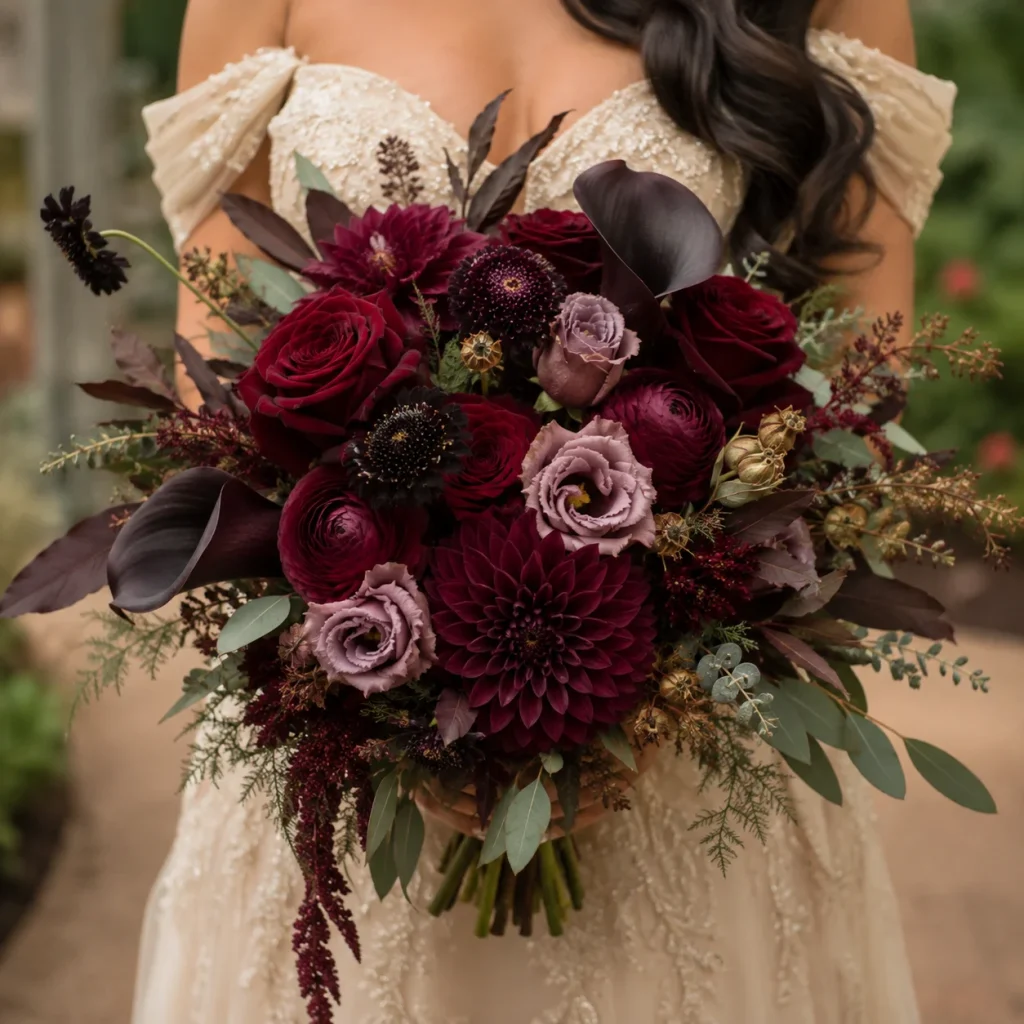
Creating a moody bridal bouquet that perfectly captures the essence of dark romance involves selecting the right balance of flowers, greenery, and texture. Below are saveable and buyer-friendly bouquet recipes to inspire you. These combinations will help you shop multiple Whole Blossoms categories and craft stunning, unforgettable arrangements.
Classic Burgundy and Wine Bridal Bouquet
Suggested Starting Formula:
- 6–8 burgundy roses
- 4–6 wine roses
- 3–5 dark dahlias
- 3–5 mauve or blush lisianthus
- 3–4 dark scabiosa
- Italian ruscus or eucalyptus
- Optional: trailing amaranthus
Design Effect:
This bouquet features a rich and dramatic color palette without veering completely into darkness. The balance of burgundy, wine, and soft mauve tones creates a romantic yet bold statement piece that speaks volumes of timeless elegance.
Plum and Black Editorial Bouquet
Suggested Starting Formula:
- 3–5 dark calla lilies
- 4–6 plum or burgundy roses
- 3–5 dark dahlias
- 3–4 scabiosa
- Antique mauve or quicksand roses
- Dark greenery
- Subtle dried texture
Design Effect:
For brides seeking a sleek and fashion-forward look, the plum and black editorial bouquet offers a powerful aesthetic. Dramatic plum hues and black accents combined with subtle, dried elements create a bold and sophisticated arrangement that feels straight out of a Vogue spread.
Soft Moody Romantic Bouquet
Suggested Starting Formula:
- Burgundy roses
- Antique blush roses
- Mauve lisianthus
- Dark scabiosa
- Plum focal blooms
- Eucalyptus
- Dusty preserved accents
Design Effect:
Ideal for brides who desire a moody vibe without going fully dark, this bouquet softens the drama with antique blush tones and preserved, dusty-textured elements. The result is a romantic arrangement that still captures depth and intrigue, perfect for intimate, candle-lit weddings.
Bridesmaid Bouquet Variation
For bridesmaid bouquets, consider a scaled-down version of the bridal bouquet with these key changes:
- Fewer dark focal flowers
- More mauve and antique blush roses to maintain softness
- Lighter greenery for an airier feel
- A smaller scale overall
- Include one or two signature dark blooms that tie into the bridal bouquet for a cohesive look
Buyer Questions to Answer
How many flowers do I need for a moody bridal bouquet?
The exact number of stems depends on factors like bloom size, bouquet density, and scale. Start with the suggested formulas above and adjust based on your preferences and seasonal availability.
Can black and burgundy flowers be used together?
Absolutely! They create a strikingly bold and romantic look. Use subtle greenery or lighter accents to prevent the bouquet from feeling overly dark.
How do I make a dark bouquet feel romantic?
To add romance to a dark bouquet, include soft textures, lighter blush or mauve touches, and flowing greenery. These elements help balance the depth of darker hues, giving the arrangement a more approachable feel.
Should bridesmaid bouquets be lighter than the bridal bouquet?
Yes, bridesmaid bouquets are typically lighter and smaller in size to complement but not overshadow the bride’s bouquet. Opt for softer colors and fewer dramatic flowers while keeping a touch of the overall theme.
Stem counts in the recipes above are starting points and may vary based on the size of blooms, desired bouquet density, and seasonal flower availability. For best results, adjust as needed to suit your vision.
Part 4 – Dark Romantic Centerpieces and Ceremony Flowers That Still Feel Elegant
When creating a wedding aesthetic, extending the dark and romantic palette beyond the bouquet into centerpieces and ceremony flowers can create a cohesive and elevated design. Below, we provide inspiration and practical strategies to help your clients achieve an elegant and balanced look throughout the wedding venue.
Low Centerpieces with Wine and Plum Flowers
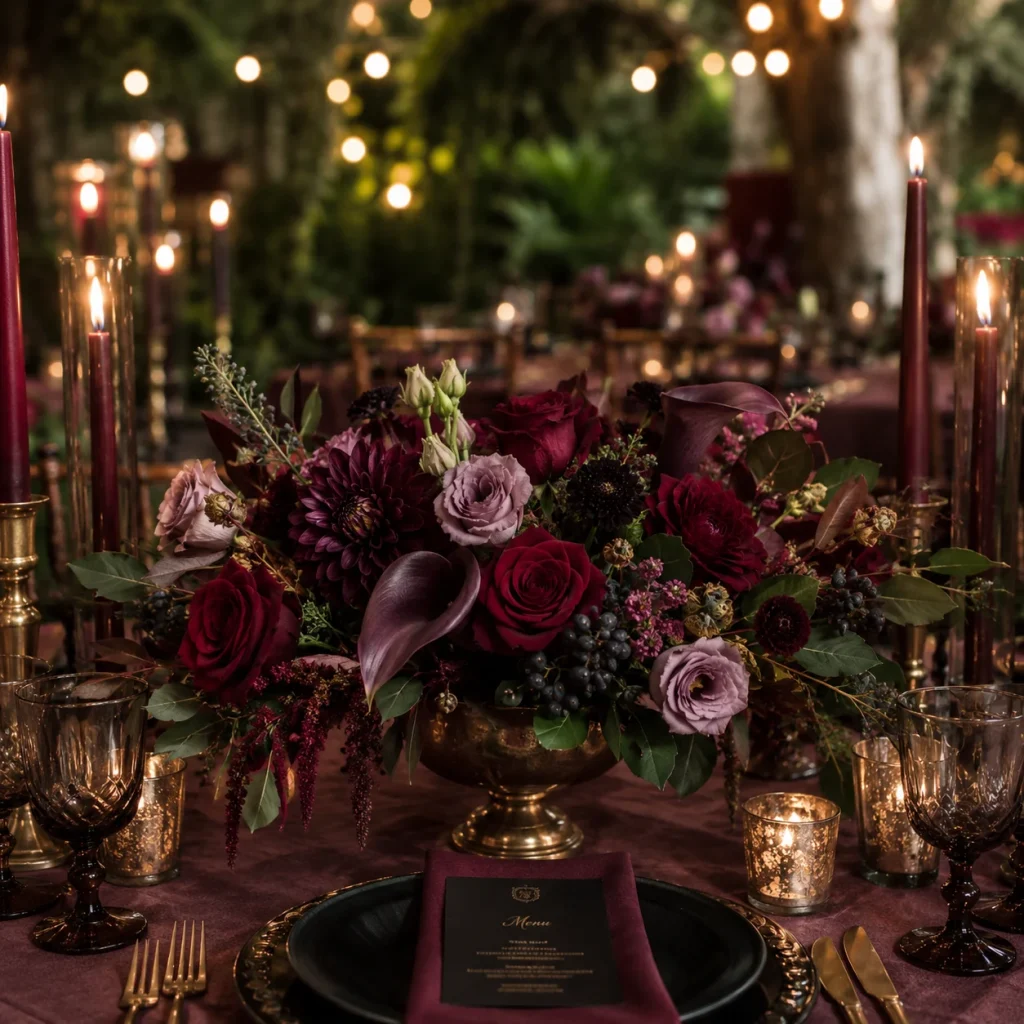
Low centerpieces are perfect for encouraging conversation at reception tables while adding a moody yet elegant atmosphere. For these arrangements, we recommend using combinations of burgundy roses, dark dahlias, mauve roses, plum calla lilies, and scabiosa. Dark greenery, such as ruscus or eucalyptus, can be used to provide texture and depth. Candlelight enhances the romantic ambiance, creating a warm glow that complements the richness of the floral palette.
To maintain clarity and definition in the arrangement, use lighter flowers sparingly. A subtle touch of blush or cream can soften the look without overshadowing the richness of the darker blooms. Incorporate varying stem lengths to give dimension and ensure a natural, layered arrangement.
Tall Arrangements with Dark Greenery
For added drama at the reception or ceremony, tall arrangements are a striking option. Create height and movement by featuring tall calla lilies, trailing amaranthus, and sculptural stems like branches or dark foliage. Pair these with flowing greenery such as ruscus or eucalyptus to frame the design and emphasize the vertical dimension.
Avoid creating a dense visual block by spacing flower clusters thoughtfully. Strategically placing blooms ensures that the arrangement maintains an elegant and structured feel while minimizing the risk of looking overcrowded. Tall arrangements are particularly impactful near entryways, on bars, or as statement pieces within the venue.
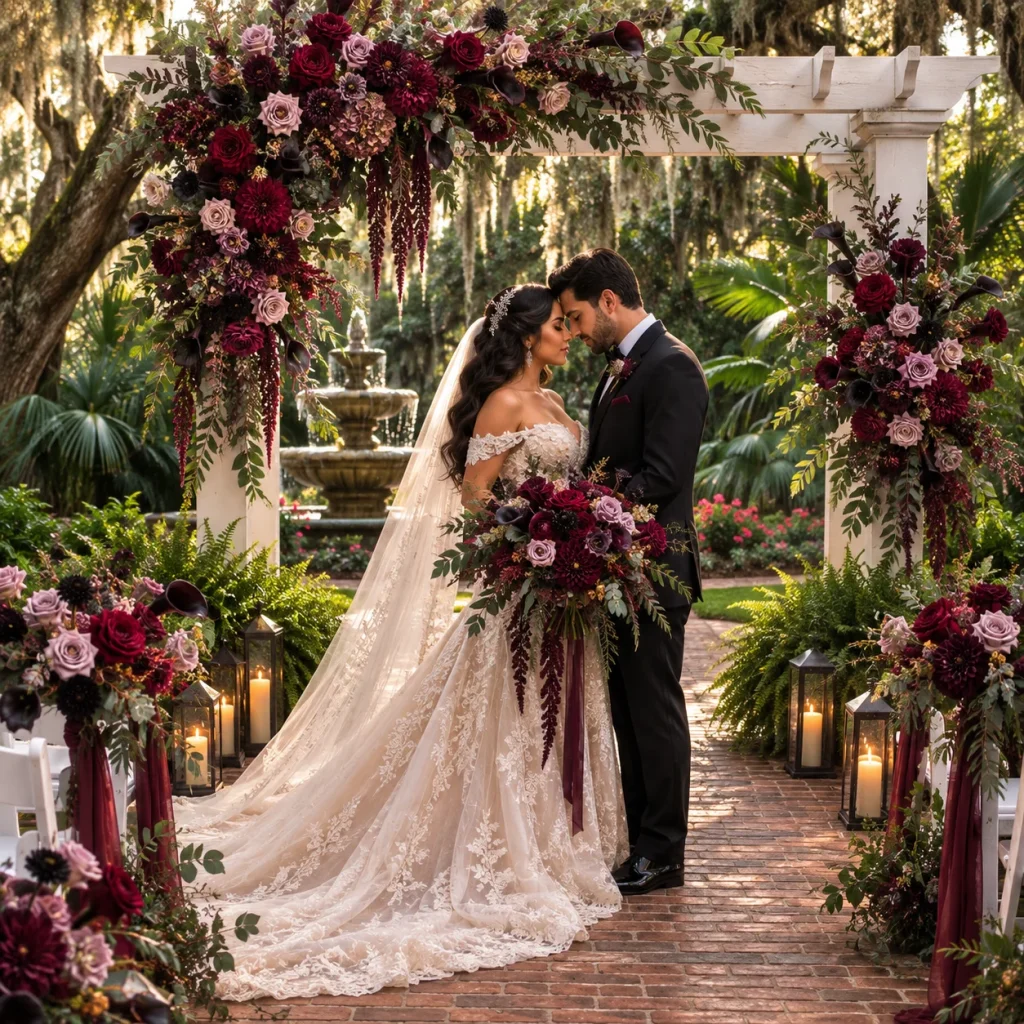
Ceremony Flowers for Tropical Garden Venues
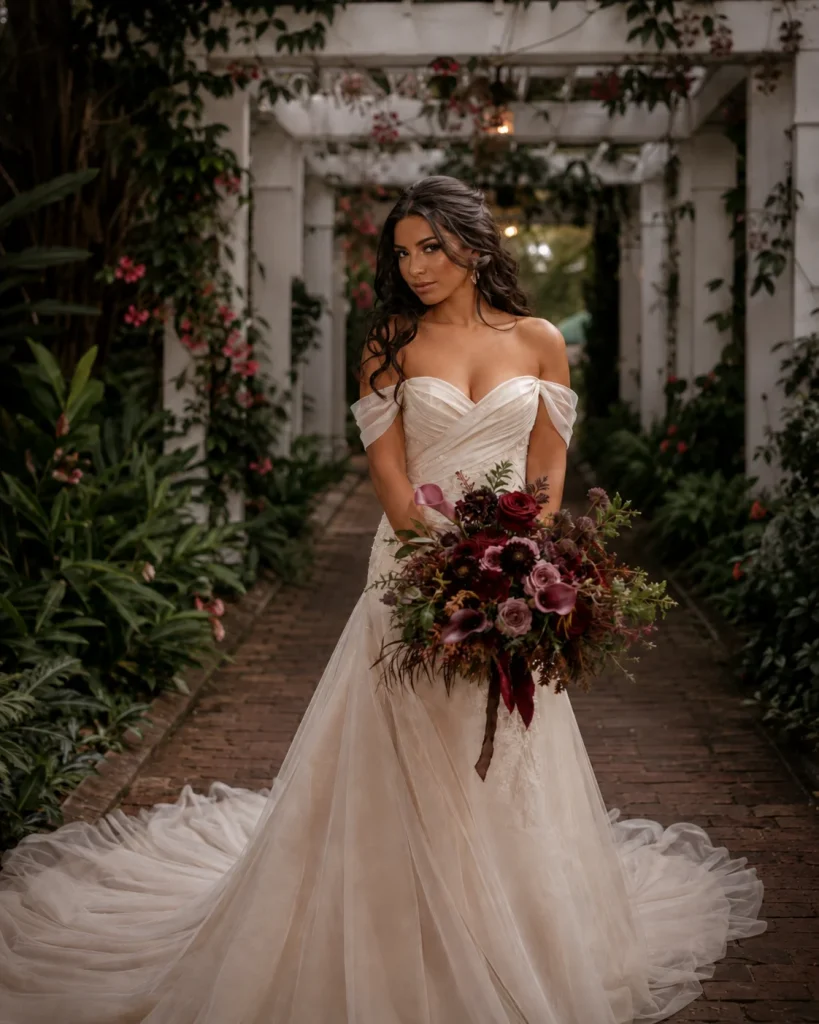
For couples hosting their ceremonies in lush settings like Harry P. Leu Gardens, dark floral clusters can stand out beautifully against the vibrant greenery. Tropical venues often feature mature trees, rose gardens, fountains, garden walkways, and pergolas, all of which provide a stunning yet neutral backdrop for richly colored florals.
To maintain the botanical feel while achieving a dark romantic tone, opt for floral clusters featuring burgundy and plum hues, paired with dark greenery for texture. Use architectural arrangements to complement pergolas or archways, ensuring the florals blend seamlessly with the venue’s natural elements. Incorporate accents like white or ivory candles to tie the look together while adding warmth and light.
Buyer Questions to Answer
- What flowers work for moody centerpieces? Burgundy roses, dark dahlias, plum calla lilies, scabiosa, and mauve roses work beautifully.
- How much dark color should I use on reception tables? Balance is key—aim for 60–70% dark hues, incorporating lighter tones selectively to highlight depth without overwhelming the space.
- Do black flowers work outdoors? Yes, but they are best paired with complementary shades and lush greenery for contrast. Avoid using them in low-light conditions where details might be lost.
- How do I style dark wedding flowers in a botanical garden? Highlight their richness by pairing them with tropical greenery and using structural design to complement the venue’s natural elements.
- What candles look best with moody wedding flowers? Opt for warm tones like gold or ivory. Black candles can also be dramatic but are best used with discretion to avoid overly dark undertones.
By extending the palette into these design elements, buyers can achieve a cohesive and balanced wedding look that combines drama, elegance, and sophistication.
Part 5 – How to Order Moody Wedding Flowers Without Losing the Color Story
Creating moody wedding arrangements with depth and sophistication requires careful planning and thoughtful flower selection. To maintain a cohesive color story, it’s essential to assign a distinct design role to each flower and greenery type. Below is a step-by-step guide to help you successfully order and design moody wedding flowers that bring your vision to life.
Choose One Dominant Dark Color
Start by selecting a single dominant dark color to anchor your arrangements. Popular options include burgundy, plum, wine, or oxblood. This primary hue will set the tone for the entire design. Avoid the temptation to purchase a variety of dark shades unless you have a specific plan for how they will work together. Sticking to one dominant color ensures a cleaner, more intentional look.
Add One Transitional Color
To soften the impact of the dark tones, incorporate a transitional color. Choose from soft, muted shades like mauve, antique rose, dusty blush, taupe, or champagne. These hues bridge the gap between the darkest flowers and the rest of the arrangement, ensuring a balanced design. Transitional colors also help avoid an overly heavy or monochromatic look.
Choose Greenery Before Finalizing Stem Counts
Greenery plays a critical role in determining how lush or moody the arrangement appears. Intense greenery, like ruscus or ferns, can amplify the depth of the arrangement, while lighter options, such as eucalyptus or olive branches, can soften the overall aesthetic. Finalize your greenery selections before ordering your stems, as this will influence the arrangement’s density and tone.
Build a Backup Flower Plan
Having a backup plan is essential when working with specialty flowers. Some blooms may be unavailable due to seasonality or supply chain issues. For instance, replace seasonal burgundy dahlias with deep red roses, or opt for dark carnations if deeper hues are needed. Plum calla lilies can add architectural contrast, while scabiosa offers rich texture. If fresh options are limited, consider preserved accents to maintain the desired aesthetic.
Answering Common Buyer Questions
- How many dark flower varieties should I order? Stick to one or two varieties to prevent overwhelm and maintain focus on the dominant color story.
- Should I order backup flowers? Always order replacements for vital flowers in case of unavailability.
- What if black flowers are unavailable? Opt for deep burgundies or plums, which provide a similar dramatic effect.
- How do I keep every arrangement consistent? Design one sample arrangement beforehand and document the recipe.
- Should I order extra stems? Yes, factor in extras for damaged blooms or last-minute changes.
By thoughtfully selecting flowers and greenery, sticking to a cohesive color palette, and preparing for contingencies, you can achieve stunning moody wedding arrangements while ensuring a seamless and stress-free process.
FAQ
What are the best flowers for a moody fall wedding?
Burgundy roses, wine roses, dark dahlias, plum calla lilies, scabiosa, mauve lisianthus, antique roses, and dark greenery are excellent choices. The strongest moody fall wedding flowers combine deep shades with a few medium or pale tones so individual blooms remain visible.
Can I use black flowers in a wedding bouquet?
Yes, although truly black fresh flowers are uncommon. Deep plum, dark burgundy, oxblood, and very dark calla lilies or scabiosa can create a near-black effect. Use them selectively so the bouquet keeps dimension and does not photograph as one dark mass.
How do I keep moody wedding flowers from looking too dark?
Use transitional flowers in mauve, dusty rose, antique blush, champagne, or cream. Space deep blooms throughout the design and use greenery to create additional shadow. Differences in flower shape and texture also help dark colors remain distinct.
What greenery works best with dark wedding flowers?
Italian ruscus, eucalyptus, salal, leatherleaf, seeded eucalyptus, trailing vines, and amaranthus can all work well. Choose greenery with enough variation in leaf size and texture to give the arrangement structure without making it feel overly dense.
Are burgundy and plum good fall wedding colors?
Yes. Burgundy and plum are especially effective for fall because they provide richness and depth without requiring a completely black palette. Pair them with wine, mauve, antique rose, cream, or dark greenery for a sophisticated dark-romantic look.
Can I mix dried flowers with fresh moody wedding flowers?
Yes. Dried grasses, seed pods, preserved foliage, and other textural accents can add depth to moody designs. Use them selectively alongside fresh roses, dahlias, calla lilies, and greenery so the arrangement still feels lush and wedding-ready.
Conclusion
A moody wedding palette thrives on the balance of contrast and harmony, proving that not every flower needs to be dark to achieve drama and elegance. By selecting one deep foundation color, pairing it with a secondary wine or plum hue, adding a softer transition shade, incorporating a textural specialty flower, and finishing with lush greenery, you can craft a design that feels both bold and romantic. This thoughtful approach ensures your arrangements are cohesive yet striking, creating a memorable aesthetic for your special day.
Build your dark romantic wedding palette with farm-direct flowers from Whole Blossoms. Shop our selection of fall wedding flowers, including burgundy and wine roses, scabiosa, calla lilies, dahlias, dried accents, and bulk greenery. Our premium blooms will bring your bouquets, centerpieces, and ceremony décor to life. Visit Whole Blossoms today and start designing your dream wedding!