


 by
by 

If you are wondering how many stems for wedding centerpieces you need, the answer depends on your table count, arrangement size, flower style, greenery, and budget. For many DIY brides and event planners, this question can feel overwhelming—after all, ordering too few stems can lead to sparse, disappointing centerpieces and a last-minute scramble to fill in the gaps. On the other hand, ordering too many can waste money and valuable resources. It’s no surprise that this is one of the biggest challenges when planning DIY wedding flowers. But don’t worry! This guide is here to simplify the process and help you feel confident in your flower planning. At Whole Blossoms, we specialize in providing farm-direct bulk flowers that make your DIY dreams achievable and stress-free. Follow along, and we’ll break down all the numbers you need to know.
In This Article:
- How to Calculate Your Table Count
- Recommended Stem Counts for Different Centerpiece Sizes
- The Golden Ratio: Focal Flowers vs. Greenery
- Budget-Friendly Tips for DIY Floral Arrangements
- Shop Your Bulk Floral Needs
Part 1 – How Many Stems Do You Need Per Centerpiece?
When planning your wedding centerpieces, one of the first questions to answer is, “How many stems do I need per arrangement?” The short answer is that the number of stems you’ll need varies depending on the size and style of your centerpiece. Here’s a simple guide to get you started:
Simple Stem Count Chart by Centerpiece Size
- Bud vase centerpiece: 1–5 stems per vase
- Small centerpiece: 10–15 stems
- Medium centerpiece: 20–30 stems
- Large/lush centerpiece: 35–50+ stems
- Greenery-heavy centerpiece: Fewer focal flowers, more greenery
- Minimalist centerpiece: Fewer stems with strong focal flowers
This breakdown provides a general starting point. From here, you can customize your arrangements based on your desired aesthetic and the overall atmosphere of your wedding.
What Counts as a Stem?
When we talk about “stems,” we’re including all parts of your arrangement—focal flowers (the statement blooms), secondary flowers (to help fill the arrangement), filler flowers (like baby’s breath), and greenery (eucalyptus, ferns, or other foliage). These elements work together to create balance and texture in your centerpiece. Using a mix of these components is key, whether you’re going for a lush and romantic look or a sleek, minimalist design.
Why Centerpiece Style Changes the Number
The style of your centerpiece can significantly impact the number of stems you need. For example, a greenery-heavy centerpiece will require fewer focal flowers but more foliage to create that full, organic look. Alternatively, a minimalist centerpiece may use just a few impeccably chosen focal flowers, such as wholesale roses, paired with subtle filler flowers or greens. On the other hand, a large, lush centerpiece will need a mix of focal, secondary, and filler flowers in higher quantities to give that dramatic, overflowing effect. It’s all about finding the balance that matches your vision.
Quick Example for 10 Guest Tables
If you’re planning for 10 guest tables, here’s a quick calculation to guide you.
- Small centerpieces (10–15 stems each): 100–150 stems in total
- Medium centerpieces (20–30 stems each): 200–300 stems in total
- Large centerpieces (35–50+ stems each): 350–500+ stems in total
- Greenery-heavy centerpieces: Adjust based on your greenery-to-flower ratio, using something like bulk greenery for most of the design.
This simple math can help you budget your flowers and ensure you order the right amount. Don’t forget to account for possible extras to cover unexpected needs or DIY practice arrangements before the big day.
By keeping your centerpiece size and style in mind, you’ll feel more prepared to decide how many flowers you’ll need for your wedding. If you’re ready to order, visit our Bulk Flowers page for affordable options, or explore our Wedding Flowers collection for inspiration. With the right planning, your centerpieces will look stunning—and fit your budget!
In this guide, you’ll learn:
- How many stems you need per centerpiece
- Stem counts by centerpiece size
- How to calculate flowers for your table count
- Which flowers and greenery work best
- Common mistakes to avoid
- FAQs about wedding centerpiece stem counts
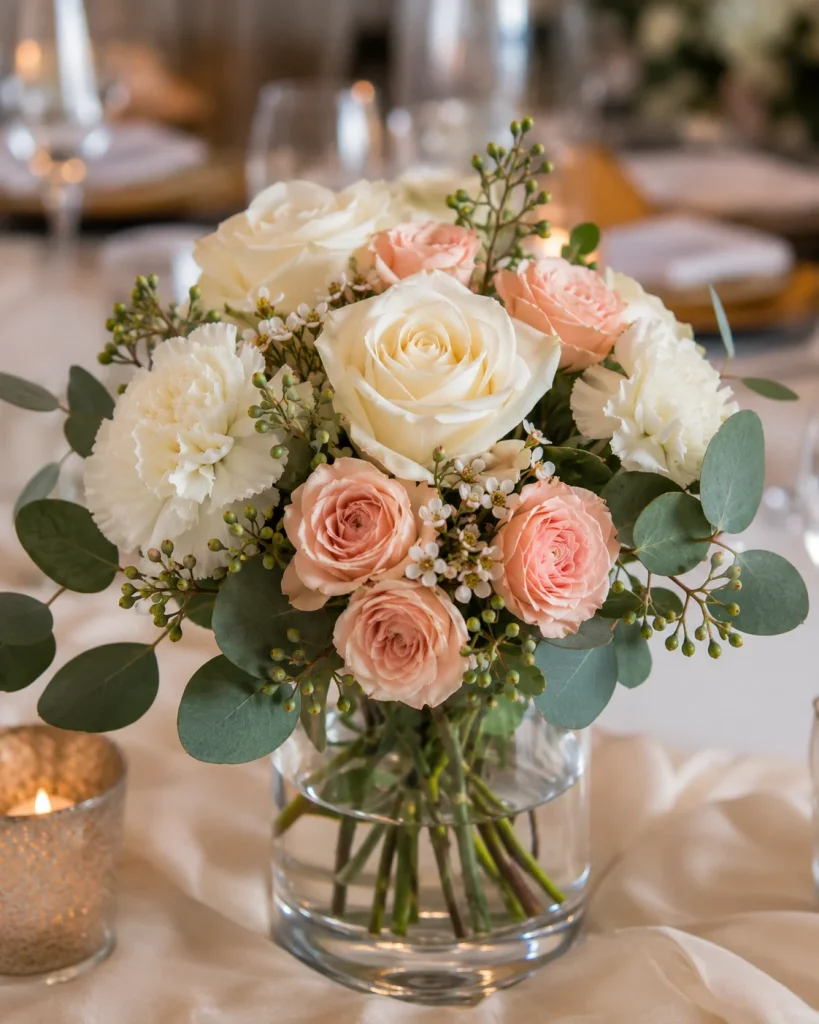
Part 2 – Wedding Centerpiece Stem Count Chart by Table Count
Planning the perfect wedding flower arrangements involves more than just picking your favorite blooms—it’s all about ensuring you have the right quantity to suit your table count and centerpiece size. To help you scale your order, we’ve created a handy stem count guide based on common wedding sizes. These estimates will help you figure out how many stems you’ll need for different table counts and centerpiece sizes, whether you’re opting for small, medium, or large arrangements.
Stem Count for 5 Guest Tables
- Small centerpieces: 50–75 stems
- Medium centerpieces: 100–150 stems
- Large centerpieces: 175–250 stems
For weddings with five tables, smaller centerpieces can be achieved with just 10 to 15 stems per table, focusing on simple designs with one or two types of flowers and greenery. Medium centerpieces can require 20 to 30 stems, adding variety and more volume. Large centerpieces—ideal for statement-making designs—may need up to 50 stems per table to create a lush, full look. Consider mixing focal flowers like roses or hydrangeas with budget-friendly options like carnations for balance.
Stem Count for 10 Guest Tables
- Small centerpieces: 100–150 stems
- Medium centerpieces: 200–300 stems
- Large centerpieces: 350–500 stems
For a medium-sized wedding with 10 tables, scaling up is simple. Small arrangements can still maintain a minimal aesthetic with 10–15 stems per table, while medium arrangements may range from 20–30 stems per table. Larger centerpieces, often featuring several layers of blooms, will require around 35–50 stems each. Don’t forget to factor in greenery, which adds texture and filler without inflating your budget too much—eucalyptus or leatherleaf ferns are excellent choices.
Stem Count for 15 Guest Tables
- Small centerpieces: 150–225 stems
- Medium centerpieces: 300–450 stems
- Large centerpieces: 525–750 stems
Fifteen tables open up opportunities for grander displays. Smaller centerpieces here could still achieve elegance with just 10–15 stems per table, amounting to roughly 150–225 stems overall. For medium arrangements with 20–30 stems per table, plan for a total between 300–450 stems. Large displays will require significant florals, at around 35–50 stems per table—perfect for upscale receptions or venues needing dramatic floral accents.
Stem Count for 20 Guest Tables
- Small centerpieces: 200–300 stems
- Medium centerpieces: 400–600 stems
- Large centerpieces: 700–1,000 stems
For weddings with 20 tables, keeping track of your budget and flower choices is key. Small centerpieces using 10–15 stems for a minimalist vibe can stay cost-effective and still look lovely. Medium arrangements may need 20–30 stems per table, while large centerpieces require a bigger investment with 35–50 stems. If you’re working with premium flowers like roses, remember that including greenery or less expensive blooms such as chrysanthemums or carnations can bring balance.
Why You Should Add a Small Cushion
When ordering flowers, always include a small cushion of extra stems—around 10% more than your estimated total—to account for breakage, design tweaks, or the need for fuller arrangements. Extra stems are also ideal if you plan to design bouquets, decorate your wedding arch, create aisle arrangements, or add flowers to cocktail tables. It’s better to have too many flowers than to fall short mid-project.
Answers to Common Questions:
- How many stems do I need for 10 wedding centerpieces? You’ll need between 100–150 stems for small designs, 200–300 stems for medium ones, or 350–500 stems for large centerpieces.
- How many flowers do I need for 20 tables? Depending on centerpiece size, plan for 200–300 stems (small), 400–600 stems (medium), or 700–1,000 stems (large).
- Should I order extra flowers? Yes! Adding 10% more to your total will cover unexpected needs.
- How much extra should I order? For example, if you need 500 stems, add an extra 50 stems to be safe.
For additional planning assistance, visit our Bulk Flowers page to explore affordable options or our Floral Supplies section for vases, clippers, floral tape, and more. Consider using Carnations for budget-friendly volume or Roses for focal blooms. With the right tools and preparation, your wedding centerpieces will look stunning and stress-free!
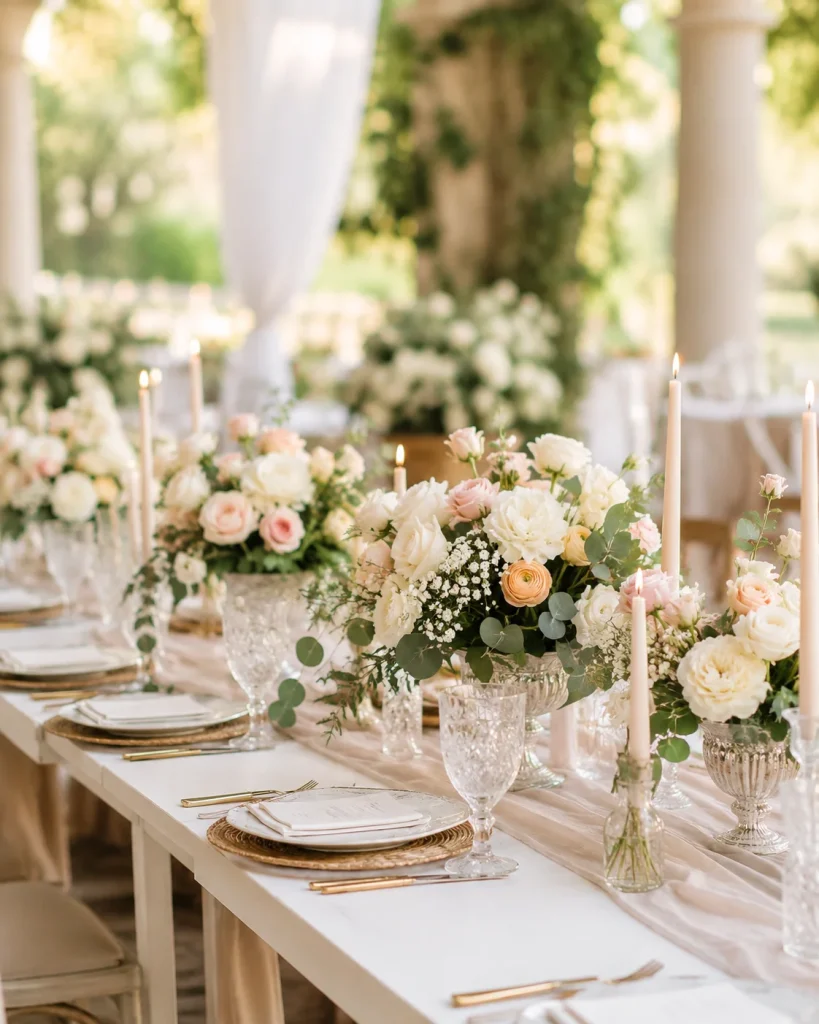
Part 3 – How to Divide Stems Between Focal Flowers, Fillers, and Greenery
Building a balanced centerpiece is both an art and a science. Instead of ordering random flowers, understanding how to divide your stems into focal flowers, secondary blooms, fillers, and greenery will help you create stunning, professional-looking arrangements. Think of this as building a “recipe” for your centerpiece, where each element plays a specific role to achieve harmony, texture, and fullness.
Focal Flowers: The Main Blooms
Focal flowers are the stars of your centerpiece—the blooms that immediately grab attention. Popular choices for focal flowers include Roses, Peonies, and Garden Roses. These blooms should be the largest and most vibrant in your arrangement, acting as the centerpiece’s foundation. A medium-sized centerpiece generally requires 5–8 focal flowers, while a lush centerpiece may need 10–15 focal flowers. For example, if you’re crafting a rose-centered design, visit our Wholesale Roses page for different sizes and hues to match your theme.
Secondary Flowers: The Supporting Blooms
Secondary flowers complement the focal blooms by surrounding and enhancing them. These smaller flowers add depth, contrast, and support to the arrangement. Popular secondary flower options include Spray Roses, Snapdragons, and Ranunculus. For a medium centerpiece, consider adding 8–12 secondary flowers, while a lush design might require 12–18 secondary stems. These blooms shouldn’t overpower the focal flowers but instead create a balanced, layered look.
Filler Flowers: Texture and Volume
Filler flowers are essential for adding texture, softness, and volume to a centerpiece. Light and airy options like Baby’s Breath, Wax Flower, or Statice are ideal for achieving this effect. Depending on the desired fullness, include 5–8 filler stems for medium centerpieces or 8–12 filler stems for a lush design. If you’re wondering how much filler to use, remember that these flowers provide the finishing touches by filling any gaps and enhancing the overall arrangement without drawing too much attention.
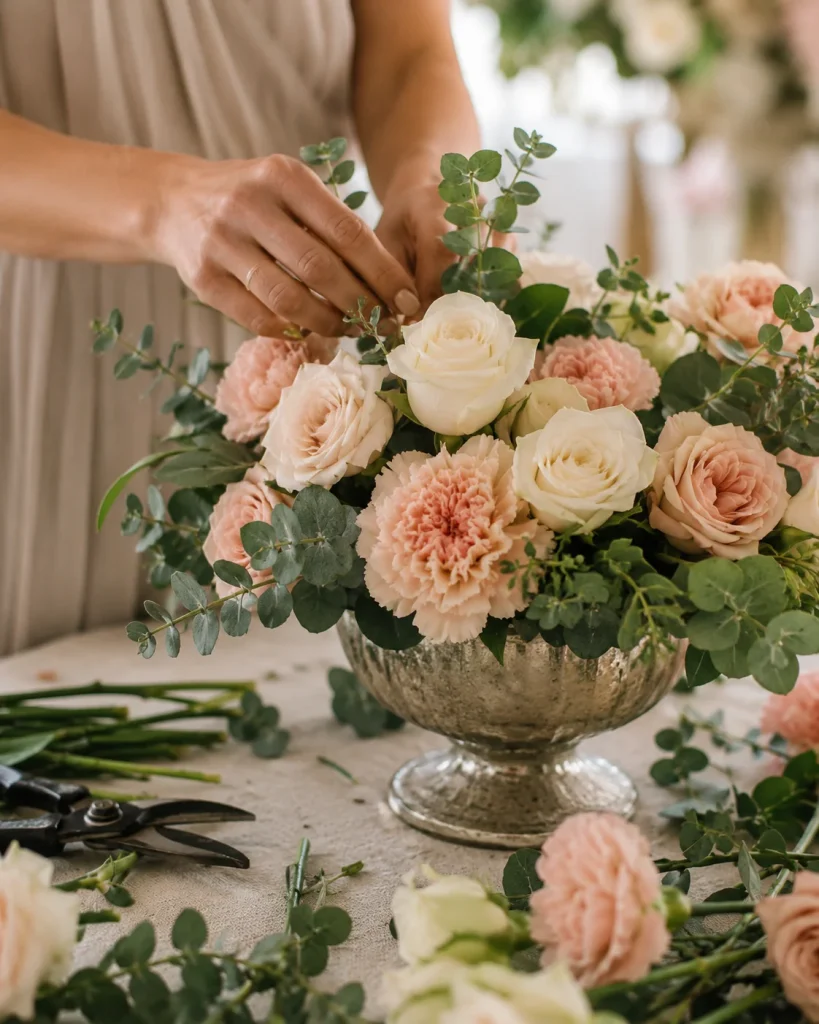
Greenery: Fullness Without Overspending
Greenery not only provides structure and shape but also adds movement and fullness to your centerpiece. Affordable options like Eucalyptus, Ruscus, or Fern can help you create a lush arrangement while staying within budget. Greenery-heavy centerpieces are particularly effective if you want to reduce the number of flowers without sacrificing fullness. For medium-sized centerpieces, include 5–10 greenery stems, and for lush designs, plan for 10–15 greenery stems. Browse our Bulk Greenery section to find options that suit your color palette and style.
Sample Centerpiece Recipe
To help you get started, here’s an example for two different centerpiece styles:
Medium Centerpiece Recipe
- 5–8 focal flowers
- 8–12 secondary flowers
- 5–8 filler stems
- 5–10 greenery stems
Lush Centerpiece Recipe
- 10–15 focal flowers
- 12–18 secondary flowers
- 8–12 filler stems
- 10–15 greenery stems
Buyer Questions Answered
How many roses should I use in a centerpiece?
For a medium centerpiece, use around 5–8 roses as your focal flowers.
How many filler flowers do I need?
Include 5–8 filler stems for a medium arrangement or 8–12 for a lush centerpiece, depending on your desired volume.
How much greenery should go in a centerpiece?
Greenery requirements vary, but most medium centerpieces need 5–10 greenery stems, while larger, luxurious ones may use 10–15 stems.
Can greenery help me save money?
Absolutely! Greenery-heavy centerpieces reduce the need for flowers yet still create a full, lush appearance. Check out affordable options like Bulk Greenery for budget-friendly ideas.
By following these guidelines and experimenting with different flower combinations, you can create gorgeous, balanced centerpieces that look straight out of a professional florist’s studio. Don’t forget to explore our Baby’s Breath or filler flowers, Carnations, and Floral Supplies to enhance your arrangement process!
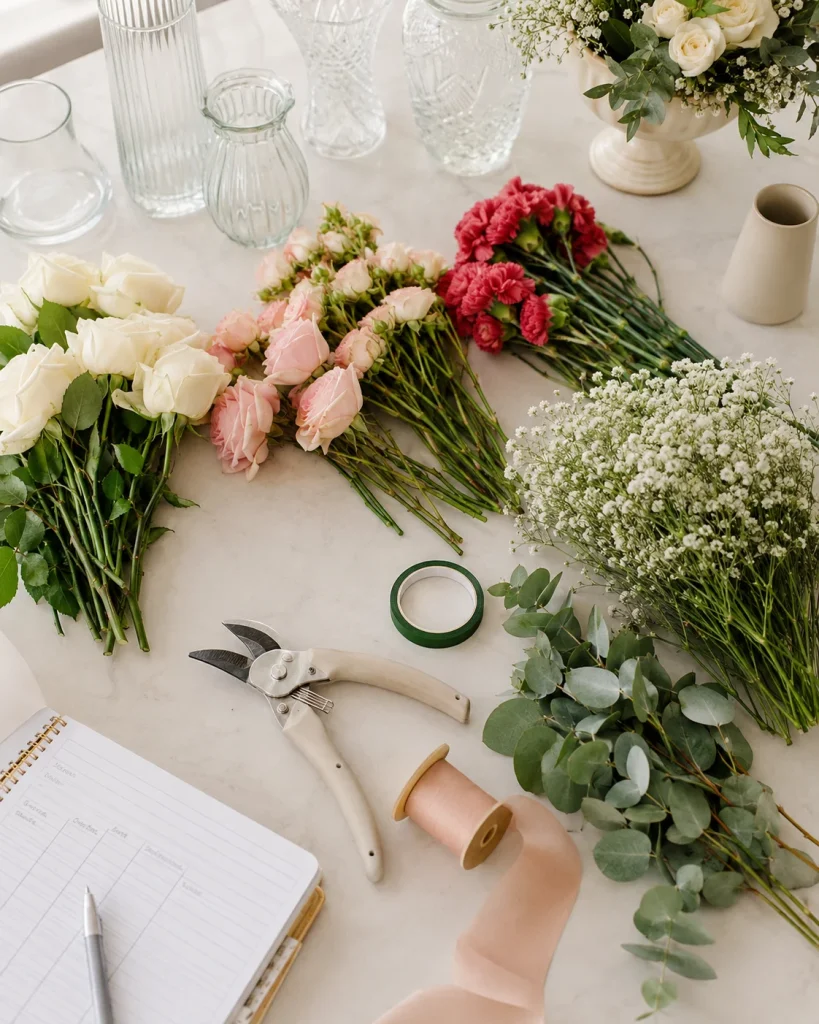
Part 4 – Centerpiece Stem Counts by Style and Budget
Creating the perfect centerpiece for your wedding is all about balancing your desired look with your budget. The number of stems you’ll need can vary significantly depending on the style you choose, so it’s important to plan accordingly. Below, we’ve broken down the most popular centerpiece styles, their typical stem counts, and how to achieve your dream aesthetic without overspending.
Minimalist Bud Vase Centerpieces
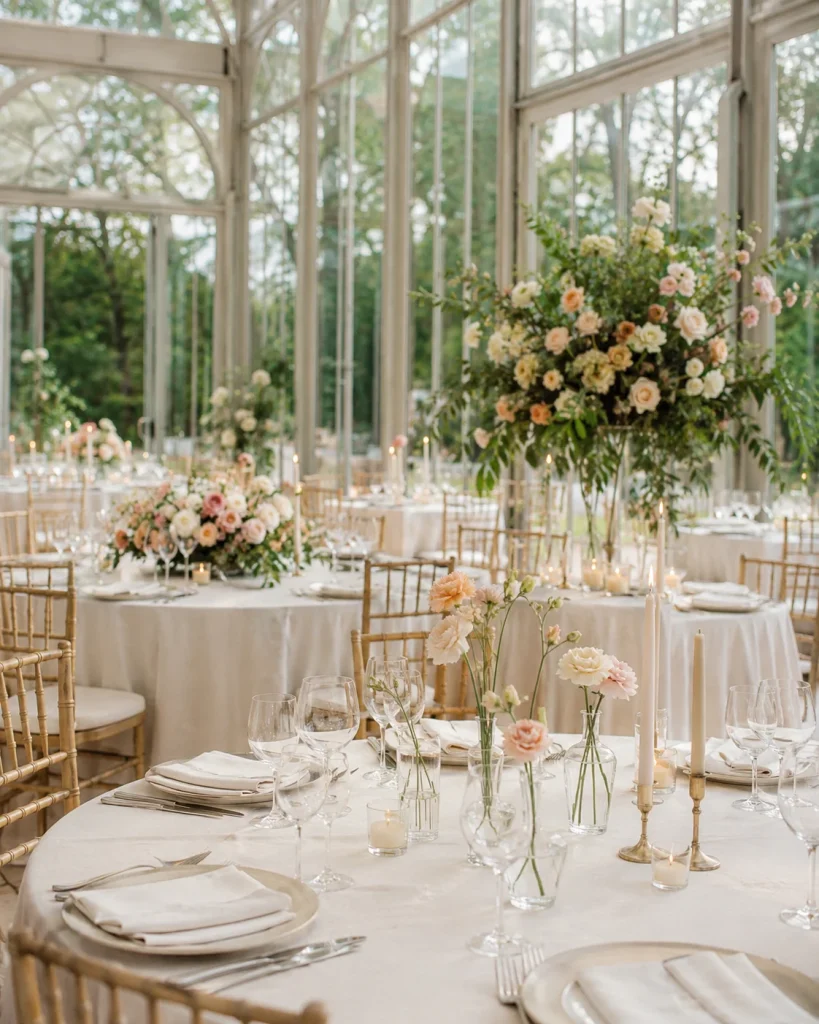
If simplicity and elegance are your goals, minimalist bud vase centerpieces are the perfect option. These designs typically use 1–5 stems per bud vase, creating a refined and modern look. Ideal for modern weddings, cocktail tables, bridal showers, and smaller gatherings, this style is an excellent choice for those on a tight budget or seeking understated beauty. Mix and match single-stem flowers like Roses, Ranunculus, or Baby’s Breath for a polished yet minimalist effect. To save further, consider browsing our Affordable Wedding Flowers and Preserved Flowers for unique textures and lasting arrangements.
Classic Wedding Centerpieces
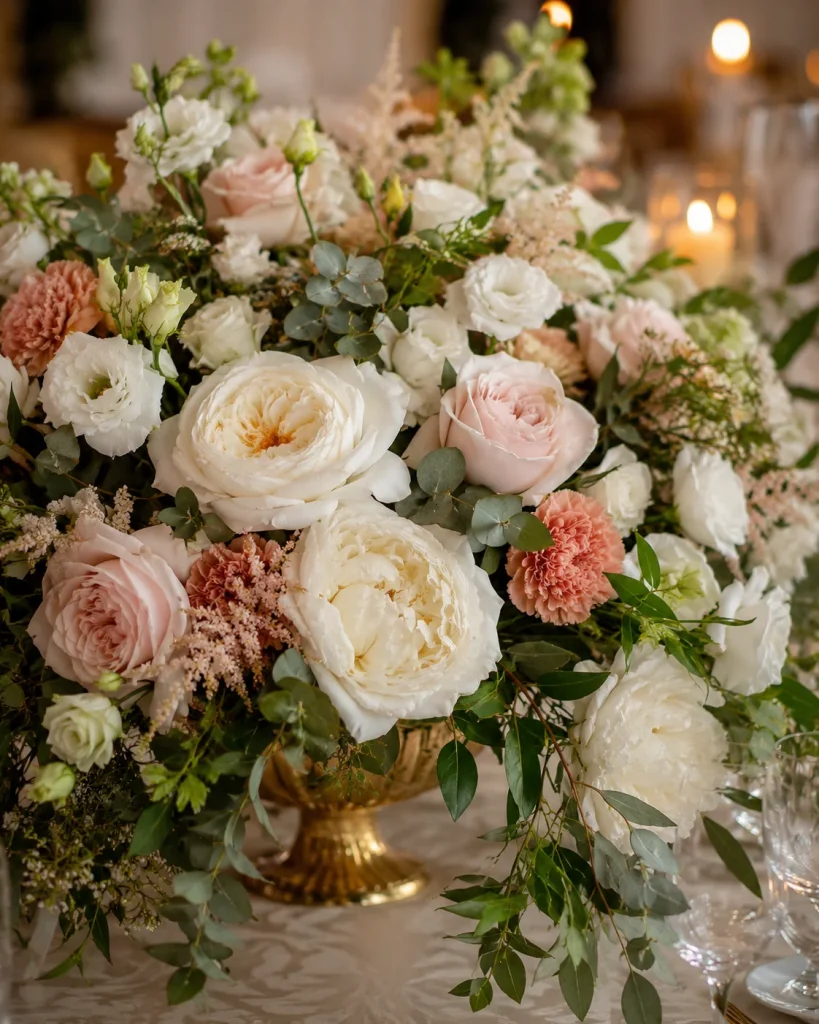
The timeless round centerpiece is a staple for traditional weddings and offers a full, balanced look. These arrangements typically require 20–30 stems, depending on the flower variety and size. Popular selections for classic designs include Roses, Carnations, and filler flowers like Baby’s Breath. This style brings symmetry and elegance to any table, making it a versatile option for receptions of all sizes. For budget-friendly options, check out Bulk Flowers, which can help you achieve a stunning centerpiece while staying within budget.
Garden-Style Centerpieces
For couples who love a looser and more organic aesthetic, garden-style centerpieces are a great choice. These designs feature 25–40 stems, combining flowers, greenery, and textured elements for a natural, unstructured appearance. Eucalyptus, Wax Flowers, and garden Roses are popular options for this style. Adding Bulk Greenery enhances the overall fullness while keeping costs manageable. This look works beautifully for rustic or bohemian-themed weddings, creating a lush yet approachable vibe.
Lush Luxury Centerpieces
For those looking to make a bold statement, lush luxury centerpieces are unmatched in their impact. These designs require 40–60+ stems, featuring a variety of premium blooms like Peonies, Orchids, and garden Roses. Often used for head tables or high-impact guest table arrangements, this style brings extravagance and elegance to your event. While this option leans toward the higher end of the budget spectrum, purchasing Bulk Flowers and Flowers by Color can help tailor the palette without exceeding your budget. Adding preserved or dried flowers also offers dimension and texture for a truly luxurious look.
Greenery-Heavy Centerpieces
For couples aiming for a full, lush design without spending a fortune on flowers, greenery-heavy centerpieces are a great solution. These arrangements typically use 10–20 flower stems combined with ample greenery like Eucalyptus, Ruscus, or Ferns. This style creates a natural, abundant feel while allowing you to prioritize your budget. Consider exploring our Bulk Greenery and Affordable Wedding Flowers to craft stunning centerpieces without sacrificing quality.
Choosing the Right Style for Your Budget
When determining the number of stems for your centerpieces, remember that there’s no single right choice. The best style for your wedding will align with your vision, budget, and event size. Whether you prefer minimalist bud vases or extravagant luxury arrangements, planning ahead and sourcing blooms from Bulk Flowers or Preserved Flowers can help make your dream centerpieces a reality.
Part 5 – Common Stem Count Mistakes to Avoid
Creating the perfect wedding centerpieces requires careful planning, especially when it comes to flower counts. Many buyers make common mistakes during this step, leading to unexpected stress or last-minute adjustments. Below, we’ll explore the pitfalls to avoid and provide guidance to ensure a smooth flower-ordering experience.
Forgetting Greenery and Fillers
One common mistake is focusing solely on focal flowers, like roses or peonies, and neglecting the importance of greenery and fillers. These elements are crucial for creating fullness and balance in your arrangements. Greenery like eucalyptus from Bulk Greenery adds texture, while fillers like wax flower or baby’s breath complete the look. Make sure to account for these items early in the planning process to avoid sparse arrangements.
Choosing the Wrong Vase Size
Another issue buyers face is underestimating how vase size impacts stem counts. Large vases, while visually striking, require more flowers to create a cohesive and proportional design. If you’re opting for oversized vessels, increase your flower order accordingly to ensure you achieve the desired full, lush look. For those on a budget, consider scaling down vase size to maximize the impact of fewer stems.
Not Ordering a Cushion
Whether you’re buying fresh Bulk Flowers or preserved blooms, always order a modest cushion above your estimated needs. Flowers are fragile, and occasional breakage can occur during transport. Additionally, DIY arrangements often use more stems than expected as designs are adjusted. Planning for extra flowers not only ensures you’re covered but also allows for flexibility if you decide to add fuller designs or last-minute touches.
Forgetting Extra Event Tables
Guest tables often top the list when ordering blooms, but don’t overlook other key areas that need florals. Cocktail tables, welcome tables, cake tables, bars, and ceremony spaces all benefit from thoughtful arrangements. Including these areas in your stem count from the beginning ensures your entire event space is cohesive and inviting. Wedding Flowers planning resources can help you stay organized.
Waiting Until the Last Minute
Waiting too long to place your flower order can cause unnecessary stress or limit your options. Popular wedding months can lead to increased demand for certain blooms, making it harder to find your desired flowers. To avoid this, order early and secure your favorites while they’re available. Additionally, early preparation allows you to shop for Floral Supplies, such as clippers, buckets, and tape, so you’re ready when the flowers arrive.
Common Buyer Questions
- Should I order extra flowers for my wedding? Yes, always order extra stems to account for breakage, fuller designs, or last-minute touches.
- What tables besides guest tables need flowers? Don’t forget cocktail tables, welcome tables, cake tables, bars, and ceremony flowers.
- Why did my centerpiece need more flowers than expected? Vase size and bloom size significantly affect the number of stems required. Larger vases and smaller blooms usually need more flowers to fill space.
- What supplies do I need before flowers arrive? Gather essentials like clippers, flower buckets, floral tape, and other Floral Supplies to streamline your process.
By avoiding these common mistakes, you can reduce stress and bring your wedding vision to life. Plan ahead, and with the right preparation, your centerpieces will dazzle without last-minute surprises!
FAQ Section
FAQ 1: How many stems do I need for each wedding centerpiece?
Most small wedding centerpieces need about 10–15 stems, medium centerpieces often require 20–30 stems, and large, lush centerpieces may need 35–50 or more stems. The final number depends on factors like the vase size, flower types, greenery, filler flowers, and how full you want the arrangement to look. Always consider your overall style and vision when planning stem counts.
FAQ 2: How many stems do I need for 10 wedding tables?
For 10 guest tables, plan for about 100–150 stems for small centerpieces, 200–300 stems for medium-sized arrangements, or 350–500 stems for larger, more luxurious designs. Additionally, don’t forget to account for flowers needed for other areas such as cake tables, welcome tables, bars, or cocktail tables. Adding extra stems ensures flexibility in achieving the desired look.
FAQ 3: Does greenery count as part of my stem count?
Yes, greenery should absolutely be included in your overall stem count. Greenery enhances the shape, fullness, and texture of your wedding centerpieces. Additionally, greenery-centric designs can help reduce costs, as they often require fewer focal flowers while still achieving an elegant, lush appearance.
FAQ 4: Should I order extra flowers for DIY wedding centerpieces?
Yes, ordering extra flowers is always a smart decision for DIY centerpieces. Having a small cushion of extra stems allows you to account for unexpected issues like breakage, design mistakes, or forgotten areas. It’s better to have more flowers available instead of risking running out during the setup process.
FAQ 5: What flowers are best for DIY wedding centerpieces?
Roses, spray roses, carnations, hydrangeas, baby’s breath, chrysanthemums, alstroemeria, and various types of greenery are popular options for DIY wedding centerpieces. The most suitable flowers will depend on your desired style, color scheme, budget, and the season. Mixing focal flowers with filler blooms and greenery will create balanced and beautiful arrangements.
FAQ 6: How do I know if my centerpieces will look full enough?
Start by considering your vase size and the style you’re aiming to achieve. Smaller vases typically require 10–15 stems, while larger compote or footed vases may require 25–40 stems. Using a combination of focal flowers, filler flowers, and greenery can add volume and shape without relying solely on more expensive blooms. Take time to experiment and adjust to find the right balance for your design.
Conclusion
Calculating the perfect number of stems for your wedding centerpieces doesn’t have to be stressful. Once you know your table count, centerpiece size, flower styles, and greenery needs, creating an accurate bulk flower order becomes much simpler. With a thoughtful plan and the right tools, DIY wedding flowers are not just possible—they can be truly stunning. By combining focal flowers, filler flowers, and greenery in the appropriate quantities, your arrangements will look balanced, full, and beautiful.
Ready to build your wedding centerpieces? Shop fresh bulk flowers, wholesale roses, carnations, greenery, filler flowers, and floral supplies from Whole Blossoms to create beautiful DIY wedding centerpieces with confidence.