


 by
by 
Introduction
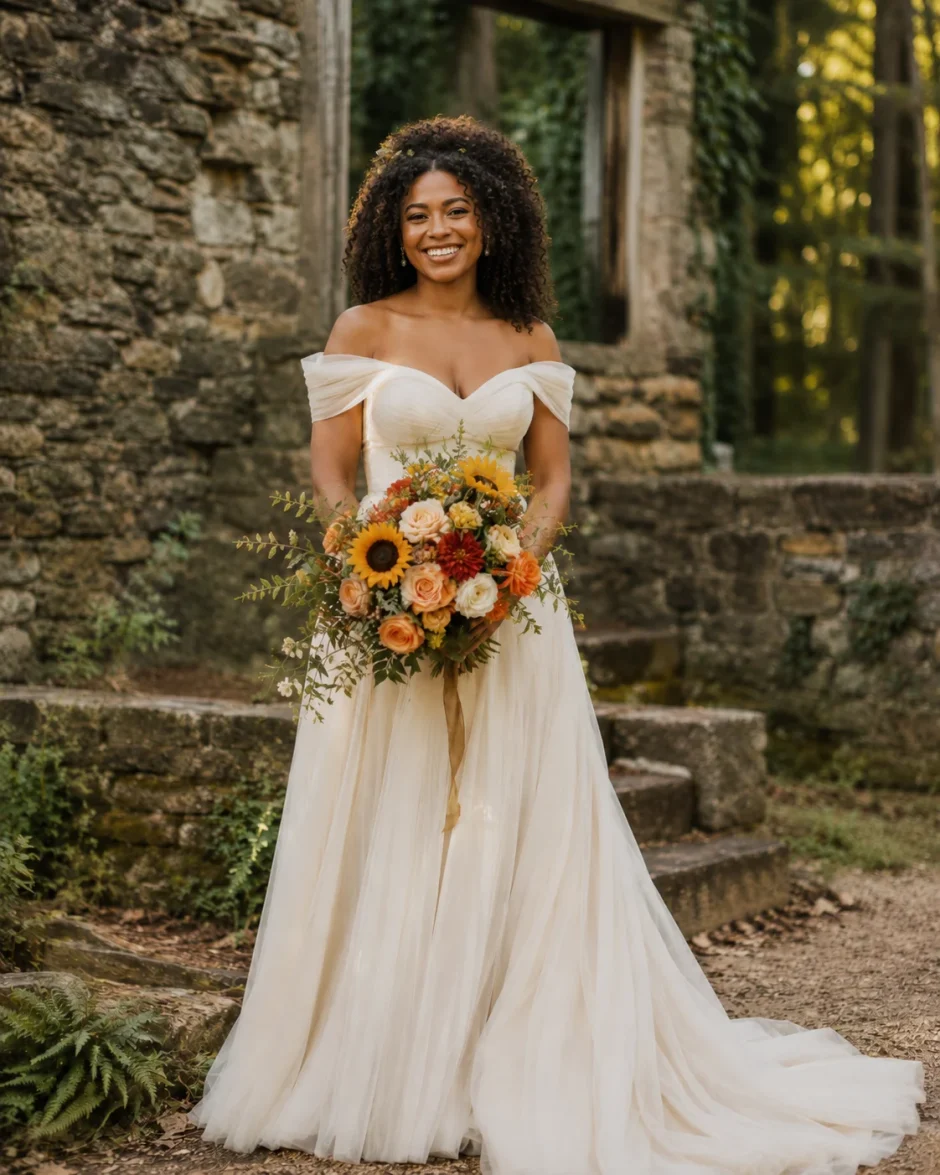
An August or September wedding sits in one of the most beautiful—but sometimes confusing—places on the floral calendar. Should the flowers feel bright and summery, warm and autumnal, or somewhere in between? Late summer weddings present couples with the unique opportunity to blur the lines between two distinct floral seasons. Summer bursts with vibrant colors and cheerful blooms, while early fall ushers in deeper tones, textured arrangements, and earthy accents. Fortunately, couples don’t have to choose one over the other. By incorporating late summer wedding flowers, it’s easy to achieve a harmonious blend of seasonal charm, combining the lively warmth of summer with the richer, more layered elegance of autumn.
Whole Blossoms makes this combination effortless by offering an incredible selection of bulk flowers to suit any vision. From sunflowers, dahlias, and zinnias to roses, greenery, and more, we supply everything you’ll need to bring your late summer wedding floral dreams to life. Whether you’re after bold summer hues, soft autumn palettes, or a perfect mix of both, Whole Blossoms is your trusted partner for fresh, high-quality blooms and floral supplies. The transition from summer to fall has never been so beautiful.
In this guide, you’ll learn:
- How to bridge summer and fall with color
- The best flowers for August and September
- Bouquet and centerpiece ideas
- How to plan and order seasonal flowers
- Frequently asked questions
Part 1 – How to Build a Wedding Palette That Bridges Summer and Fall
Creating a wedding palette that seamlessly transitions between the vibrant energy of summer and the understated richness of fall requires thoughtful planning. With the right balance, your floral arrangements can exude timeless beauty, avoiding any rigid seasonal labels while reflecting your unique style and vision.
Keep Summer Warmth Without Using Only Bright Colors
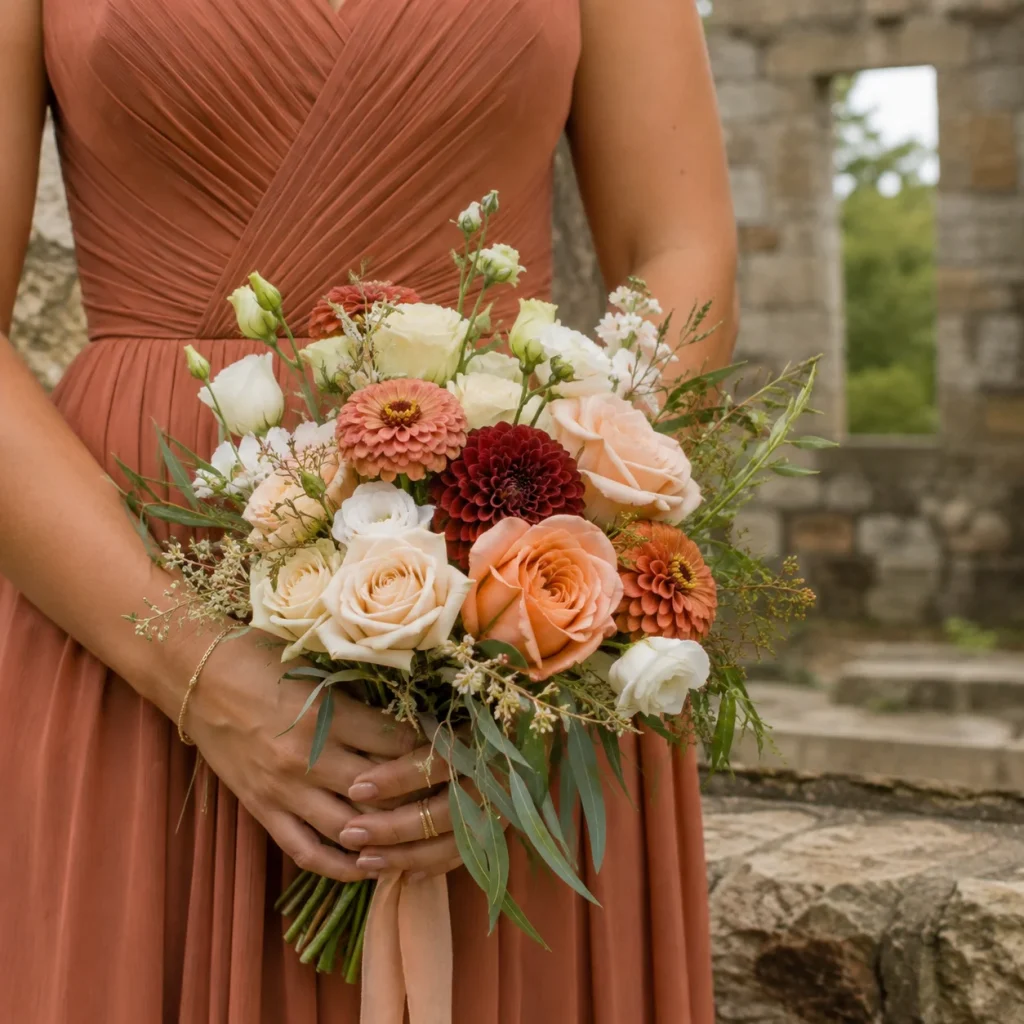
Start by anchoring your palette with one warm foundation color, such as soft peach, golden yellow, or delicate blush. These hues embody the sunny essence of summer without overwhelming the overall aesthetic. Incorporate one or two brighter summer accents—like coral, soft pink, or fresh green—to provide lively, cheerful touches. However, instead of saturating every arrangement with bright blooms, use these accents sparingly to create pockets of interest and maintain a sense of harmony.
Introduce Fall Through Texture Before Deep Color
To lean into fall without committing to darker tones too early, weave textures into your arrangements. Seed pods, dried grasses, soft ferns, layered petals, and berries can introduce a sense of early autumn. These details hint at the month’s evolving landscape and subtly transition your wedding’s design from summer to fall. If muted tones like mauve, terracotta, or dusty rose are appealing, blend them in gradually alongside textured greenery or sage accents for a natural progression.
Let the Venue Guide the Final Palette
Your venue plays a pivotal role in guiding your color choices. A historic stone building or wooded outdoor setting naturally harmonizes with earthier tones like burgundy, rust, or olive green. On the other hand, airy, modern spaces or seaside venues might elevate softer colors such as champagne, blush, and ivory. Keep in mind the lighting and time of day as well—candlelit receptions are enhanced by warm, romantic hues, while sunshine-filled ceremonies can carry brighter pops of color.
Buyer Questions Answered
- What colors work for an August wedding? Brighter hues, like golden yellow, peach, coral, and cream, provide warmth and vibrancy while still feeling seasonal.
- What colors work for a September wedding? Deeper shades, such as burgundy, dusty rose, terracotta, and sage, blend well with softer summer tones for a sophisticated look.
- Can I mix summer and fall flowers? Absolutely! Combining the two creates a transitional palette full of depth and interest.
- How do I keep late-summer flowers from looking too bright? Bring balance by incorporating soft pastels, creamy neutrals, or textured greenery.
- Do September wedding flowers need to be dark? No, dark colors aren’t necessary! September palettes work beautifully with a mix of light and rich hues.
By choosing carefully and layering your colors with intention, your late-summer wedding palette will feel cohesive and naturally aligned with the seasonal shift.
Part 2 – The Best Late-Summer Flowers for August and September Weddings
When designing wedding arrangements for late summer, selecting the right flowers is key to achieving a seasonal, cohesive look. August and September offer a wealth of blooms that evoke the warm transition from summer to fall, each contributing unique qualities to bouquets, centerpieces, and displays. Below, we highlight some of the strongest flower categories for late-summer weddings and explore their roles in creating stunning designs.
Sunflowers Bring Warmth and Seasonal Energy
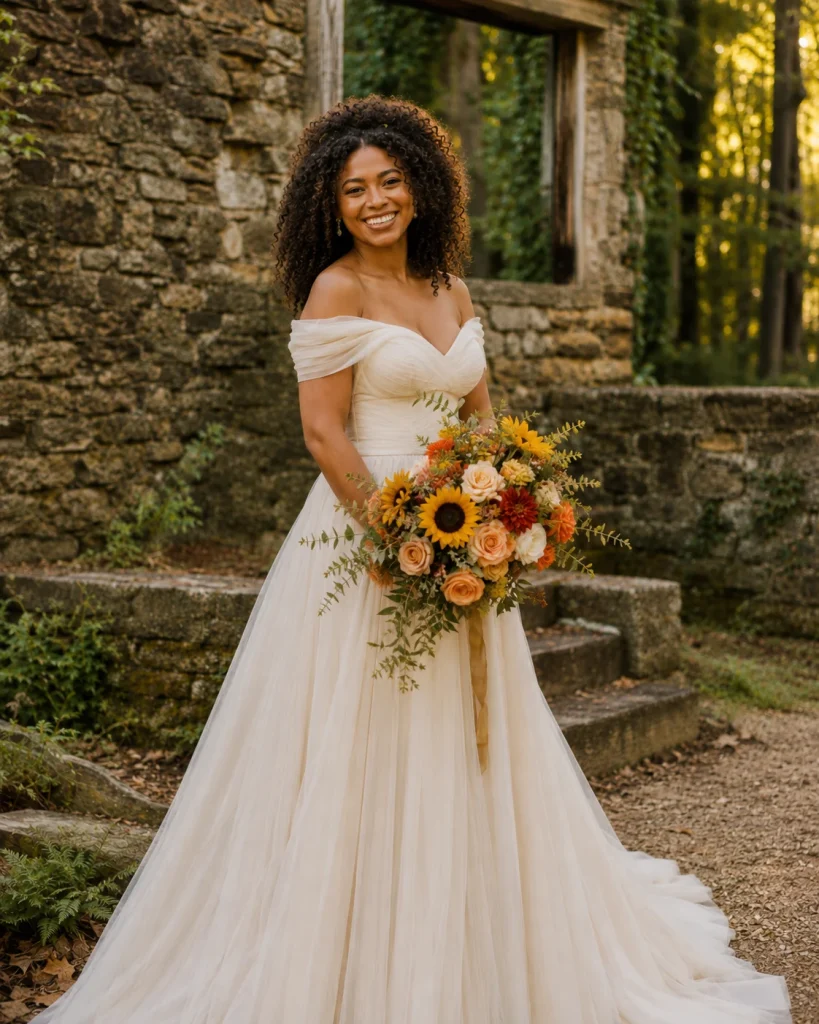
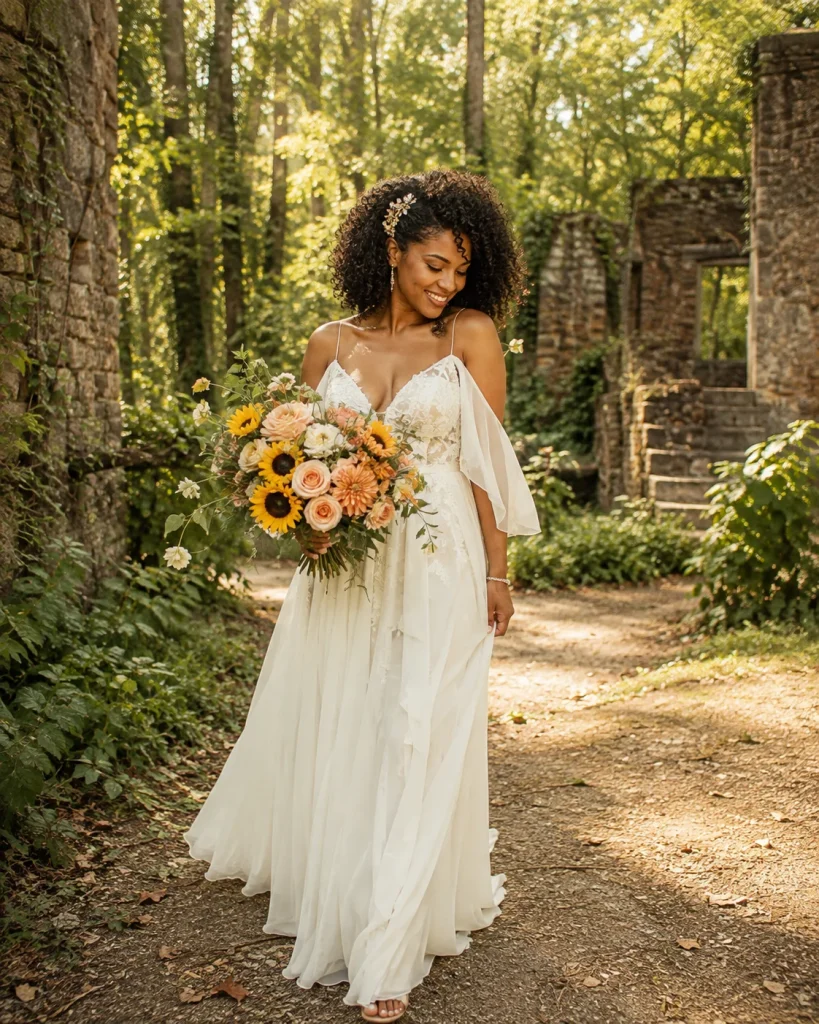
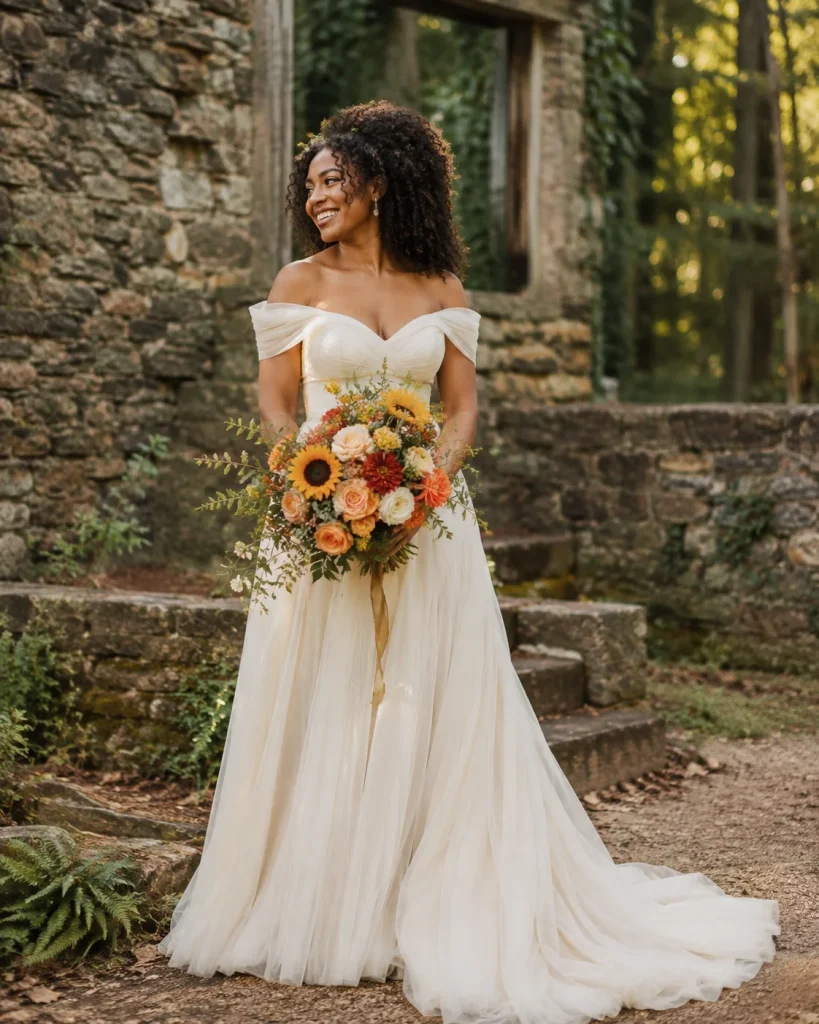
Sunflowers are synonymous with late summer, providing a cheerful and unmistakable seasonal vibe. Their bold, golden blooms radiate warmth and energy, making them a striking choice for various wedding arrangements. Use sunflowers in bridal and bridesmaid bouquets, ceremony installations, welcome displays, or to complement the natural beauty of farm, woodland, or historic-ruin venues.
To avoid an overly casual look, balance sunflowers by pairing them with cream roses, rust-colored flowers, lush greenery, and textured accents like thistles or dried wheat. These combinations elevate the rustic charm of sunflowers into an elegant and thoughtfully cohesive wedding design. Check out our Sunflowers collection for more inspiration.
Dahlias Add Rich Color and Focal Texture
Known for their intricate, fluffy blooms, dahlias command attention as dramatic focal flowers, making them perfect for anchoring bouquets and centerpieces. They also seamlessly guide wedding color palettes toward deeper, richer hues suitable for the transition to fall.
Available in a wide range of colors, dahlias often work beautifully in shades like burgundy, wine, rust, peach, blush, cream, or bronze. However, their availability can vary, especially later in the season, so it’s prudent to have a backup focal flower ready, such as garden roses or chrysanthemums. For stunning inspiration, browse our Dahlias selection.
Zinnias Create Color and Garden-Style Movement
Zinnias are a favorite for informal, garden-inspired weddings due to their vibrant hues and whimsical charm. These flowers excel at bringing playful color and natural movement to arrangements, making them ideal for rustic and woodland celebrations. Incorporate zinnias into mixed bouquets, bud vases, low centerpieces, cocktail table arrangements, or relaxed ceremony designs.
Thanks to their versatility, zinnias can stand alone in simple décor or combine with seasonal greenery and other blooms to create layered, colorful designs. Visit our Zinnias page to see how these lively flowers can enhance any garden-style wedding.
Roses Provide Dependable Structure and Color
Roses remain a timeless choice for weddings because they provide a dependable structure and color palette, making them a versatile foundation for arrangements when seasonal flowers may be more limited. Select from a wide array of late-summer rose colors, such as peach, blush, cream, yellow, orange, mauve, burgundy, toffee, or neutral brown.
Use roses to anchor bouquets and arrangements or mix them with textured greenery and seasonal blooms to add depth and dimension. Discover our full range of Wholesale Roses to find the perfect match for your event.
Supporting Flowers and Greenery Complete the Transition
No arrangement is complete without the supporting cast of flowers and greenery that add volume, texture, and transitions between summer and fall. Consider incorporating carnations, lisianthus, spray roses, mums, solidago, or hypericum berries for supporting flowers. For greenery, favorites like eucalyptus, Italian ruscus, leatherleaf, and amaranthus can provide the perfect backdrop. Add dried or preserved accents where appropriate to bring an extra layer of seasonal depth.
Explore our Bulk Greenery, Preserved Flowers, and Dried Flowers collections to find the perfect finishing elements for your designs.
Buyer Questions to Answer
- What flowers are best for an August wedding? Bright and bold blooms like sunflowers, zinnias, and dahlias are excellent for adding seasonal warmth and color.
- What wedding flowers work in September? Dahlias, roses, and chrysanthemums transition smoothly into fall palettes.
- Can I use sunflowers in an elegant wedding? Yes, pair sunflowers with soft roses, greenery, and textural accents to elevate their look.
- What can replace dahlias if they are unavailable? Consider garden roses, chrysanthemums, or other large focal blooms.
- Do zinnias work in bridal bouquets? Absolutely! Zinnias add color and movement to relaxed, garden-style arrangements.
- Which flowers can bridge summer and fall? Roses, spray roses, and carnations blend easily into transitional palettes, while greenery like eucalyptus and ruscus enhances the design.
By carefully choosing flowers that highlight late-summer beauty and layering them strategically, your wedding arrangements will create stunning memories that perfectly honor the seasonal shift.
Part 3 – Late-Summer Bouquet and Centerpiece Recipes That Feel Seasonal
When designing wedding arrangements for late summer, it’s important to consider combinations that highlight the warm, rich hues of the season while remaining versatile enough to suit various styles. Below are practical flower recipes and tips to inspire your next bouquet or centerpiece.
Golden August Bridal Bouquet
Suggested starting recipe
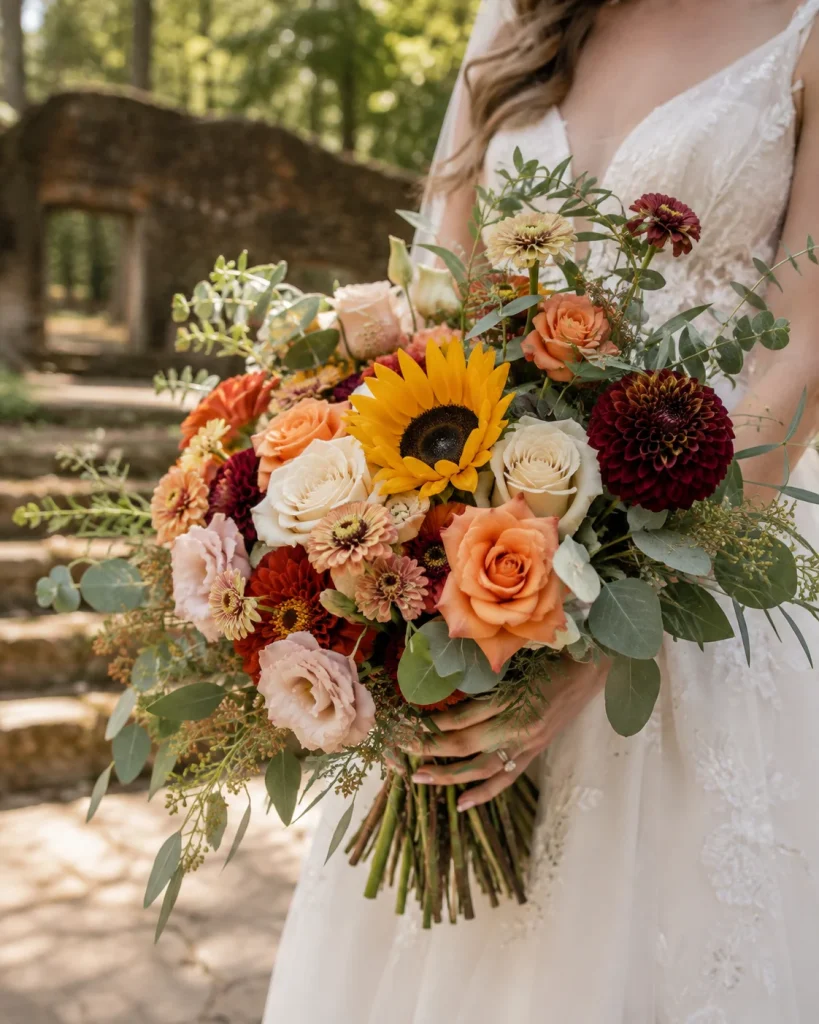
- 3–5 medium sunflowers
- 6–8 peach or cream roses
- 4–6 warm-toned zinnias
- 3–5 lisianthus stems
- 3–5 carnations
- Eucalyptus or Italian ruscus
- Optional golden solidago
Design effect
This bouquet captures the essence of golden August with its vibrant, sunny palette. Packed with bright and warm tones, it’s perfect for brides seeking a cheerful yet polished look. The addition of eucalyptus or Italian ruscus adds freshness and movement, while optional golden solidago boosts texture and brightness. The result feels seasonal, welcoming, and distinctly more intentional than a casual field-flower bundle.
Romantic September Bridal Bouquet
Suggested starting recipe
- 3–5 burgundy or rust dahlias
- 6–8 blush, cream, or toffee roses
- 4–6 mauve or rust-toned zinnias
- 3–5 lisianthus stems
- 3–5 antique carnations
- Soft eucalyptus
- Optional berries or trailing amaranthus
Design effect
This bouquet adds depth and richness with its deeper tones, perfect for the romantic vibe of September weddings. The interplay of burgundy, rust, and mauve flowers creates a textured, layered effect, offset by the softness of blush or cream roses. Optional additions like delicate trailing amaranthus or festive berries help this arrangement feel lush and beautifully transitional for the season.
Late-Summer Low Centerpiece
Suggested starting recipe
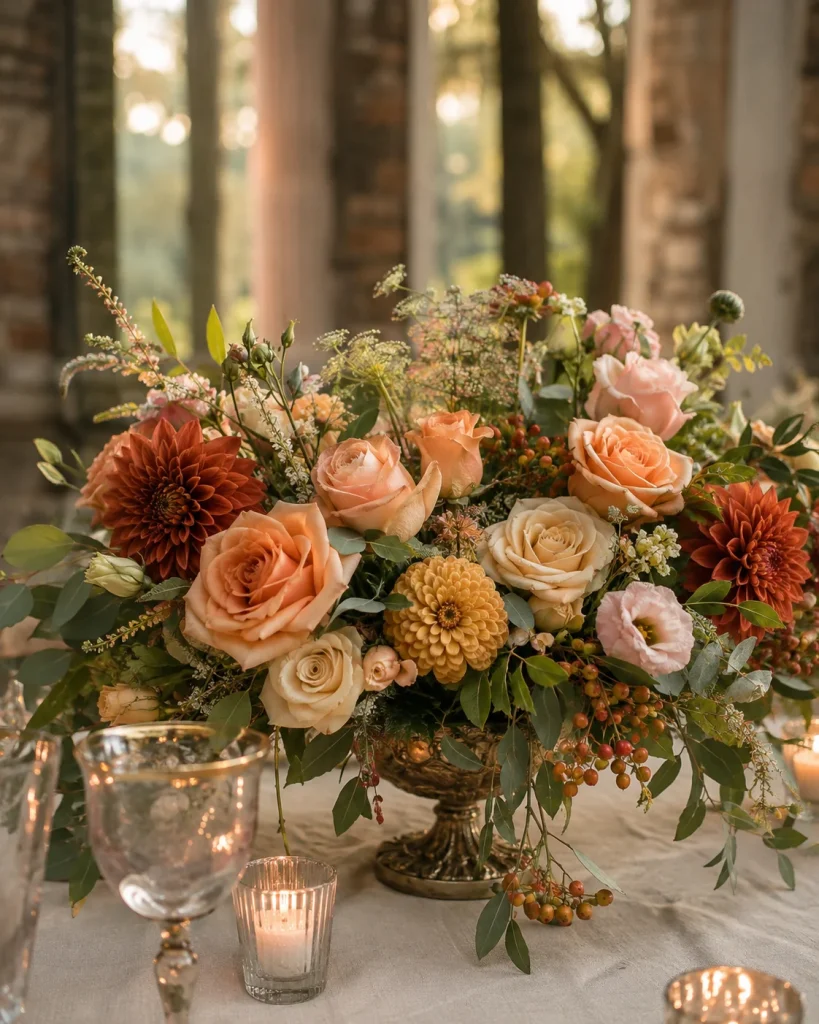
- 1–3 focal sunflowers or dahlias
- 5–7 roses
- 3–5 zinnias
- 3–5 carnations
- 2–4 lisianthus stems
- Seasonal filler
- Greenery around the outer edge
Low centerpieces are ideal for guest tables, offering an inviting, colorful focal point without blocking sightlines. For late summer, focal sunflowers or dahlias bring seasonal charm against a base of roses, carnations, and zinnias. Surrounding the arrangement with structured greenery creates a natural, balanced look. Add filler like solidago or baby’s breath for softness, and choose colors that match your overall wedding palette.
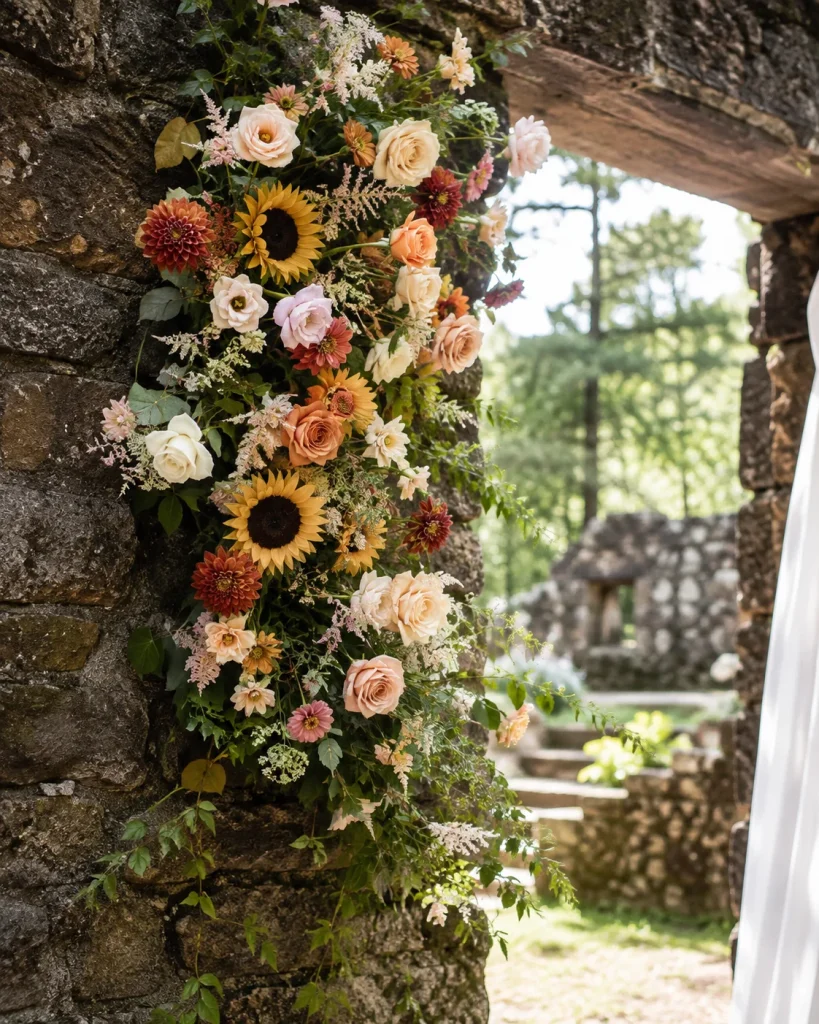
Ceremony Arrangement for Historic Stone Ruins
Historic stone venues pair beautifully with arrangements that complement rather than overpower their character. An elegant ceremony arrangement might include the following elements:
- Focal flowers: Gold and rust-toned sunflowers or dahlias create warm contrast.
- Supporting blooms: Peach and cream roses balance bold tones with softness.
- Greenery: Layered greenery such as eucalyptus, ruscus, or olive branches frames the arrangement with organic texture.
- Height and shape: Incorporate slightly asymmetrical stems for a natural, free-flowing silhouette. Use textural elements like trailing vines or amaranthus to add dimension.
- Lighting: Enhance the setting with candlelight or lanterns to highlight the venue’s unique architectural details.
This approach ensures the arrangements honor the venue’s aged elegance while drawing guests’ eyes naturally to the floral designs.
Buyer Questions to Answer
- How many flowers do I need for a late-summer bouquet? This will depend on the size of the bouquet and density of the design, but most medium-sized bridal bouquets use between 25–35 stems.
- Can I combine sunflowers and roses? Absolutely! Pairing sunflowers with roses creates a mix of rustic charm and classic elegance.
- Can dahlias and zinnias be used together? Yes. These two summer favorites blend beautifully, providing complementary textures and tones.
- Should August and September bouquets look different? Yes, as September’s deeper hues can subtly signal the coming of fall while August designs may lean into brighter summer shades.
- What flowers complement a historic stone venue? Flowers with warm, earthy tones—such as rust, gold, and peach—work well, paired with greenery and subtle textural elements.
When creating late-summer arrangements, think of these recipes as flexible starting points. Factors like bloom size, arrangement density, and your personal design preferences may lead to individual adjustments for each project. Save these ideas or share them with your flower supplier for inspiration!
Part 4 – How to Order Late-Summer Wedding Flowers With a Backup Plan
Planning your late-summer wedding flowers requires a balance of creativity and preparation. With seasonal blooms in play, it’s essential to organize your flower order effectively while incorporating a reliable backup plan. Here’s how to do it:
Choose One Dependable Foundation Flower
Start by selecting a versatile and dependable foundation flower. Roses and carnations are excellent options, as they are widely available, come in various colors, and can easily complement any arrangement. These blooms can be used across all your floral designs, from bouquets to centerpieces, ensuring consistency and cohesion in your overall aesthetic.
Select One Seasonal Focal Flower
For your statement blooms, pick a seasonal focal flower that highlights the unique charm of late summer. Sunflowers and dahlias are standout choices, offering bold colors and striking shapes that enhance the sophistication of your designs. These focal flowers add depth and drama while celebrating the natural beauty of the season.
Add One Supporting Flower for Movement
To add movement and texture to your arrangements, include a supporting flower. Consider options like lisianthus, spray roses, zinnias, or solidago. Filler flowers with interesting textures can provide a soft contrast to bold seasonal blooms, creating a visually harmonious look.
Choose a Backup Before Ordering
Having a backup plan ensures that any seasonal variations or availability issues won’t disrupt your wedding preparations. For example:
- If dahlias are out of stock, substitute them with roses, mums, or carnations in similar colors.
- If your chosen zinnia color is limited, replace it with spray roses or carnations while maintaining your palette.
- If sunflowers feel too bold, reduce the number of focal stems and increase the use of roses or supporting flowers for balance.
Calculate Flowers by Design Area
To ensure you order the right quantities, plan flowers by the specific design areas:
- Bridal bouquet
- Bridesmaid bouquets
- Boutonnieres and corsages
- Ceremony structures and aisle arrangements
- Table decor such as centerpieces, cocktail tables, and a sweetheart table
- Additional displays like welcome signs or cake tables
Providing a clear breakdown for each area will help you calculate the flowers you need and avoid over- or under-ordering.
Prepare Before the Flowers Arrive
Before your flowers are delivered, gather the necessary supplies:
- Clean buckets for hydrating blooms
- Sharp floral snips
- Flower food (when appropriate)
- Floral tape, wire, and ribbon
- Clean vases and arrangement mechanics
- Transport boxes to protect arrangements in transit
Buyer Questions to Answer
To help you prepare further, here are some common buyer questions:
- When should I order flowers for an August wedding? Place your order 4–6 weeks in advance.
- When should I order flowers for a September wedding? Order 3–5 weeks ahead while finalizing your backup plan.
- Should I choose backup flowers? Yes, planning backups will ensure your wedding arrangements stay on track despite availability issues.
- What happens if dahlias are unavailable? Substitute them with similar blooms like roses, mums, or carnations in coordinating colors.
- How many flower varieties should I order? Stick to 3–5 main varieties to keep your designs cohesive.
- Should I order extra stems? Yes, order about 10–15% more than needed to account for breakage or adjustments.
By following these tips, you’ll create stunning late-summer wedding arrangements that fit your vision and accommodate seasonal variations seamlessly.
Part 5 – How to Style Late-Summer Flowers at Historic Stone and Woodland Venues
Late-summer weddings offer the perfect opportunity to blend natural beauty with timeless elegance, especially at venues like The Ruins at Kellum Valley Farm in Cleveland, Georgia. This historic location, with its aged stone foundations, woodland surroundings, and picturesque mountain atmosphere, serves as an ideal canvas for creating unforgettable floral designs. Here’s how to enhance the venue’s unique character with late-summer flowers:
Use the Stone as a Natural Neutral
The gray, brown, and mossy tones of historic stonework provide an earthy, neutral backdrop for floral arrangements. Late-summer hues such as gold, peach, rust, burgundy, blush, cream, and green can complement the stone and create a warm, romantic look. For a pop of drama, consider rust-colored dahlias paired with blush roses, or mix burgundy blooms with soft cream peonies. To highlight the venue’s woodland charm, incorporate textured foliage like seeded eucalyptus and ruscus.
Preserve the Architecture With Asymmetrical Flowers
One of the key features of a venue like this is its historic stone architecture. Instead of covering the aged walls or steps with overwhelming florals, opt for asymmetrical installations that frame doorways or highlight stone staircases. Wispy arrangements featuring garden roses, ranunculus, and greenery can add elegance while maintaining the integrity of the ruins. Such designs invite guests to admire the structure itself while enjoying the floral artistry.
Let Greenery Connect the Flowers to the Woods
A venue surrounded by woodland offers an opportunity to harmonize floral designs with nature. Use flowing greenery like smilax, ivy, or ferns to visually tie your arrangements to the trees. Whether you’re creating grounded floral installations at the ceremony site or designing garlands for reception tables inside the foundations, greenery can connect every element to the lush outdoor setting.
Design Areas to Highlight
To make the most of the venue, focus on specific areas for floral styling:
- Ruin doorway: Craft a statement piece for a ceremony backdrop that frames, rather than hides, the stonework.
- Stone stairs: Line the steps with delicate, grounded flower arrangements that lead to the ceremony.
- Ground installations: Use low, cascading flowers and greenery to blend with the natural surroundings.
- Welcome displays: Greet guests with arrangements near entryways or signage.
- Reception tables: Decorate with arrangements that enhance the rustic foundations, incorporating candles for evening charm.
Buyer Questions Answered
- What flowers look best against stone walls? Rich tones like rust, burgundy, and blush pair wonderfully with neutral stone colors. Flowers with texture, like dahlias, carnations, and garden roses, create depth.
- Which colors work for a woodland wedding? Warm neutrals and earth tones, including green, gold, and cream, help tie the flowers to the forest setting.
- How can I decorate ruins without hiding the architecture? Use asymmetrical designs and negative space to frame, rather than obscure, key architectural features.
- Do sunflowers work at a historic venue? Yes, sunflowers add a cheerful, rustic touch and can be paired with softer blooms to balance the look.
- What greenery complements a wooded setting? Ferns, smilax, and ivy blend seamlessly with woodland surroundings.
Combine these tips with high-quality wholesale flowers and greenery to create breathtaking arrangements for an unforgettable late-summer wedding at stone and woodland venues.
FAQ Section
- What flowers are best for an August wedding?
Sunflowers, roses, zinnias, dahlias (when available), lisianthus, carnations, and seasonal greenery are wonderful choices for August weddings. Opt for golden, peach, coral, blush, cream, or fresh green tones to capture the warmth of summer while adding texture that subtly hints at the early fall season.
- What wedding flowers work well in September?
For September weddings, consider using dahlias, roses, zinnias, carnations, lisianthus, mums, sunflowers, berries, and layered greenery. Richer colors, such as burgundy, rust, mauve, terracotta, and mustard, combined with cream or blush accents, create a romantic yet grounded aesthetic.
- Can I mix sunflowers and dahlias in the same bouquet?
Absolutely. Sunflowers provide warmth and a cheerful, open shape, while dahlias bring structure and layered depth. To balance these flowers, use one as the main focal point and the other in a supporting role. Include connecting elements like roses, lisianthus, carnations, or greenery for a cohesive and elegant arrangement.
- What can I use if dahlias are unavailable?
If dahlias are not in season, roses, garden roses, chrysanthemums, or carnations can often take their place. The best substitute will support the existing color palette and provide enough visual weight to anchor the design of the bouquet or centerpiece.
- Should August and September wedding flowers look different?
They can be distinct, but drastic differences are not required. August designs often lean on bright gold, peach, and coral hues with fresh greens, while September arrangements may take on deeper tones like rust, burgundy, and mauve. Both months, however, share versatility in using roses, sunflowers, zinnias, and textured greenery.
- How far in advance should I choose my late-summer wedding flowers?
Start early to ensure your palette and key flower choices align with seasonal availability. Plan for possible substitutions by identifying alternative focal flowers that fit your design. Follow Whole Blossoms’ guidance on ordering and flower care to perfect timing and delivery for your special day.
Conclusion
Late-summer wedding flowers strike the perfect balance between the warmth of summer and the rich textures of early fall. The strongest designs blend elements from both seasons to create a stunning and cohesive look for your wedding. By starting with a dependable foundation flower, complementing it with a seasonal focal flower, adding a supporting flower, selecting a textural accent, and incorporating greenery, you can craft a coordinated palette that brings your vision to life.
Whole Blossoms is here to make your floral dreams a reality. Bring your August or September wedding palette to life with farm-direct flowers from Whole Blossoms. Shop bulk sunflowers, dahlias, zinnias, roses, wedding flowers, event flowers, greenery, and floral supplies to create breathtaking bouquets, centerpieces, ceremony installations, and reception décor. Explore our wide selection and experience the beauty of farm-fresh blooms for your special day!