


 by
by 
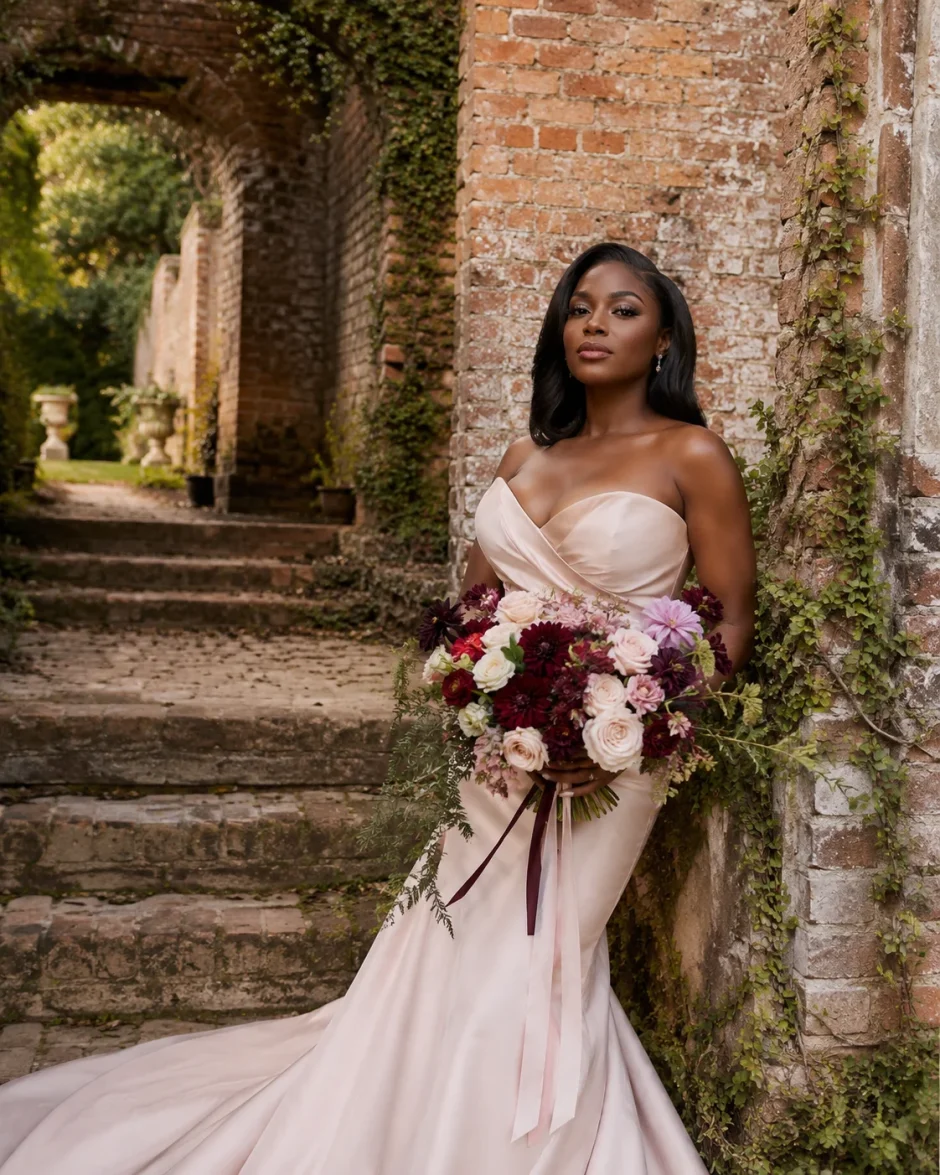
You chose burgundy for its rich fall depth and blush for its softness—but how do you combine them without creating flowers that look either too dark or too pale? Burgundy and blush wedding flowers are undeniably stunning together, but achieving the perfect balance requires more than simply ordering an equal mix of both colors. Burgundy is naturally bold and visually dominant, meaning just a few deep-hued blooms can command as much attention as a larger grouping of lighter, blush-colored flowers. Without careful planning, the design can easily feel unbalanced.
The key is to use burgundy strategically, adding depth and focal contrast, while allowing blush, cream, and soft greenery to maintain an overall romantic and airy look. At Whole Blossoms, we make thoughtful design easy by providing a wide selection of individual flower varieties. This allows you to create a custom-coordinated palette for every aspect of your wedding, from bouquets and centerpieces to ceremony and reception arrangements. With our diverse collection of fresh-cut flowers, you’ll find everything you need to bring your vision to life and craft the perfect harmony of burgundy and blush for your special day.
In this guide, you’ll learn:
- How to balance burgundy and blush flowers
- Which flowers work best for this fall palette
- Bouquet and centerpiece recipe ideas
- How to order the right quantities
- Frequently asked questions
Part 1 – How to Balance Burgundy and Blush Without Making Designs Too Dark
When incorporating burgundy and blush into your wedding floral arrangements, striking the right balance is essential to ensure your designs are visually appealing without feeling too heavy or overly dark. Burgundy is a rich, deep color with significant visual weight, while blush adds a soft, romantic touch. By understanding the principles of color distribution and how to pair these hues effectively, you can create arrangements that feel harmonious and elegant.
Why Burgundy Needs Visual Breathing Room
Burgundy flowers naturally draw the eye due to their depth and saturation, making them ideal as a focal or anchoring color. However, using too many burgundy blooms can overwhelm softer tones like blush and cream. To prevent this, space larger burgundy blooms carefully within your arrangements. Allow lighter-colored flowers to surround and balance them, creating visual breathing room. Smaller burgundy flowers can be incorporated more freely to add pops of depth without dominating the overall design.
Use Blush and Cream to Soften the Palette
Blush flowers enhance the romantic feel of your arrangements, while cream or champagne-colored blooms bring lightness and refinement. Blush works particularly well when distributed throughout the bouquet or centerpiece in clusters, complementing burgundy without competing for visual attention. Cream tones introduce a natural softness that prevents the palette from skewing overly pink and provides a fresh, understated contrast to the darker burgundy.
Add Greenery for Separation and Natural Movement
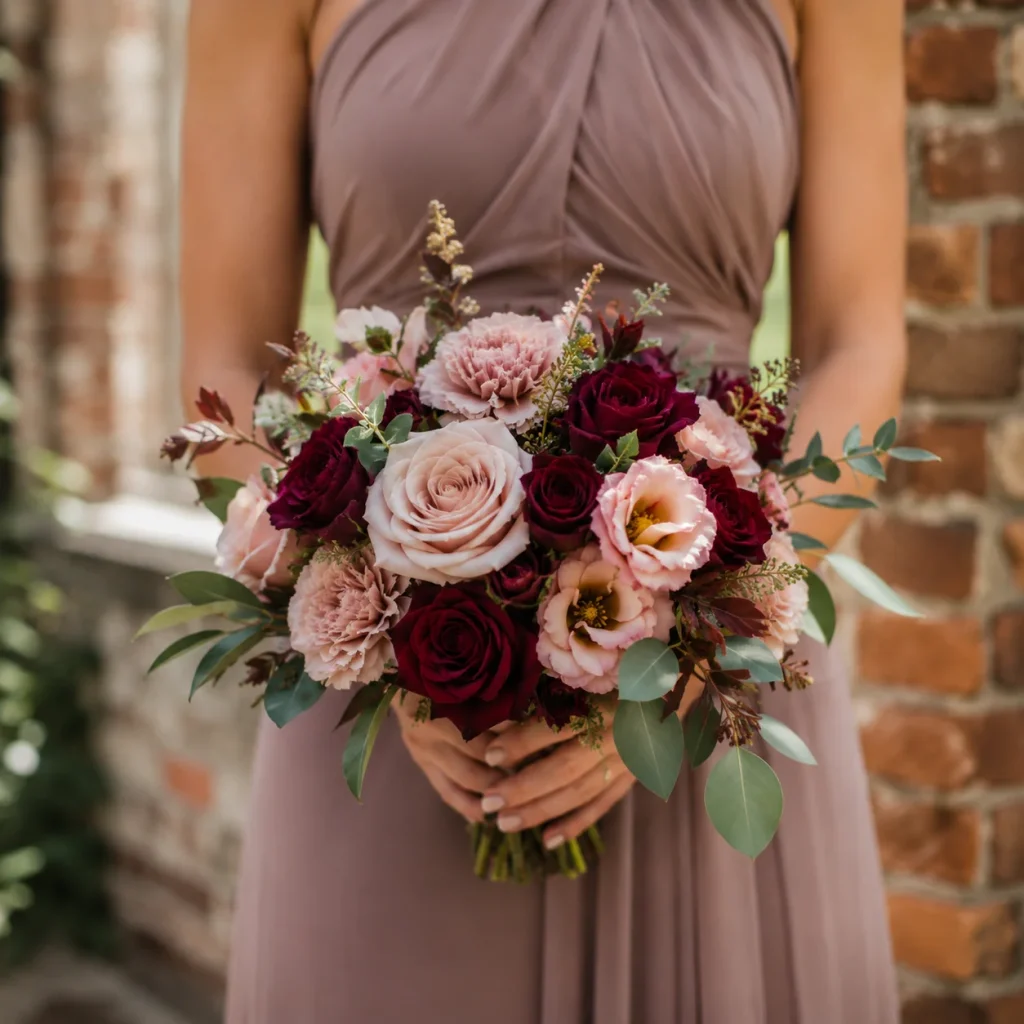
Greenery plays an essential role in tying this palette together and adding depth to your floral designs. Soft, neutral greens like eucalyptus, dusty miller, or olive branches create separation between the burgundy and blush flowers, ensuring they don’t blur into a single block of color. Greenery also introduces movement and texture, bringing a natural, garden-inspired feel to your arrangements.
Suggested Starting Color Ratio
Here’s a versatile color ratio that works as a starting point for balancing burgundy and blush in floral designs. Adjust based on your wedding style and venue lighting:
- 20–30% burgundy focal flowers
- 40–50% blush and muted pink flowers
- 15–25% ivory, cream, or champagne flowers
- 10–20% greenery and textural accents
For formal evening weddings, slightly increasing the percentage of burgundy can enhance the dramatic ambiance. Meanwhile, for outdoor or daytime ceremonies, incorporating more blush, cream, and greenery creates a lighter, more ethereal look.
Buyer Questions
How much burgundy should I use in my wedding flowers? Use burgundy sparingly as a focal or accent color, ensuring it doesn’t overpower the arrangement.
Will burgundy flowers make my bouquet look too dark? Not if balanced with lighter colors like blush, cream, and soft greenery.
Do burgundy and blush flowers need to be used equally? No, even distribution isn’t necessary. Burgundy carries more visual weight, so fewer blooms are typically needed.
What neutral colors work with burgundy and blush? Ivory, champagne, and cream are excellent neutrals that provide lightness while complementing the palette.
By following these guidelines, you can beautifully balance burgundy and blush in wedding floral designs, creating arrangements that feel sophisticated, cohesive, and memorable.
Part 2 – The Best Flowers for Burgundy and Blush Fall Arrangements
Creating stunning burgundy and blush floral arrangements involves more than just selecting the right flowers; it’s about assigning each flower a role to ensure a well-balanced and cohesive design. Below, we’ll explore specific flowers that excel in this palette and highlight their contributions to your arrangements.
Roses Create the Foundation
Roses reliably serve as the foundation for burgundy and blush arrangements. Their classic shape, wide availability, and versatility make them a go-to flower for anchoring your floral designs. Burgundy roses bring rich, moody depth to the palette, immediately drawing the eye and enhancing the overall sophistication of the arrangement. Quicksand or muted beige roses act as transitional elements, effortlessly blending burgundy with blush tones. Meanwhile, blush roses contribute softness and romance, adding a delicate touch. Cream roses provide a hint of lightness, preventing the arrangement from feeling too heavy. Incorporating spray roses of similar shades ensures smaller color repetitions throughout the design.
Dahlias Add Seasonal Drama
Few flowers create as much drama and visual impact in fall arrangements as dahlias. Burgundy dahlias, in particular, provide a stunning focal point with their bold color and intricate, layered petals. Their large size means fewer stems are needed, making them ideal for bouquet centers and show-stopping centerpiece designs. However, availability can be seasonal, so it’s essential to confirm their readiness before finalizing your floral recipe. When used thoughtfully, dahlias amplify the overall elegance and drama of fall arrangements.
Lisianthus Adds Softness and Movement
Lisianthus is an excellent addition to burgundy and blush arrangements for its ability to soften contrasts between bold burgundy and light blush or cream shades. With their open blooms, smaller buds, and graceful stems, lisianthus provides airy movement and romantic texture, ensuring that the arrangement feels dynamic rather than static. Opt for shades like blush, pale pink, cream, or white to create seamless transitions between stronger and lighter colors in the palette. Their understated elegance makes lisianthus a must-have for adding a touch of gentle flow to any composition.
Carnations Build Volume Economically
Carnations may be an economical choice, but they are by no means an afterthought in elegant wedding designs. Available in burgundy, blush, cream, and even antique-inspired tones, carnations can build volume and texture while maintaining the arrangement’s cohesion. Their ability to mimic the look of premium flowers without the high cost makes them invaluable for filling out bouquets and providing color continuity. When used thoughtfully, carnations enhance the arrangement’s overall structure and aesthetic without overshadowing focal flowers.
Greenery and Textural Flowers Finish the Design
No arrangement is complete without the perfect finishing touches. Greenery like Italian ruscus, eucalyptus, seeded eucalyptus, and smilax creates a lush backdrop for your blooms and provides natural movement. For additional texture, consider amaranthus, hypericum berries, waxflower, or preserved accents that bring depth and interest. These elements not only complete your design but also help highlight the delicate interplay between burgundy and blush flowers.
Buyer Questions Answered
- What flowers come in burgundy for fall weddings? Burgundy roses, dahlias, carnations, and amaranthus are excellent options.
- Which blush flowers pair well with burgundy roses? Blush roses, lisianthus, and spray roses blend perfectly.
- Are carnations suitable for elegant wedding arrangements? Yes, they build affordable volume and maintain sophistication.
- What can I use instead of burgundy dahlias? Burgundy roses or amaranthus can serve as replacements.
- What greenery looks best with burgundy and blush flowers? Italian ruscus, eucalyptus, and smilax are ideal greenery choices.
By assigning each flower a purpose—foundation, focal point, filler, movement, volume, or texture—you ensure a thoughtfully designed arrangement that beautifully balances the burgundy and blush palette.
Part 3 – Burgundy-and-Blush Bouquet and Centerpiece Recipes
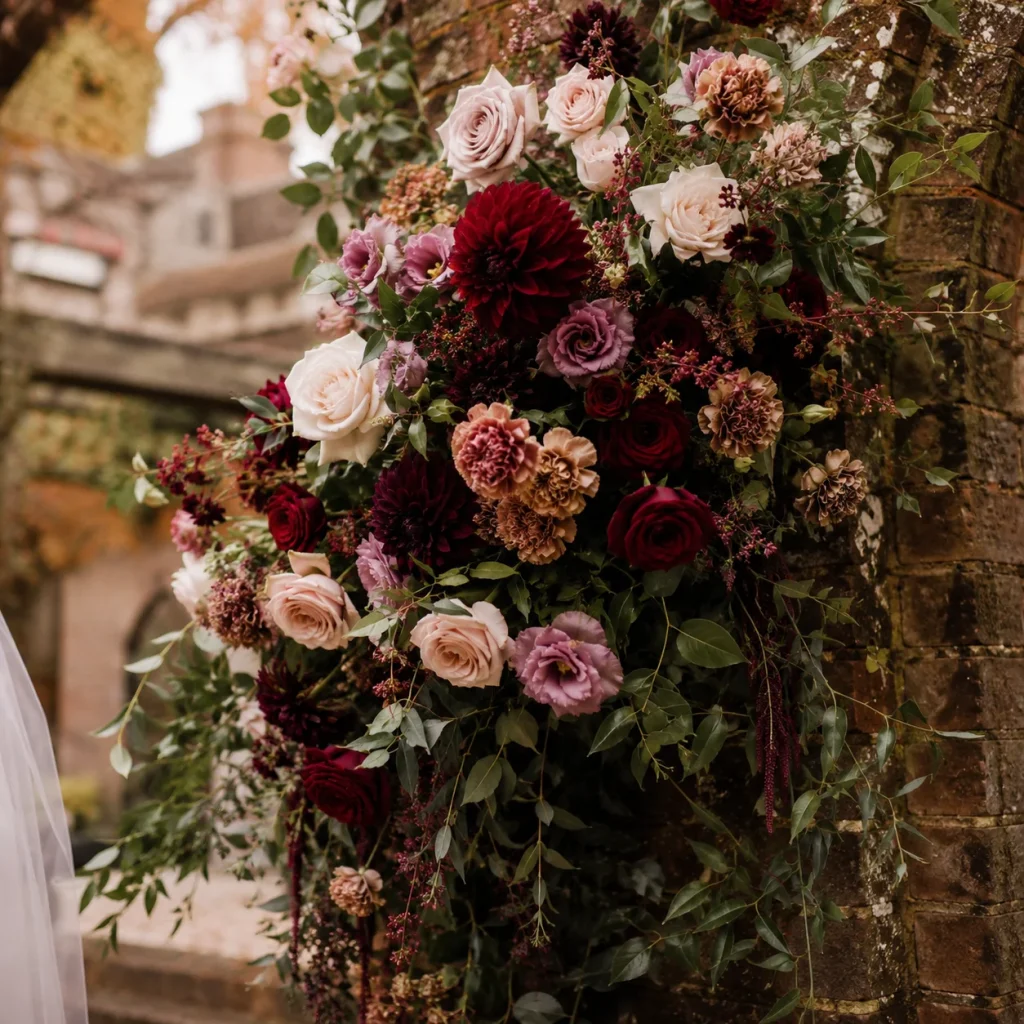
Turning inspiration into a reality, these burgundy-and-blush floral recipes will help you plan stunning arrangements for any romantic occasion. Whether you’re styling a bridal bouquet, bridesmaid bouquets, or reception centerpieces, these formulas serve as a starting point to get you closer to a flawless look. Use them as a guide while accounting for bloom size, arrangement density, and desired fullness to adapt to your specific vision.
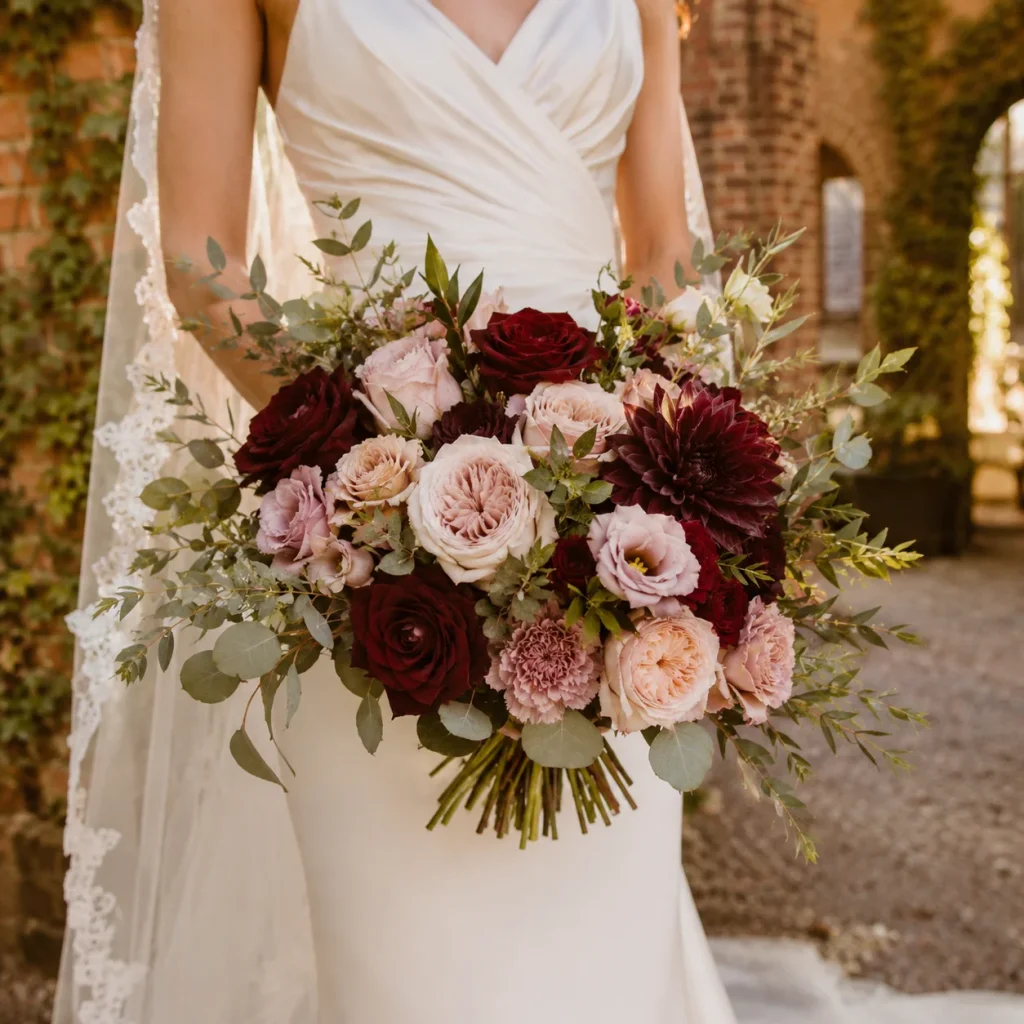
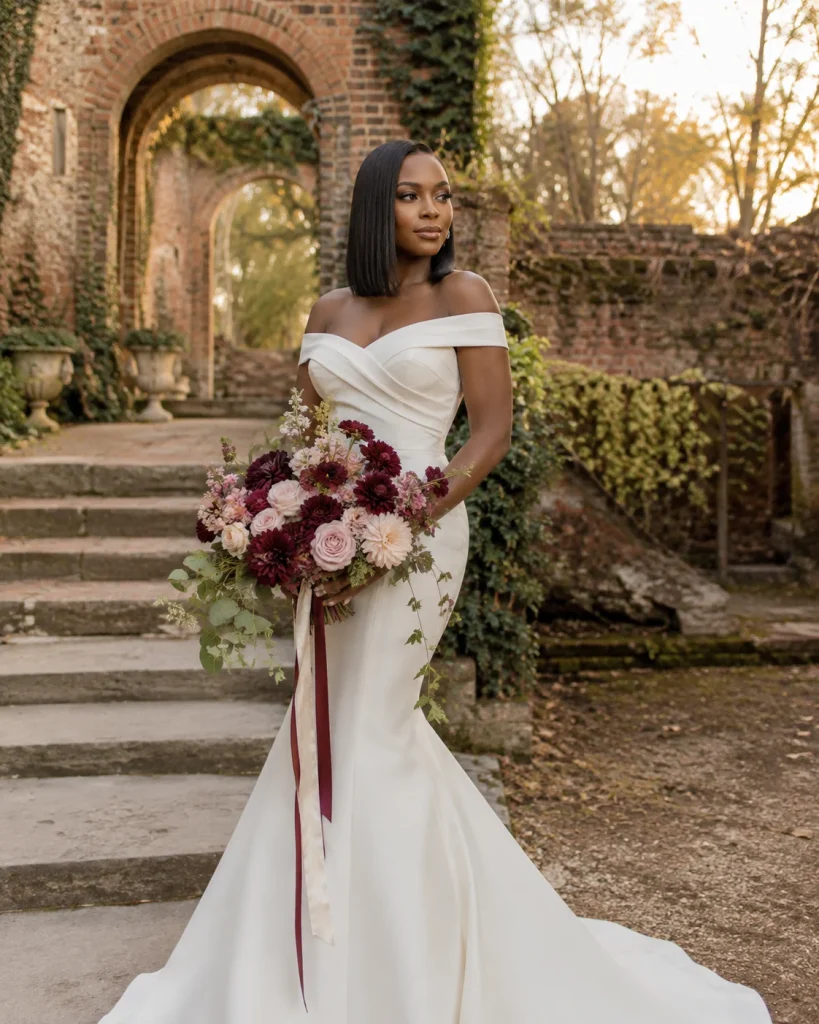
Romantic Bridal Bouquet Recipe
A suggested starting formula for a romantic and elegant bridal bouquet:
- 8–10 blush or muted pink roses
- 5–7 burgundy roses
- 3–5 burgundy dahlias
- 4–6 blush or cream lisianthus stems
- 4–6 antique or blush carnations
- 2–4 spray rose stems
- Eucalyptus or Italian ruscus
- Optional burgundy hanging amaranthus
Consider bloom size when finalizing the quantities; larger flowers may require fewer stems to achieve the desired look. Burgundy dahlias add depth and texture, while lisianthus and carnations create softness. Eucalyptus or Italian ruscus contributes a whimsical, airy quality, and optional hanging amaranthus can add a touch of dramatic movement.
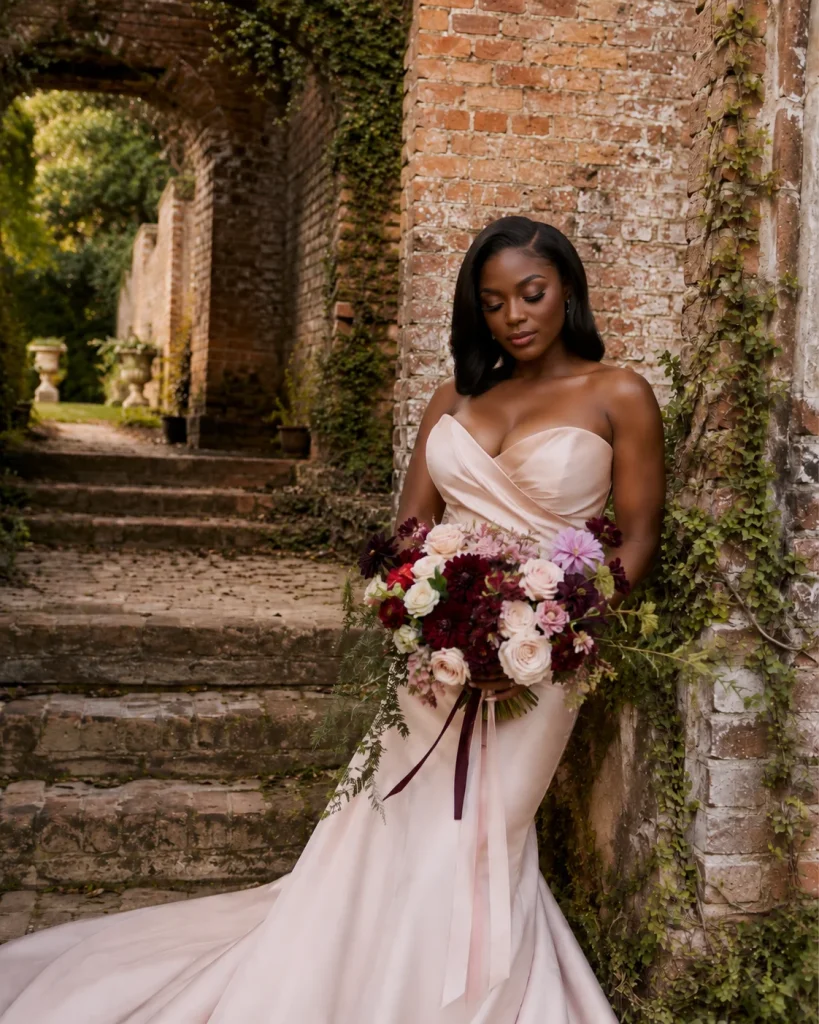
Coordinated Bridesmaid Bouquet Recipe
A bridesmaid bouquet should complement the bridal bouquet while remaining smaller and less intricate. Here’s a suggested formula:
- 4–5 blush roses
- 2–3 burgundy roses
- 1–2 burgundy focal blooms (e.g., dahlias)
- 2–3 lisianthus stems
- 2–3 antique or blush carnations
- Light greenery
This scaled-down version shares similar flowers with the bridal bouquet to maintain consistency across the event’s aesthetic. Light greenery ensures a touch of organic elegance without overshadowing the smaller number of blooms.
Low Reception Centerpiece Recipe
Designing low reception centerpieces allows your guests to converse easily while still showcasing luscious florals. Here’s a starting formula:
- 5–7 blush roses
- 3–5 burgundy roses
- 1–3 burgundy dahlias
- 3–5 lisianthus stems
- 3–5 carnations
- Spray roses or waxflower for accents
- Greenery around the outside edge
These compact arrangements are perfect for showcasing both your color palette and bloom variety. Position the greenery around the edges to frame the centerpiece while leaving space for the burgundy and blush flowers to shine.
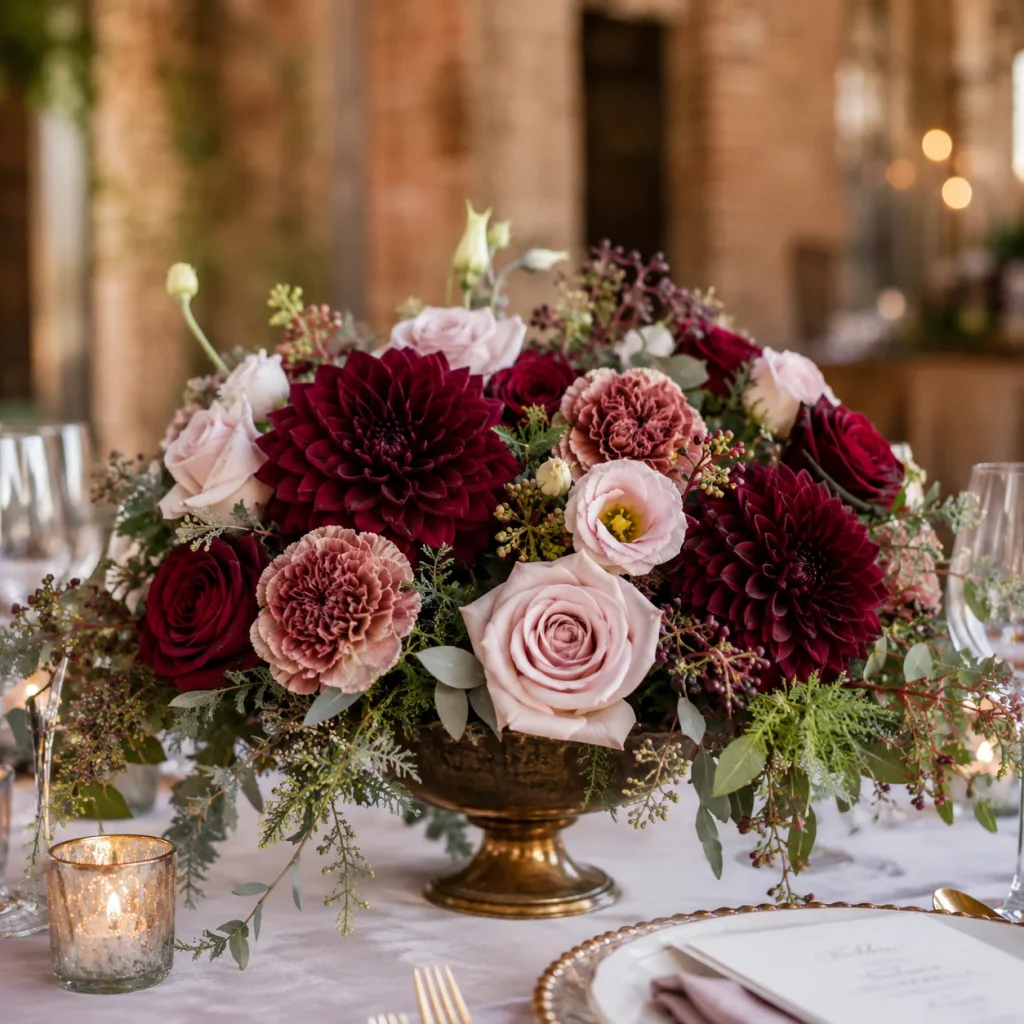
Historic Manor and Ruins Design
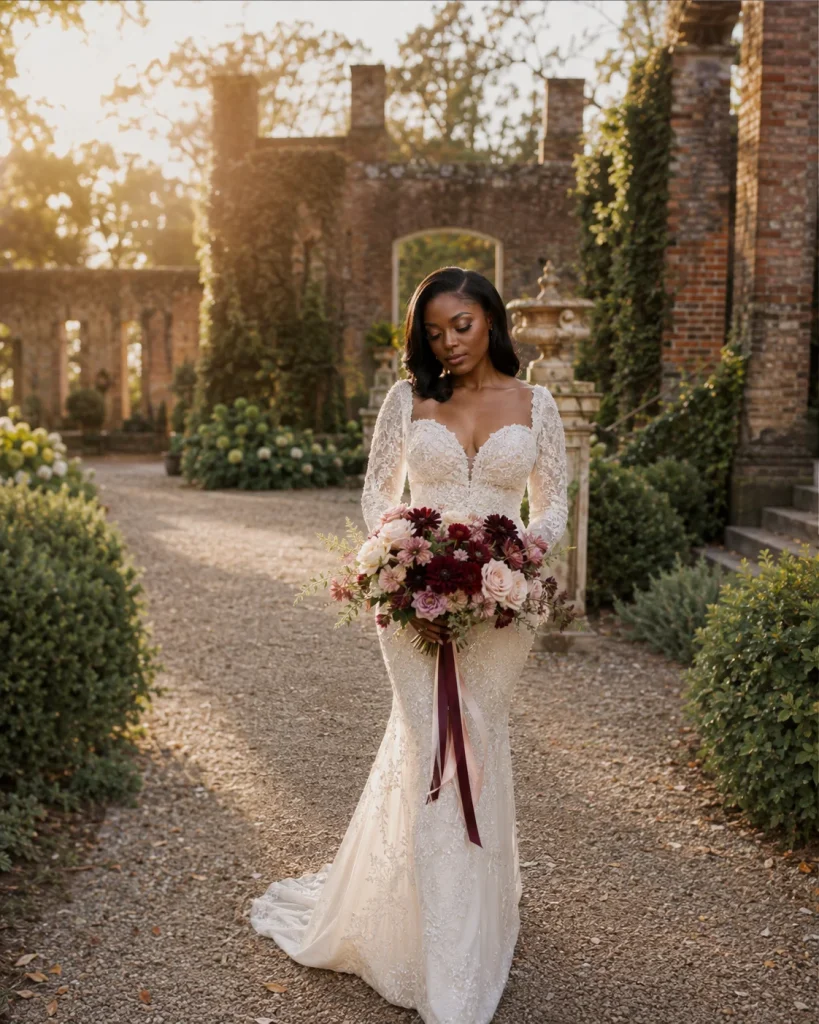
The burgundy-and-blush color palette pairs beautifully with historic fall wedding venues. Imagine this design complementing the textures of:
- Weathered brick
- Stone arches
- Climbing ivy
- Dark wood
- Candlelight
- Gold or antique brass accents
For inspiration, think of a venue like Barnsley Resort in Adairsville, Georgia, with its romantic brick ruins, ivy-covered arches, sprawling lawns, and old-world details illuminated by warm fall light. These florals harmonize effortlessly with the richness and warmth of historic manor architecture. Note that this example is provided for visual context and does not imply any specific endorsement or sponsorship.
Buyer Questions to Answer
Here are some common buyer questions to guide your floral planning:
- How many flowers do I need for a burgundy and blush bouquet? This depends on the desired fullness and bloom size, but the suggested recipes above provide a helpful baseline.
- Can I use the same flowers in bouquets and centerpieces? Yes! Repeating flowers can create a cohesive look, but balance the quantities based on arrangement size and purpose.
- How do I make the bridal bouquet stand apart? Use additional blooms, unique textures like hanging amaranthus, or more intricate layering for added drama.
- What flowers work with a historic fall wedding venue? Burgundy dahlias, blush roses, and greenery like ivy or smilax pair beautifully with historic textures.
- Should every arrangement contain the same percentage of burgundy? Not necessarily. Adjust the balance of burgundy and blush based on the arrangement type and overall aesthetic you hope to achieve.
With these recipes and tips, you’re equipped to turn your burgundy-and-blush vision into memorable arrangements that bring romance and sophistication to your big day.
Part 4 – How to Order Burgundy and Blush Flowers for a Fall Wedding
Planning a burgundy-and-blush floral order doesn’t have to be overwhelming. By breaking it down into essential steps, you’ll feel confident creating an organized plan that fits your vision — and ensure your fall wedding arrangements are as stunning as you imagined.
Decide Which Flowers Are Essential
The first step is to narrow down your must-have flowers. Choose one or two standout blooms in each category to avoid an overcomplicated order. For a balanced mix, consider these staples:
- Burgundy focal flower: Burgundy dahlias (or roses as a substitute) make an excellent centerpiece for arrangements.
- Blush foundation flower: Blush roses or carnations provide a soft contrast to deep burgundy tones.
- Light neutral flower: White or cream roses, lisianthus, or hydrangeas add brightness and balance.
- Volume flower: Gypsophila (baby’s breath) or stock fills space while maintaining elegance.
- Textural flower: Burgundy scabiosa pods or astilbe add dimension and visual interest.
- Greenery: Choose one or two versatile greens like eucalyptus or ivy for a cohesive look across arrangements.
Sticking to a focused palette ensures your designs feel unified and prevents over-ordering unrelated blooms.
Build Quantities by Arrangement Type
Next, plan how many flowers you need by listing every arrangement type you’ll create. Use your wedding’s floral areas as a guide:
- Bridal bouquet
- Bridesmaid bouquets
- Boutonnieres and corsages
- Ceremony arrangements (arches, altars, etc.)
- Aisle decorations
- Cocktail table arrangements
- Guest table centerpieces
- Sweetheart table arrangement
- Welcome flowers and cake table accents
Calculating quantities by arrangement type ensures you order what you need without excess stems piling up.
Order a Practical Cushion
Nature is unpredictable, so plan to order slightly more than your calculated total for these reasons:
- Natural variations in size
- Damaged stems during transport
- Testing practice arrangements ahead of the big day
- Accommodating last-minute changes
- Flowers that open differently than expected
Rather than following a universal percentage, use your arrangement counts as a base and add a reasonable cushion to stay prepared while preventing waste.
Consider Seasonal Availability
Seasonal flowers add charm but can also present challenges. For example, if burgundy dahlias are unavailable, suitable substitutes include:
- Burgundy roses
- Deep red garden roses
- Burgundy carnations
- Burgundy chrysanthemums
- Dark scabiosa (seasonally available)
Flexibility with specific varieties keeps your designs stress-free and ensures you get beautiful flowers regardless of availability.
Prepare Supplies Before Delivery
Having all supplies ready before your flowers arrive makes assembly smoother. Suggested supplies include:
- Clean buckets for hydration
- Floral snips, tape, and wire
- Bouquet ribbon or wraps
- Vases, compotes, or floral mechanics (like cages or foam)
- Transport boxes for arranged florals
Proper preparation ensures your flowers stay fresh and reduces the pressure during setup.
Buyer Questions to Answer
To make your ordering experience seamless, here are answers to common questions:
- When should I order fall wedding flowers? Place your order 4–6 weeks in advance to secure your preferred blooms.
- What should I buy first for a burgundy-and-blush wedding? Start with focal and foundation flowers, then build around them.
- What can replace burgundy dahlias? Burgundy roses, carnations, and chrysanthemums are excellent options.
- Should I order extra stems? Yes, always plan for a cushion to account for variations and unexpected needs.
- Which supplies do I need for DIY wedding flowers? Buckets, snips, tape, wire, ribbon, mechanics, and transport boxes are essential tools.
By following these practical steps, you’ll be ready to bring your burgundy-and-blush wedding vision to life. Visit Whole Blossoms to easily order fresh flowers tailored to your fall wedding’s needs!
FAQ Section
What flowers work best for a burgundy and blush wedding?
Burgundy roses, burgundy dahlias, blush roses, lisianthus, carnations, spray roses, and cream-colored flowers form a reliable foundation for a burgundy-and-blush color scheme. Use burgundy flowers as focal elements, and balance their richness with softer hues such as blush, ivory, and champagne. To add texture and dimension, consider incorporating greenery like eucalyptus, ruscus, or smilax, which can provide movement and separation within the arrangement.
How do I keep burgundy wedding flowers from looking too dark?
To prevent burgundy flowers from overpowering the design, avoid grouping them all in one area. Instead, distribute the darker blooms across the arrangement, pairing them with blush, cream, or neutral flowers to create balance. Remember, burgundy offers significant visual weight compared to lighter hues, so you’ll often need fewer burgundy stems than blush or ivory ones to achieve a harmonious look.
Can I use burgundy and blush flowers for a daytime wedding?
Absolutely. For daytime ceremonies, increase the prominence of blush, cream, and greenery in your arrangements, using burgundy as an accent to maintain the richness and sophistication of the palette. This approach ensures the design remains light and complements natural daylight while still capturing the bold beauty of burgundy and blush tones—perfect for a fall-inspired wedding.
What can I use instead of burgundy dahlias?
If burgundy dahlias are unavailable, you can substitute with burgundy roses, deep red garden roses, burgundy carnations, chrysanthemums, or another dark focal flower. Look for options that offer similar color depth and bloom size. Always confirm seasonal availability with your supplier to ensure your planned substitutes are in stock when needed.
How many flowers do I need for a burgundy-and-blush bridal bouquet?
The quantity depends on the desired fullness and the size of each bloom. A starting recipe for a bridal bouquet might include 3–4 large blooms like garden roses or dahlias, several supporting flowers like lisianthus or carnations, spray roses, and a variety of greenery to add texture. Rather than focusing on a fixed stem count, focus on balancing flower roles (focal, filler, and greenery) while accounting for natural variations during assembly.
Does burgundy and blush work for a historic wedding venue?
Yes, the combination is ideally suited to historic wedding venues. Burgundy pairs beautifully with architectural elements like weathered brick, dark wood, stone, and ivy, while blush tones soften the look to prevent it from feeling overly heavy. The palette harmonizes beautifully with candlelight, antique gold accents, or romantic settings such as historic manors or vine-covered ruins. Together, burgundy and blush create an elegant and timeless ambiance.
Conclusion
Burgundy brings depth, blush adds softness, and cream flowers paired with greenery provide the balance that makes this palette truly harmonious. The beauty of this design lies in its simplicity—you don’t need a wide variety of flower types to create a stunning arrangement. Start with just one burgundy focal flower, one blush foundation flower, one neutral flower, one volume flower, and one greenery choice, and you’ll have the perfect foundation for your romantic fall wedding look.
Whole Blossoms makes it easy to create this elegant palette with farm-direct flowers delivered right to your door. Shop burgundy and blush roses, seasonal dahlias, lisianthus, carnations, greenery, and more, perfect for bouquets, centerpieces, ceremony arrangements, and reception décor. Create your timeless floral designs today with Whole Blossoms! Start shopping now.