


 by
by 

Introduction
Carnations have spent years carrying an unfair reputation. Put them in a plastic grocery-store sleeve and they may look ordinary, but pair them within the right arrangement and they transform into something exquisite. Modern flower design has moved far past outdated notions that every bloom in a wedding arrangement must be a premium garden rose. Today, what truly defines a stunning centerpiece is the interplay of color, proportion, texture, movement, flower placement, and overall composition.
Assorted Carnations offer the perfect floral body for a modern fall wedding arrangement, with their soft, ruffled density creating an elegant foundation. To complement them, Assorted Scabiosa brings lightness and whimsy, with its airy stems and artistic movement providing striking contrast. Together, these flowers create a dynamic design that feels both lush and playful—perfect for any celebration seeking a blend of elegance and personality. For flawless results, Whole Blossoms offers an excellent farm-direct source for both carnations, scabiosa, and the greenery needed to complete your vision. Whether you’re styling an editorial-worthy centerpiece or a cozy bouquet, carnations and scabiosa prove that exceptional floral design doesn’t always rely on tradition.
In this guide, you’ll learn:
- Why carnations and scabiosa work together
- The best fall color combinations
- How to design bouquets and centerpieces
- Which greenery and fillers to add
- How to order the flowers in bulk
- FAQs
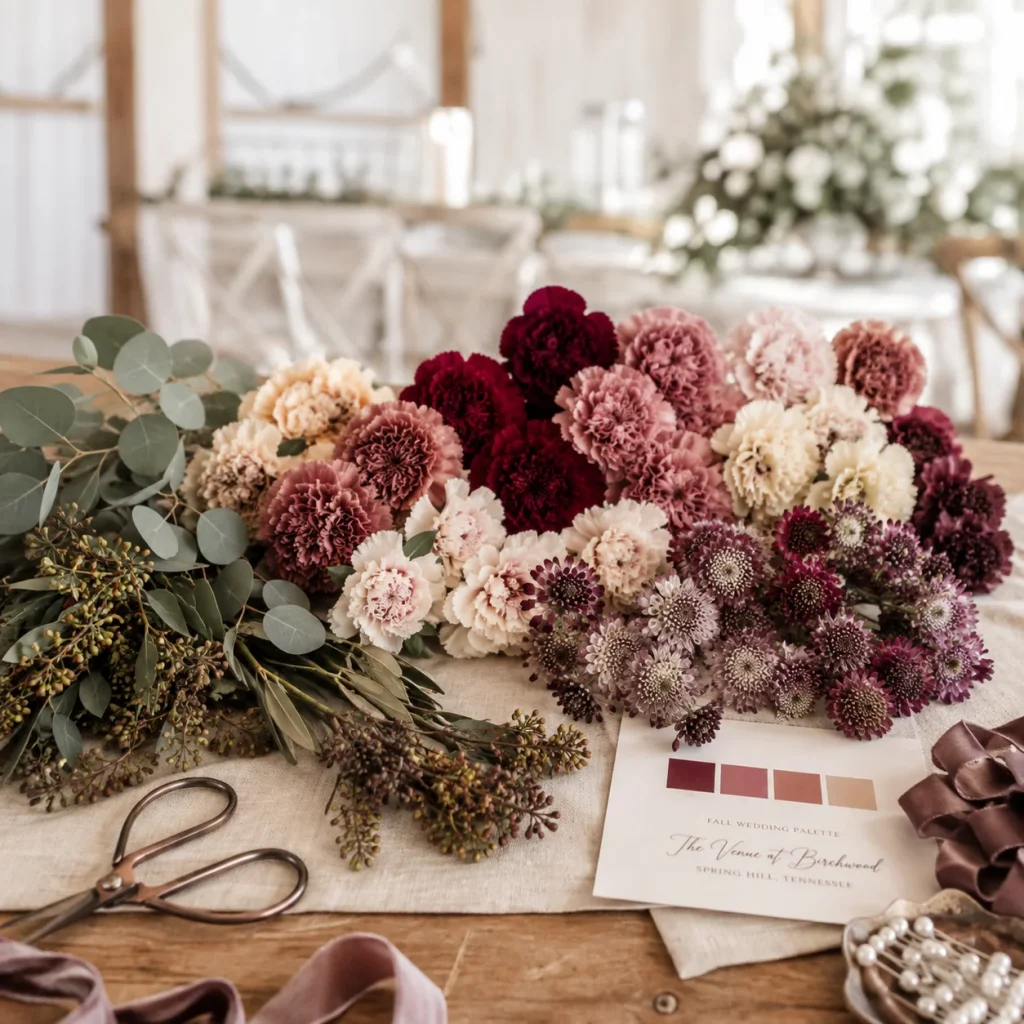
Part 1: WHY CARNATIONS AND SCABIOSA CREATE BETTER TEXTURE TOGETHER
Carnations Provide the Volume
Carnations are the backbone of many floral arrangements, offering a sturdy foundation with their tightly layered petals and rounded bloom shape. Their strong visual mass creates focus and balance in a design, making them an essential choice for both bouquets and centerpieces. Available in a wide variety of colors, carnations are dependable in their ability to align with different themes, from soft pastels to bold jewel tones. Their structure also makes them suitable for repeated designs, ensuring consistent results even when creating in bulk.
One of the strongest design applications for carnations is clustering the blooms together rather than scattering them. When grouped densely, their ruffled petals create a sense of intentionality, transforming their texture into a bold design element. This deliberate approach ensures carnations are not just a filler but a critical artistic component of the arrangement.
Scabiosa Provides the Movement
While carnations offer volume and structure, scabiosa complements them by adding a sense of movement and lightness. These blooms are characterized by their slender stems, distinctive pincushion centers, and irregular bloom height, which lend a free-flowing elegance to arrangements. Unlike the densely packed carnation, scabiosa creates visual “negative space,” which prevents the arrangement from appearing too compact or static.
The airy quality of scabiosa helps balance the design, softening the overall composition. Their irregular placement naturally guides the viewer’s eye across the arrangement, offering moments of pause and intrigue. Combined with carnations, they introduce an element of delicacy that elevates the bouquet or centerpiece, making it look polished and refined.
Combining Different Flower Shapes Makes Arrangements Look More Intentional
The beauty of pairing carnations and scabiosa lies in their contrasting qualities. Dense, ruffled carnations provide the structural bulk, while the airy, whimsical scabiosa brings architectural movement. This combination creates a dynamic interplay of textures and shapes, resulting in an arrangement that feels more thoughtful and professionally designed.
The secret to a designer look is contrasting textures—think dense paired with airy, ruffled paired with architectural, or structured paired with whimsical. By balancing such opposing elements, carnations and scabiosa together encourage a sense of harmony and creativity, proving that great design relies on intentional contrasts to captivate the eye.
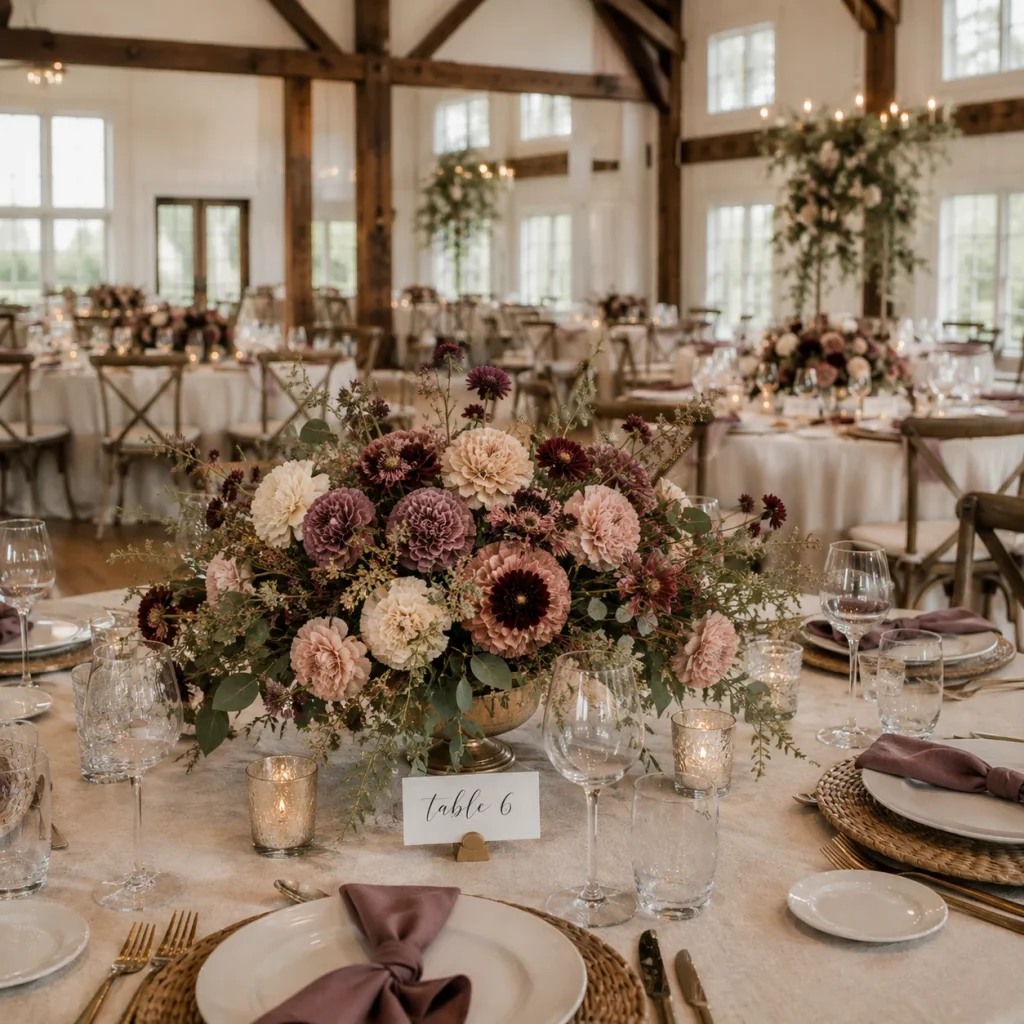
Part 2 – CHOOSE FALL COLOR COMBINATIONS THAT MAKE THE FLOWERS LOOK INTENTIONAL
Creating cohesive autumn palettes from assorted flowers requires intentional color pairings. Rather than using every color indiscriminately, select complementary combinations to craft arrangements that feel purposeful and polished. Below are some fall color palettes and tips to help buyers turn assorted boxes into harmonious designs.
Burgundy + Dusty Pink + Plum for Moody Romance
- Use: Burgundy carnations, dusty pink carnations, dark or plum scabiosa, muted greenery
- Mood: Rich, romantic, candlelit.
This palette channels an intimate and dramatic vibe, perfect for moody autumn evenings. The deep burgundy and plum tones add richness, while dusty pink softens the look for a touch of romance. Incorporating muted greenery provides subtle texture and ensures the colors remain the focal point. This combination is ideal for events like fall weddings or dinner parties, where an opulent yet refined mood is desired.
Cream + Mauve + Wine for Soft Autumn Elegance
- Use: Cream carnations, mauve carnations, wine-toned scabiosa, eucalyptus
- Mood: Refined and transitional.
For a more delicate autumn arrangement, combine soft cream tones with understated mauve and lush wine hues. This palette exudes understated elegance, making it suitable for transitional fall events or upscale occasions. The eucalyptus adds an effortless touch of greenery that complements the sophisticated color scheme. These flowers work beautifully in airy arrangements to bridge the late summer to early autumn aesthetic.
Rust + Burgundy + Ivory for Stronger Fall Color
- Use: Rust or warm carnations where available, burgundy carnations, dark scabiosa, ivory accents, earthy greenery
- Mood: Warm October drama.
Rust and burgundy are quintessential fall colors that evoke rustic October warmth. Adding ivory accents gives the arrangement a visual break from the heavier tones, while earthy greenery enhances the natural, autumnal vibe. This bold and dramatic palette works well for seasonal décor or lively fall gatherings, creating a striking visual impact that embodies the spirit of October.
Mixed Assortments Can Still Look Cohesive
When working with mixed assortments, cohesive designs are still achievable with a little organization. Begin by sorting the flowers by tone to better understand the colors available. Then, select two or three dominant colors for the main arrangements. Reserve the other shades for supporting pieces like small bouquets or table accents, ensuring the entire event maintains a uniform aesthetic.
Another tip is to repeat the same palette logic across all arrangements. By echoing the dominant colors and tones, even varied assortments can look thoughtful and intentional. This process is particularly helpful when working with assorted flower boxes, which can initially feel overwhelming but ultimately provide flexibility and creativity.
Notes from Jasper
Sorting flowers by tone and selecting intentional palettes is key to making mixed assortments work. Buyers often feel uncertain when dealing with “assorted” products, but by following these guidelines, they can confidently create cohesive and beautiful fall arrangements.
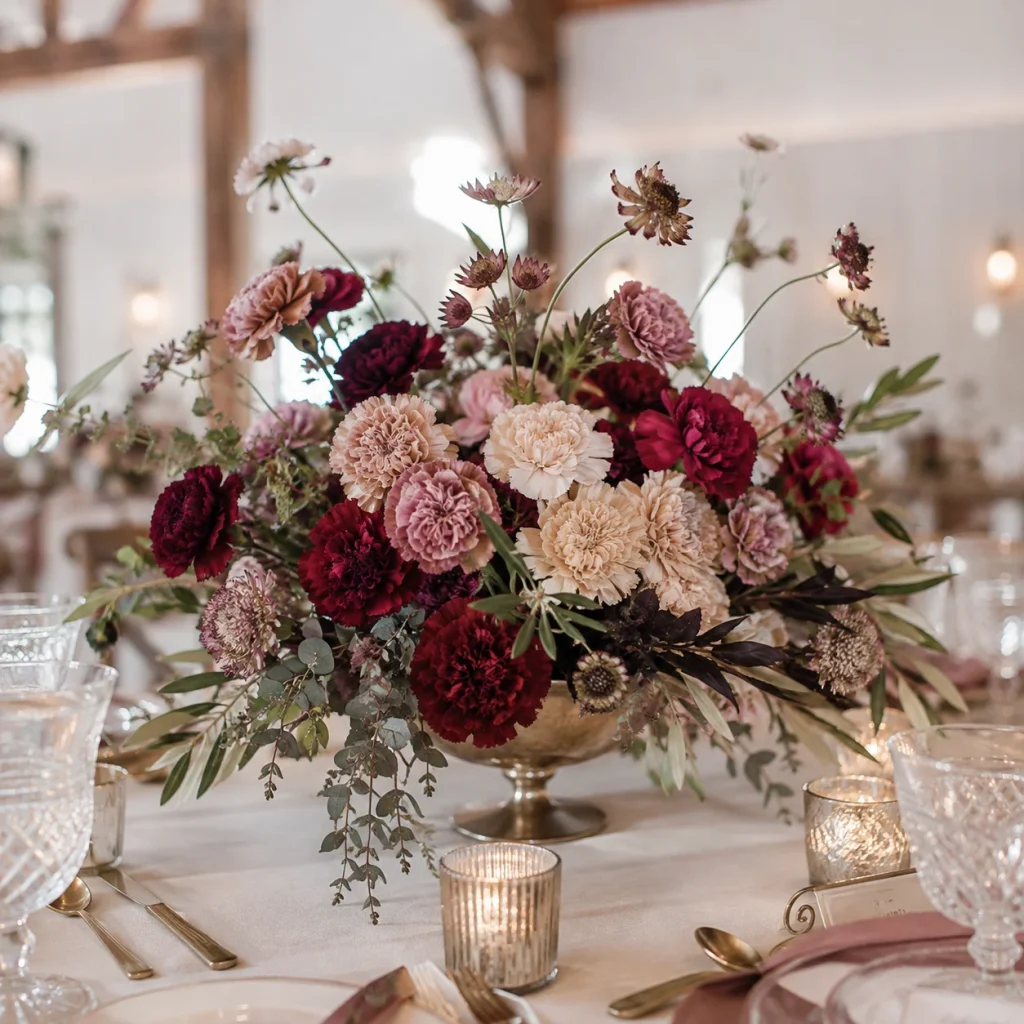
Part 3 – Build Lush Fall Centerpieces Without Using Premium Flowers Everywhere
Creating lush and beautiful fall centerpieces doesn’t need to rely solely on premium flowers. By using a well-balanced mix of affordable blooms like carnations, striking accents such as scabiosa, and supporting greenery, you can achieve elegant, full designs that are both cost-effective and visually stunning. Below is a suggested starting recipe for a medium low fall centerpiece:
- 10–16 carnations
- 4–7 scabiosa stems
- 3–6 supporting flower or berry stems
- Greenery as needed
Keep in mind that these quantities serve as a starting range, not a rigid formula. Actual needs may vary based on factors such as vessel diameter, bloom size, the desired density, greenery volume, and overall design style.
Build the Base With Carnations
Carnations serve as an affordable and versatile foundational bloom. To achieve an organic, visually engaging design, cluster the carnations instead of arranging them in an evenly spaced ring. These clusters will help define key aspects of your centerpiece, including its width, density, and primary color zones. The soft texture of carnations also adds volume, making the arrangement appear more abundant.
Add Scabiosa Above and Around the Base
Scabiosa, with their airy appearance and striking shapes, add depth and interest to the centerpiece. Position the scabiosa stems slightly above and around the base of carnations to create layers and enhance the perception of movement. Avoid aiming for a completely symmetrical dome; instead, allow some blooms to extend naturally beyond the main floral mass. This controlled irregularity lends the arrangement a modern yet effortless appeal.
Greenery Creates Space Between the Flowers
Greenery plays a crucial role in balancing and softening the visual weight of the centerpiece. Choose options like seeded eucalyptus, Italian ruscus, olive-style branches, or dark agonis to add texture and contrast. Greenery should serve not only as a filler but also as a design element that creates visual separation between flower clusters while adding an earthy, natural touch.
Repeat the Recipe Across Guest Tables
Using one repeatable recipe across multiple guest tables has both financial and logistical advantages. For example, if you’re creating centerpieces for 15 tables, you would need approximately:
- 180 carnations (15 tables × 12 carnations)
- 75 scabiosa stems (15 tables × 5 scabiosa stems)
By sticking to a consistent design formula, you can streamline the purchasing process and ensure that all tables maintain a cohesive look. This simplifies decision-making for bulk floral orders while translating design inspiration directly into actionable calculations. This versatility and efficiency make this approach a strong commercial advantage for weddings, corporate events, or holiday gatherings.
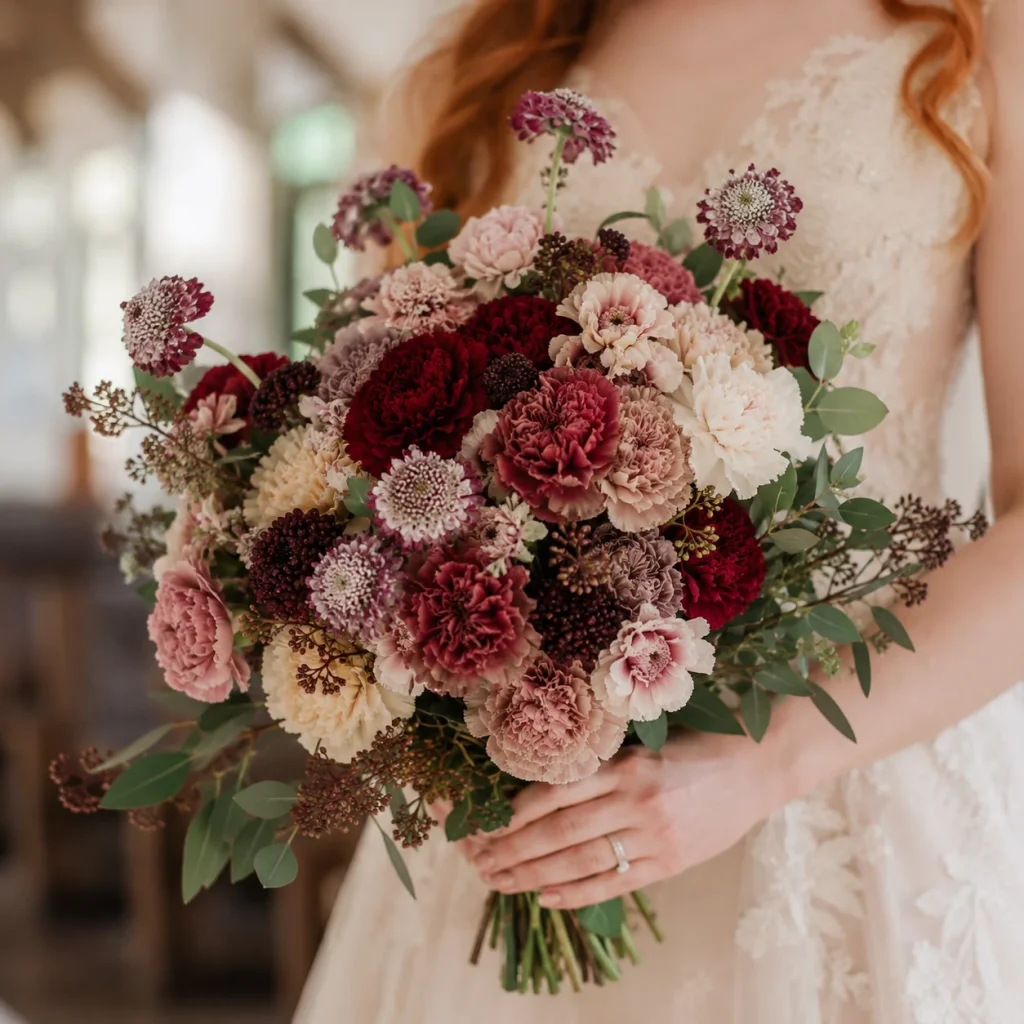
Part 4 – Use Carnations and Scabiosa in Bouquets and Personal Flowers
Expanding the use of carnations and scabiosa beyond centerpieces allows for versatile, cohesive designs in weddings and other events. These flowers contribute to a variety of arrangements, from bridal bouquets to personal flowers, balancing elegance and cost-effectiveness.
Fall Bridal Bouquet
Suggested starting design:
- 10–14 carnations
- 5–8 scabiosa
- Several supporting focal flowers (if desired)
- Berries or filler
- Eucalyptus or ruscus
Carnations make an excellent foundation for bridal bouquets, providing a dense, structured base that underscores the design. Their affordability and range of colors make them adaptable to various wedding styles. Scabiosa stems, with their striking shapes, add a delicate, outward-reaching dimension that enhances visual texture. Additional elements like berries or greenery such as eucalyptus or ruscus can introduce depth and seasonal charm. This combination creates a bouquet that feels lush while maintaining balance.
Bridesmaid Bouquets
To align with the bridal bouquet while ensuring visual variety, simplify the recipe for bridesmaids’ arrangements.
Suggested starting design:
- Fewer carnations (8–10)
- 3–5 scabiosa
- Lighter greenery
By reducing the number of blooms and opting for more understated greenery, bridesmaid bouquets retain coordination with the bridal bouquet without overshadowing it. The slightly scaled-down approach allows the bridesmaid arrangements to complement the bride without directly mimicking her design.
Boutonnieres
Both carnations and scabiosa can be used effectively in boutonnieres to complement the overall floral theme. Scabiosa, or its unique pods, offers an eye-catching focal point, while carnations, when appropriately sized, serve as a sturdy bloom that holds its structure well.
Combine with:
- Small greenery (to frame the flowers)
- Berries (for subtle detail)
- Ribbon and floral tape (to tie it all together)
By focusing on proportionality and using simple but impactful elements, boutonnieres become elegant accents that reinforce a cohesive theme.
Repurpose Small Stems and Side Shoots
During the assembly of bouquets and centerpieces, smaller floral pieces or leftover side shoots often become available. Rather than discarding these, repurpose them to enhance other floral accents.
Ideas for using smaller floral pieces:
- Boutonnieres or corsages
- Tiny bud vases for decor
- Cake flowers or toppers
- Welcome-table arrangements
This resourceful approach reduces waste and ensures that every flower contributes to the event’s aesthetic. It also maximizes budget efficiency, a significant advantage for wedding planners and couples alike.
When designing with carnations and scabiosa, prioritize proportion and the role of each flower in the arrangement. It’s not just about following ingredient lists—it’s about ensuring balance, texture, and a cohesive visual style across all floral accents. This approach makes the event feel thoughtfully curated while highlighting the versatility of these blooms.
Part 5 – CHOOSE GREENERY AND FILLERS THAT GROUND THE FALL PALETTE
When designing floral arrangements for fall-inspired events, the importance of carefully selected greenery and fillers cannot be overstated. These elements provide structure, texture, and balance, ensuring that the arrangement feels both intentional and complete. Thoughtful choices of greenery and fillers can elevate the design while complementing the warm and muted tones of autumn.
Seeded Eucalyptus Adds Muted Texture
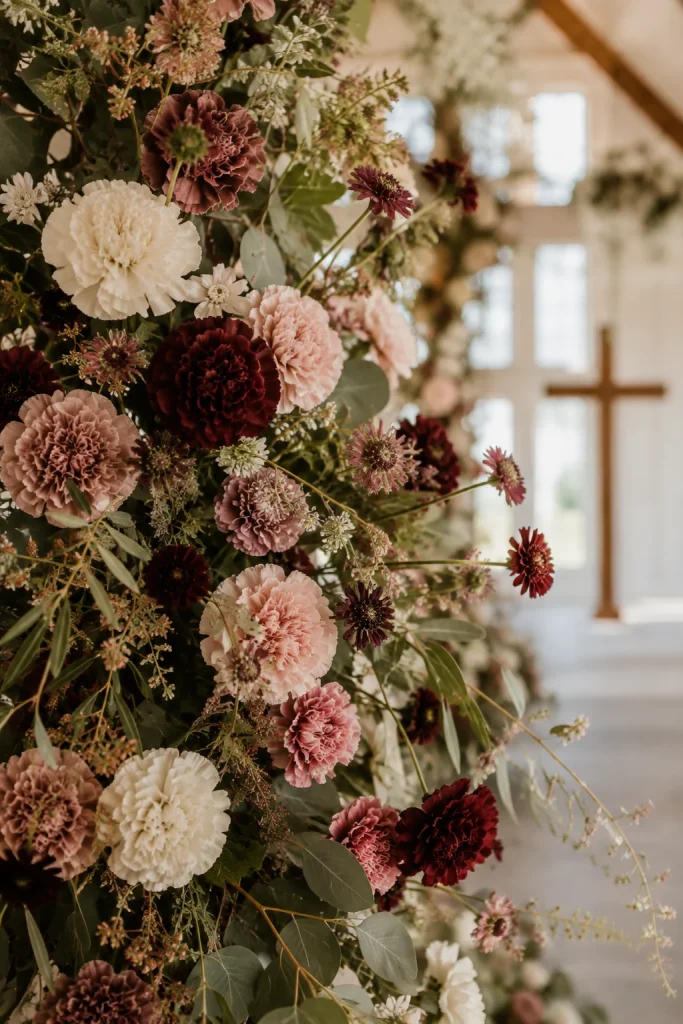
Seeded eucalyptus is a favorite for fall arrangements, introducing soft blue-gray and green tones that mesh beautifully with the earthy hues of burgundy, mauve, dusty pink, and cream. Its gentle, organic texture adds depth and dimension, creating a layered look that feels natural yet refined. Seeded eucalyptus works well as a backdrop for vibrant blooms, ensuring they stand out without overpowering the design.
Italian Ruscus Adds Clean Lines
When aiming for a more polished, less wild aesthetic, Italian ruscus is an ideal choice. With its sleek and cascading lines, it brings elegance and simplicity to any arrangement. Its deep green color complements warmer tones while offering a minimalist touch that balances more intricate flowers like scabiosa. Using Italian ruscus can help brides and planners achieve a sophisticated, timeless look.
Dark Agonis Deepens Moody Palettes
For those looking to add drama to fall arrangements, dark agonis offers rich, deep hues that contrast beautifully with lighter carnations and colorful scabiosa. This dark foliage enhances the moody palette often associated with autumn décor and provides a striking visual anchor to the design. Its linear leaves also add an extra layer of movement, ensuring the arrangement feels dynamic and textured.
Berries Add Small Seasonal Details
The inclusion of textured berry stems, such as hypericum or viburnum berries, creates a subtle nod to the harvest season. These accents help bridge the gap between larger blooms like carnations and lighter, airy flowers like scabiosa. Berries also introduce a playful, seasonal charm to the arrangement, making them an excellent addition to centerpieces and bouquets.
Do Not Add Filler Just Because It Is Inexpensive
Every element in a floral design should have a purpose. Resist the temptation to add filler simply because it’s budget-friendly. Each ingredient must contribute something meaningful—whether that’s volume, movement, texture, contrast, or color transitions. Thoughtful curation elevates the final product, ensuring a cohesive, stunning arrangement that feels intentional rather than haphazard.
Part 6 – How to Order Assorted Carnations and Scabiosa for Your Wedding
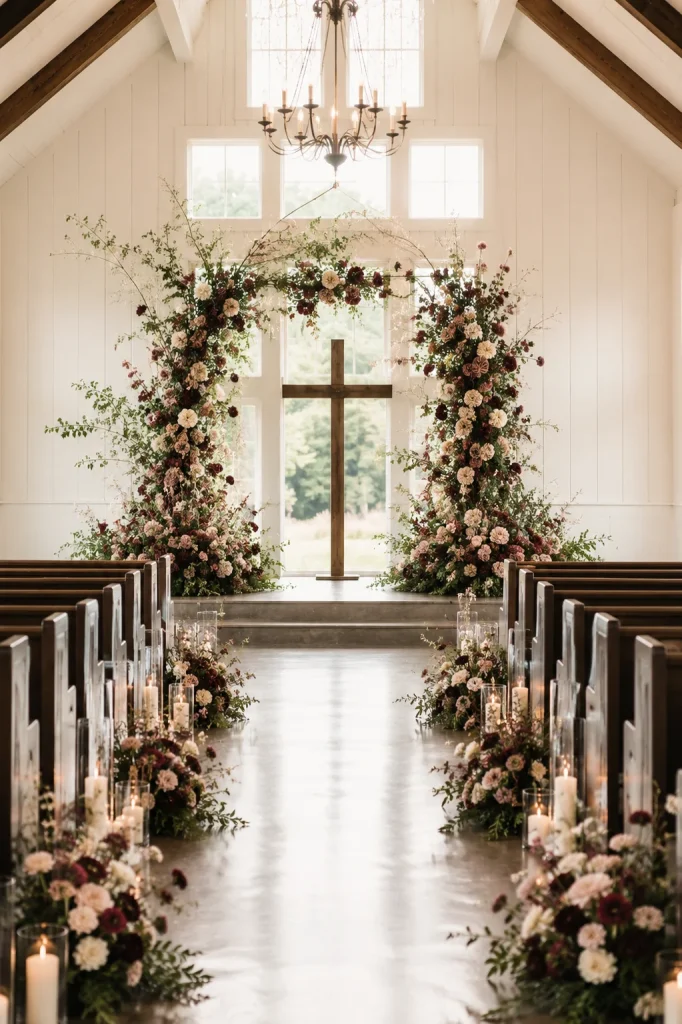
Planning your wedding flowers can feel overwhelming, but breaking it into steps makes it manageable and fun. Here’s how to streamline the process of ordering assorted carnations and scabiosa to bring your wedding floral vision to life.
Count Every Arrangement
To start, list every floral arrangement you’ll need for the big day. Include the following:
- Bridal bouquet
- Bridesmaid bouquets
- Ceremony flowers
- Guest-table centerpieces
- Cocktail tables
- Sweetheart table
- Welcome table
- Cake table
Every arrangement will require its own recipe, so creating a master list ensures you won’t forget anything when calculating quantities.
Build One Recipe Before Multiplying
Once you’ve outlined all your arrangements, focus on one design to calculate your initial flower needs. For example, if a single guest-table centerpiece uses 14 carnations and 5 scabiosa stems, and you have 18 tables, you’ll need 252 carnations and 90 scabiosa stems for centerpieces alone.
This method applies to every design. Tally the flowers required for bouquets, boutonnieres, ceremony flowers, and other arrangements, then add them all together for your total order quantity.
Sort Assorted Flowers by Color When They Arrive
Assorted boxes of carnations and scabiosa will often include multiple colors. When your flowers arrive, sort them by color to create several coordinated mini-palettes. This approach allows you to design unique arrangements while maintaining a cohesive overall aesthetic. Remember—you don’t need to use every color in every arrangement. A thoughtful balance of hues can elevate your designs.
Account for Greenery and Supplies
When calculating your floral needs, don’t forget to include the essentials that complete your arrangements. This includes greenery for volume and texture, as well as containers, floral tape, wire, shears, mechanics, and ribbon. Having all the necessary supplies ensures your flowers can be arranged efficiently and beautifully.
By following these steps and planning carefully, you’ll confidently order the right amount of carnations and scabiosa for your wedding. This approach not only simplifies the process but ensures your florals will be stunning and perfectly tailored to your vision.
Carnation + Scabiosa Fall Wedding Recipe Chart
| Arrangement | Carnations | Scabiosa | Greenery | Other Flowers | Design Style |
| Bridal bouquet | 15 | 10 | Eucalyptus | Roses, Ranunculus | Romantic, lush |
| Bridesmaid bouquet | 8 | 6 | Olive branches | Spray Roses | Soft, natural |
| Small centerpiece | 6 | 4 | Ruscus | Dahlias | Compact, balanced |
| Medium centerpiece | 10 | 8 | Fern | Hydrangeas | Full, layered |
| Bud vase | 2 | 1 | Minimal foliage | Alstroemeria | Simple, elegant |
| Boutonniere | 1 | 1 | Myrtle | Wax Flowers | Petite, refined |
| Ceremony cluster | 20 | 15 | Smilax | Chrysanthemums | Dramatic, flowing |
Design Role Comparison
- Carnations → Volume, ruffles, color mass
- Scabiosa → Height, movement, texture, negative space
- Greenery → Framework, separation, scale
FAQ Section
Are carnations elegant enough for wedding flowers?
Yes. Carnations become especially effective when they are clustered rather than scattered randomly through an arrangement. Their densely ruffled petals create substantial floral volume, and pairing them with more delicate flowers such as scabiosa, berries, and textured greenery produces a layered, contemporary wedding design.
Do carnations and scabiosa look good together?
They complement each other because their shapes are so different. Carnations create rounded, dense floral mass, while scabiosa adds slender stems, pincushion centers, height, and movement. That contrast keeps an arrangement from becoming overly compact or uniform.
What colors of carnations work best for a fall wedding?
Burgundy, dusty pink, cream, mauve, wine, rust-adjacent colors, and muted neutrals can all suit autumn designs. When using assorted carnations, sort the flowers into related color groups before arranging rather than putting every available color into every centerpiece.
How many carnations do I need for wedding centerpieces?
A medium low centerpiece might begin with roughly 10–16 carnations, but the actual quantity depends on vessel width, bloom size, greenery, supporting flowers, and desired fullness. Build one sample centerpiece first, record its recipe, and multiply that recipe by your table count.
Is scabiosa good for bridal bouquets?
Yes. Scabiosa adds delicate movement and distinctive texture to bridal bouquets. Its longer stems can extend slightly beyond denser flowers such as carnations, helping create a loose, garden-inspired silhouette rather than a tight round bouquet.
What greenery works with carnations and scabiosa?
Seeded eucalyptus, Italian ruscus, olive-style foliage, and darker greenery such as agonis can all work depending on the desired palette. Muted eucalyptus is particularly useful with dusty pink, burgundy, mauve, cream, and plum fall flowers
CONCLUSION
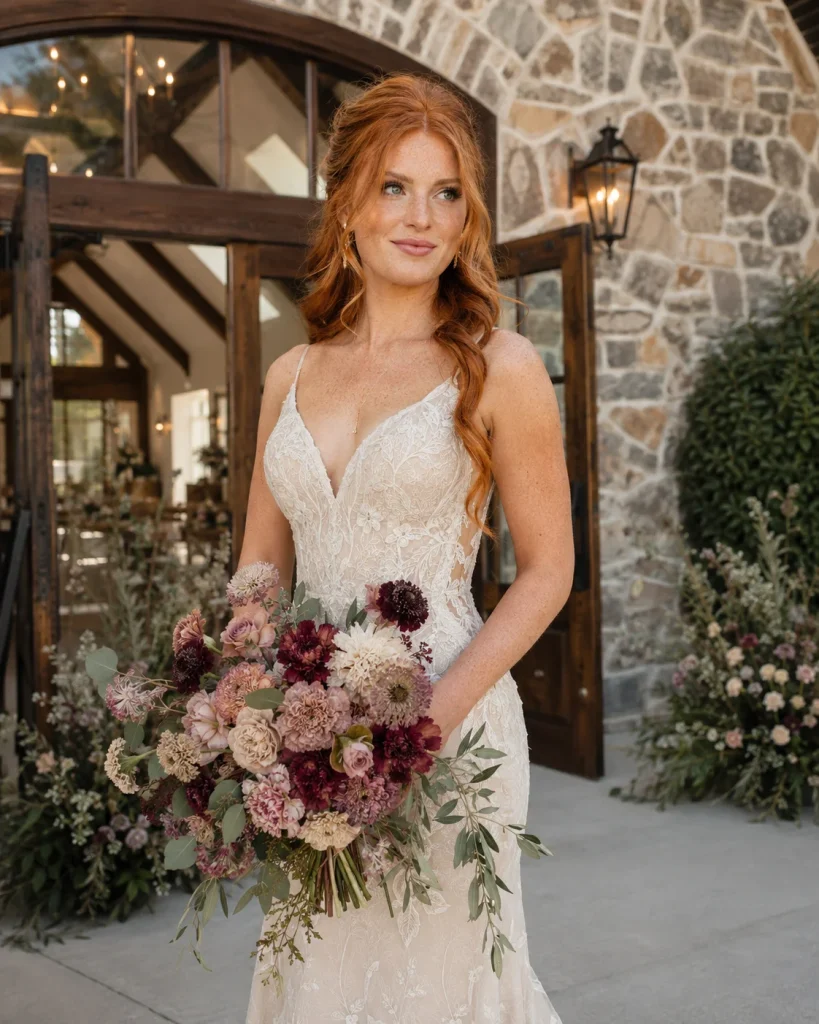
Carnations and scabiosa are the perfect pairing for creating layered, visually dynamic arrangements because each brings a different element to the design. Carnations offer fullness and volume, while scabiosa adds movement and lightness. Greenery acts as the structure that ties everything together, and the addition of berries or seasonal supporting flowers provides the perfect details to reflect autumn’s rich tones. This combination allows DIY floral designers to craft textured, beautiful fall wedding arrangements without entirely relying on premium focal blooms, balancing quality and affordability.
Create your own layered autumn floral palette with farm-direct flowers from Whole Blossoms. Shop Assorted Carnations, Assorted Scabiosa, bulk greenery, wedding flowers, and floral supplies for bouquets, centerpieces, personal flowers, ceremony arrangements, and fall event décor. Turn your floral vision into reality this fall with Whole Blossoms!