


 by
by 
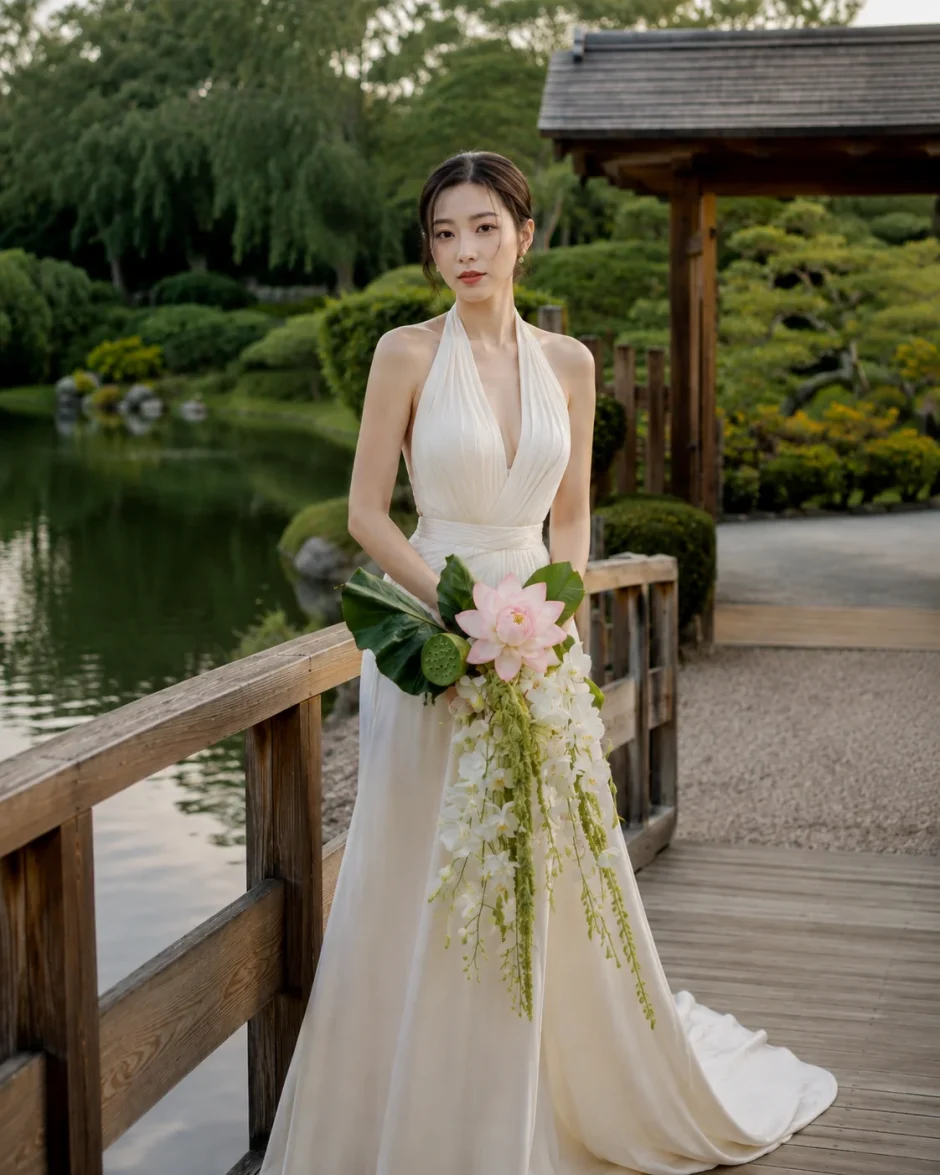
Introduction
Some flowers fill space. Others change the entire composition. Lotus belongs to the second group. Its clean geometry, layered petals, and unmistakable silhouette can turn a bridal bouquet or centerpiece into something guests stop and look at twice.
When it comes to wedding floral arrangements, many couples find themselves sifting through countless designs that reuse the same classic staples, roses, hydrangeas, peonies, carnations, and baby’s breath. While these blooms are undeniably beautiful, they often lack the ability to redefine the character of an arrangement. For couples seeking something truly unique, the lotus flower offers an unparalleled opportunity to elevate floral designs to works of art.
The lotus is an architectural focal flower that transforms the structure of any bouquet or tablescape. With its distinctive geometry, recognizable petal structure, and strong visual presence, it brings organic sophistication to both minimalist and lush floral styles alike. Beyond aesthetics, the lotus carries rich symbolic meaning across cultures, often representing purity, renewal, and spiritual growth. For couples who resonate with these values, it adds a heartfelt, personal dimension to their wedding décor. Incorporating lotus flowers into wedding arrangements is a natural choice for those who want their celebration to stand out both visually and meaningfully.
In this guide, you’ll learn:
- Why lotus makes such a strong wedding focal flower
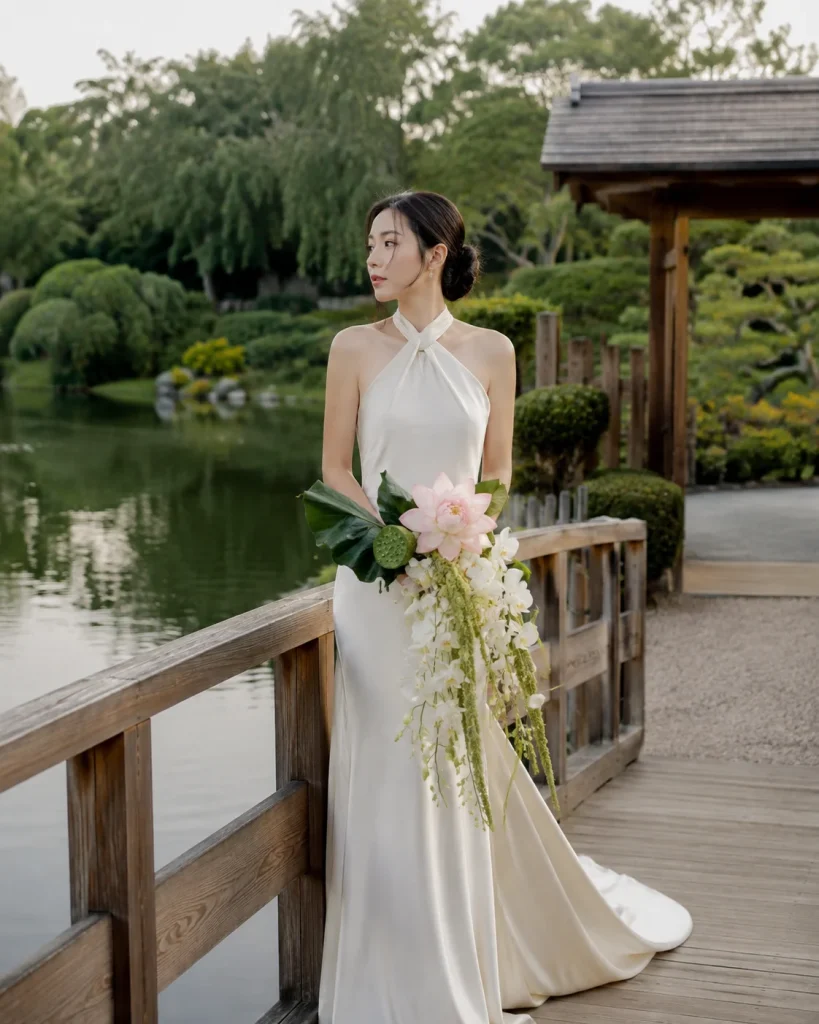
- How to style a lotus bridal bouquet
- How to use lotus in centerpieces
- Ceremony installation ideas
- How to work with lotus pods
- Best greenery and supporting flowers
- How to build a cohesive lotus wedding palette
- FAQs
Part 1 – Why Lotus Flowers Make Such a Powerful Wedding Statement
The lotus flower stands out as one of the most captivating and meaningful choices for wedding décor. Its distinctive shape, minimal need for repetition, and dynamic balance between organic and architectural qualities make it a remarkable addition to any arrangement. Below, we’ll explore why the lotus flower creates such a powerful statement in wedding designs.
Lotus Creates a Natural Focal Point
At the heart of the lotus flower’s appeal is its immediately recognizable, architectural shape. The broad petals form clean, symmetrical geometry, giving the lotus a sculptural quality that is both elegant and timeless. Its distinctive radial symmetry and strong center draw the eye naturally, ensuring it doesn’t blend into the background like more common wedding flowers. This bold yet refined presence allows it to act as an anchor for any bouquet or centerpiece, making it the perfect focal flower for couples seeking a standout aesthetic.
One Statement Bloom Can Change the Entire Arrangement
Unlike smaller flowers that often require clustering to make a visual impact, the lotus thrives as a solitary bloom or with minimal repetition. One carefully placed lotus flower can completely transform the tone of an arrangement, setting a modern, artistic, or cultural direction. This quality makes it especially suitable for couples who prefer understated yet impactful designs. The lotus’ substantial presence means you can create a cohesive and memorable style without needing to overcrowd an arrangement with other florals.
Architectural Flowers Make Modern Designs More Interesting
The lotus strikes the perfect balance between organic softness and structural precision, making it an ideal choice for a variety of wedding styles. Its sculptural appearance allows it to complement modern or minimalist weddings, where clean lines and elegant simplicity take center stage. At the same time, its natural beauty makes it well-suited for garden weddings, tropical celebrations, or destination-inspired events. Whether emphasizing a chic and contemporary vibe or highlighting lush, natural surroundings, the lotus effortlessly adapts.
This distinctive blend of boldness and versatility is what makes the lotus a cherished flower for weddings. From defining a design’s style and tone to creating stunning focal points, the lotus flower adds a sense of artistry and sophistication that enhances any celebration.
Part 2 – Design an Exotic Statement Bridal Bouquet Around Lotus Flowers
Elevate your wedding flowers by centering your bridal bouquet around the striking beauty of lotus flowers. By leveraging their natural elegance and bold presence, you can create a truly unforgettable design. Below, we’ll explore step-by-step guidance for crafting a breathtaking statement bouquet built around the lotus.
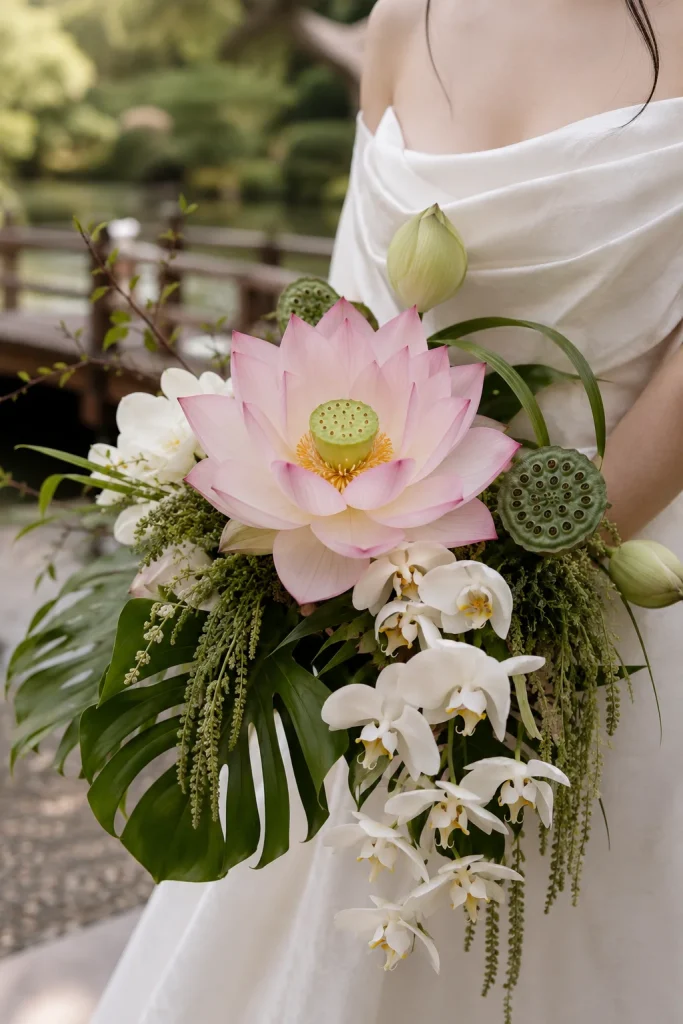
Let One Lotus Bloom Anchor the Bouquet
The lotus flower’s bold structure and size make it a perfect anchor for your bouquet. Instead of overwhelming the design with too many dominant flowers, allow the lotus to take center stage. Surround it with complementary elements to create a harmonious and visually balanced composition. Build the bouquet around:
- One prominent lotus bloom as the focal point
- A small supporting cluster of lotus buds or secondary flowers
- Directional greenery to provide movement and shape
- A few secondary flowers for texture and interest
By giving the lotus room to shine, you’ll create a bouquet with a striking, uncluttered aesthetic that exudes sophistication.
Pair Lotus With Sleek Flowers
When selecting companion flowers to pair with your lotus, opt for sleek and elegant varieties that enhance its presence rather than compete with it. Some ideal companions include:
- Orchids: Perfect for adding graceful, flowing lines to the bouquet.
- Calla lilies: Their clean silhouette aligns beautifully with the lotus.
- Restrained roses: Choose white, blush, or other neutral shades to maintain harmony.
- Delicate textural flowers such as ranunculus or astilbe to provide subtle contrast and softness.
Orchids, in particular, are excellent additions for creating a more dynamic and flowing bouquet design that complements the lotus without overpowering it.
Use Greenery to Create Shape
Greenery plays a crucial role in defining the bouquet’s structure and movement. Choose from the following foliage options to enhance your bouquet’s design:
- Italian Ruscus for light, airy framing
- Broad tropical leaves, such as banana leaves or palm leaves, for a bold aesthetic
- Monstera-style foliage to add drama and dimension
- Soft cascading greenery, like jasmine vines or ivy, to create a sense of flow
When used thoughtfully, greenery can elevate the bouquet’s overall look and serve as the perfect backdrop for the lotus centerpiece.
Choose a Silhouette Before Choosing Ingredients
Before finalizing your flower and greenery choices, consider which bouquet silhouette best suits your wedding style. The lotus works beautifully in a variety of designs, including:
- Asymmetrical hand-tied bouquets for a modern vibe
- Sculptural bouquets to highlight bold artistry
- Loose cascading bouquets for an ethereal, romantic feel
- Minimalist bouquets for a clean and contemporary look
By selecting the silhouette first, you can ensure all your ingredients align cohesively with your chosen style.
Suggested Bouquet Recipe Concept
For an elegant and exotic statement bouquet, consider this conceptual recipe:
- 1–3 lotus focal flowers as the centerpiece
- Sleek orchid stems for added movement
- Selective white or blush flowers to complement the lotus
- Dark or glossy foliage to create bold framing
- Controlled trailing greenery for softness and flow
This concept serves as inspiration rather than a strict guide, encouraging creativity while allowing the lotus to remain the standout feature of the design.
Part 3 – Use Lotus Flowers in Modern Wedding Centerpieces
Lotus flowers, with their exquisite beauty and symbolic significance, offer a fresh opportunity to elevate modern wedding reception design. While commonly seen in bouquets, their unique form and versatile nature make them ideal for creating standout centerpieces that captivate guests and complement a variety of themes. Below are a few innovative ways to showcase lotus flowers in wedding centerpieces.
Low Sculptural Centerpieces
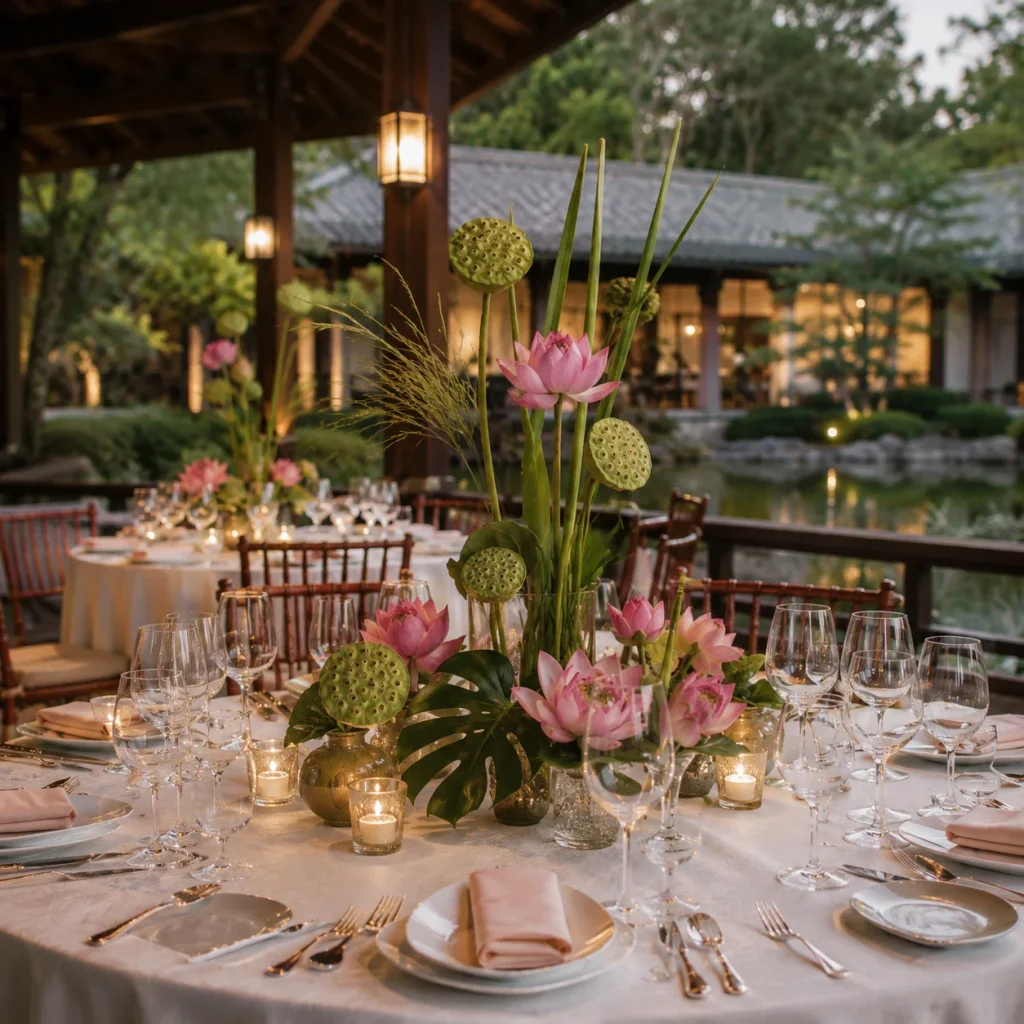
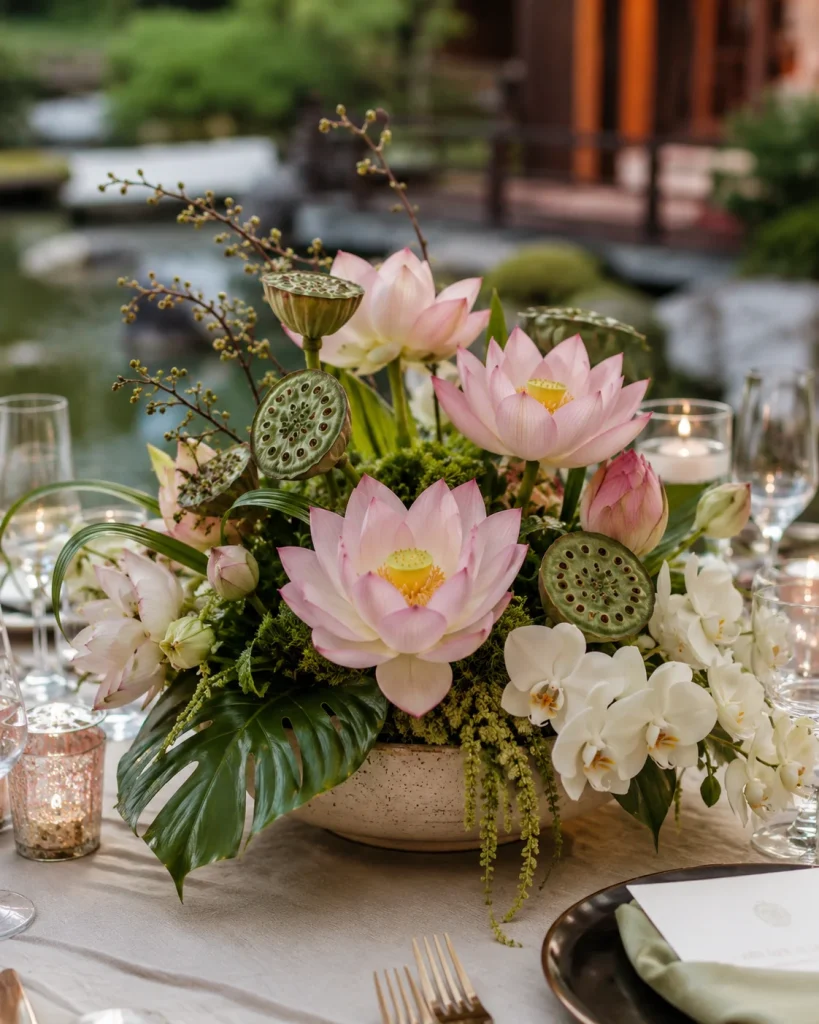
For a minimalist and sculptural aesthetic, low centerpieces featuring lotus flowers are an excellent option. Keeping the design low and wide allows the intricate beauty of the lotus form to remain visible and appreciated from all angles. Pair lotus blooms with lotus pods, clean-lined vessels, and restrained greenery for a design that feels modern yet organic. The addition of sleek orchids or complementary foliage can enhance the arrangement’s movement and texture, while maintaining a cohesive look. This approach suits contemporary and understated wedding designs where the focus is on elegant simplicity.
Floating-Water Displays
Lotus flowers naturally evoke a serene, aquatic ambiance, which can be amplified by incorporating floating-water displays. Utilizing low bowls filled with reflective water creates a tranquil centerpiece that highlights the flower’s natural association with serene environments. Floating petals, compatible blooms, and candles can add a touch of romance and sophistication. Minimal greenery or accent elements, such as simple reeds or grasses, can emphasize the calming aesthetic while supporting the overall symmetry of the arrangement. When using fresh blooms for floating designs, ensure their condition is appropriate for this purpose, as water can affect their longevity.
Mix Lotus Blooms and Pods
A balanced mix of lotus blooms and pods allows for a unique combination of softness and structure in centerpieces. The fresh blooms provide gentle curves and visual lightness, while the pods add earthy texture, contrast, and geometric interest. Together, they create a compelling interplay of shapes and textures, ideal for couples seeking distinctive modern designs. For added refinement, consider pairing them with a limited selection of complementary elements like orchids or greenery to reinforce the organic and elegant vibe.
Use Fewer Ingredients in Modern Designs
When designing a lotus centerpiece, less is often more. Avoid creating a visually overwhelming arrangement with too many flower varieties or elements. Instead, opt for a refined combination such as lotus flowers paired with a few supporting materials—perhaps orchids, greenery, and lotus pods. A compact, curated selection ensures the centerpiece remains focused on the elegant beauty of the lotus without being overshadowed. This minimalist approach suits contemporary wedding receptions, where clean and sophisticated designs are often preferred.
By incorporating these approaches, lotus flowers can take center stage in modern wedding receptions, offering couples a chic and extraordinary way to enhance their special day.
Part 4 – Create Ceremony Installations That Let Lotus Stay the Focal Point
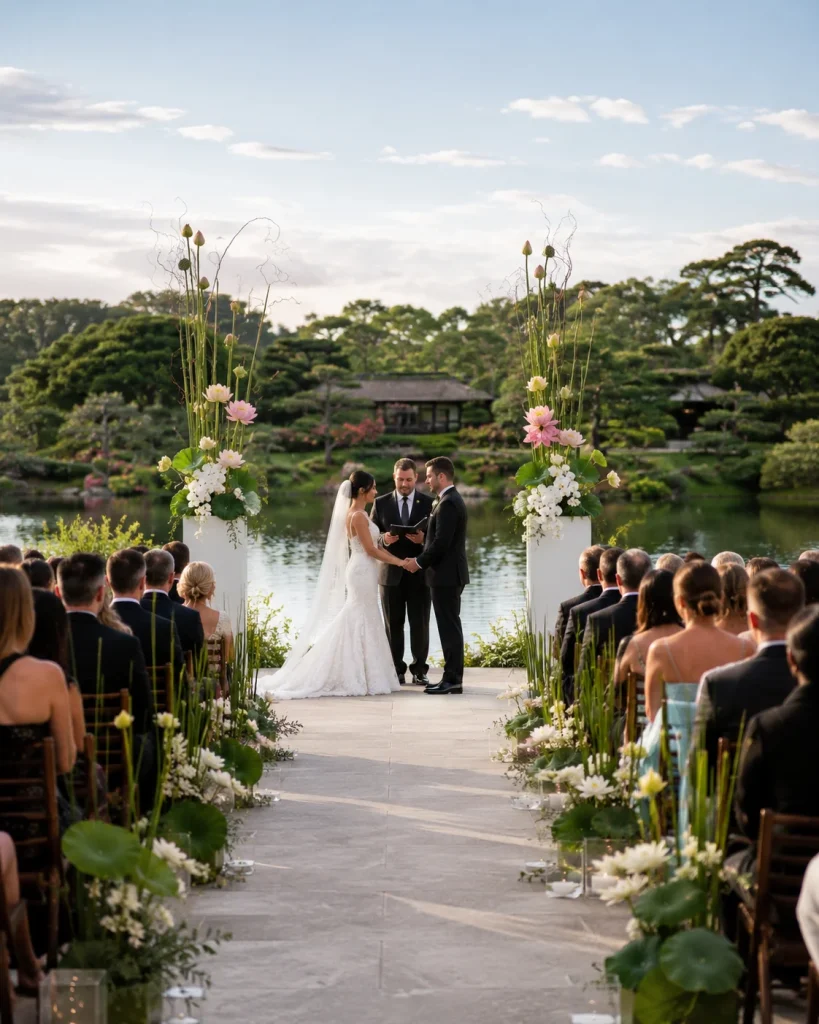
When designing ceremony installations that highlight the lotus, balance is key to achieving a stunning large-format floral display without unnecessary excess. Thoughtful placement and strategic choice of materials will allow the beauty of the lotus to shine without overwhelming the eye or causing waste.
Concentrate Lotus Instead of Covering the Entire Arch
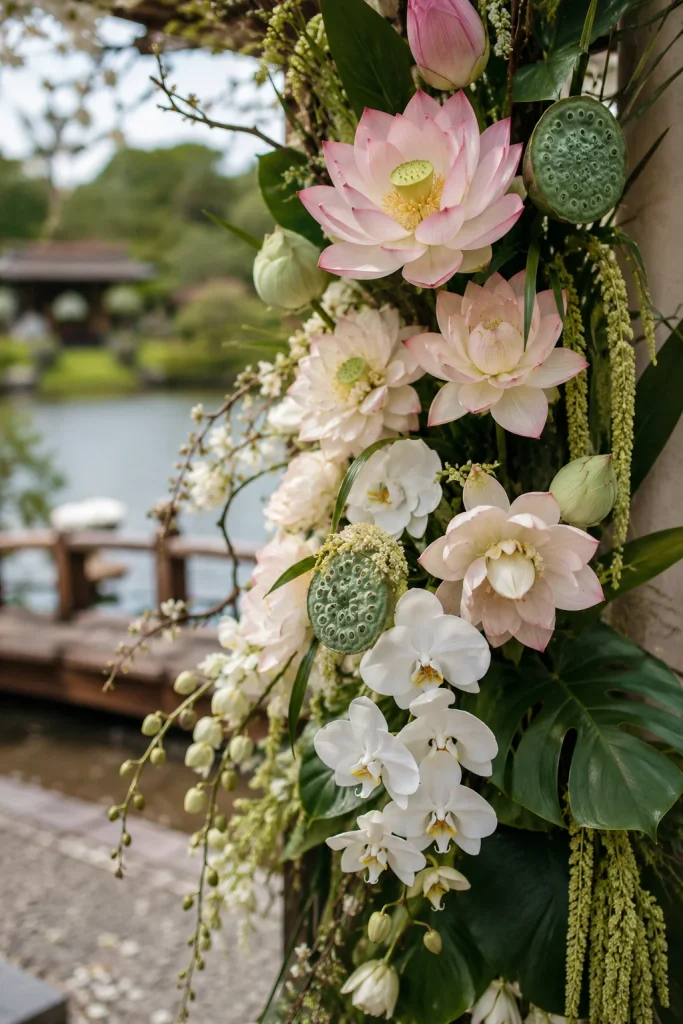
Rather than attempting to blanket an entire arch with flowers, focus on selective placement of lotus blooms. Position the lotus flowers where attention naturally gravitates, such as at the center of the altar, at the arch corners, or incorporated into ground-level arrangements. Entrance pillars or the starting point of the aisle are also ideal locations for lotus blooms, putting their elegance in key focal areas. This approach creates visual impact while highlighting the intricate details of the lotus.
Build Around Botanical Structure
Complement the lotus with a well-thought-out selection of supporting materials. Broad tropical leaves, cascading greenery, orchids, ornamental grasses, and a handful of neutral-toned flowers can provide a structured yet organic backdrop. By highlighting the lotus through thoughtful layering and proportion, the arrangement maintains a refined and cohesive look without overshadowing the flower’s significance.
Use the Venue as Part of the Design
The setting itself can often serve as an integral part of the floral design, especially in venues like the Morikami Museum and Japanese Gardens. With its serene water elements, arched bridges, mature trees, layered greenery, stone textures, and bamboo structures, this type of venue already embodies natural beauty. Flower installations should enhance these elements, complementing the existing environment rather than competing with it. For example, a lotus arrangement might align harmoniously with the tranquil water features or act as an extension of the venue’s layered greenery.
Reuse Ceremony Flowers
To maximize both impact and sustainability, consider how ceremony flowers can be repurposed into the reception decor. Ground-level arrangements and corner accents can transition seamlessly to the sweetheart table or reception entrance. Lotus-adorned pieces from the arch could later highlight key areas such as the bar or cake display. By thoughtfully reusing ceremony flowers, couples can maintain a cohesive design throughout their celebration while reducing floral waste.
With these approaches, the lotus can command attention in the ceremony while offering a sustainable, elegant statement that honors its beauty and significance.
Part 5 – Lotus Pods Add Architectural Texture for Fall and Winter Events
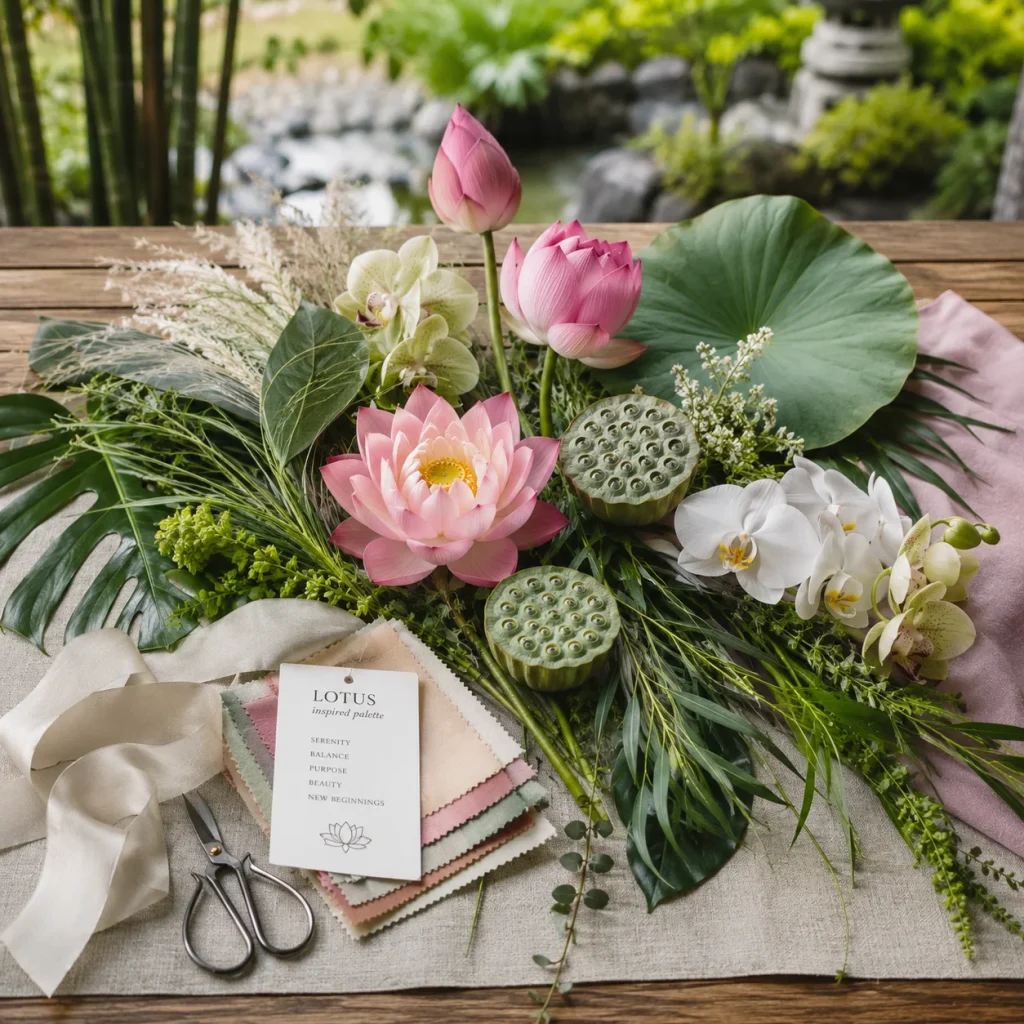
The lotus continues to make an impact beyond its fresh blooms by utilizing lotus pods to expand its seasonal relevance, particularly during fall and winter events. The unique characteristics of lotus pods—woody textures, distinctive perforated geometry, neutral earthy tones, and their unusual sculptural form—allow them to visually contrast with softer florals, creating an architectural yet natural appeal for event designs.
Fall Palette
For fall celebrations, lotus pods can seamlessly fit into rich, warm color schemes full of earthy and autumnal tones. Pair them with shades like terracotta, rust, burgundy, chocolate, olive green, and bronze to create arrangements that celebrate the season’s warmth and depth. Dried grasses or pampas can further enhance their aesthetic appeal, bringing a rustic charm to centerpieces, arches, and other installations.
Winter Palette
Winter events are the perfect opportunity to emphasize textures and contrasts, and lotus pods shine in these settings when paired with cooler, more serene palettes. Complement them with cream, white, and evergreen tones, adding accents of deep plum or metallic hints to evoke the frosty elegance of the season. Dried botanical materials, such as preserved foliage or silvery eucalyptus, can lend a sophisticated yet natural ambiance, while also highlighting the lotus pods’ sculptural beauty.
Use Pods Strategically
When incorporating lotus pods into event designs, thoughtful placement is key to achieving balance and impact. They work wonderfully as focal elements in centerpieces, drawing the eye with their geometric form. For groomsmen, lotus pods make unique and memorable boutonnières when paired with dried greenery or berried accents. They can also elevate ceremony arrangements, either as standalone pieces or clustered with complementary florals for added dimension. Add them as unexpected details in place-setting accents, tying the table design to the wider theme of the event. Their sculptural form also makes them excellent focal points in dried floral installations, offering lasting beauty long after fresh blooms have faded.
By leveraging the architectural qualities of lotus pods, you can create fall and winter event designs that feel innovative, texturally diverse, and seasonally appropriate while celebrating the lotus’s enduring charm.
Part 6 – Choose Greenery and Supporting Flowers That Complement Lotus
When designing arrangements centered around lotus pods, choosing supporting elements like greenery and flowers thoughtfully is essential to maintain balance and cohesion. Pairing complementary elements with lotus allows the distinctive shape and texture of the pods to take center stage, while creating visually striking arrangements for a variety of event themes.
Orchids Add Elegant Movement
Orchids are a natural companion to lotus pods, offering an elegant sense of motion with their elongated stems and gracefully cascading blooms. Their delicate structure provides a pleasing contrast to the broader, more sculptural geometry of the lotus pods, ensuring that both elements are highlighted without overpowering each other. Phalaenopsis and Dendrobium orchids, in particular, are popular choices for this purpose, as they provide both refinement and a modern aesthetic.
Broad Leaves Create Tropical Drama
Including broad-leaf greenery introduces an exotic, tropical flair to your arrangements. Think Monstera leaves or other robust, large-leaf options that pair well with the organic textures of lotus pods. These leaves add a bold backdrop that can frame the lotus while creating a sense of depth and drama, making them perfect for tropical- or jungle-inspired events.
Italian Ruscus Creates Cleaner Lines
For events requiring a more understated yet sophisticated look, Italian Ruscus offers versatility and clean, refined lines. When used alongside lotus pods, its fine, tapering stems lend a polished, minimalist aesthetic. This greenery works particularly well in arrangements designed for formal settings, where the focus is on elegance and simplicity rather than exuberance.
Wispy Grasses Create Bohemian Contrast
If the design leans toward a more bohemian or relaxed style, incorporating wispy grasses like pampas or bunny tails softens the overall composition. These textural pieces create an airy, whimsical feel that works in harmony with the structural presence of the lotus pods, offering a delightful contrast that feels effortless and light.
Do Not Let Supporting Flowers Compete With Lotus
The golden rule of floral design applies here as well—when everything is a focal flower, nothing truly stands out. It’s crucial to select supporting flowers and greenery that complement the lotus rather than attempting to rival its prominence. By ensuring supporting elements are understated yet purposeful, you allow the lotus pods to remain the star of the design, creating a cohesive and intentional arrangement.
Part 7 – How to Shop Lotus Flowers for a Wedding or Event
Creating a stunning floral arrangement featuring lotus flowers begins with thoughtful planning and intentional shopping. From prioritizing key areas to managing availability, here’s a comprehensive guide on how to transform your design inspiration into an order that brings your vision to life.
Decide Where Lotus Will Make the Biggest Impact
The lotus flower’s dramatic and elegant presence makes it ideal for focal arrangements in a wedding or event setting. Start by identifying the areas where lotus flowers will make the biggest visual impact. High-priority placements include:
- Bridal bouquet – The centerpiece of the wedding floral designs. Incorporate lotus as the focal bloom to symbolize purity and beauty.
- Altar or ceremonial space – Highlight the lotus in this sacred setting for an air of tranquility and sophistication.
- Welcome display – Incorporate lotus flowers to greet guests with a breathtaking first impression.
- Sweetheart table – Enhance the romantic mood by featuring lotus as part of the couple’s table arrangement.
- Key centerpiece tables – Place lotus flowers prominently in statement table designs to anchor your overall theme.
Do Not Assume Every Arrangement Needs Lotus
A well-balanced wedding or event can incorporate lotus flowers without overusing them in every arrangement. Supporting tables can carry the same design language and cohesive style using complementary elements without duplicating the focal flower. Consider alternatives such as:
- Lush greenery and vines to add texture and movement.
- Orchids, which coordinate beautifully with lotus flowers.
- Other coordinating flowers that mirror the color palette and complement the design.
- Lotus pods as accents for smaller or secondary arrangements.
Balancing the presence of the lotus ensures it retains its role as the show-stopping feature while allowing supporting tables to harmonize with subtle elegance.
Build One Floral Recipe per Arrangement Type
To ensure cohesion and consistency while maximizing the beauty of lotus flowers, create a specific floral recipe for each type of arrangement. For example:
- Statement table – Incorporate lotus blooms, lotus pods, orchids, and lush greenery to craft a striking ensemble.
- Supporting table – Use orchids, complementary flowers, and greenery for refined and understated arrangements.
- Cocktail table – Opt for a single sculptural lotus bloom or a pod-focused accent for a minimal yet impactful design.
Customizing floral recipes by arrangement type helps strike the balance between standout pieces and understated arrangements.
Account for Availability and Condition
Because lotus flowers are more specialized than common blooms, their availability can vary based on the season and supplier inventory. It’s essential to review current inventory and order timelines before finalizing your design. Consult with your floral supplier to confirm the condition and quality of lotus flowers upon arrival. Freshness and proper handling are critical for preserving their beauty for the big day.
By carefully planning where to feature lotus flowers and seamlessly incorporating supporting elements, you’ll create an unforgettable floral design that highlights the lotus’s unique charm while maintaining a cohesive aesthetic.
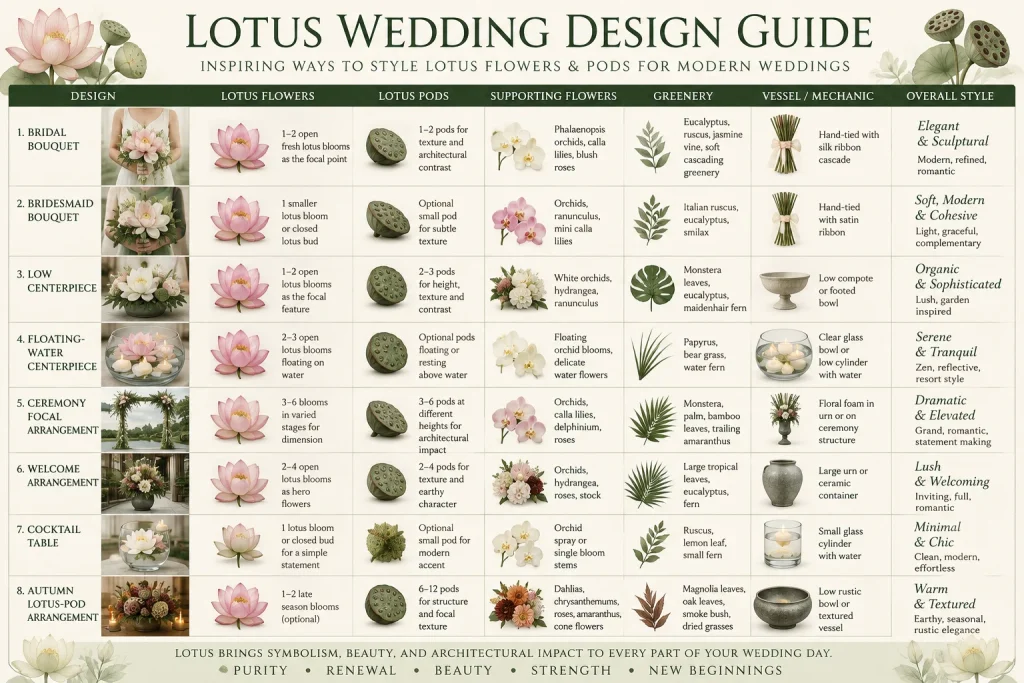
Lotus Wedding Design Matrix
| Design | Lotus Blooms | Pods | Companion Flowers | Greenery | Vessel/Mechanic | Overall Look |
| Ceremony Arch | Abundant accent | Subtle details | Orchids, roses | Broad greenery | Foam-free mechanics | Grand, botanical elegance |
| Table Centerpieces | Focal clusters | Highlighted | Orchids, tulips | Ruscus, ferns | Low, wide bowls | Sophisticated and refined |
| Bridal Bouquet | Individual stems | Minimal usage | Orchids, ranunculus | Delicate foliage | Hand-tied, ribbon wrap | Soft, romantic, geometric |
| Aisle Markers | Scattered | Small hints | Mini orchids | Broad greenery | Small hanging vessels | Textural and airy |
| Hanging Installations | Suspended clusters | Structural | Orchids, cascading florals | Broad greenery | Lightweight wire frames | Dramatic, floating effect |
Lotus Design Role Comparison
- Fresh Lotus: Serves as the focal point, showcasing a blend of softness and unique geometry.
- Lotus Pod: Adds texture, structure, and highlights seasonality, offering contrast to softer elements.
- Orchid: Introduces movement and a touch of elegance, complementing the natural beauty of the lotus.
- Broad Greenery: Provides scale and creates a sense of botanical drama, enhancing the overall design.
- Ruscus: Used to define line and add a sense of refinement, tying together the arrangement.
FAQ Section
Can lotus flowers be used in a bridal bouquet?
Yes. Lotus can create an especially strong bridal-bouquet focal point because of its distinctive shape. Rather than hiding it among many competing focal flowers, build the bouquet around one or several lotus blooms and use orchids, greenery, or quieter supporting flowers to complete the silhouette.
What flowers look good with lotus flowers?
Orchids, calla lilies, restrained roses, and clean white or neutral flowers can work well depending on the design style. Greenery can range from sleek Italian Ruscus to broad tropical foliage, allowing the arrangement to move from minimalist to lush.
Can lotus flowers be used in wedding centerpieces?
Yes. Lotus is particularly effective in low sculptural centerpieces, modern vessels, and designs that incorporate water or reflective surfaces. Its strong shape means a centerpiece can feel intentional without requiring an enormous number of different flowers.
What are lotus pods used for in wedding arrangements?
Lotus pods provide geometric texture and earthy structure. They can be added to bouquets, centerpieces, ceremony installations, or dried seasonal designs. Their woody appearance also makes them particularly useful for autumn and winter arrangements.
Are lotus flowers suitable for a fall wedding?
They can be. Fresh lotus can be paired with deeper fall colors, while lotus pods provide a more overtly autumnal texture. Burgundy, chocolate, terracotta, olive, bronze, dried grasses, and dark foliage can help shift the design toward fall.
What does the lotus symbolize in weddings?
Lotus symbolism differs across cultures and traditions, but the flower is often connected with ideas such as purity, renewal, spiritual growth, and resilience. Couples who value those associations may choose lotus for both its visual beauty and personal meaning.
Conclusion
The lotus is more than just another flower to complement a mixed bouquet, it’s a statement of individuality and timeless beauty. Its architectural form and symbolic depth make it the perfect focal point for any wedding arrangement. Fresh lotus flowers provide unmatched elegance, while lotus pods add texture and an autumnal feel. Pair them with orchids for movement, greenery for structure, and minimal supplemental flowers to maintain a cohesive, intentional design. By focusing on the lotus’s unique characteristics, you can create a wedding design that is truly unforgettable.
Create a wedding design guests will remember with distinctive flowers from Whole Blossoms. Explore our collection of lotus flowers, orchids, greenery, dried botanical accents, and comprehensive floral supplies. Build sculptural bridal bouquets, modern centerpieces, ceremony arrangements, and statement event décor that leave a lasting impression.