



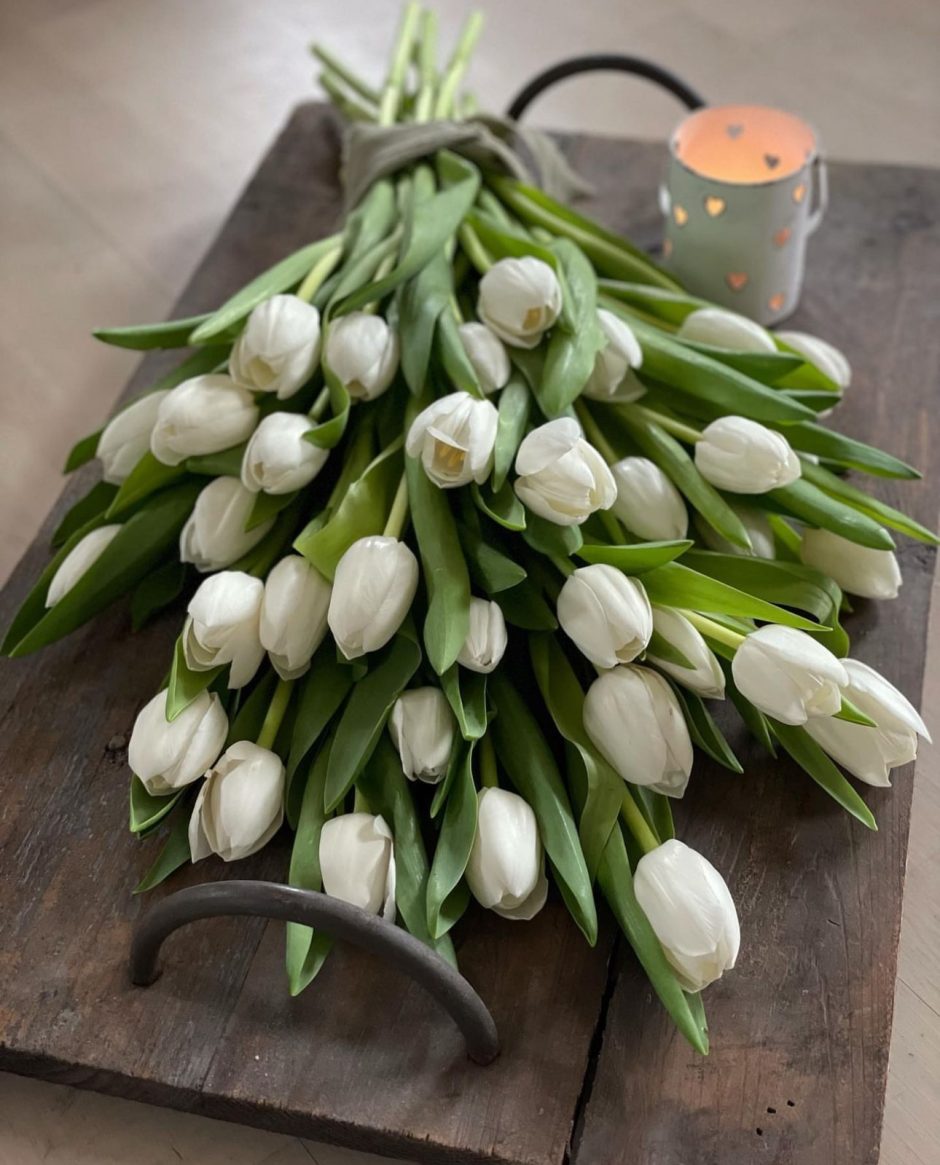
Historically, wedding flowers have symbolized various meanings and sentiments, evolving over centuries to reflect cultural and social trends. Initially, flowers and herbs were chosen for their symbolism and supposed magical properties. For example, in ancient Rome and Greece, brides carried herbs to ward off evil spirits. The Victorian era introduced the language of flowers, with each bloom carrying a specific meaning, influencing bouquet compositions. In the 20th century, wedding flower trends mirrored broader fashion and design trends, from the opulent arrangements of the 1920s to the simple and natural styles of the 1960s and 1970s. Today, the focus has shifted towards personalization and sustainability, with couples favoring flowers that have a personal significance or are eco-friendly, such as locally-sourced blooms. White tulips, with their elegance and simplicity, have emerged as a popular choice, reflecting modern couples’ preference for minimalist yet meaningful floral arrangements.
Continue reading “A Modern Take on Wedding Flowers: Spotlight on White Tulips “Fresh Flower Delivery
Unboxing Love: Valentine’s Day Delight with Whole Blossoms Roses
February 2, 2024
 by Paul T
835 views
by Paul T
835 views
by Paul T
835 views

Valentine’s Day, celebrated on February 14th, is traditionally a time when people express their affection for one another through romantic gestures. Its origins steeped in history, this day has become synonymous with love and romance, and is eagerly anticipated by couples worldwide. An exchange of heartfelt cards, gifts, and particularly, the giving of roses, epitomizes the essence of this intimate holiday. Roses, especially red ones, are symbols of deep love and passion, making them the quintessential Valentine’s Day bloom.
Continue reading “Unboxing Love: Valentine’s Day Delight with Whole Blossoms Roses “