


 by
by 

Your bulk flowers have arrived, and now the boxes are sitting there, waiting for your attention. Some of the blooms might appear tight, sleepy, thirsty, or slightly compressed from their time in transit. This can feel nerve-wracking, especially when a wedding or event is fast approaching. If you are wondering how to condition bulk flowers after delivery, the most important thing is to unpack them quickly, hydrate them properly, and give them time to recover before arranging. The good news is that flowers often just need a little time to wake up and show their full beauty after shipping. By following a few simple steps, you can help them look vibrant and event-ready in no time. At Whole Blossoms, we take pride in providing fresh, farm-direct flowers while also helping you confidently care for them after arrival, so you can feel at ease as you prepare for your big occasion.
In this guide, you’ll learn:
- What to do as soon as your bulk flowers arrive
- How to trim, clean, and hydrate fresh flowers
- How long to condition flowers before arranging
- How to store flowers before your wedding or event
- How to control how fast flowers open
- Common bulk flower care mistakes to avoid
- FAQs about conditioning wholesale flowers
Part 1 – What to Do as Soon as Your Bulk Flowers Arrive
When your bulk flowers arrive, it’s essential to act quickly to ensure they remain fresh and vibrant. Start by unboxing them carefully, making sure not to damage the stems or petals. Remove any packaging materials, such as plastic wraps or foam, and check each stem for any signs of wilting or damage. If you notice any flowers that are not in good condition, set them aside for special care or replacement if necessary. Once unboxed, proceed to trimming, cleaning, and hydrating the flowers as described in the steps below. Taking immediate action upon their arrival helps extend the lifespan of your flowers and keeps them looking their best for your big occasion.
Part 2 – How to Trim, Clean, and Hydrate Bulk Flowers Properly
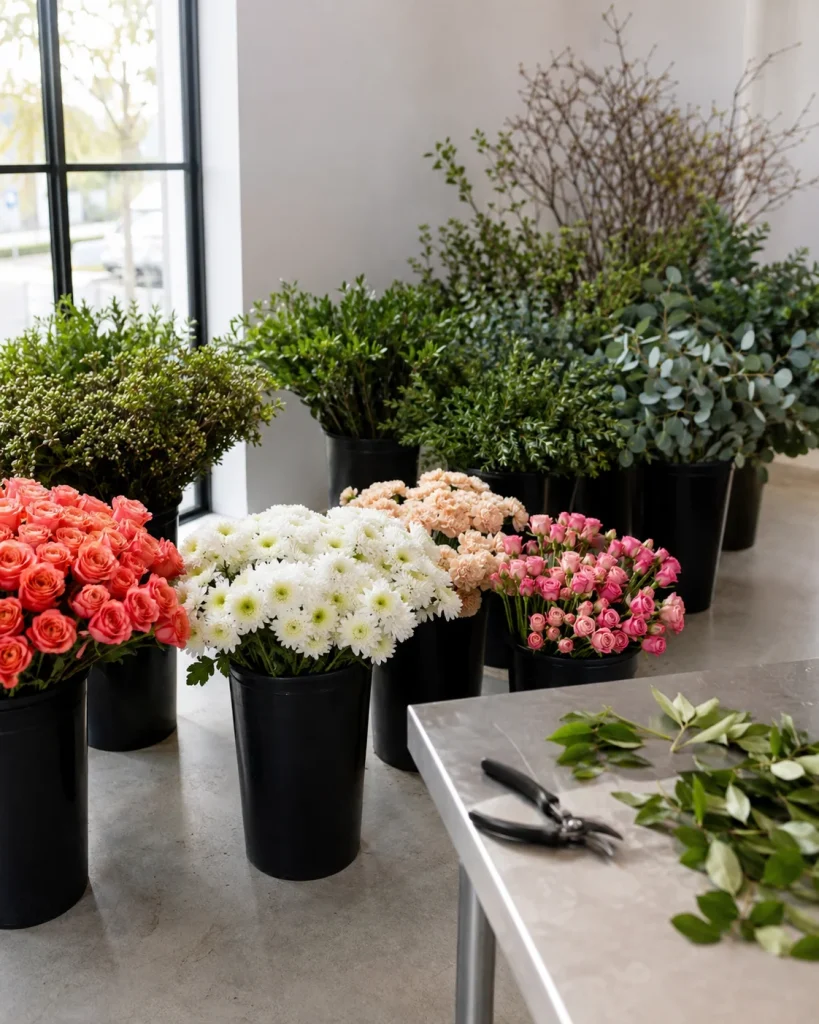
Once your bulk flowers have been unboxed, the next step is conditioning them to maximize their freshness and beauty. Proper trimming, cleaning, and hydrating are crucial to ensure that your flowers stay vibrant and healthy for your big occasion. Follow the step-by-step guide below to prepare your flowers like a pro.
Use Clean Buckets and Fresh Water
Start by filling clean buckets with fresh, room-temperature water. Ensure the buckets are free of any dirt or debris, as clean water reduces the growth of bacteria, which can harm your flowers. If provided, add flower food or floral preservative to the water, as this helps nourish the flowers and extend their vase life. According to the Brooklyn Botanic Garden, proper hygiene and the use of flower food significantly contribute to the longevity of cut flowers.
Remove Leaves Below the Waterline
Carefully remove any leaves that would sit below the waterline. Submerged leaves can decay quickly, leading to bacterial growth that clouds the water and blocks the stems’ uptake of nutrients. By stripping lower foliage, you ensure cleaner water and healthier flowers. The Royal Horticultural Society (RHS) also recommends this simple practice as an essential step in flower care.
Recut Stems at an Angle
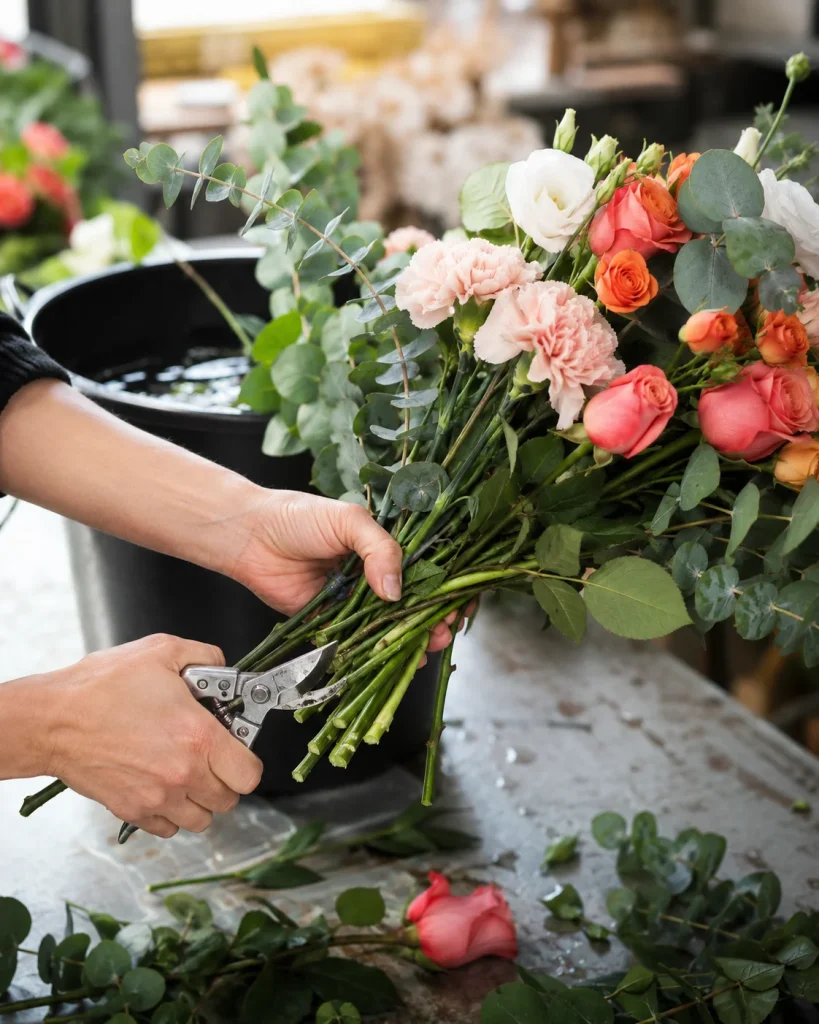
Using sharp floral clippers or a clean knife, recut each stem at a 45-degree angle. This angled cut increases the surface area for water absorption and prevents the stems from sitting flat at the bottom of the bucket, allowing better hydration. Fresh cuts ensure that any dried or sealed ends from the shipping process are removed, restoring the stem’s ability to uptake water effectively. Aim to trim about one to two inches off each stem for optimal results.
Place Flowers in Water Immediately
After cutting the stems, place them into the prepared buckets of water immediately to prevent air pockets from forming in the stems, which could block water uptake. Keeping the flowers hydrated straightaway is especially crucial after shipping, as the transit process can cause flowers to lose moisture. This step helps rejuvenate the blooms and prepares them for arranging.
Give Flowers Time to Drink Before Arranging
Allow your flowers to hydrate for at least four to twelve hours before arranging or using them. This time is essential for the flowers to recover from the stresses of shipping and open up to their full beauty. The Brooklyn Botanic Garden emphasizes that freshly cut flowers need this period to rehydrate and regain their vibrancy.
Avoid Overcrowding Buckets
When placing flowers in the buckets, be mindful not to overcrowd them. Overcrowding can cause flowers to bruise or wilt due to lack of space and ventilation. Proper spacing ensures good airflow and prevents damage, keeping your blooms in pristine condition.
Keep Flowers in a Cool, Shaded Area
Store your conditioned flowers in a cool, shaded area away from direct sunlight, heat sources, or drafts. Extreme temperatures can accelerate wilting and shorten their lifespan. By maintaining a temperate environment, you help the flowers retain their freshness until they are ready to be used.
By following these practical steps, you can ensure your bulk flowers remain fresh, vibrant, and ready for your event. Whether you’re a first-time DIY bride or a seasoned event planner, these methods provide a foundation for exceptional flower care.
Buyer FAQs:
- How do I hydrate flowers after shipping? Trim the stems, clean off lower leaves, and place the flowers in buckets of fresh water immediately.
- Should I cut the stems before putting flowers in water? Yes, always recut stems at an angle for better water absorption.
- Do I remove leaves from bulk flowers? Remove any leaves that would sit below the waterline to reduce bacterial growth.
- How much should I cut off the stems? Recut about one to two inches from the ends of the stems.
- Should I use flower food? Yes, if provided, as it nourishes the flowers and extends their lifespan.
For more supplies, visit our product pages for Floral Supplies, Wholesale Flowers, Bulk Roses, Bulk Greenery, Carnations, and Roses.
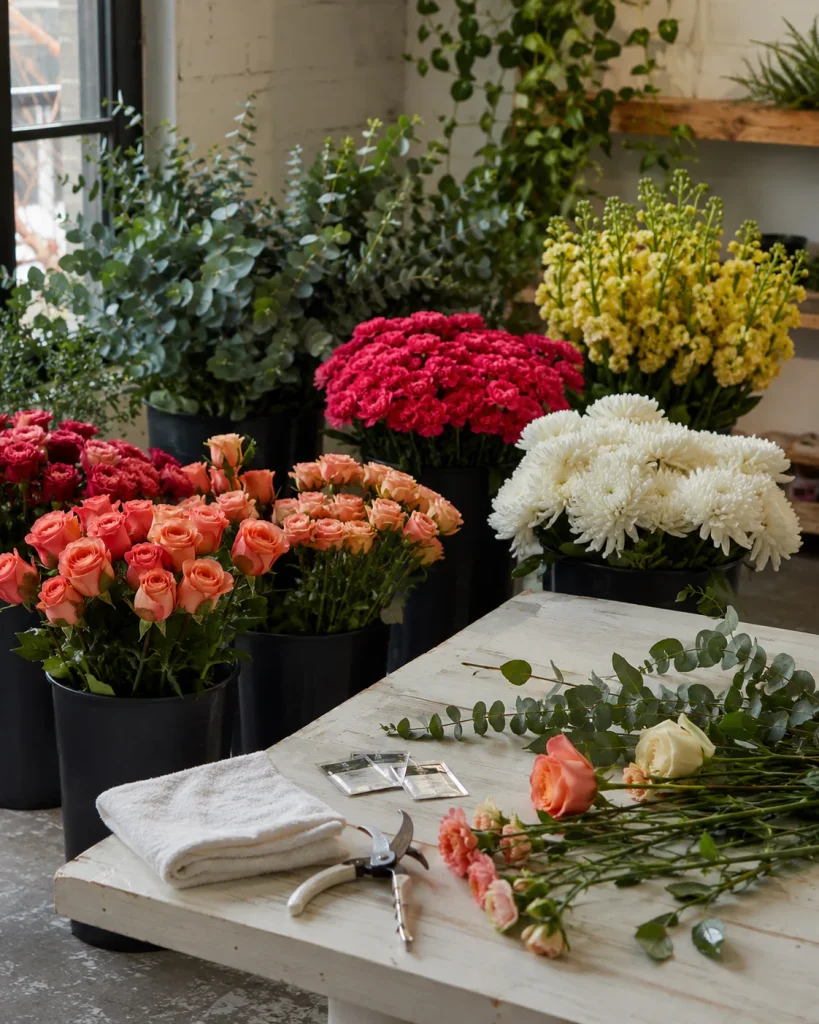
Image Idea: A close-up of hands trimming flower stems at an angle beside clean buckets, flower food, and fresh water.
Part 3 – How Long Should Bulk Flowers Condition Before Arranging?
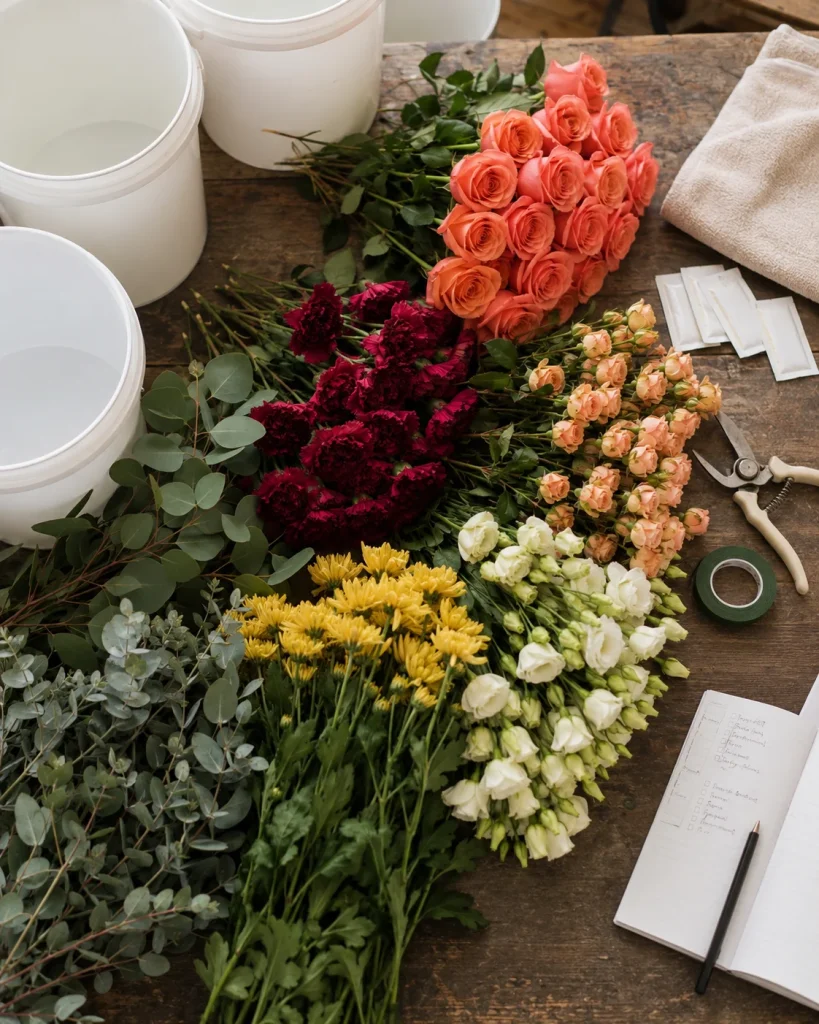
When preparing bulk flowers for arrangements, allowing enough time for conditioning is essential to ensure they look fresh, vibrant, and beautiful for your event. Proper hydration after shipping is key, as most flowers need several hours—and in some cases, overnight—to reach their ideal condition for arranging. Here’s what you need to know about the time flowers need before designing them into arrangements.
Most Flowers Need Time to Hydrate
After shipping, flowers are often dehydrated and need time to drink water and regain their vitality. A minimum window of 2–4 hours is typically necessary to allow the stems to absorb water fully and refresh their appearance. This helps flowers become more pliable and easier to arrange while reducing the risk of wilting or drooping once they are displayed. The Royal Horticultural Society (RHS) recommends letting flowers hydrate for at least two to three hours in a cool space. For best results, place the stems in clean water with flower food in a climate-controlled environment away from heat or drafts.
Overnight Conditioning Is Often Better
When time allows, overnight conditioning is often the best option, especially for larger events like weddings or celebrations. Flowers conditioned overnight in a cool area are better prepared to thrive in warmer environments, such as those filled with lighting or bustling activity. While a 2–4 hour hydration window may suffice for some varieties, conditioning overnight ensures even delicate or stubborn blooms like roses open and drink properly. By giving flowers extra time to recover and hydrate, you can achieve more reliable results and reduce last-minute stress.
Flower Type and Event Timing Matter
The amount of time flowers need for conditioning depends on the type of blooms and greenery you’re working with, as well as your event timeline. For instance:
- Roses often need time not only to hydrate but also to open slightly if a more blossomed look is desired. Ordering roses 2–3 days ahead of the event gives them time to achieve this stage.
- Carnations are durable and can condition quickly, making them a versatile option for events with tighter preparation schedules.
- Greenery also benefits from hydration, as well-hydrated foliage looks fresher and lasts longer in arrangements.
- Delicate flowers, such as ranunculus or peonies, may require gentle handling and extra hydration to maintain their beauty.
- Tropical blooms may have specific care needs, such as misting or being kept at slightly warmer temperatures than typical flowers.
For weddings or other events, flowers are best delivered 1–3 days before the event, depending on the type of flower and the desired level of bloom. Tight buds will need time to open, while fully blossomed flowers are best stored in cooler conditions to slow their development.
Do Not Wait Until the Last Minute
Rushing the conditioning process can lead to compromised results and prevent flowers from performing at their best. While it’s tempting to arrange flowers as soon as they arrive, giving them time to properly hydrate is a critical step in ensuring your arrangements stay fresh throughout the event. Planning ahead—even by just a few hours—can make a significant difference in the quality of your floral designs and minimize last-minute anxiety.
By following these guidelines and ensuring that your bulk flowers have enough time to condition, you’ll set yourself up for success, whether you’re creating wedding centerpieces or simply arranging blooms for a special occasion.
Suggested Image Idea: Buckets of roses, carnations, greenery, and filler flowers hydrating in a cool prep room with soft daylight.
For more supplies, visit our product pages for Bulk Roses, Wholesale Flowers, Bulk Greenery, Wedding Flowers, and Floral Supplies.
Part 4 – How to Store Bulk Flowers Before a Wedding or Event
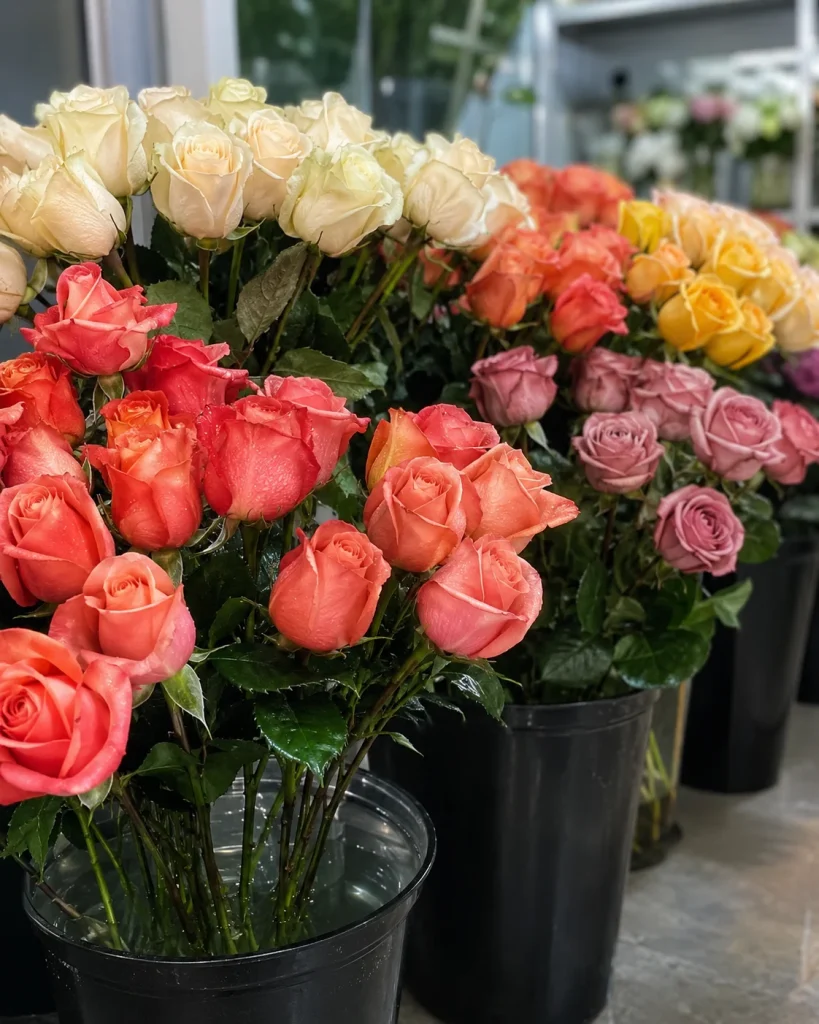
Proper storage is essential for keeping bulk flowers fresh and vibrant between delivery day and the big event. The way you store your flowers can make or break their condition, so it’s crucial to follow these best practices to ensure they’re picture-perfect when it’s time to use them.
Keep Flowers Cool, Shaded, and Hydrated
The key to maintaining flower freshness lies in keeping them cool, shaded, and well-hydrated. Store your flowers in a temperature-controlled space that’s cool but not freezing. Ideal conditions include a shaded area with soft, indirect light. Direct sunlight can cause flowers to wilt prematurely, so avoid placing them near windows or other sources of strong light. To keep flowers hydrated, ensure that your buckets are clean, and use fresh water. If flowers have been conditioned properly, as the NYBG’s guide suggests, they should stand in a cool space out of direct sunlight in tepid water for several hours before storage.
Avoid Heat, Sun, Garages, and Cars
Heat is the enemy of fresh flowers. Avoid storing them in spaces prone to heat, such as hot garages or cars. Similarly, keep them away from heaters, vents, and other warm areas that may dry them out or cause them to degrade faster. A shaded, cool indoor storage space will significantly enhance the longevity of your blooms. Always aim to store flowers in an environment where the temperature is consistent and not overly humid or dry.
Be Careful With Household Refrigerators
While refrigeration may sound like a good idea, it’s not always the best solution for storing flowers. Professional floral coolers are designed specifically for this purpose, maintaining appropriate humidity and temperature levels. Household refrigerators, on the other hand, are often too cold, too dry, and may contain food or fruit that can harm flowers. If you must use a household refrigerator, ensure that it is clean and free of food, especially fruit, which releases ethylene gas and can cause flowers to wilt prematurely. Avoid freezing flowers at all costs, as this will damage their delicate petals and stems.
Refresh Water and Check Flowers Daily
To keep your flowers at their freshest, monitor their water and adjust as needed. Change the water if it becomes discolored or if any stems appear slimy. Use clean buckets, and avoid overcrowding stems to allow proper oxygen flow and hydration. Check your flowers daily for any signs of wilting or damage and remove any deteriorating petals or leaves to prevent them from affecting the others.
Keep Flowers Away From Fruit and Food
One crucial point to remember is to store flowers away from ripening fruit or food. Fruits such as apples, bananas, and tomatoes release ethylene gas, a natural compound that can prematurely age flowers, causing them to lose their vibrant appearance and shorten their lifespan. Keep flowers in a dedicated space free from food products to avoid this issue.
By following these guidelines, you can keep your conditioned flowers fresh and event-ready. Always prioritize a clean, shaded, temperature-controlled environment and monitor their hydration regularly. With proper care, your blooms will remain stunning throughout your wedding or event.
Part 5 – How to Control How Fast Bulk Flowers Open
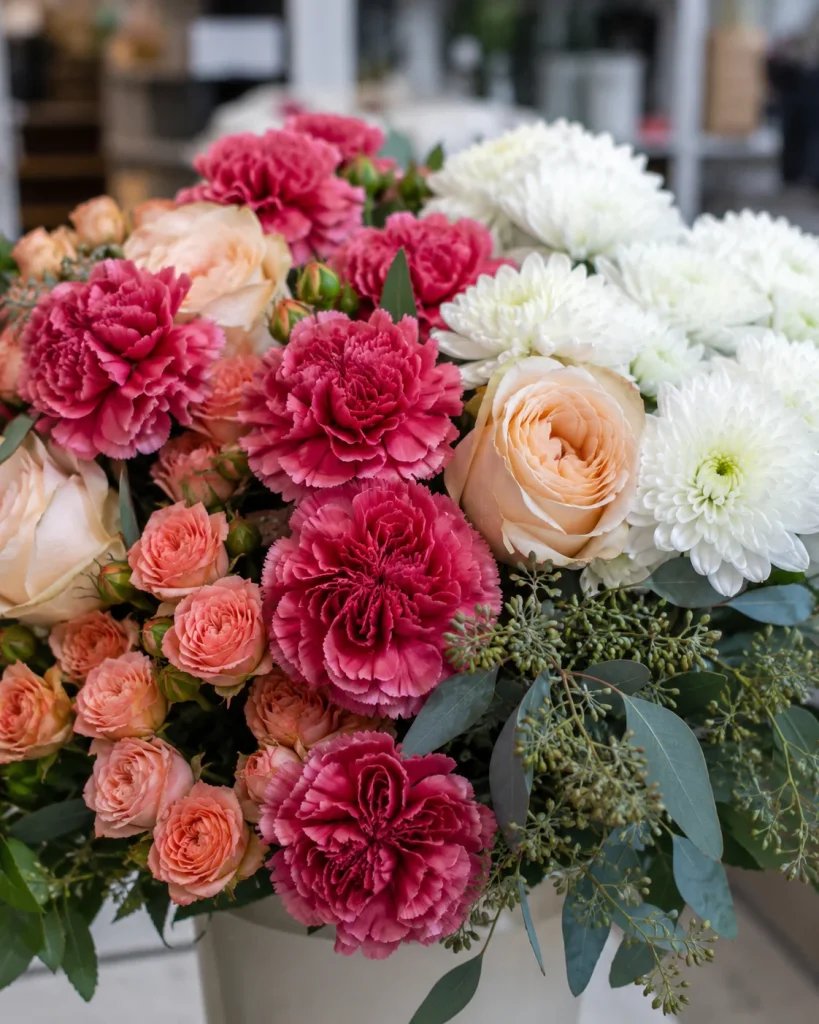
Managing how flowers open is an essential skill for anyone working with bulk flowers, especially for significant events like weddings and celebrations. Often, flowers are shipped while still closed, or “tight,” to preserve their freshness during transit. Upon arrival, understanding how to control their bloom stages can ensure they are at their peak beauty for the event. Below, we’ll explore strategies for handling tight blooms, slowing down flowers that are opening too fast, and optimizing the timing of their display.
What to Do if Flowers Arrive Too Tight
It’s not uncommon for flowers to arrive in a tight, closed state. This is done intentionally to preserve their freshness during shipping. If your flowers seem too tight upon arrival, don’t panic. Here’s how to handle them:
- Hydrate Your Flowers: Upon arrival, cut the stems at an angle to maximize water uptake and place the flowers in fresh, clean water. Allow them time to drink and rehydrate.
- Room Temperature Matters: Keep the flowers in a room with a comfortable temperature, ideally between 65°F and 75°F. Avoid cold storage for tightly closed blooms, as this can slow or prevent them from opening.
- Do Not Force Blooms: Never attempt to force petals open with your hands. This could damage the flowers and compromise their appearance. Trust the natural process.
- Plan Ahead: If you know the flowers you ordered are likely to arrive tight, plan your delivery with ample lead time. This gives them time to open fully before your event. For example, roses often need two to three days to open, depending on the temperature and their initial stage upon delivery.
Keep in mind that different flowers have varying bloom behaviors. For instance, peonies and lilies typically arrive tighter and require more time to open than more forgiving blooms like carnations.
What to Do if Flowers Open Too Fast
Sometimes, flowers may start blooming faster than anticipated. To slow their progress and ensure they last through your event, follow these steps:
- Move Flowers to a Cooler Area: Temperature plays a significant role in bloom speed. Relocate flowers to a shaded, cooler room, ideally below 65°F, to slow their development.
- Maintain Clean Water: Regularly check and change the water to keep it fresh. Dirty water can accelerate wilting.
- Avoid Direct Sunlight and Heat: Warm environments and sunlight encourage flowers to bloom quickly. Keep flowers away from bright windows, radiators, or any other heat sources.
- Arrange Closer to Event Time: If you notice your flowers are opening too quickly, hold off on arranging them until closer to the event. This minimizes unnecessary handling and heat exposure.
Why Roses Need Time to Open
Roses, a popular choice for weddings and events, often arrive in a tight stage to maintain freshness. They need time to open before achieving their signature full, elegant appearance. When conditioning roses, ensure they are well-hydrated and stored in a room with moderate temperatures. Give them at least 48 hours to open up completely, but bear in mind that some varieties may take even longer.
Do Not Force Blooms Open by Hand
While it can be tempting to manually push petals open when flowers don’t seem to be progressing, this can damage delicate blooms and lead to uneven results. Instead, rely on proper hydration, temperature control, and patience to achieve optimal bloom quality.
Match Delivery Timing to Your Event Date
Always plan your flower delivery based on your event date and the bloom times of your chosen flowers. Remember, some flowers, like orchids or tropical blooms, tend to be more stable and require less time-sensitive care. Others, like roses or lilies, need a specific amount of time to reach their full opening stage. Order accordingly and consult with your supplier if unsure.
Buyer Questions Answered:
- Why did my flowers arrive closed? Fresh flowers are often shipped closed to protect them during transit and maintain peak freshness.
- How do I make roses open before a wedding? Hydrate them, store them in a moderate temperature room, and give them at least 2-3 days to bloom.
- How do I slow flowers from opening too fast? Keep them in a cooler, shaded area with fresh water and avoid warm environments.
- What if my flowers are not open enough? Provide additional time, hydration, and moderate warmth if needed but do not force blooms.
- What if my flowers open too early? Place them in a cool, dark area to slow their progression, and arrange them closer to the event.
By understanding bloom behavior and following these conditioning practices, you can manage your bulk flowers effectively and ensure they’re event-ready at the right time.
Part 6 – Common Bulk Flower Conditioning Mistakes to Avoid
Properly conditioning bulk flowers is key to maintaining their beauty and freshness for any event. To prevent common issues that frustrate buyers and lead to customer service concerns, it’s important to know what not to do during the conditioning process. By avoiding these mistakes and preparing ahead of time, you’ll ensure your flowers look their best when it matters most.
Do Not Leave Flowers in the Box Too Long
One of the most critical mistakes is leaving flowers in their delivery box for too long. Flowers need air circulation, hydration, and space to recover from transportation. Illinois Extension recommends unpacking flowers immediately upon arrival and transferring them into clean, sanitized containers with fresh water and floral preservative. Leaving flowers boxed overnight or for extended periods can cause dehydration, premature wilting, and even damage to the stems and petals.
Tip: Prepare your work area and supplies before your flowers arrive to streamline their transition from box to vase.
Do Not Use Dirty Buckets
Buckets and containers play a vital role in the hydration process, yet they are often overlooked. Using dirty buckets with bacteria or residue can contaminate the water and shorten the lifespan of your flowers. Always clean and sanitize containers thoroughly with soap and water before use to prevent harmful bacteria from affecting your blooms. Fresh water with a floral preservative will go a long way in preserving their quality.
Do Not Let Leaves Sit Below the Waterline
When conditioning flowers, always remove any leaves or foliage that would be submerged in water. Leaves left below the waterline decompose quickly, promoting bacterial growth and fouling the water. This not only shortens the life of your flowers but can also leave them looking less vibrant and fresh. Snip off the lower leaves with clean, sharp scissors or clippers to keep the water clean and stems healthy.
Do Not Store Flowers in Heat or Direct Sun
Flowers are highly sensitive to temperature and light. Storing them in hot rooms or direct sunlight can cause them to wilt, dry out, or discolor. Instead, place your buckets in a cool, shaded area with good air circulation. If possible, use a dedicated floral refrigeration unit or similar cool space to keep blooms fresh until you’re ready to arrange them.
Do Not Wait Until the Last Minute
Proper conditioning takes time, so don’t leave it until the day of the event. Flowers need at least several hours to hydrate fully after cutting and may need a day or more to open to their full beauty. Plan ahead, and condition your flowers at least one day before the event to allow any tight blooms to soften and open naturally. This way, you avoid rushing and ensure your flowers are event-ready.
Buyer Questions Addressed:
- What should I not do when flowers arrive? Do not leave them in the box, avoid using dirty buckets, and ensure you have the necessary supplies before delivery.
- Why are my flowers wilting after delivery? They may be dehydrated from being boxed too long or placed in unclean water.
- Can dirty buckets hurt fresh flowers? Yes, bacteria in dirty buckets can significantly shorten flower life.
- Can I leave flowers in the box overnight? It’s not recommended; always unpack them as soon as possible.
- What supplies should I have before delivery? Clean buckets, sharp scissors or clippers, floral preservative, and plenty of fresh water.
By avoiding these simple mistakes—and preparing with proper tools and techniques—you’ll set yourself up for success.
FAQ Section
FAQ 1: How do I condition bulk flowers after delivery?
To condition bulk flowers after delivery, start by opening the boxes as soon as possible and removing the packaging gently to avoid damaging the blooms. Prepare clean buckets with fresh, room-temperature water. Remove any leaves that would fall below the waterline to prevent bacteria growth. Recut the stems at an angle using sharp scissors or a knife, and immediately place the flowers in the prepared water. Allow the flowers to hydrate in a cool, shaded area before proceeding with arranging.
FAQ 2: How long should bulk flowers condition before arranging?
Most bulk flowers require at least 2–4 hours to condition and rehydrate before arranging. However, it’s often more effective to allow them to hydrate overnight if your schedule permits. This extra time allows the blooms to drink water, recover from transportation stress, and begin opening naturally, ensuring they are ready to shine in bouquets, centerpieces, or installations.
FAQ 3: Is it normal for wholesale flowers to look tired when they arrive?
Yes, it’s normal for bulk flowers to appear tight, slightly thirsty, or “sleepy” upon arrival, as they have likely been in transit for an extended period. This doesn’t necessarily indicate a problem. With proper hydration, fresh stem cuts, clean water, and cool storage, most flowers will perk up and regain their natural vibrancy in no time.
FAQ 4: Should I remove leaves before putting flowers in water?
Absolutely. Be sure to remove any leaves that will be submerged in water, as they can decompose and create bacteria in the water, which can negatively impact flower longevity. Keeping the stems clean below the waterline ensures the blooms can hydrate properly in cleaner conditions.
FAQ 5: Can I store bulk flowers in a refrigerator?
Caution is advised when using a household refrigerator to store flowers. Unlike professional floral coolers, domestic refrigerators may be too cold, too dry, or contain ethylene-emitting produce, which can harm certain flowers. For most DIY buyers, a cool, shaded, and clean room is a safer option unless specific care instructions for a flower type recommend refrigeration.
FAQ 6: What supplies do I need before bulk flowers arrive?
Before your bulk flower delivery, gather essential supplies to make the conditioning process smoother. These include clean buckets, fresh water, floral clippers or a sharp knife, towels, flower food or preservative (if provided), trash bags, labels, and a cool storage space. Being prepared ahead of time helps reduce stress and makes the conditioning process more efficient.
Conclusion
Conditioning bulk flowers doesn’t have to be difficult, but it does require proper care, timing, and preparation. Using clean water, fresh cuts, and a cool space for hydration can make all the difference in the appearance and lifespan of your blooms. Remember, flowers may look sleepy after shipping, but with patience and proper handling, they’ll wake up and look their best.
At Whole Blossoms, we’re here to support your DIY floral needs. Ready to plan your next wedding or event? Shop fresh wholesale flowers, bulk roses, greenery, and floral supplies at Whole Blossoms, and use this conditioning checklist to ensure your flowers are hydrated, open, and gorgeous for your special celebration.